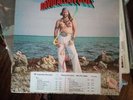
(16) Vintage Polka Dance LP Records Favorite Folk Music Party Album Bundle LOT
$
40


Favourite Auctions
To save auctions to your favourites, please login
If you don't have an account, please register
Description
(16) Vintage Polka Dance LP Records Favorite Folk Music Party Album Bundle LOT
Good Shape - Some wear from Storage - Untested - LPs look to be in Good Condition - Sold AS IS - NO RETURNS - Please review all pictures to see the condition of the item being sold. Thanks!
Oh Yeah Its Payday at a Polka Party Million Dollar Polkas Favorite Polkas In Stero Polkas - Stanley Polaski Polkas for Parties Hula Hoop Polka
Johnny Menko Carefree Polkas Sweet Cookie Polkas Norfolk Polka Kings Stash Wolowic and the Polk Chips Polka Steps All Time Great Polkas Dine & Wine the Polka
******************************************************************
The term polka referring to the dance is derived from the Czech word Polka meaning "Polish woman" (feminine form corresponding to Polak, a Pole).[1] Czech cultural historian Čeněk Zíbrt also attributes the term to the Czech word půlka (half), referring to both the half-tempo 2
4 and the half-jump step of the dance.[2] The word was widely introduced into the major European languages in the early 1840s.[1]
Origin and popularity
Polka, c. 1840
The polka's origin story first appears in the periodical Bohemia in 1844,[3] in which it was attributed to a young Bohemian woman named Anna Slezáková (born Anna Chadimová). As told by Čeněk Zíbrt, the music teacher Josef Neruda noticed her dancing in an unusual way to accompany a local folk song called "Strýček Nimra koupil šimla", or "Uncle Nimra Bought a White Horse" in 1830. The dance was further propagated by Neruda, who put the tune to paper and taught other young men to dance it.[2] Some versions of this origin story placed the first polka as being danced in Hradec Kralove, while others claimed it occurred in the village of Labska Tynica.[4] Historians believe the polka evolved as a quicker version of the waltz, and associate the rapid bourgeoning in popularity of the polka across Europe in the mid-1800s with the spread of the Romantic movement, which emphasized an idealized version of peasant culture.[5]
By 1835, this dance had spread to the ballrooms of Prague. From there, it spread to classical music hub Vienna by 1839,[6] and in 1840 was introduced in Paris by Johaan Raab, a Prague dance instructor.[3] It was so well received in Paris that its popularity was referred to as "polkamania."[7] The dance soon spread to London in 1844, where it was considered highly fashionable, and was also introduced to America.[3] It remained a popular ballroom dance in America, especially with growing Central, Northern, and Eastern European immigrant groups until the late 19th century.
n the 1850s, the polka was expanded among Belarusians.[10] Although the polka is a borrowed dance, close to Belarusian folk choreography, it has been greatly transformed in the National plan, while having a strong influence on other dances.[11] Having entered the life of the Belarusians, it was transformed into the national spirit. In different regions, local variants arose, which assimilated with local choreographic folklore and became popular. The ease of penetration of the polka into Belarusian choreography is due to its certain proximity to Belarusian national choreographic traditions.[12]
The 2/4 meter polka merged well with the Belarusian traditional dance, which had a similar meter. So, for example, "Trjasucha" (Belarusian: "Трясуха", "Trjasucha" or "Пацяруха", "Paciaruchais") a symbol of a typical folk dance, from which it got its name, and polka.[11] Most often in Belarus, the polka is performed in pairs, moving half a step with turns in a circle. The dance is decorated with a variety of small pas,[12] often accompanied by chastushkae.
Belarusian polkas are extremely rich in their choreographic and musical patterns, they are distinguished by great modal and intonation diversity.[11] Polka demanded from the dancers both skill and physical endurance.
Like the square dance, the polka also has many local variants: "Віцебчанка, Viciebčanka", "Барысаўская, Barysaŭskaja", "Ганкоўская, Hankoŭskaja", and the names were also given according to the peculiarities of the choreography: "Through the leg", "With a podkindes", "With squats", "On the heel", "Screw" and others.[11]
The United States
Main article: Polka in the United States
In the United States, polka is promoted by the International Polka Association based in Chicago, which works to preserve the cultural heritage of polka music and to honor its musicians through the Polka Hall of Fame. Chicago is associated with "Polish-style polka," and its sub-styles including "The Chicago Honky" (using clarinet and one trumpet) and "Chicago Push" featuring the accordion, Chemnitzer and Star concertinas, upright bass or bass guitar, drums, and (almost always) two trumpets.
Texas Polka Music Museum in Schulenburg, Texas
Polka is popular in Milwaukee, Wisconsin, where the "Beer Barrel Polka" is played during the seventh-inning stretch and halftime of Milwaukee Brewers and Milwaukee Bucks games.[13] Polka is also the official state dance of Wisconsin.[14]
The United States Polka Association is a non-profit organization based in Cleveland, Ohio.[15] Cleveland is associated with North American "Slovenian-style polka", which is fast and features piano accordion, chromatic accordion, and/or diatonic button box accordion. North American "Dutchmen-style" features an oom-pah sound often with a tuba and banjo, and has roots in the American Midwest.
"Conjunto-style" polkas have roots in northern Mexico and Texas, and are also called "Norteño". Traditional dances from this region reflect the influence of polka-dancing European immigrants. In the 1980s and 1990s, several American bands began to combine polka with various rock styles (sometimes referred to as "punk polka"), "alternative polka", or "San Francisco-style".
Comedy musician "Weird Al" Yankovic is a fan of polka, and on every album since 1984 (with the exception of Even Worse), Al has taken bits of famous songs and modified them to fit polka style.
The Grammy Awards were first presented for polka in 1985. The first award went to Frankie Yankovic, known as "America's Polka King", for his 70 Years of Hits album on Cleveland International Records. Cleveland International Records had another polka Grammy winner with Brave Combo's Polkasonic in 1999. Other polka Grammy nominees included Frankie Yankovic's America's Favorites (1986), Songs of the Polka King Vol. I, Songs of the Polka King Vol. II (1997), and Brave Combo's Kick Ass Polkas (2000). Jimmy Sturr & His Orchestra is one of the most popular polka bands in America, having won 18 of the 24 awards for Grammy Award for Best Polka Album.
Polka Varieties was an hour-long television program of polka music originating from Cleveland, Ohio. The show, which aired in several U.S. cities, ran from 1956 until 1983. At that time, it was the only television program for this type of music in the United States.[16] A number of polka shows originated from the Buffalo Niagara Region in the 1960s, including WKBW-TV's Polka Time, which was hosted for its first half-year on air by Frankie Yankovic, and cross-border station CHCH-TV's Polka Party, hosted by Walter Ostanek.[17] In 2015, when Buffalo station WBBZ-TV launched the weekly Polka Buzz hosted by Ron Dombrowski, who also hosts the Drive Time Polkas radio show on WXRL Mondays-Saturdays from 5pm-7pm and on WECK Sundays from 8am-11am.[18])
Beginning with its inception in 2001, the RFD-TV Network aired The Big Joe Show, a television program that included polka music and dancing. It was filmed on location in various venues throughout the United States from 1973 through 2009. RFD-TV replaced The Big Joe Show with Mollie Busta's Polka Fest in January 2011; after Big Joe's death, reruns of The Big Joe Show returned to RFD-TV in 2015.[19]
In 2009, the National Academy of Recording Arts and Sciences, which hosts the Grammy Awards, announced that it was eliminating the polka category[20] "to ensure the awards process remains representative of the current musical landscape".[20] A declining number of polka albums were considered for the award in previous years.
Huge, Large, Big, Collection, Qty considerable
whopping
substantial
humungous
super
heroic
planetary
herculean
galactic
cosmical
jumbo
elephantine
good
major
sizeable
majestic
staggering
heroical
handsome
formidable
Himalayan
supersized
vasty
king-size
price rating
![Hannibal Original Soundtrack (Season 2 Volume 2) Hemochrome Red Vinyl [VINYL] Br](https://www.popsike.net/php/thumbnail.php?url=https://www.popsike.pics/pix/20160304/161996408805.jpg)