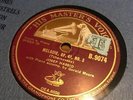
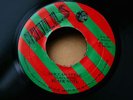
1906 FRANCESCO VIGNAS Vinas LA PARTIDA/ MI NINA w Piano FONOTIPIA 78
$
23


Favourite Auctions
To save auctions to your favourites, please login
If you don't have an account, please register
Description
Welcome to my auctions of great records
WEEK 1 of 3 weeks of great auctions – this is the first week of three weeks of great records. As a default, I will not send you an invoice until the end of my sales cycle on September 27 – that way you can see my next listings and you can combine your wins into one parcel for a low postage.
IF YOU WIN MULTIPLE ITEMS DO NOT USE EBAY CHECK OUT in order for me to get you low combined postage. Send me an invoice request instead.
A series of great early Opera performances: From 1902 G&Ts to 40s wartime German records:
Great Catalan Singer FRANCISCO VINAS w Piano
LA PARTIDA/ MI NINA w Piano
Fonotipia 10 3/8" 78 rpm record
Condition:
NINA VG++/ Partida VG+, short scratches
plays quiet but some dist on top notes.
from http://www.marstonrecords.com
Francisco Vi±as
The career
As far as I know, all the records of Francisco Vi±as were made in Italy and so we are used to seeing his name as it appears on their labels, spelled Francesco Vignas, which seems to be the way he wrote his name everywhere he sang outside Spain and perhaps Portugal.
This great Catalan tenor was born Francesc Vi±as in Moiß, near Barcelona, on 27 March 1863, and died there on 14 July 1933. Just as the healthy influence of singers like Adelina Patti and Emma Albani, trained in the old Italian school of singing, influenced taste in London and New York until the First World War, keeping before critics and singers the virtues of a steady, radiant tone and graceful phrasing, so the popularity in Spain and Russia of such highly esteemed and paid Italian singers as the tenors Masini and Marconi or the baritone Battistini preserved a respect for certain old-fashioned styles and mannerisms that local singers were quick to imitate. Emulation of role models played an important part in the education of singers lucky enough to be able to attend opera performances or, after the issue of CarusoÆs first discs in 1902, wealthy enough to own a gramophone. Fernando De Lucia studied the personal traits of the three great tenorsûGayarre, Masini and Stagnoûactive at the San Carlo in his student days, about 1880-1885, and reproduced them in his own singing, so that his recordings are a sort of living museum of already antiquated stylistic quirks. In the records of Vi±as we hear a bright, open, silvery tone similar to that of other ôSpanishö tenors such as Valero and Constantino and, we believe, also typical of the way Italian lyric tenors sang before the age of CarusoûMarconi is somewhat similar in his more lyrical moments, while Signoretti has something of the declamatory brilliance of Vi±as.
Vi±as began to study, apparently with Gon?al Tintorer, at the Conservatory in Barcelona when he was 23. Juan Goula, a principal conductor in Madrid and Barcelona, heard the young man in the Conservatory concerts and invited him to study the role of Lohengrin. On 9 February 1888 Vi±as made his debut in Lohengrin at the Teatro del Liceu, Barcelona, singing with the famous soprano Medea Borelli (who had failed in London but was a big star in Latin countries). Gayarre, the great tenor whose place he was in part destined to take, was so impressed with this first performance that he gave the young Vi±as his own Lohengrin costume.
The steady progress of his career has been meticulously plotted out by Larry Lustig and Clifford Williams in the Record Collector, Vol. 34, nos 5-6-7, July 1989. After more performances of Lohengrin in Barcelona and Mefistofele in Valencia, Vi±as was already invited to la Scala, Milan, where he sang Lohengrin in 1889 and again in 1891; he was also heard there in Cavalleria rusticana (1891), Carmen (1896), and Germania (1904). Over the years he also sang in Brescia, Treviso, Turin, Genoa, Catania, Palermo, Modena, Florence, Rome, Cremona, Venice, Perugia, Pistoia, Padova, appearing in most of these cities at least once in his famous interpretation of Lohengrin, and closing his Italian career with performances of Lohengrin in Bologna (1913) and Parsifal in Pisa (1914). (He was announced to sing Tristano at the Teatro Adriano, Rome, late in 1914, but these performances seem to have been cancelled by the outbreak of war.) The theater in which he was most loved was the San Carlo, Naples, where he returned again and again. He first sang there in 1893, inevitably as Lohengrin, which he repeated in 1896, 1901, and 1910. Naples also heard him in Mefistofele, Lorenza (Mascheroni) with Gemma Bellincioni (world premiere), Germania, Aida, Manon Lescaut, Andrea Ch?nier, La Gioconda, LÆAfricana (with Ruffo, Bonini, Amato, and Caronna sharing the baritone role in eight performances), La Perugina (Mascheroni), and, in 1910, his last season in Naples, Don Carlo, Il Profeta, and Lohengrin all with the great American mezzo-soprano Eleonora De Cisneros. Naples also heard him in concert performances of MassenetÆs Marie Magdeleine (1902), Lorenzo PerosiÆs Mos? (1903, with Salomea Kruschelnytska and Giuseppe De Luca, conducted by the composer), and RossiniÆs Stabat Mater. Throughout his distinguished but perhaps less than spectacular career he was constantly to be heard in Madrid and Barcelona, and did not neglect the other theaters of Spain: a frequent visitor to the Teatro Principal, Valencia, after 1905 he was also heard in Seville, Malaga, C?rdoba, La Coru±a, Vigo, Santander, Oviedo, Gijon, and Palma de Mallorca. The Teatro S?o Carlos of Lisbon first heard himûneed one say, in Lohengrinûin the 1904ù1905 season; he returned in 1905ù1906, 1907, and 1908, also appearing in Tannh?user, Mefistofele, Aida, Tosca, La Gioconda, LÆAfricana, Pagliacci, Carmen, Fedora, Il Profeta, his first performances of Tristano e Isotta (with the ill-fated Cecilia Gagliardi), Amor De Perdi?ao (Joao Arroyo), and Sansone e Dalila.
The pure quality of Vi±asÆs voice and his classical, even rather severe style of singing made him the perfect partner for such artists as Melba, Albani, Calv?, Nordica, Eames, Litvinne, Tetrazzini, Plan?on, Edouard de Reszke, Ancona, Lassalle, and Maurel, with whom he sang in London and in the United States. His popularity in London does not seem to have been affected by the frequent observation by critics that he was by no means a good or convincing actor. (One wonders how plausible he can have been in verismo roles, for his vocal style was remarkably chaste and free from any cheap effectsûwhat a perfect partner for Melba!) He made an instant hit with his singing of Turiddu in the first performance in London of Cavalleria rusticana in the adventurous Signor LagoÆs season at the Shaftesbury Theatre on 19 October 1891: ôSignor Francisco Vi±as, who uses a tenor voice of remarkably good quality with skill and intelligence, received still further favours from the audience, as the æbrindisiÆ of the final scene, being the one very conventional number in the work, was doubly encoredö (the Times). Cavalleria rusticana was performed at Windsor Castle by command of the Queen, and Vi±as also appeared in a concert there, accompanied at the piano by Tosti. As generally happened to the best artists ôdiscoveredö by Lago, he was snatched up by Augustus Harris who engaged him for Covent Garden. For some reason he was not able to return in 1892 but made his Covent Garden debut as Lohengrin with Nellie Melba on 15 May 1893: ôThe Lohengrin of Signor Vi±as, an impersonation not yet seen in London, though expected for some time, proved entirely successful. If the artist is hardly an ideal representative of the character, his vigorous style, manly bearing and artistic singing, exhibited in the first and third acts, make up for what he lacks in romantic charmö (the Times). Photographs of Vi±as in costume underline this lack of ôromantic charm,ö but in those days any tenor who sang certain roles in London or New York was inevitably compared with the elegance and charisma of the aristocratic Jean de Reszke. The same critic later wrote: ôSignor Vi±as was a very satisfactory Tannh?user and the part must rank as one of his very best, even though he has scarcely exhausted its possibilities.ö Emma Albani was his Elisabeth in Tannh?user, and he sang with Emma Calv? in Cavalleria rusticana and LÆAmico Fritz, and with Lillian Nordica in StanfordÆs Il Profeta velato. On 15 July he sang with Calv? and Ancona, with Mascagni conducting, a Royal Command Performance of Cavalleria rusticana and Act Two of LÆAmico Fritz for Queen Victoria at Windsor Castle.
As was practically inevitable in those days, his success at Covent Garden was followed by an invitation to the Metropolitan (Maurice Grau would be artistic director of both theaters from 1897 to 1900, thereby strengthening the bond). He made his debut on 29 November 1893 as Turiddu; it was rather unfortunate that on the same evening the dynamic Emma Calv? was making her American debut as Santuzza, and that Pol Plan?on, the greatest bass of his day, was also making his debut in the other half of the double bill, GounodÆs Phil?mon et Baucis, so poor Vi±as, although favorably noticed by the press, was hardly the center of attention that most tenors would expect to be. Even worse was to come, for when he essayed Edgardo on 4 December, his Lucia was Melba, making her New York debut! Fortunately, between these historic events he had managed to sing a performance of Lohengrin on 1 December, with Nordica. As Irving Kolodin says in his The Story of the Metropolitan Opera, 1883ù1950 (Alfred A. Knopf, New York, 1953, p.123): ôAs of the mid-nineties there was a problem common to both London and New York: how to admit the immense push of the Wagnerian literature to the common repertory without making it, as it had been in New York during the 1880s, an exclusively German enterprise, or as it had been in Londonûand still wasûan exclusively non-German enterprise.ö Performances such as Lohengrin sung in Italian by such sopranos as Melba, Nordica, and Eames and such tenors as Vi±as and Jean de Reszke (with whom Vi±as had to share the title role both in London and New York) were a satisfactory compromise until the Polish tenor and the Australian and American sopranos were ready to embark on their Wagnerian roles in German. Vi±as continued to sing them only in Italian.
At the Metropolitan and on tour with the company in Philadelphia, Brooklyn, Boston, Chicago, and St. Louis, Vi±as sang further performances of Lohengrin and Cavalleria rusticana and Lucia di Lammermoor, in Tannh?user with Melba, Nordica, Ancona, and Plan?on and in Aida with Nordica and Lassalle. Fortunate those Met subscribers who, on 22 December 1893, heard a double bill of Pagliacci with Melba, Fernando De Lucia, and Mario Ancona and Cavalleria rusticana with Calv? and Vi±as.
To some extent Vi±as may have shared the fate of Pertile at the Metropolitan, appearing beside stars of extraordinary charisma who eclipsed him; however, such an excellent singer would certainly have been invited to return, for after all he was welcomed back to Covent Garden in 1895, 1904, and 1907. The problem seems to have been that he was struck by a severe kidney illness after the close of the Metropolitan season, preventing him from singing for nearly a year, and furthermore he had the same dread of the Atlantic Ocean that kept Battistini from ever singing in the United States. (Gaps in the chronology of his career may indicate other periods of ill health.)
After tentatively resuming his career with a few performances in Turin and Genoa, Vi±as finally made his debut in Madrid as Lohengrin on 6 March 1895; he would return in 1898, 1899, 1901, 1904, 1905, 1906, 1907, 1911, 1912, 1913, 1914, and finally in 1916, when he made his last stage appearances there, as Tannh?user. Barcelona, the city of his debut, heard him as Lohengrin again in 1889 then had to wait until 1903 for his returnûnot only in Lohengrin again but also in Aida, Lorenza, and LÆAfricana. He returned in 1907ù1908 (when he sang LÆAfricana with Hariclea Darcl?e and Tannh?user with Battistini), 1908ù1909, 1909, 1910, 1911, 1912, 1913ù1914, 1914ù1915, and 1915ù1916. His last official public appearances were at the beautiful Palau de la Musica Catalana in Barcelona in February 1918, singing in excerpts from the opera Act? by Joan Man?n.
In 1910 his old mentor Juan Goula persuaded Vi±as to overcome his fear of ocean crossing one more time and accept an engagement to sing Lohengrin in Spanish at the Teatro Colon, Buenos Aires; he also appeared with the company in Bret?nÆs Los Amantes de Teruel in which the fifteen-year old Conchita Supervia was making her debut.
The list of operas in Vi±asÆs repertory is not particularly long for such an excellent and famous tenorûabout 35 worksûand it includes several that he sang only once, such as Gli Ugonotti, Der Freisch?tz, Don Carlo, Sansone e Dalila, Fedora, Andrea Ch?nier, and Un ballo in maschera. In Valencia in 1901 he sang in two operas by the local composer Salvador Giner, Sagunto and El so±ador (world premiere) and in Madrid in 1913 he sang in the first performances of Tabar? by Tomßs Bret?n. With the passage of time his Tristan became as famous in Spain as his Lohengrin, and his Parsifal, a fitting conclusion to his career, was considered a distinguished interpretation: he first sang it in Barcelona on 31 December 1913, but earlier in the year he had already sung portions of the opera (perhaps in Catalan) in concert.
Vi±as married Giulia Novelli, a mezzo-soprano with whom he had sung Carmen in Palermo in 1892 (the Micaela was Olimpia Boronat, and how one would have liked to hear them in the duet!). He died of cancer of the lung in his hometown.
The voice and the records
Perhaps no better example of ideal voice production could be found for a young singer to emulate than Francisco Vi±as; the voice we hear on the records is of a purity rivaledûbut not surpassedûonly by Caruso. The voice is perfectly free of the throat, easy and natural in emission, and, like Caruso or Gigli, does not have any very obvious vibrato: an example of how a voice should be firm and steady without being ôfixedö in the way Latin ears find so detestable. It is a voice of silver, perhaps, rather than of gold, with the clarion ring of a Bach trumpet on the high notes. His range, on records, is from the low D (a weak note) to the high B natural. It is not surprising that a tenor born in Spain in the 1860s should have embodied so many virtues of the old Italian school, nor should we then wonder if we find that his major triumphs in Italy (where Tetrazzini and Battistini were considered rather old-fashioned) should have been in the older operas, Meyerbeer and Wagner, rather than in the new works of the verismo school.
The distinguishing technical features of the old Italian school are the correct method of breathing (described in the Vocal Method of the Conservatoire de Paris, 1803, and the Treatises of Garcia and Lablache), the pose of the voice on the breath, and the mastery of the registers, including the correct method of ascending to the high notes through adroit handling of the passaggio di registro. Antonio Cotogni, the great baritone and teacher of the Roman school, used to say that tenors and baritones should appear to be singing with an open tone at the top whilst correctly ôcoveringö the notes: this is how Vi±as sings. His voice has the most appealing, boyish, open timbre (even at the age of 50). When he ascends the scale he passes from ôchestö to ôheadö voice on E flat or E natural, fourth space, but the difference in quality is only evident to the practiced ear. Many tenors would prefer to prepare the passaggio on C sharp or D, but Vi±as always sings these notes with a fearlessly open sound, except in descending passages, when often we can clearly hear the darker and ôdreamyö sound of the mixed voice brought down to D or D flat. The effect is of a seamless, homogeneous scale. The F, fifth line, is always a perfect mixed note whether he takes it loudly or softly. He is capable of very accurate singing in florid passages (an inheritance from his Catalan background, perhaps) and when he wants to effect a diminuendo or a crescendo (not, perhaps, as often as we should like) his voice floats easily and smoothly through the desired modulation. He neverûor hardly everûforces his voice, even on the highest notes or in the most taxing dramatic outbursts. He can linger dreamily on a sustained piano phrase, like the opening of ôO paradiso,ö or sweep majestically through ringing, fortissimo outpourings, as in the Germania apostrophe.
Like all the greatest names in singing, Vi±as has an individual timbre and style that stamp him as a distinctive and recognizable musical personality. His wonderfully clear and pellucid diction, with limpid consonants and rounded, equalized vowels (the ôiö, as so often happens, not quite so mellow as the other vowels, but helping him at times to get brilliant high notes) is an important feature of this distinctive style.
There are not many singers whose entire recorded output I long to hear, but Vi±as is one of them: after at long last having had the opportunity to hear all his records, I find that they are all good, and quite a lot of them I shall want to hear again and again. Apart from the beauty of tone and the flawless legato, his singing is distinguished by a high sense of artistic endeavor.
There are not many joyous outbursts among his recorded repertoire, which seems to concentrate on rather serious pieces, but some of the songs feature a charming smile in the voice. His style is noble, and if the solemnity and measured tempi, as well as the brilliant high notes, remind me of Tamagno, I feel that his recorded excerpts from Lohengrin, his most famous role, must have something of the solemnly mystical aura of Jean de Reszke (as distantly suggested by the Mapleson cylinders).
All his records from Lohengrin are particularly lovely and explain why his performance was so famous; I cannot think of any other tenor on records who sings this music so affectionately. He has re-thought and modified Salvatore MarchesiÆs Italian translation. His style is thoroughly Italian: in his first record (on G & T) of LohengrinÆs narration ôDa voi lontanö (In fernem Land) he even inserts appoggiaturas on the penultimate syllables of ôMonsalvatoö and ôornato!ö This record comes to a gloriously ringing conclusion. In ôBen altra provaö (ôProva maggiorö in the score) his marvelously grand and yet affectionate phrasing of ôdella tua bocca la volutt?ö is so faithful to Italian ideals of the shape of phrases that it practically constitutes re-composing! One of his greatest records, even better than the later Fonotipia, is the G & T ôSÆei torna alfin,ö in which he makes a lovely contrast between the fortissimo of ôlÆacciar gli accorder?ö and the haunting piano of the succeeding phrase, ôMa se allÆanello volger? il suo sguardo.ö He sings particularly slowly in this record, which might serve as a model for the execution of upward and downward portamento. There are some very long phrases but the voice floats on the breath with ineffable serenity throughout this profoundly eloquent performance. The grand style, indeed.
Wagner hoped for singers who could sing his works in the Italian style, and Vi±as, whose Lohengrin and Tannh?user were welcomed in London and New York, fitted in perfectly with such partners as Nordica, Melba, Lassalle, and Ancona. We should not, therefore, be scandalized to hear WagnerÆs music sung in Italian nor disconcerted by hearing it sung with such loving reverence.
Vi±as is a master of the legato style, tends to sing deliberately with grandly sweeping portamento, savoring the melody and the words and, especially at the fermate and at significant closes, he likes to introduce long-held and gracefully diminished notes; he also embellishes the vocal line occasionally with affectionate mordents. The extraordinary beauty and eloquence of his singing must surely make his records among the most important, stylistically and historically, among all documents of 19th-century Wagnerian performance practice.
The earlier, piano-accompanied Fonotipia recordings of 1905ù1907 capture the beauty of the voice better than the slightly primitive G & Ts recorded in 1903. However, as happened with many other singers on the Fonotipia label, Vi±as is further from the recording horn in the orchestrally-accompanied records made from 1908 and many of these do not capture the bloom on the tone so well. The earliest G & T matrices, the arias from Aida and I maestri cantori di Norimberga and La Walchiria, two operas he never sang in the theater, are rather dimly recorded but still very beautiful performances. It is worth noting that he sings SiegmundÆs love song much more slowly than we are accustomed to hearing it, with lovely sustained legato, and so the speeding up at the climax is all the more effectiveûI do not find the ôconcert endingö in the Fonotipia recording at all inappropriate. (A simple concert ending, involving the cut of just one bar, is also used in his version of the Love Duet from Tristano e Isotta.) In the score the aria goes down to C below the stave, a note not really possessed by Vi±as, but he solves the problem by transposing the Cs (and at least one of the Ds) an octave higherûan obvious solution indeed to an ôItalianö singer of his generation. He sings WaltherÆs prize song with boyish enthusiasm and enviable ease. The ôStudenti, uditeö from Germania is a fine, forward recording; now that we are sitting in the front row, we can hear clearly how he blends the registers.
The Vi±as voice is especially forward and present in the brilliant Fonotipia records of February 1905, allowing us to appreciate the full beauty and charm of the tone in his salon songs. Copies of these records are easy to find in Spanish junk shops, but alas! their inevitably worn-out condition is a testament to their having been enjoyed all too often. Vi±as has left us several versions of his interpretations of the Aida and Africana arias, but these are the best, sung with insolent ease. He tries to observe the composersÆ pianissimo markings (as in the opening of ôO paradisoö) wherever artistic refinement might not upset those fans who clamor for loud high notes. His ôCeleste Aidaö is one of the very best, once we have accepted the fact that it is all going to be rather loud. His legato is exemplary, as is his use of portamento, though VerdiÆs score calls for even more. His technical mastery is evident in the descending phrase on ôvicino al sol,ö five bars before the end, which he begins on a beautiful and quite soft F and continues to diminish in volume as he descends. The short excerpt from MascheroniÆs Lorenza, a most interesting work in which he and Gemma Bellincioni had really long and trying roles to get their teeth into, is one of the great records in the Fonotipia catalogue, a marvelous example of tenor declamation with a superbly ringing tone throughout. The culminating phrase, rising to the high C flat, is thrillingly sung and reproduced. In contrast the lyrical shadings of the stornello ôSe ti dicessiö are enchanting.
A group of Wagner ôchunksö recorded in September 1906 finds him in very fine voice, and in ôDiÆ, non tÆincantanö (ôAtmest du nichtö) his singing is particularly charming, the legato style ravishingly persuasive. The first half of ôLohengrinÆs Farewell,ö ôCigno fedel,ö is so poetically sung that it is a great pity that the second part (ôSÆei torna alfinö) recorded the same day could not be published, because it could not stand the factory test of 50 playings with a steel needle! Vi±as recorded the complete scene again on two sides in 1908, with orchestra, but the recording is not so vivid.
The pastorale ôSopra Berta, lÆamor mioö from MeyerbeerÆs Le Proph?te is one of Vi±asÆs best-known records, and he sings it very well in his most boyish, radiantly open tones. Tamagno, despite his 53 years, gives more of a virtuoso performance in this aria, still having a command of soft singing on the high B flat, but Vi±as has more breath at his disposal and can include the downward scale at the end that the older tenor is forced to cut out. There were other dramatic tenors who, in the first 20 years of the last century, were recording arias from the old-fashioned repertory requiring the effortless delivery of brilliant high notes, but in Vi±as, a 19th century singer of the old school, these notes are integrated into a perfectly produced and solidly supported scale in which all the notes are beautiful.
A small group of very good records is brought to us in 1907. The aria from Lucrezia Borgia, an inevitable number in any Spanish tenorÆs repertory then, although Vi±as never sang the role in the theater, suggests perhaps that his days of sustained, high singing in the voce mista may have been over. Both the Verdi arias are models, the tone saddened and thoughtful in ôMa se mÆ? forza perderti,ö with a brilliant B natural in the cadenza; I wonder whether Vi±as sang the aria onstage, for in those days it was usually omitted.
Sadly, the very first orchestrally accompanied records of 1908 occasionally hint at decline: in ôO paradisoö and ôSopra Bertaö the voice is not so steady as before, and the performances are rather effortful. ôCeleste Aidaö fares better, with graceful phrasing and a few diminuendi; the final high B flat is the only forced note. The Wagner pieces do not show any falling off in the singing, but neither does the recording reveal the full beauty of the timbre. ôNel verno al pi?ö from the Meistersinger is a charming performance. Vi±as is back in fine fettle for the duet from Act Three of Aida, with very grand phrasing of the opening bars and a typical Vi±as touch in the diminuendo on ôOdimi, Aida.ö Although all MazzoleniÆs records from this opera show that she has thoughtfully prepared the role, she is not a suitable partner for the mellow-toned Vi±as: her voice is too open in emission and her rapid vibrato too obtrusive, so for all her care in phrasing her singing lacks nobility. There is no doubt of her effect in the theater, but she is not a ôgramophone singer.ö
Even less satisfactory is the little-known Maria Alessandrovich who joins Vi±as in some Wagnerian duets; no adequate substitute for Melba, she is certainly not helped by being placed further away from the horn than her tenor, making her sound weak, but she seems at least to be singing accurately and in the same portamento style as Vi±as. This style, harking back to the great days of opera, makes WagnerÆs music sound even more languorous and erotic. In the central, duet proper section of the Tristan duet, an ambitious choice for Fonotipia (though the opera was very popular at the time in Italy), Vi±as sings lyrically and caressingly with admirable steadiness, displaying the bright, manly and noble tone that sounds so unusual today in this music. The excerpts from Parsifal were recorded before he had ever sung the role in the theater, explaining perhaps the lack of variety in his otherwise splendid singing of the long scene from Act Two beginning ôAmfortas! La piaga!ö His voice, with its appealing, adolescent timbre, is perfectly suited to the character. I do not suppose that Bayreuth would ever have approved the high A flat which he interpolates to end ParsifalÆs final scene, ôSi salvo, assolto alfin!ö It was a great coup for Fonotipia to get these celebrity recordings from Parsifal into their catalogue before the opera came into the public domain on 3l December 1913.
In 1911 in Barcelona Vi±as made a series of records for Fonotipia whose engineers had, in previous years, traveled to London, Paris, and Berlin to make ôout of houseö recordings of their celebrities. Typically for a Spanish tenor trained in the old traditions, Vi±as is careful to invest the two arias from Mefistofele with a wealth of shading and expressive detail that he does not always lavish on his pieces. A very ambitious diminuendo on the words ôsacro misterö near the beginning of ôDai campi, dai pratiö gives him no trouble, but in these arias we notice for the first time that he is uncomfortable on the F, top line, if the vowel is an ôaö, which has suddenly become too open and wooden sounding. In later records he has corrected this fault. The vulgar ôalternativeö ending to ôGiunto sul passo estremoö was, unfortunately, a variant hallowed by tradition (McCormack sings it much better.)
We listen to him in Tannh?user with the greatest interest, as this was probably his most successful role after Lohengrin. In the ôHymn to Venusö he sings rather fast but brilliantly, with near-perfect accuracy in the difficult intervals. How beautifully he sings the ôRome Narration,ö often a wearisome trudge through tuneless pages in the hands of less musical and imaginative tenors. With Vi±as the music seems perfectly written for the voice. He employs a hauntingly beautiful dark and doleful tone for the remorseful passages, brightening when he sings of Elisabeth. The Narration comes to a thrilling climax with the PopeÆs sentence.
Vi±as may have been invited specially to Milan in 1912 to make his last series of recordings; now in his 50th year, the great singer is still in magnificent voice and Fonotipia are recording him nearer again, so the tones pour out with splendor. The prayer ôO Padre santoö from Rienzi can surely never have been sung better than in this triumphant recording, showing off the instrumental perfection of Vi±asÆs line and his warm, pleading tone rising easily to high notes that are incorporated into the line and never unduly stressed. The high tessitura of Chap?Æs ôFlores purisimasö is surmounted with elegant ease. It is a pity that he opts for an unwritten high-note ending in MascagniÆs lovely ôSerenataö for this rather spoils the stornello character of the piece. Vi±as is at his brilliant best in TirindelliÆs ôO Primaveraö and Lorenzo FiliasiÆs ôIn riva al mare.ö In emulation of G & T, Fonotipia hadûapparently in 1907ûembarked on a music-publishing venture, publishing the sheet music of songs by Leoncavallo, Giordano, Filiasi, Paul Vidal, and Ernest Reyer, together with some piano compositions by Waldteufel a
More Great Records on sale right now:
http://shop.ebay.com/carsten_sf/m.html
http://shop.ebay.com/carsten_sf/m.html
====
A Quick NOTE ON GRADING AND SHIPPING:
As you can see from my feedback, I try hard to earn your POSITIVE FEEDBACK and FIVE STAR RATINGS.
If for any reason your transaction was NOT SATISFACTORY, pls contact me and I will work something out with you. YOU WILL NEVER HAVE A REASON TO GIVE ME A NEGATIVE RATING or a LOW STAR RATING.
Quick note on grading:
The Grade (Excellent to Fair, I don't give Mint) refers to the WEAR of the record. Any other defects are stated separately
When I listen to a record, I may also give it an aural grade (again E to F), and make a SUBJECTIVE judgment of the pressing quality for hiss and surface noise.
"SUPERQUIET" is basically noiseless, like a vinyl pressing.
"VERY QUIET" is an exceptionally quiet record for a given pressing.
"Quiet" is a record that is a great example without undue noise for a give pressing.
These judgments are SUBJECTIVE and will depend one the styli, phonograph etc. you use on your own equipment.
Pls check my other auctions for more great records and phonograph items:
Multiple item shipping: I am happy to combine items for shipment in one parcel.
If you win multiple items, pls send me an INVOICE REQUEST to calculate the correct postage. Ebay check out will not give you the multiple item discount!
Records will be packed safely between corrugated cardboard in a sturdy box with plenty of padding for safe shipment.
Shipment is usually Media Mail, unless another service is requested. Shipping is at your risk, I will be happy to insure items at your cost.
I charge actual postage plus a small fee for packing materials
As always, I guarantee your satisfaction. If you don't like the item, just return it, and I will refund the full purchase price.
If you are in the San Francisco area, I encourage pick-up in person.
US Domestic Shipping:
Here is a guideline for US Media Mail Shipping:
Prices below are for regular 78 rpm records. Up to about 5 records, I will ship Edison Discs for the same rates. Albums from Album Sets count as 1 record. Above that and for international shipments, it will be actual weight plus a small packing charge (1-3$ depending on size of shipment)
1 record: 4.50 – 5.00$
2 records: 5.75$
5 records: 7.50$
10 records: 9.50$
MANY MORE RECORDS: Don't worry. I safely ship 40 - 50 pounds of records double boxed in moving boxes, and even then Media Mail will probably not exceed 30$.
Please send me a message if you would like to lower your shipping rates!
International Buyers:
All'attenzione degli acquirenti italiani:
ATTENTION TO ITALIAN BUYERS:
Due to rare problems with delivery in ITALY, I will NOT GUARANTEE delivery of parcels sent by US Postal Service First Class and Priority Mail. If you prefer secure delivery, I will be happy to quote you either Registered Mail or shipment by FEDEX
I am very happy to ship records worldwide.
Please use the EBAY shipping cost only as a guideline. My actual charges are usually lower
One record usually ships for 25 – 28$ (Less for Canada).
I can get competitive rates from FedEx and the US Postal service for any kind of parcel weight, and will make use of all the cost-saving shipment methods
Pls contact me for a shipping estimate, or send me an invoice request after close of auction.
AND AGAIN -THANK YOU FOR YOUR INTEREST
As you can see from my feedback, I take great care in presenting, grading and shipping your items. I really want you to be happy with the purchase. If you feel that anything is wrong with the item or the shipping, contact me and we will work it out !!!
As always, I would appreciate any suggestions and corrections from you, pls contact me with any question.
Thank you very much, and good luck bidding !!!
price rating