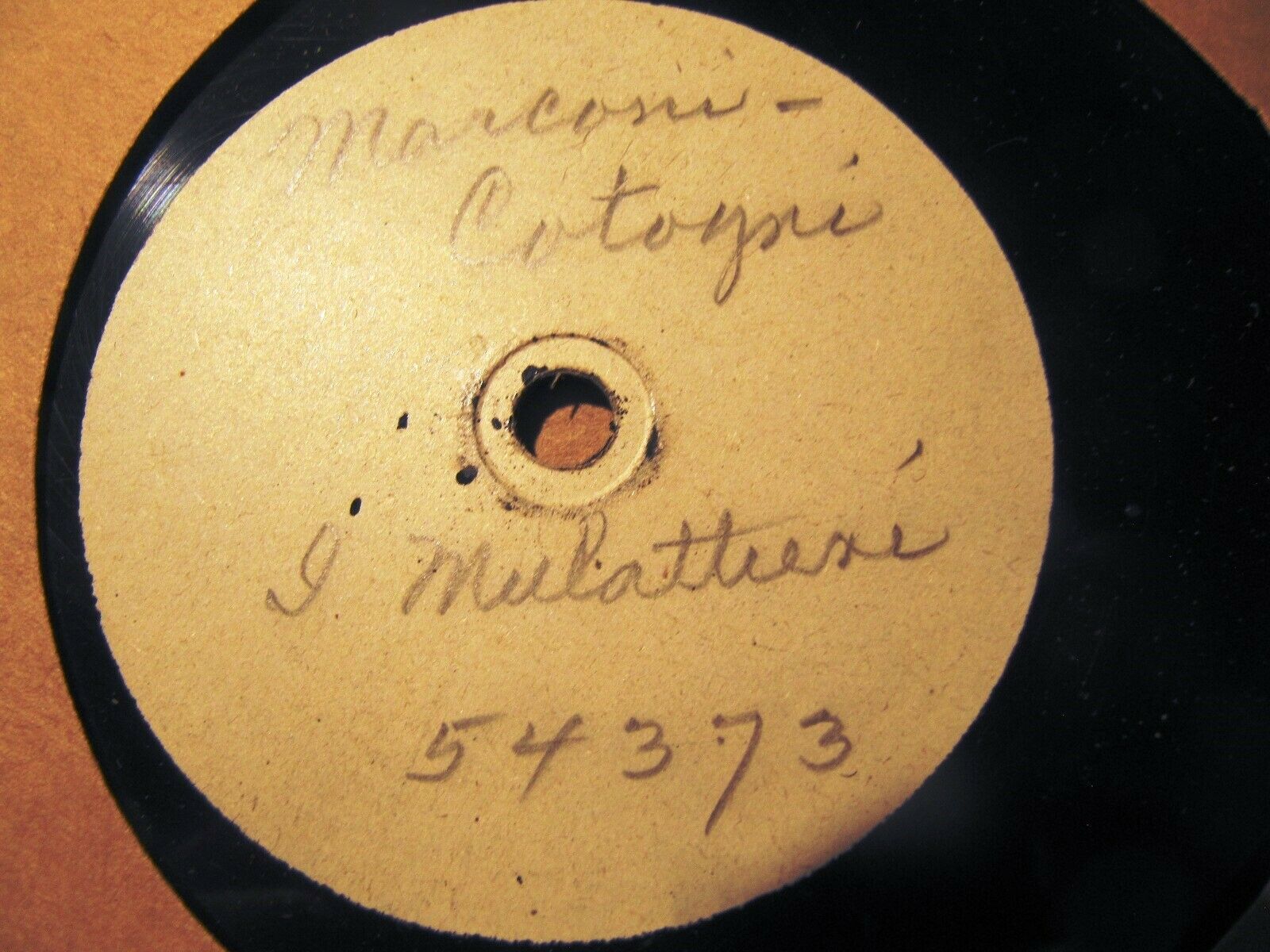
1908 ANTONIO COTOGNI ONLY RECORD Francesco Marconi I Mulattieri Masini
$
250


Favourite Auctions
To save auctions to your favourites, please login
If you don't have an account, please register
Description
A series of great early Opera performances: From 1902 G&Ts to 40s wartime German records:
Students from the Accademia di Santa Cecilia on a trip to Frascati, June 18, 1914. Antonio Cotogni (center row, center), Beniamino Gigli (top row, right), Enrico Rosati (seated in chair, 2nd from right), Romeo Rossi (far left), Ugo Donarelli behind Cotogni, Luigi Ricci (behind and to the left of Cotogni).
Francesco Marconi in a duet with his famous teacher Cotogni, who is legendary for training some of the greatest 20th century voices: Gigli, Lauri-Volpi, Benvenuto Franci, and quite a good many of them.
This is the only known recording of Antonio Cotogni
This is a comic Italian dialect piece, with plenty of comic-rustic verve w piano
Gramophone, Milano May 1908
11180½b I mulattieri (Masini) (w. Cotogni) 54373
Masini's comic mule drivers' duet, "I mulattieri".
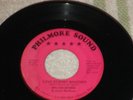
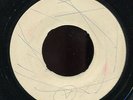
White label pressing with hand written credits. No further markings, no matrix number 10 " 78 rpm record
Condition:
EXCELLENT close to pristine, plays E+ EXCEPTIONALLY QUIETA CHOICE COPY
Antonio "Toto" Cotogni (Italian pronunciation: [an't??njo 't??to ko'to??i]; 1 August 1831 – 15 October 1918) was an Italian baritone of the first magnitude. Regarded internationally as being one of the greatest male opera singers of the 19th century, he was particularly admired by the composer Giuseppe Verdi. Cotogni forged an important second career as a singing teacher after his retirement from the stage in 1894.
Early years and education
Antonio Cotogni was born in Rome to Agata Fazzini and Raffaele Cotogni, who managed a small majolica plant. He had four siblings: sister Giuditta (who remained unmarried and lived in the family household); brothers Francesco, Andrea (who owned a meat packing business), and Gaspare (later mayor of Melara).[1]
After some initial studies at the Hospice of San Michele, he studied music theory at Santa Maria Maggiore under Fontemaggi. Soon after, he began working with Achille Faldi on the study of singing itself. Under his guidance, Cotogni made his first public ventures into solo singing but only in the principal churches of Rome and in small summer music festivals in the small towns of the province, such as Anagni, Valmontone, Subisco, Velletri, and Viterbo.
Early on, Cotogni worked part-time in a majolica plant and did not care much for theater. He had no pretensions for assuming a career there and was content to remain a church singer. He won his first success in 1851 singing Salvatore Capocci's oratorio Il martirio di Sant'Eustachio at the church of Santa Maria in Vallicella.[2]
About his training prior to his Italian stage debut, Cotogni told a former student:
"For the first year I sang nothing but scales. In the second year, vocal exercises and simple songs. Third year, training in operatic music, chiefly solos. Fourth year, ensembles, duets, trios, etc. Fifth year, training in scenic action, mostly in front of a looking-glass." This may be to a certain extent too rigid a description, but the fact remains that, as Cotogni said, his master considered him fit for the stage when there was not a single opera in the current repertoire which he did not know backwards, and when, as he reproachfully added every time I tried to find an excuse for missing a top note, he could be awakened at 3 a.m. and made to give an A-flat mezza voce. Cotogni sang on the stage for over forty years.[3]
—?The Gramophone, November 1924, The Gramophone, Volume 2
Operatic career
Debut
In 1852, after much insistence from Faldi and castrato Domenico Mustafà, among others, he agreed to sign a contract for his debut at Rome's Teatro Metastasio, as Belcore in L'elisir d'amore. For the next year, he did not sing in public at all but rather studied assiduously with Faldi to build his repertoire. After an initial contract at Spoleto for Il trovatore and Maria di Rohan, he began to pick up consistent work in the Italian regional operatic circuit: Lanciano for Trovatore, Rigoletto, and Maria di Rohan; Orvieto for I masnadieri; Lucrezia Borgia in several cities; I puritani at Perugia.
In the spring of 1857, he was signed by the impresario Jacovacci for Lucia di Lammermoor and Gemma di Vergy at Rome's Teatro Argentina. In September and October of that year, he performed I due Foscari and Luisa Strozzi at Teatro Rossini in Turin. It was then that he met the soprano Maria Ballerini. They married the next year but never had any children together.[2]:26
Following that, Cotogni was engaged for Foscari and La traviata at Asti and then Cuneo, the Teatro Rossini again, Zara, in Genova, and at Turin for the opening of the new Teatro Alfieri. There he was asked by the impresario Scalaberni to take the place of the famous baritone Felice Varesi in an operatic company being formed for the theater in Nice. During his time in Nice, Cotogni studied the role of Don Giovanni with his predecessor, Italian baritone Antonio Tamburini, who had left the stage in 1855.
Breakthrough
The turning point in Cotogni's career came in late 1858. As soon as he arrived in Nice for rehearsals in October, he began to feel an air of contempt for his presence from everyone from the theater to public restaurants and cafés. Those who knew and loved Varesi felt that Cotogni, an virtually unknown singer, had been hastily and unfairly chosen to replace him. The first role he was engaged to sing was of Antonio in Gaetano Donizetti's Linda di Chamounix in Nice,[4] where the audience greeted him with noises and whistling before he had even opened his mouth. This same audience fell silent during Antonio's opening aria "Ambo nati in queste valle" and gave him a unanimous, colossal applause after the cadenza, demanding a bis.[2]:27–28 That performance assured his place on the scene and revealed him to be an absolute master of his art—technically, stylistically, and dramatically. Consequently, this became one of Cotogni's signature roles, one by which he made great impressions on all the great theaters of Europe and even the most sullen critics. In Nice, he followed Linda with Gemma di Vergy, Rigoletto, La favorita, Traviata, Trovatore, Don Pasquale, Roberto Devereux, Don Sebastiano, and Il barbiere di Siviglia.
He sang with enormous success over the next year—I lombardi, Rossini's Otello, and Nabucco in Viterbo; again at Nice for Lucia di Lammermoor, Ernani, Trovatore, and Maria di Rohan; and at Barcelona's Teatro Principal for Saffo, Traviata, Attila, Gemma, Barbiere, and Trovatore. By October 1860, Cotogni had sung in 21 theaters, and it was at this point that he reached La Scala, Milan, debuting there in the role of Giovanni Bandino in Bottesini's L'assedio di Firenze. Cotogni had been nervous about this debuting, doubting his ability to do it justice and doubting the power of his voice to be heard in the theater. The reviews of the debut were encouraging, but one or two critics mentioned a certain tremulousness and constriction in his high notes. But Cotogni regained his composure after the premiere, and won over the Milan public with his other roles that season—William Tell, Peri's Vittor Pisani, Rodolfo in La sonnambula, and Ezio in Attila.
During the ensuing decades, he also appeared at the leading opera houses in Madrid, Lisbon, Paris, London, Moscow, and Saint Petersburg. He became enormously popular with London audiences, performing at the Royal Opera House, Covent Garden, from 1867 to 1889. He sang at Saint Petersburg in 26 successive seasons.[5]
It was in 1894 at Saint Petersburg that he gave his last operatic stage performance, in Donizetti's Don Pasquale. While Cotogni had spent his career singing the opera's baritone role of Dr. Malatesta, the younger baritone Mattia Battistini was now taking over many of the Cotogni's old roles. Nevertheless, Battistini requested Cotogni to honor the company by joining them in one final performance, only this time asking that he sing the lead comic bass role of Don Pasquale, which Cotogni obliged.[2]:69–70
Voice teacher
Students from the Accademia di Santa Cecilia on a trip to Frascati, June 18, 1914. Antonio Cotogni (center row, center), Beniamino Gigli (top row, right), Enrico Rosati (seated in chair, 2nd from right), Romeo Rossi (far left), Ugo Donarelli behind Cotogni, Luigi Ricci (behind and to the left of Cotogni).
In retirement, Cotogni became one of the most celebrated vocal teachers in history. At the invitation of Anton Rubinstein, he taught at Saint Petersburg Conservatory (where incidentally he had Sergei Diaghilev as a student)[6] from 1894–1898, but he had to abandon this post in consequence of a serious illness,[5] subsequently taking up an appointment in 1899 as a professor at the Accademia di Santa Cecilia in Rome, where his assistant was Enrico Rosati,[7] who was later to become teacher to Beniamino Gigli.
The qualities that made Cotogni revered and beloved in his career on the stage also made him an exceptional teacher, one who went out of his way for his students to give them what they needed musically, artistically, and often materially.[note 1]
During this time, twelve-year-old Luigi Ricci (who would later become a vocal coach) began accompanying voice lessons given by Cotogni, who had performed several of Verdi's operas under the composer's supervision. At this early age, Ricci began taking meticulous notes on traditions that Cotogni passed on to him from his own work with Verdi and other 19th century composers and conductors information about elements that had been changed in rehearsal and practice but had never been notated officially, as well as traditions of variations and cadenza begun by various singers from the past century. Ricci continued his copious note taking throughout his life and eventually compiled these into a four-part collection entitled Variazioni-cadenze tradizioni per canto (two volumes and two appendices published by Casa Ricordi, 1963).[9]
Cotogni died of old age in Rome less than a month prior to the 1918 armistice that ended World War I.
price rating