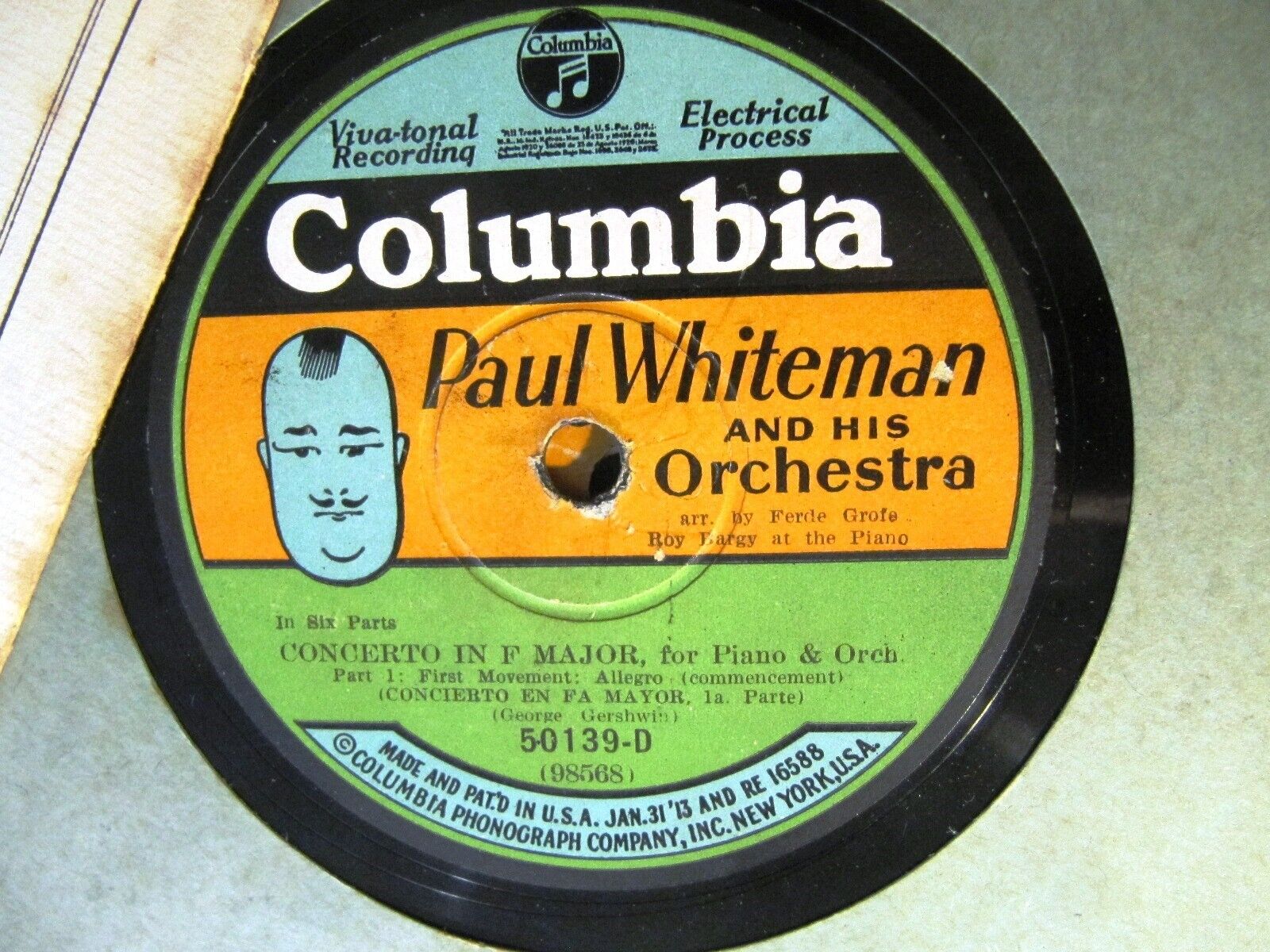
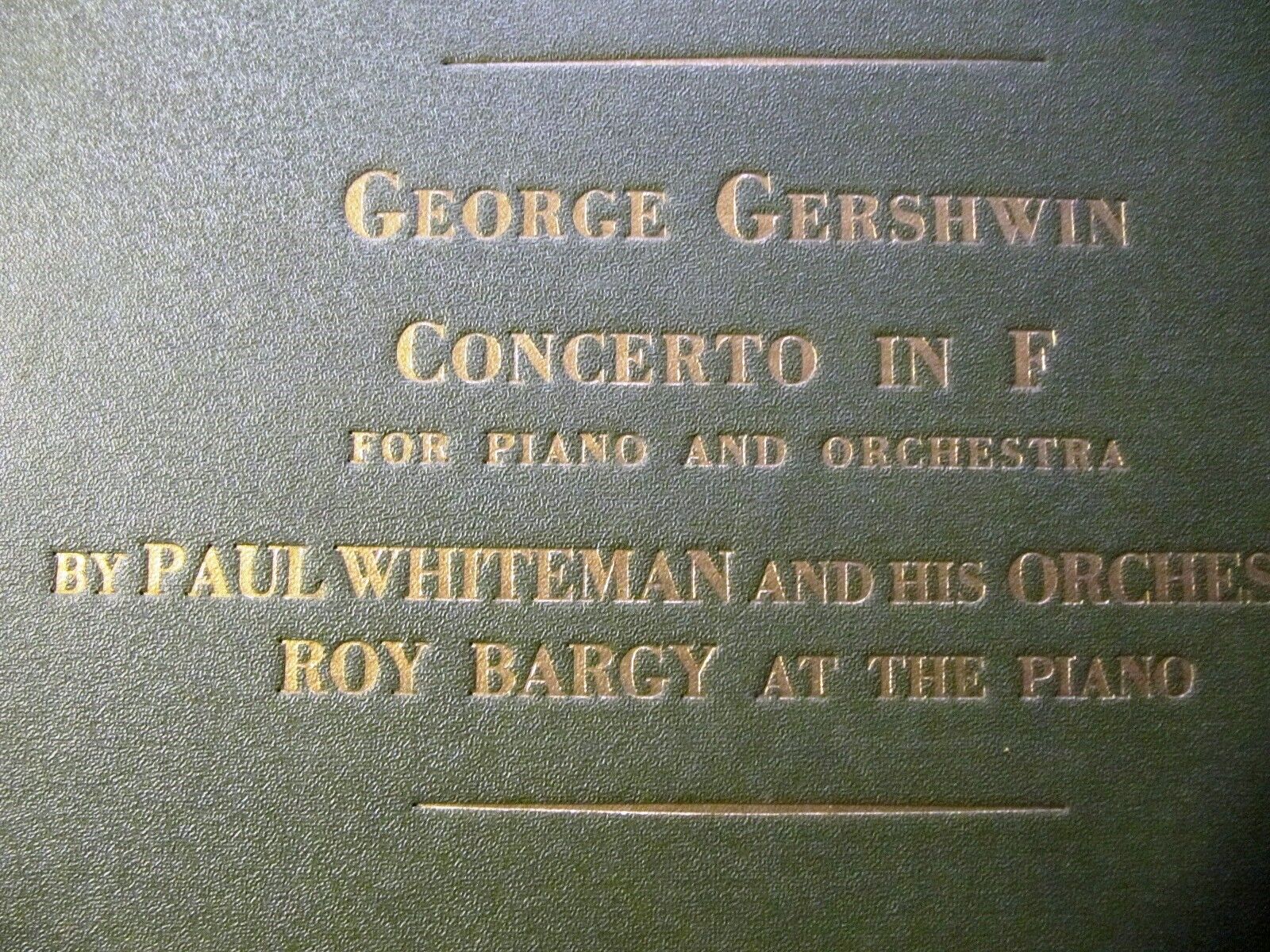
1st REC 1928 George GERSHWIN Concerto in F Roy Bargy Paul Whiteman Orc Columbia
$
200
Favourite Auctions
To save auctions to your favourites, please login
If you don't have an account, please register
Description
A series of great JAZZ and Swing Records from early Ragtime to Beb-Bop on 78 rpm Victrola Records
Click this link for more great Jazz and Vocal Records in my other listings!
:
Creator First recording of GEORGE GERSHWIN s Famous PIANO CONCERTO in F
The first recording was in 1928 by Paul Whiteman and his Concert Orchestra, with Roy Bargy at the piano, of an arrangement by Ferde GrofT, for Columbia Records.
Paul Whiteman and his Band, soloist ROY BARGY, cornet solo by BIX BEIDERBECKE
90- September 15, 1928 COLUMBIA
Columbia, New York
PAUL WHITEMAN AND HIS ORCHESTRA
Charles Margulis, Harry Goldfield, Eddie Pinder (tp); Bix Beiderbecke (c); Boyce Cullen, Wilbur Hall, Bill Rank, Jack Fulton (tb); Frank Trumbauer, Chester Hazlett, Irving Friedman, Rube Crozier, Roy Maier, Charles Strickfaden (reeds); Kurt Dieterle, Matty Malneck, Mischa Russell, John Bouman, Charles Gaylord, Mario Perry (vln); Roy Bargy (p); Mike Pingitore (bj); Mike Trafficante (sb); Min Leibrook (tu); George Marsh (perc); Lennie Hayton (cel)
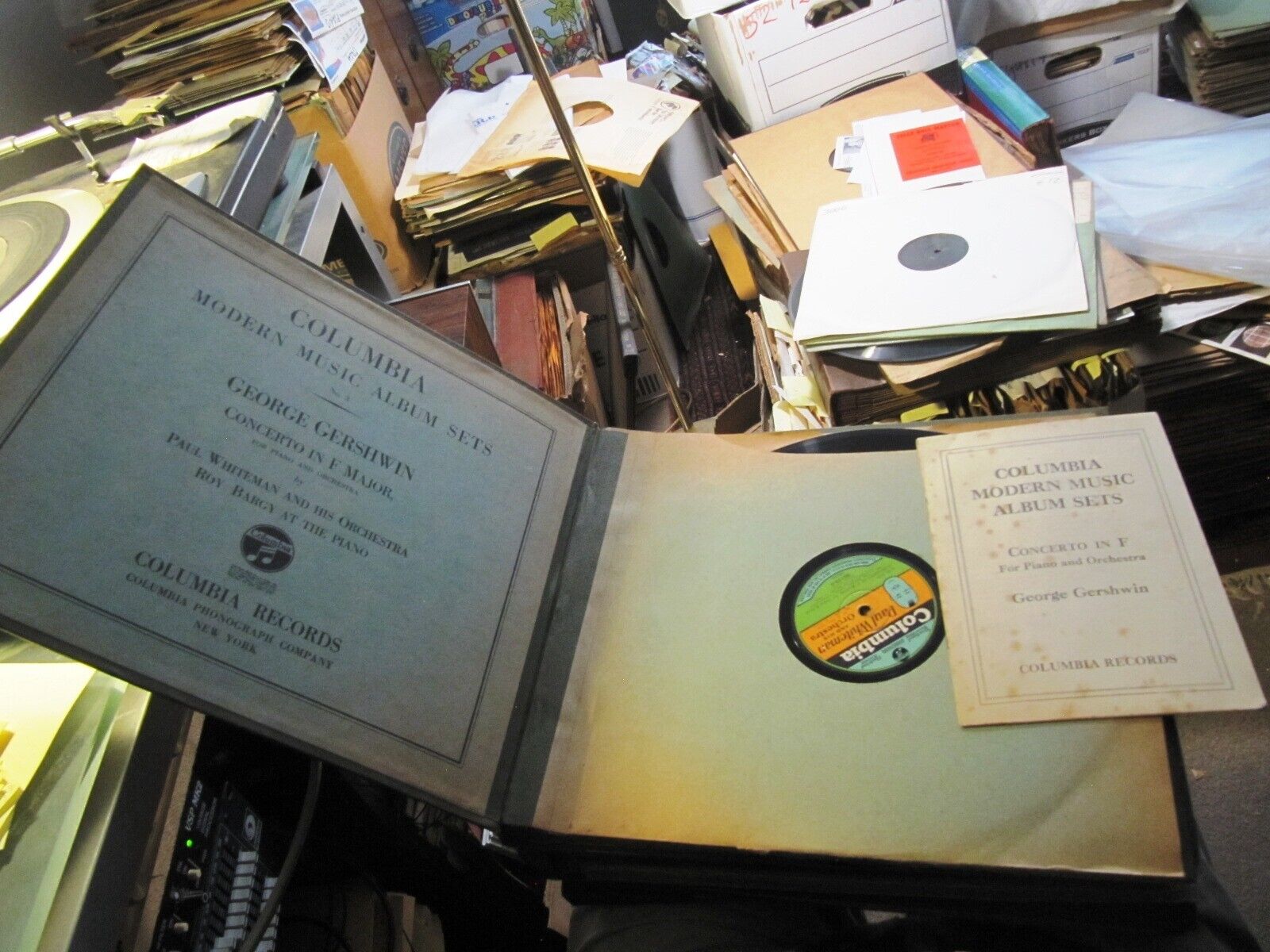
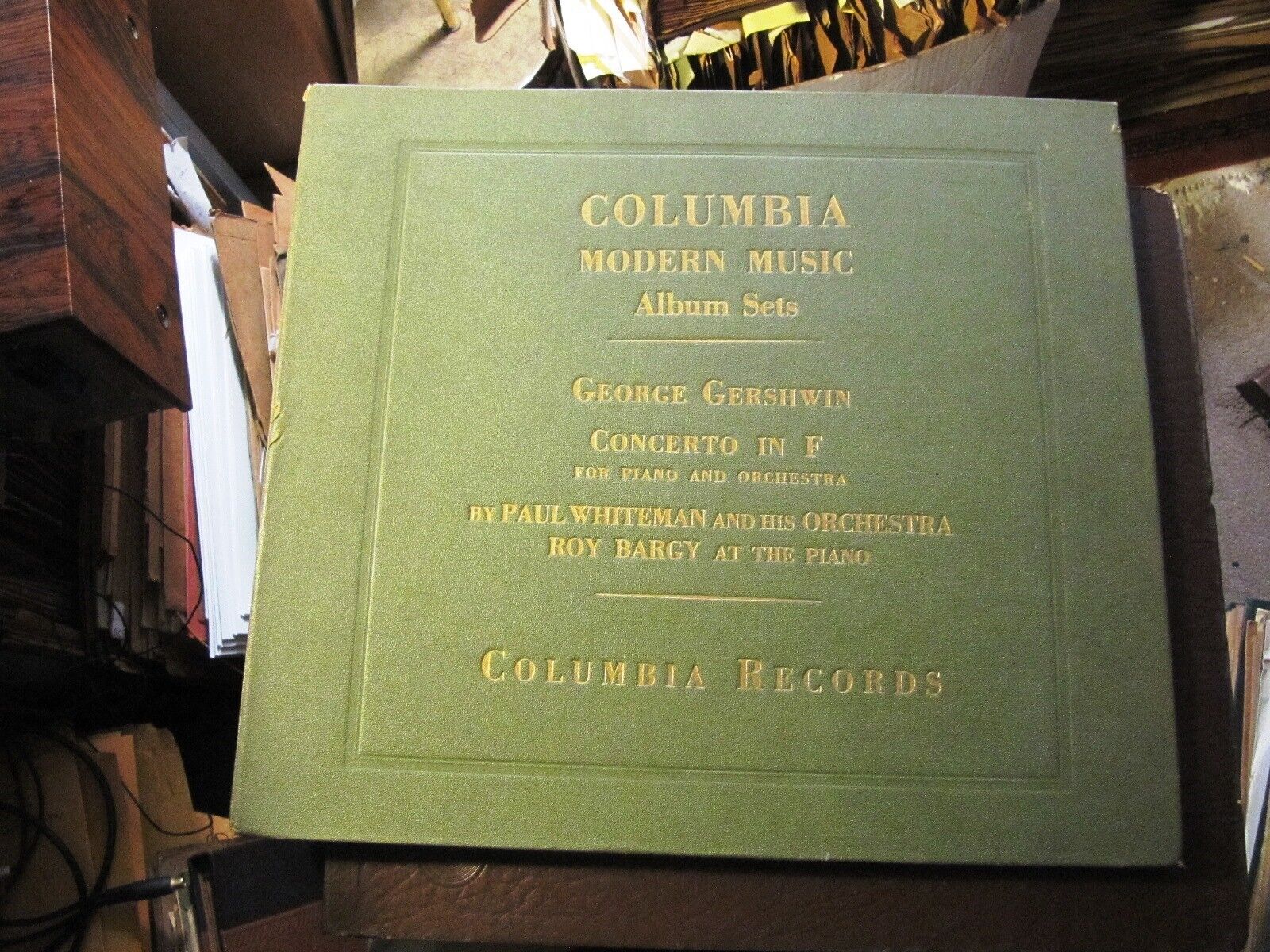
Paul Whiteman And His Orchestra, Roy Bargy – Concerto In F
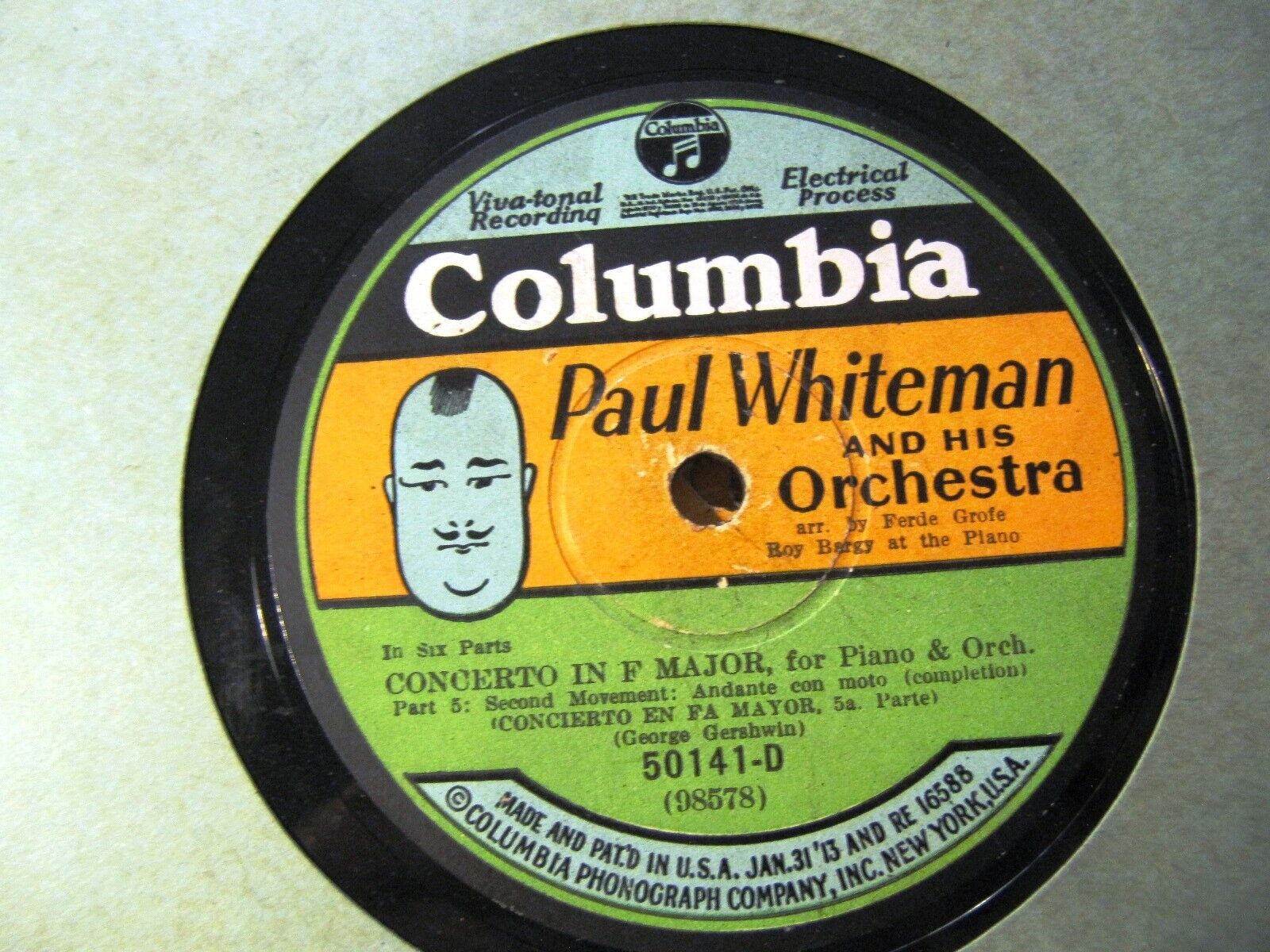
Label: Columbia 50139-D, 50140-D, 50141-D
Columbia Masterworks Modern Music Series Album #3
Format:
3 x Shellac, 12", 78 RPM, Album
Country: US
Released: 1929
Genre: Jazz, Classical
Style: Modern
Concerto In F Major, For Piano & Orch.
Arranged By – Ferde Grofé
Piano – Roy Bargy
Written-By – George Gershwin
A Part 1: First Movement: Allegro (Commencement)
B Part 2: First Movement: Allegro (Continuation)
C Part 3: First Movement: Allegro (Completion)
D Part 4: Second Movement: Andante Con Moto (First Half)
E Part 5: Second Movement: Andante Con Moto (Completion)
F Part 6: Finale: Allegro Con Brio
Record Company – Columbia Phonograph Company, Inc.
First recording of Gershwin's "Concerto in F", arranged by Ferde Grofé for Paul Whiteman's orchestra (Gershwin's original orchestration was for symphony orchestra).
Columbia Masterworks Modern Music Series Album #3
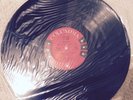
Green album book with Paul Whiteman "Potato Head" picture labels. Booklet with notes on composition and artists.
Recorded in September/October 1928, New York, NY.
Recordings were offered with two different sets of record catalog numbers:
7170-M, 7171-M, 7172-M
50139-D, 50140-D, 50141-D
Original FIRST Issue Columbia Potatohead Label Complete 3x12" 78 rpm records 50139-41M w orig album and booklet
Condition:
EXCELLENT close to PRISTINE faint scuffs, plays EXCEPTIONALLY QUIET, album exterior close to new, tiny rubbing top and bottom of spine, paper sleeves splits at bottom nicely repaired, booklet has light foxing.
Concerto in F is a composition by George Gershwin for solo piano and orchestra which is closer in form to a traditional concerto than the earlier jazz-influenced Rhapsody in Blue. It was written in 1925 on a commission from the conductor and director Walter Damrosch.
Genesis of the concerto
Damrosch had been present at the February 12, 1924 concert arranged and conducted by Paul Whiteman at Aeolian Hall titled An Experiment in Modern Music which became famous for the premiere of Gershwin's Rhapsody in Blue, for which the composer performed the piano solo. The day after the concert, Damrosch contacted Gershwin to commission from him a full-scale piano concerto for the New York Symphony Orchestra, closer in form to a classical concerto and orchestrated by the composer. Although Gershwin would later receive formal training and lessons from influential figures like Henry Cowell, Wallingford Riegger and Arnold Schoenberg in advanced composition, harmony and orchestration, in 1925 Gershwin, without such training and a deadline to complete the work, bought books on theory, concerto form and orchestration and taught himself the skills needed. Because of contractual obligations for three different Broadway musicals, he was not able to begin sketching ideas until May of 1925. He began the two-piano score on July 22 after returning from a trip to London, and the original drafts were entitled New York Concerto. The first movement was written in July, the second in August, and the third in September, much of the work being done in a practice shack at the Chautauqua Institution. Gershwin completed the full orchestrations on November 10 (this is supposedly the first work that he ever orchestrated).
Gershwin hired a 60-piece orchestra to run through his first draft in November of 1925. Damrosch attended and gave Gershwin advice, and he thereafter made a few cuts and revisions. The premiere performance was on 3 December 1925 in New York's Carnegie Hall by the New York Symphony Orchestra with Damrosch conducting (three years later the orchestra would merge with the Philharmonic Symphony Society into the now-famous New York Philharmonic Orchestra, and one of the new orchestra's first projects was the commission and December 1928 premiere of Gershwin's next symphonic work An American in Paris) and Gershwin playing the piano solo. The concert was sold out and the concerto was very well received by the general public. However, the reviews were mixed with many critics unable to classify it as jazz or classical. Indeed, there was a great variety of opinion among Gershwin's contemporaries; Igor Stravinsky thought the work was one of genius, whereas Sergei Prokofiev disliked it intensely.
The Concerto in F shows considerable development in Gershwin's compositional technique namely because he orchestrated the entire work himself, unlike the Rhapsody in Blue which was done by Ferde GrofT, the orchestrator for Paul Whiteman's orchestra. The English composer William Walton commented that he adored Gershwin's orchestration of the concerto, he himself being a famous orchestrator. Gershwin scored his concerto for 2 flutes and a piccolo, 2 oboes and an English horn, 2 B flat clarinets and a B flat bass clarinet, 2 bassoons, 4 French horns in F, 3 B flat trumpets, 3 trombones and a tuba, 3 timpani - 32" , 29" and 26" (one player), 3 percussionists (first player: bass drum, bells, xylophone; second player: snare drum periodically muffled and with regular and brush sticks, wood block, Whip (instrument); third player: crash cymbals, suspended cymbal with sticks, triangle and gong), solo piano and strings.
[edit] Form
The concerto is in the traditional three movements:
Allegro
Adagio - Andante con moto
Allegro agitato
There are strong thematic links between the outer movements, while the second movement is the most obviously jazz-influenced. There exists in each movement a very subtle structural integrity that is not immediately apparent to the listener or even the player, but the structure rivals that of any classical or romantic composer.
The first movement begins with blasts from the timpani, introducing some of the main thematic material. After four pages of orchestral introduction, the piano comes in to play a jazzy solo section which introduces yet another new melody that will be seen throughout the movement. From here, the music alternates between grandiose and skittish, between broad and delicately soft. The climax is reached at a section marked Grandioso, with the orchestra blaring out the piano's original melody, and the piano playing a large triplet figure in support. There is a piano cadenza of a quick triplet ostinato that has been heard before in the piece, which leades to the final pages; speeding octaves and chords, capitulating in a large run of the triplet ostinato up the keyboard along an F Major 6 chord, which brings the movement to a close.
The second movement is the blues, with a slow beginning, where a solo trumpet plays a slow blues type melody; a faster piano part, and a gradual build until near the end. When the full orchestra and piano are playing loud, only a few bars to the end, and it seems the piece will come to a crashing end, everything pulls back to the original quiet melody and ends peacefully.
The final movement is a pulsating, energetic finale that features the dominant seventh melody and the main melody of syncopated eighth notes and triplets from the first movement, the blues melody from the second movement, and a melody of its own. One section, at the Grandioso, is exactly the same as the corresponding section in the first movement, but this time, the scales at the end lead back into the pulsing patterns from the beginning. The same motif that closed the first movement is heard in octaves now, a quick run of octaves up and down an F Major 6 chord, bringing the work to a blasting finish.
[edit] Notable Recordings
Although somewhat less popular than many other piano concertos, a number of recordings by well known artists have been made. The first was in 1928 by Paul Whiteman and his Concert Orchestra, with Roy Bargy at the piano, of an arrangement by Ferde GrofT, for Columbia Records. Others include:
Lazar Berman and Gennady Rozhdestvensky
Garrick Ohlsson and Michael Tilson Thomas
Philippe Entremont and Eugene Ormandy
HTlFne Grimaud and David Zinman
Werner Haas and Edo de Waart
Jerome Lowenthal and Maurice Abravanel
Bonnie Gritton and Susan Duehlmeire (for two pianos)
The most recent release (May 8, 2007) features Jon Nakamatsu with Jeff Tyzik and the Rochester Philharmonic Orchestra.
Pianist Roy Bargy got his professional start accompanying films in silent movie houses in Toledo, Ohio. In 1919 he moved to Chicago and was hired by Charley Straight at the Imperial Piano Roll Company. Bargy's job was to edit piano rolls and to write his own ragtime and novelty pieces for publication on piano roll. Bargy made his first record with Charley Straight and Paul Biese in 1919 as the Imperial Three. In 1921 Bargy left Imperial and became the musical director of the Benson Orchestra of Chicago until 1922. He joined the Isham Jones and his Orchestra sometime after that. He took over the piano chair in the Paul Whiteman Orchestra in 1928 and eventually became second in command within the band. Bargy continued to work with Whiteman until 1940. In 1940 Bargy was very active in radio as a conductor. He led bands for the studio orchestras of Lanny Ross, Xavier Cugat and Gerry Moore. In 1943 he was hired as Jimmy Durante's musical director and stayed with Jimmy for the next twenty years.
Paul Whiteman and his Orchestra was the most popular band of the 1920s and represented the apex of jazz to the general public. Over the years, critics and some musicians like Eddie Condon, have not had kind words to say about the band and have tended to represent Whiteman as a bad influence on the music in his attempts to "Make a lady out of Jazz". The title of "The King Of Jazz" which Whiteman was billed as seems somewhat politically incorrect these days, but in the 1920s he dominated the scene and hired the best White hot musicians like Bix Beiderbecke, Frankie Trumbauer, Eddie Lang, Joe Venuti, Jack Teagarden and many more to play in his band. Paul Whiteman greatly enriched American music by commissioning George Gershwin to write Rhapsody In Blue which became his orchestra's signature tune. He also "discovered" Bing Crosby and featured him in Paul Whiteman's Rhythm Boys, and gave the career of Hoagy Carmichael a boost, by recording several of Hoagy's songs early in his career. Jazz singer Mildred Bailey also rose to fame in the orchestra in the 1930s. So, what was it that has led Whiteman's name to be dragged through the mud in the annals of Jazz history? Paul Whiteman being the most popular Jazz band leader of the Jazz Age is blamed for the racism in America that denied African-American musicians the credit that they deserved in the history of Jazz. If there is such a thing as the "King of Jazz" the title belongs to Louis Armstrong, although that may not have been clear to most people in the 1920s. Whiteman is also criticized for not hiring African-American musicians to play in his band, but this argument ignores the commercial realities of the period. Paul Whiteman was clearly not a racist. He commissioned Duke Ellington to write for his modern music series, recorded with Paul Robeson and Billie Holiday, and hired Don Redman as an arranger in the 1930s and was generally held in high regards as a person by musicians both Black and White. The worst that can be leveled at Whiteman was that he was a businessman. Despite that, Whiteman made some very good Jazz records in the 1920s such as San, Washboard Blues, Mississippi Mud, Whiteman Stomp, Wang Wang Blues and I'm Coming, Virginia. His interest in making symphonic Jazz led the way for generations of Jazz musicians as diverse as Miles Davis, Gil Evans, The Modern Jazz Quartet and Winton Marsalis, who may not directly cite Whiteman as an influence, but have certainly walked down the path that he blazed at points in their careers.
price rating
![HOPETON LINDO - THE ASSASSINATOR / DUB // SUPER? - COPACET /DUB [kiwi012]](https://www.popsike.net/php/thumbnail.php?url=https://www.popsike.pics/pix/20190115/173741808222.jpg)