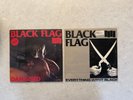
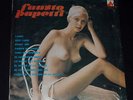
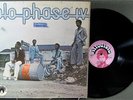
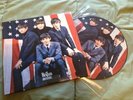
6x Rock'n'Roll Garage LINK WRAY Cramps Gitogito Hustler
€
46
$
52


Favourite Auctions
To save auctions to your favourites, please login
If you don't have an account, please register
Description
Achtung! Ebay zwingt mich, kostenlos zu versenden, was ich für eine Frechheit halte. Ich versende per Hermes und das für 4 Euro inkl. Versand in einem stabilen Plattenpäckchen. Bieten Sie daher nicht, wenn Sie damit nicht einverstanden sind. Danke!
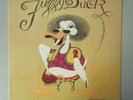
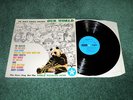
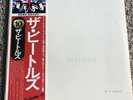
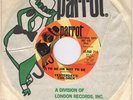
6 LP's von Link Wray, Cramps, Gitogito Hustler, Charlie Feathers und Dale Hawkins
Alle LP's bis auf die Cramps-LP sind jeweils ein, zweimal gehört worden, daher...
Vinyl: m- // Cover: m-; die Cramps LP ist Cover: m- // Vinyl: vg+
Cramps: A Date With Elvis
After Psychedelic Jungle, the Cramps experienced personnel and record label difficulties; they would not release another studio album until this one, four years later. Gone here are the tinny sound quality and horror-flick-based lyrics of prior releases, replaced by clearer sonics and an often hilarious obsession with sex (examples of the latter can be found on "What's Inside a Girl?," "The Hot Pearl Snatch," "Cornfed Dames," "(Hot Pool of) Womanneed," "How Far Can Too Far Go?," and the uproarious single "Can Your Pussy Do the Dog?"). There are numerous sly references in the verses to high and low cultural icons, including "Shake it one time for me" (a line from Jerry Lee Lewis' "Whole Lotta Shakin' Goin' On"), "I'll be dancing through the flames/Like a devil in disguise" (a nod to the Elvis Presley hit), and "Now there's more things in Tennessee/Than is dreamed of in your philosophy" (a paraphrase of a line from Shakespeare's Hamlet). Most of the songs here are in various rockabilly-derived styles featuring either garage rock fuzz or Duane Eddy twanging guitar from Poison Ivy. Vocalist Lux Interior is in excellent form here, exhibiting a fair bit of variety within his usual 1950s-derived approach. "Kizmiaz" is unique in the band's oeuvre, being a smarmy parody of 1960s hippie feel-good music; Ivy joins Interior on vocals here. Intonation is off in a few numbers (notably on "Kizmiaz," "The Hot Pearl Snatch," and "Can Your Pussy Do the Dog?"), but this is not enough to detract from the overall excellence. This rollicking and energetic platter in particular is the equal of any in their canon, and an essential listen.
Gitogito Hustler: Love & Roll
The all-girl Japanese pop-punk act Gitogito Hustler formed in 1995 in Kyoto, Japan. Later relocating to Tokyo, the group comprised Mitsuko (guitar), Tae (bass), and sisters Yago (vocals/guitar) and Fusa (drums). Starting up their own label in April 2002 called Candy Poison, they released the Gitogito.org EP in May 2003 and played a slot at October's CMJ Festival in New York. Their full-length, Happy Today, appeared the next month. Tour dates continued into the next year, both in Japan and around the United States. San Francisco-based Gearhead Records issued the Wonderful 7" in January 2005, and Gitogito Hustler performed at the label's South by Southwest showcase that March. Another EP, Gitogito Galore, surfaced later in the year before the gals hit the road for a September U.S. tour with the Spunks. Back in the United States the following spring, another tour with the Spunks took place as Love and Roll, their debut U.S. full-length, dropped in April 2006.
Link Wray & The Raymen: Edsel Records
Link Wray may never get into the Rock & Roll Hall of Fame, but his contribution to the language of rockin' guitar would still be a major one, even if he had never walked into another studio after cutting "Rumble." Quite simply, Link Wray invented the power chord, the major modus operandi of modern rock guitarists. Listen to any of the tracks he recorded between that landmark instrumental in 1958 through his Swan recordings in the early '60s and you'll hear the blueprints for heavy metal, thrash, you name it. Though rock historians always like to draw a nice, clean line between the distorted electric guitar work that fuels early blues records to the late-'60s Hendrix-Clapton-Beck-Page-Townshend mob, with no stops in between, a quick spin of any of the sides Wray recorded during his golden decade punches holes in that theory right quick. If a direct line can be traced forward from a black blues musician crankin' up his amp and playing with a ton of violence and aggression to a young white guy doing a mutated form of same, the line points straight to Link Wray, no contest. Pete Townshend summed it up for more guitarists than he probably realized when he said, "He is the king; if it hadn't been for Link Wray and "'Rumble,'" I would have never picked up a guitar."
Everything that was handed down to today's current crop of headbangers from the likes of Led Zeppelin and the Who can be traced back to the guy from Dunn, NC, who started out in 1955 recording for Starday as a member of Lucky Wray & the Palomino Ranch Hands. You see, back in the early '50s, it was a different ball game altogether. Rock & roll hadn't become a national event in the United States yet, and if you were young and white and wanted to be in the music business, you had two avenues for possible career moves. You could be a pop-mush crooner like Perry Como or a hillbilly singer like the late Hank Williams, and that was about it. With country music all around him as a youth in North Carolina, the choice was obvious; Wray joined forces with his brothers Vernon and Doug, forming Lucky Wray & the Lazy Pine Wranglers, later changing the band name to the spiffier-sounding Palomino Ranch Hands. By the end of 1955, they had relocated outside of Washington, D.C., and added Shorty Horton on bass. With Link, Horton, and brothers Doug and Vernon ("Lucky," named after his gambling fortunes) handling drums and lead vocals respectively, they fell in with some local songwriters, and the results made it to vinyl as an EP on the local Kay label, with the rest of the sides being leased to Starday Records down in Texas.
But by 1958, the music had changed, and so had Wray's life. With a lung missing from a bout with tuberculosis during his stint in the Korean War, Link was advised by his doctor to let brother Vernon do all the vocalizing. So Link started stretching out more and more on the guitar, coming up with one instrumental after another. By this time, the band had sweated down to a trio, and changed its name to the Ray Men. After a brief flirtation as a teen idol -- changing his name to Ray Vernon -- the third Wray brother became the group's producer/manager. Armed with a 1953 Gibson Les Paul, a dinky Premier amp, an Elvis sneer, and a black leather jacket, Link started playing the local record hops around the D.C. area with disc jockey Milt Grant, who became his de facto manager. One night during a typical set, says Link, "They wanted me to play a stroll. I didn't know any, so I made one up. I made up "'Rumble.'"
"Rumble" was originally issued on Archie Bleyer's Cadence label back in 1958, and Bleyer was ready to pass on it when his daughter expressed excitement for the primitive instrumental, saying it reminded her of the rumble scenes in West Side Story. Bleyer renamed it (what its original title was back then, if any, is now lost to the mists of time), and "Rumble" jumped to number 16 on the national charts, despite the fact that it was banned from the radio in several markets (including New York City), becoming Wray's signature tune to this day. But despite the success and notoriety of "Rumble," it turned out to be Wray's only release on Cadence. Bleyer, under attack for putting out a record that was "promoting teenage gang warfare," wanted to clean Link and the boys up a bit, sending them down to Nashville to cut their next session with the Everly Brothers' production team calling the shots. The Wrays didn't see it that way, so they immediately struck a deal with Epic Records. Link's follow-up to "Rumble" was the pounding, uptempo "Rawhide." The Les Paul had been swapped for a Danelectro Longhorn model (with the longest neck ever manufactured on a production line guitar), its "lipstick tube" pickups making every note of Link's power chords sound like he was strumming with a tin can lid for a pick. The beat and sheer blister of it all was enough to get it up to number 23 on the national charts, and every kid who wore a black leather jacket and owned a hot rod had to have it.
But a pattern was emerging that would continue throughout much of Wray's early career; the powers that be figured that if they could tone him down and dress him up, they'd sell way more records in the bargain. What all these producers and record execs failed to realize was the simplest of truths: if Duane Eddy twanged away for white, teenage America, Link Wray played for juvenile delinquent hoods, plain and simple. By the end of 1960, Wray found himself in the mucho-confining position of recording with full orchestras, doing dreck like "Danny Boy" and "Claire de Lune." But when these gems failed to chart as well, relations with Epic came to a close, and by years' end, Link and Vern formed their own label, Rumble Records.
Rumble's three lone issues included the original version of Wray's next big hit, "Jack the Ripper." If "Rumble" sounded like gang warfare, then "Jack the Ripper" sounded like a high-speed car chase, which is exactly what it became the movie soundtrack for in the Richard Gere version of Breathless. Link's amp was recorded at the end of a hotel staircase for maximum echo effect, while he pumped riffs through it that would become the seeds of a million metal songs. After kicking up noise locally for a couple of years, it was going through another period of disc jockey spins when Swan Records of Philadelphia picked it up and got it nationwide attention. Certainly Wray was at his most prolific during his tenure with Swan, and label president Bernie Binnick gave Link and Vernon pretty much free rein to do what they wanted. Turning the family chicken coop into a crude, three-track studio, the Wray family spent the next decade recording and experimenting with sounds and styles.
At least now they could succeed -- or fail -- on their own terms. Most of these sides were leased out as one-shot deals to a zillion microscopic labels under a variety of names like the Moon Men, the Spiders, the Fender Benders, etc. What fueled this period of maximum creativity is open to debate. A lot of it had to do with the fact that Link and the boys honed their particular brand of rockin' mayhem working some of the grimiest joints on the face of the planet when these tracks were cut. When Swan label chief Binnick was questioned as to how he could issue such wild-ass material, he would smile, throw his hands up in the air and say, "What can you do with an animal like that?"
As the new decade dawned, Link Wray's sound and image were updated for the hippie marketplace. Wray's career fortunes waxed and waned throughout the '70s, a muddle of albums in a laid-back style doing little to enhance his reputation. After a stint backing '70s rockabilly revivalist Robert Gordon, Wray went solo again, taking most of Gordon's band (including drummer Anton Fig) with him. But if the studio sides were a bit uneven, (Wray recorded several albums in the '80s backed by nothing more than a clumsy drum machine), he still could pack a wallop live, and his rare forays on the stages of the world spread the message that rock & roll's original wild guitar man still had plenty of gas left in the tank.
Wray married and moved to Denmark in 1980, recording the stray album for the foreign market, and throughout the 1990s he was still capable of strapping on a guitar and making it sound nastier than anyone in his sixties had a right to. And his back catalog got a lot attention in the '90s when the grunge revolution hit, with several young, hip guitarists citing Wray as an influence, and his early work continued to be reissued under various imprints. He recorded two new albums for Ace Records, Shadowman in 1997 and Barbed Wire in 2000 and toured up until his death in Copenhagen on November 5, 2005.
A1 Dixie Doodle
A2 Ramble
A3 Caroline
A4 Raw-Hide
A5 Right Turn
A6 Golden Strings
A7 Comanche
A8 Hambone
B1 Mary Ann
B2 Rumble Mambo
B3 Ain't That Loving You Baby
B4 Slinky
B5 Hand Clapper
B6 Lillian
B7 Radar
B8 Studio Blues
Link Wray and his Ray Men: Jack The Ripper (on Sundaze)
A1 Mr. Guitar
A2 My Beth
A3 Decon Jones
A4 Steel trap
A5 Cross ties
A6 Jack the ripper
B1 Fat Back
B2 Run Chicken run
B3 Dinosaur
B4 Big Ben
B5 Mash potato Party
B6 Rumble
Charlie Feathers: Jungle Fever
Boasting a generous 20 tracks, Jungle Fever is the best available compilation of Charlie Feathers' original rockabilly recordings; all of his best-known songs are collected here, including "Get With It" and "Tongue-Tied Jill."
Charlie Feathers was many things to many fans of rock and country music. To some, he was a superb country stylist who could take almost any piece of material and stamp it with the full force of his personality. To others, he was one of rockabilly's great pioneers, there at the dawn of Sun Records. And Feathers' stubborn insistence on combining elements of country, raw blues, and bluegrass to make his own version of the rockabilly experience showed him to be one of the genre's most original and enduring artists.
Feathers was born near Slayden, MS, with music all around the sharecropping community he grew up in. After day jobs in Illinois and Texas, Feathers moved to Memphis in 1950, working for a box manufacturer until a bout with spinal meningitis left him hospitalized. Listening to the radio there on a daily basis, he emerged from his stay determined to become a professional singer. By 1954, Feathers was working his way into the confines of Sam Phillips' Memphis Recording Service, with an eye toward getting something released on Sun Records. He filled in whenever and wherever he could, helping with arrangement ideas, even playing spoons on a Miller Sisters session. Demoing songs for steel guitarist Stan Kesler found him getting half credit on the Elvis Sun side "I Forgot to Remember to Forget." Phillips decided to start a local non-union label called Flip to test out new artists, and after pairing Feathers with country session songwriter-musicians Bill Cantrell and Quinton Claunch, released Charlie's first single on that label, the classic "Peepin' Eyes" coupled with "I've Been Deceived." The record kicked enough noise locally to get Feathers transferred to Sun for a second single, but the artist had bigger visions. Although Phillips saw him as "a superb country stylist," Feathers wanted to rock and cut many Sun demo sessions in that style. When Phillips turned a deaf ear to it all, Feathers' impatience led him to Memphis rival Meteor Records, where he waxed the two-sided rockabilly classic "Tongue-Tied Jill" and "Get With It." This single garnered enough Memphis airplay to cement him a deal with King Records, and it is here that the Charlie Feathers as rockabilly legend story begins in earnest. The dozen or so sides he cut as singles for King are the greatest '50s rockabilly tracks to escape the hegemony of the Sun studios, with "One Hand Loose," "Bottle to the Baby," "Everybody's Lovin' My Baby," and "I Can't Hardly Stand It" all becoming classics of the genre. Their territorial success got Feathers on numerous package tours and multiple appearances on Dallas' Big D Jamboree. When the King contract ran out, Feathers continued to record one-off singles of very high musical quality, for a variety of Memphis labels, while stubbornly playing his music for whatever local audience cared to listen.
When the rockabilly revival started up in Europe in the early '70s, Feathers became the first living artist up for deification by collectors. His old 45s suddenly became worth hundreds of dollars, and every interviewer wanted to know why he never really made it big and what his true involvement with Sun consisted of. Feathers embroidered the story with a skewed view of rock & roll history with each retelling, to be sure, but once he picked up his guitar and sang to reinforce his point, the truth came out in his music. Never mind why he didn't make it back in the '50s; he could still deliver the goods now.
With health problems plaguing him from his diabetes and a surgically removed lung, Feathers continued on his own irascible course, recording his first album for a major label in 1991 (Elektra's American Masters series) and continuing to perform and record for his wide European fan base. Truly an American music original, Feathers died August 29, 1998, of complications following a stroke; he was 66.
Dale Hawkins: Oh! Suzy-Q
Louisiana guitarist Dale Hawkins' 1957 hit "Suzy Q," with its crackling bluesy guitar and insistent cowbell, was one of the most exciting early rockabilly singles. Recording for Chess (as one of its few white artists) between 1956 and 1961, Hawkins never quite duplicated its success, either commercially or artistically, but came close enough on a number of occasions to warrant respect as one of the better rockabilly singers. His drawling delivery, sense of humor, affinity for blues, and sharp guitar work (which was actually provided by such ace players as Roy Buchanan, Scotty Moore, and James Burton) are heard to good effect on his 1958 album and a number of non-hit singles. Hawkins went on to become a producer of some note in the 1960s, working with the Five Americans and Bruce Channel. In 1999 he released his first album of new material in 30 years, Wildcat Tamer, on Mystic Records. The impressive Back Down to Louisiana appeared in 2007 from Plumtone Records.
1. Susie-Q
2. Don't Treat Me This Way
3. Juanita
4. Tornado
5. Little Pig
6. Hot Dog
7. Baby Baby
8. Mrs. Mergritory's Daughter
9. Take My Heart
10. Wild, Wild World
11. See You Soon, Baboon
12. Four Letter Word-Rock
Non-EU bidders could pay with Paypal.
Deutschland und EU: Ueberweisung möglich.
Shipping fee:
EU = 14 EURO
World = 24 Euro
Goldmine Standard
The Goldmine Grading System:
Mint (M)
Absolutely perfect in every way - certainly never played, possibly even still sealed. Should be used sparingly as a grade, if at all.
Near Mint (NM or M-)
A nearly perfect record.
The record should show no obvious signs of wear. A 45 RPM or EP sleeve should have no more than the most minor defects, such as almost invisible ring wear or other signs of slight handling. An LP jacket should have no creases, folds, seam-splits or any other noticeable similar defect. No cut-out holes, either. And of course, the same should be true of any inserts, such as posters, lyric sleeves, and the like. Basically, an LP in Near Mint condition looks as if you just got it home and removed the shrink wrap.
Very Good Plus (VG+)
A Very Good Plus record will show some signs that it was played and otherwise handled by a previous owner who took good care of it.
Record surfaces may show some slight signs of wear and may have slight scuffs or very light scratches that don't affect one's listening experience. Slight warps that do not affect the sound are OK. The label may have some ring wear or discoloration, but it should be barely noticeable. The center hole will not have been misshapen by repeated play.
Picture sleeves and LP inner sleeves will have some slight wear, turned-up corners, or a slight seam-split. An LP jacket may have slight signs of wear also and may be marred by a cut-out hole, indentation or corner indicating it was taken out of print or sold at a discount.
In general, if not for a couple of minor things wrong with it, this would be Near Mint. All but the most mint-crazy collectors will find a Very Good Plus record highly acceptable.
Very Good (VG)
Many of the defects found in the VG+ record will be more pronounced in a VG disc. Surface noise will be evident upon playing, especially in soft passages and during a song's intro and fade, but will not overpower the music otherwise. Groove wear will start to be noticeable, as well as light scratches (deep enough to feel with a fingernail) that will affect the sound. Labels will be marred by writing, or have tape [TOL] or stickers [SOL] (or their residue) attached. The same will be true of picture sleeves or LP covers [TOC] or [SOC]. However, it will not have all of these problems at the same time, only two or three of them.
Good (G), Good Plus (G+)
Good does not mean Bad! A record in Good or Good Plus condition can be put on a turntable and will play through without skipping. But it will have significant surface noise and scratches and visible groove wear (on a styrene record, the groove will be starting to turn white). A jacket or sleeve will have seam-splits, especially at the bottom or on the spine. Tape, writing, ring wear or other defects will start to overwhelm the object.
Poor (P), Fair (F)
The record is cracked, badly warped, and won't play through without skipping or repeating. The picture sleeve is water damaged, split on all three seams and heavily marred by wear and writing. The LP jacket barely keeps the LP inside it. Inner sleeves are fully seam split, crinkled, and written upon.
Viele weitere LP's, CD's, Bücher usw. in meinen anderen Auktionen! Jazz, Avantgarde, Rock'n'Roll, Psychobilly, Rockebilly, Garage, Freakbeat, Fuzz, Yé Yé, Punk, Wergo, Elektra Nonesuch, Blue Note usw.
Schönen Dank für Ihr Interesse und viel Vergnügen beim Bieten!
Das hier ist ein Privatverkauf. Mit der Abgabe eines Gebotes erklären Sie sich ausdrücklich damit einverstanden, auf die ihnen gesetzlich zustehende Garantie/Gewährleistung bei Gebrauchtwaren zu verzichten. Keine Rücknahme des Artikels. Bieten Sie bitte nicht, wenn Sie mit dieser Regel nicht einverstanden sind.
price rating