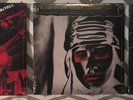
78 QUARTERLY NO.3 PARAMOUNT RECORDS/SKIP JAMES- CLEAN UNREAD M-
$
31



Favourite Auctions
To save auctions to your favourites, please login
If you don't have an account, please register
Description
78 QUARTERLY NO.3-CLEAN UNREAD OLD STORE STOCK M-
After a 22-year hiatus, editor Pete Whelan finally resumed publication of 78 Quarterly in 1990. It was worth the wait. A great deal of newly obtained information about prewar blues and jazz musicians had been gathered since 1968, and the magazine's editor brought back many of the same music researchers whose scholarship graced the pages of the first two issues. Stephen Calt begins his exhaustive history of the legendary Paramount label in "The Anatomy of a 'Race' Label - Part One." Including information about the company's origin as a furniture manufacturer, its executives, and the factors that contributed to its fateful decision to start recording blues, jazz, and black gospel material, this is everything you wanted to know about Paramount but were afraid to ask.
Perhaps the finest of many fine articles, Doug Seroff's "Polk Miller and the Old South Quartette" tells the story of one of the most important but forgotten artists in the history of American music. You can forget about everyone from Dock Boggs to Elvis Presley who is mentioned as the first significant white performer to be influenced by black musicians. As far as recorded music goes, that history starts with Polk Miller. A well-to-do pharmacist and Confederate Civil War veteran, Miller grew up on a Virginia plantation where he fell under the spell of his father's slaves. Not only did he learn to play banjo from them, but he also prided himself in being able to speak and sing in a perceived authentic black dialect. His passion for African-American culture and the antebellum South eventually led him to become a professional musician and entertainer and to recruit four black harmony singers, dubbed the Old South Quartette, as his backup group. Miller was especially remarkable in that he did not perform any of his material in blackface. Touring from 1893 until Miller's death in 1913, his "Old Times in the South" show was a success throughout the country.
Additionally, this issue features shorter articles such as Richard Spottswood's piece on ethnic records from the 1920s and 1930s, a summary of the only known biographical details about Mississippi bluesman William Harris by Gayle Dean Wardlow, and the first part of Tom Tsotsi's history of Gennett Records.
And finally, 78 Quarterly No. 3 includes a reminiscence of pioneering collector James McKune by Henry Renard, a list of the rarest 78s A to B, a fascinating transcription of Skip James' thoughts on race relations (parts of which were incorporated into the book I'd Rather be the Devil) courtesy of Stephen Calt, and an obituary for Yazoo Records founder Nick Pearls.
price rating




![METALLICA // (Black Album) Deluxe Vinyl Box Set 2021 [VINYL, NEW] SEALED](https://www.popsike.net/php/thumbnail.php?url=https://www.popsike.pics/pix/20210916/294400609731.jpg)