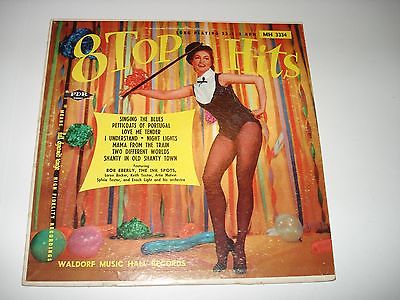
8 Top Hits 10" EP 1956 Waldorf Music MH 3334 Ink Spots Julie Newmar VG+ Cond
$
15


Favourite Auctions
To save auctions to your favourites, please login
If you don't have an account, please register
Description
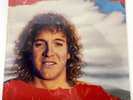
This record is almost 60 years old. It is a functional piece of American music history. It feature Julie Newmar as the model on the cover
It is in VERY GOOD PLUS Condition. It will look great in your collection and sound great on your player, or make a fun gift
You want it
You deserve it
It will make you happy
It’s only TWENTY BUCKS and that includes shipping
The sooner you click on “Buy It Now” the sooner it will be in your hands
I’ll pack it safe and ship it the next business day. Take a look at my positive reviews.
Various ?– 8 Top Hits
Label:
Waldorf Music Hall ?– MH 3334
Format:
Vinyl, LP, 10", Compilation
Country
US
Released:
1956
Genre:
Jazz, Pop
Style:
Vocal
Tracklist
A
Singing The Blues - Loren Becker With Enoch Light & his Orchestra
Petticoats Of Portugal - Enoch Light & his Orchestra
Love Me Tender - Loren Becker
I Understand - Bob Eberly With Enoch Light & his Orchestra
B
Night Lights - Artie Malvin With Enoch Light & his Orchestra
Mama From The Train (A Kiss, A Kiss) - Sylvia Textor
Two Different Worlds - Keith Textor With Enoch Light & his Orchestra
Shanty in Old Shanty Town - The Ink Spots
JULIE NEWMAR who played Catwoman in the Batman TV series is the Model on the Cover
Record is in VERY GOOD PLUS Condition
Cover is in VERY GOOD Condition
For More Records and other Items:
Visit My eBay Store: The Sultans Treasure Vault
I will COMBINE SHIPPING to save YOU money, write to me with your list
Waldorf Music Hall Records was a budget record label exclusively sold in Woolworth stores from 1954 to 1959. Waldorf was headed by Enoch Light and based in Harrison, New Jersey. Light's business partners in this venture were Casper Pinsker and Dick Davemos.[1] The business model for Waldorf Music Hall appears to have been inspired by the popularity of the Your Hit Parade television program. In the 1950s it was common to refer to Waldorf Music Hall, and other labels like it, as 'Hit Parader Records.'
Although many sources give 1953 as the establishment date for Waldorf Music Hall, none of their releases appears to predate 1954.[2] Light's promotional literature identifies Waldorf Music Hall as the first record label he began on his own,[3] with Light's Project 3 label debuting in 1967. Therefore the Waldorf label was "Project 1" whilst Grand Award Records and its later subsidiary Command Records became "Project 2". It was begun as a generic, "soundalike" label, with Light's stable of artists -- Loren Becker, Artie Malvin, Lois Winter, Dottie Evans and others -- reproducing the hits of the day. Some have regarded Waldorf Music Hall as the first such label, but it appears that Big 4 Hits, a label based out of Cincinnati and headed by Carl Burkhardt, was established in 1952 and is therefore earlier.[4] Emblazoned with the diamond-shaped logo "FDR" -- meaning "Full Dynamic Range," signifying high fidelity, but also invoking an acronym for a popular American president -- Waldorf Music Hall was primarily a 10" LP label with 8 hits apiece; 48 releases in the 3300 series appeared between January 1954 and December 1957.[5] Waldorf Music Hall also issued 45 rpm EPs of the same material; [6] 78 rpm releases were issued on a plain label simply called "Waldorf" and on another subsidiary, 18 Top Hits. The 10" Lps sold for 99 cents, and the singles for 69 cents apiece.
As mainstream pop vocals in the hit market began to give way to rock n' roll hits, Hit Parader type versions of these began to sound considerably more quaint and old-fashioned compared to the originals. Fortunately, Waldorf Music Hall had begun to diversify its offerings already through a $1.49 12" album program that featured coherent offerings ranging from classical and opera to children's records, jazz, dance music and gospel.[1] In 1955, Light had begun his higher profile Grand Award label and this drew some attention away from Waldorf Music Hall; the Hit Parader issues stopped at the end of 1957. However, at the same time Waldorf gained a budget subsidiary, Colortone Records. [7] In 1959, Enoch Light sold all of his labels to AM-PAR and became part of their organization. Grand Award continued, but at this point Waldorf Music Hall became dormant, having served its short-lived purpose.
price rating