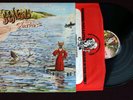
AUDIO GUIDE TO THE ALAN PARSONS PROJECTS. Boxed LP set
£
75
$
99


Favourite Auctions
To save auctions to your favourites, please login
If you don't have an account, please register
Description
AUDIO GUIDE TO THE ALAN PARSONS PROJECTS. Boxed LP set The Alan Parsons Project:
1979 Arista Records SP68 All housed in promo-stickered picture box ARISTASP68
RARE Promotional/DJ only LP Box Set issued to promote the Alan Parsons Project. This was to be used as a radio programme.
Contains a 2 LP set of Music engineered or produced by Alan Parsons and Eric Wolfson. The fascinating interviews cover the careers of Alan and Eric before the Project was formed, as well as their collaborative work.
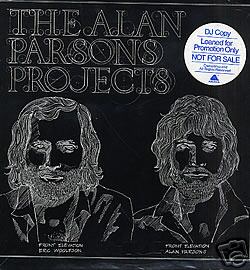
Has picture of Alan Parsons and Eric Wolfson on front of double LP and of box. Box is a little scuffed from storage but, as far as I can see, the LPs are all unplayed
Also contains these 3LP's –still sealed but with corners cut as if they were deleted albums (cut outs)
I Robot (Arista AL7002),
Eve (Arista AL9504),
Pyramid AB4180
here is a short transcript of the 2 LP set – I can email you a full copy if you ask me AP = Alan Parsons EW = Eric Woolfson
AP: Getting into the recording business was something I really didn't imagine that I would ever do. Although I had all the basic qualifications necessary to do it, because I'd had a musical background of piano and flute at school, and, y'know, I played a bit of guitar, and played with local bands, and at the same time, I had an interest in electronics. I was always building radio sets, and electronic gadgets at home, but it didn't really hit me until after leaving school that I could combine these interests into one part, and make something worthwhile out of it. After leaving school, I spent a short time in a research lab doing development work on television cameras. This was at EMI, in Hayes, Middlesex, and I was eventually moved into a tape production plant, which was devoted to the manufacture of mono quarter-inch tapes of commercially available albums, and this is really where I got interested in hi-fi, because this was the first time I had heard high quality sound systems, and One of the albums that I heard during my time there was Sargent Pepper, and having always been a great fan of the Beatles, I was totally knocked out by this album, and I was determined to find out how they got these sounds, and just how the whole thing went about, but the problem was that I'd heard that to get a job in the studios at Abbey Road was very competitive, and I'd have a very hard time. But, surprisingly enough, I just wrote a letter to the manager, and within 10 days I was working there.
[Song: The Beatles, "A Day In The Life", from the "Sgt. Pepper's Lonely Hearts Club Band", album]
AP: After I'd had a bit of experience at Abbey road, operating tapes and running around for people, it wasn't long before my schoolboy dream was fulfilled, and that was of course, to meet the Beatles. And I was sent off to the Apple studios in Savil Row, where they'd been working on their "Let It Be" album, with Ben Johns engineering. They'd had some bad luck with their initial installation of their studio equipment, because it just wasn't performing how they hoped it would, and they rented some stuff from EMI, and I was basically sent down there just to make sure that everything was okay, and to help out on tapes. I never really got to know any of them particularly well at this stage, but I was just so in awe of the situation, of actually being around them, and finding out how they worked. I think it was evident there were problems within..within the group at this time, and the film to a certain extent brought this out. But, for me it was just a great experience to..to actually see them working and recording, seeing how their ideas accumulated. And most of all, the last performance that they ever did in public, on the roof of the Apple building.
[Song: The Beatles: "Get Back" from the "Abbey Road" album]
AP: Although "Let it Be" was the last album by the Beatles, as a group, to be released, it was "Abbey Road" that was the last to be recorded. My involvement on the "Abbey Road" album, again, as tape operator/assistant engineer/what-have-you, I noticed that during the making of the album, you wouldn't often find all four Beatles there at once. Often it would just be Paul with George Martin, or George Harrison with George Martin. They'd each come in to do their own individual parts of their own individual songs. I think I was enormously impressed by the way that they didn't just use normal conventional musical instruments to make a record, they'd use all sorts of strange ideas, or strange processes with instruments. But, I was just so surprised when I saw Ringo blowing through a straw into a glass of water to get the underwater effects in "Octopus's Garden." And, likewise on "Maxwell's Silver Hammer" the banging of the anvil for the hammering effect.
[Song: The Beatles, "Maxwell's Silver Hammer" from their album "Abbey Road"]
AP: Most other artists at this stage were recording under more conventional time scales. I mean a recording session used to last 3 hours, which usually was from 10:00 to 1:00, or from 2:30 to 5:30, whatever. And, I often didn't know from one day to the next, what I was going to be doing. I mean, I might spend the morning helping out on a classical orchestra session, and in the afternoon, doing a West End musical. And then, the following day, I might be working with some progressive blues band. But it was all very valuable experience to me, to have such a wide range of musical styles, being injected into me. It was this constant learning process, finding out how different people worked, and how different engineers and producers worked. A great deal of Paul McCartney's first solo album was recorded at various locations, such as his own home, and his farm in Scotland. But he did come into Abbey Road to do a couple of songs. One of them was called "Every Night," and the other was, of course, the classic "Maybe I'm Amazed."
[Song: Paul McCartney, "Maybe I'm Amazed," from his album "McCartney"]
AP: The "McCartney" album was soon followed by "Ram," and then the Wings' "Wildlife" LP, which he came to do at Abbey Road. And this was actually the beginning of my career as an engineer, as opposed to an assistant, because every so often he would disappear with the band, and ask Tony Clark, or myself, to make tapes for him to listen to the next day so he could assess the situation, and decide what he wanted to do next. But one of the songs on the album, I actually mixed myself, just purely for his purposes, as a rough mix, so he could decide what he wanted to do with it. And, this was a song called, "I'm Your Singer," which I'm delighted to say ended up being used on the album--the rough mix that I'd done.
[Song: Paul McCartney, "I'm Your Singer," from his/Wings? album, "Wildlife"]
AP: Presumably having made some impression on "Wildlife," Paul asked me to do some tracks on the following album, "Red Rose Speedway." Working with Paul as a producer, [as opposed] to engineer, was a whole different thing to just being the guy who sat at the back, rolling tapes backwards and forwards. As a producer, Paul was always slightly doubtful about every sound that was produced. He would say "Make the guitar sound better," or "make the drums sound better," but he wasn't actually able to describe in technical terms what he was after, which actually made the engineer's job very difficult. But at the end of the day, the results were always there. During the making of the album, there was a short pause to go on a European tour, in Holland, Belgium, and Germany. And, I always remember the song "Hi, Hi, Hi" being played in a totally different way, to the way it ended up being recorded. I actually preferred the live version, believe it or not, but millions didn't.
[Song: Wings, "Hi, Hi, Hi," from their album "The Wings Greatest."]
AP: Although there was some independent production work going on at Abbey Road, a great deal of the sessions that were taking place were actually in-house productions. Although the Beatles were considered an "in-house production," because George Martin was a staff producer for EMI. There were several other full-time producers, such as Peter Sullivan, John Burgess, and Ron Richards, who had success with the Hollies for a considerable time. I got involved with the Hollies around the time that Graham Nash left the group, and Terry Sylvester joined. Among the records that I worked with them on, of course, was the classic "He Ain't Heavy, He's My Brother." And one, that I actually felt was the best record they ever made, "The Air That I Breathe"
Also features clips from
The Hollies, "The Air That I Breathe"
Pink Floyd, "Breathe," from their album "Dark Side Of The Moon."
"Money" from their album "Dark Side Of The Moon"
Pink Floyd, "Time" from their album "Dark Side Of The Moon"
Steve Harley, "Judy Teen,"
Pilot, "Magic,"
John Miles, "Pull the Damn Thing Down
John Miles, "Music (reprise)
Ambrosia, "Somewhere I've Never Travelled
Al Stewart, "End Of The Day
Al Stewart, "Year Of The Cat" (album version)
Al Stewart, "Time Passages"
UK postage will be £10 – if you live outside of England this will be expensive as it is so heavy. Probably about 12 GB pounds for surface mail which could mean 30 GBPounds for airmail Email me and ask me if you are interested. Am quite happy to post abroad but will need to get it packed up ready before I can give a definite quote
On 24-Nov-05 at 21:44:10 GMT, seller added the following information:price rating