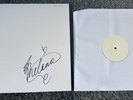
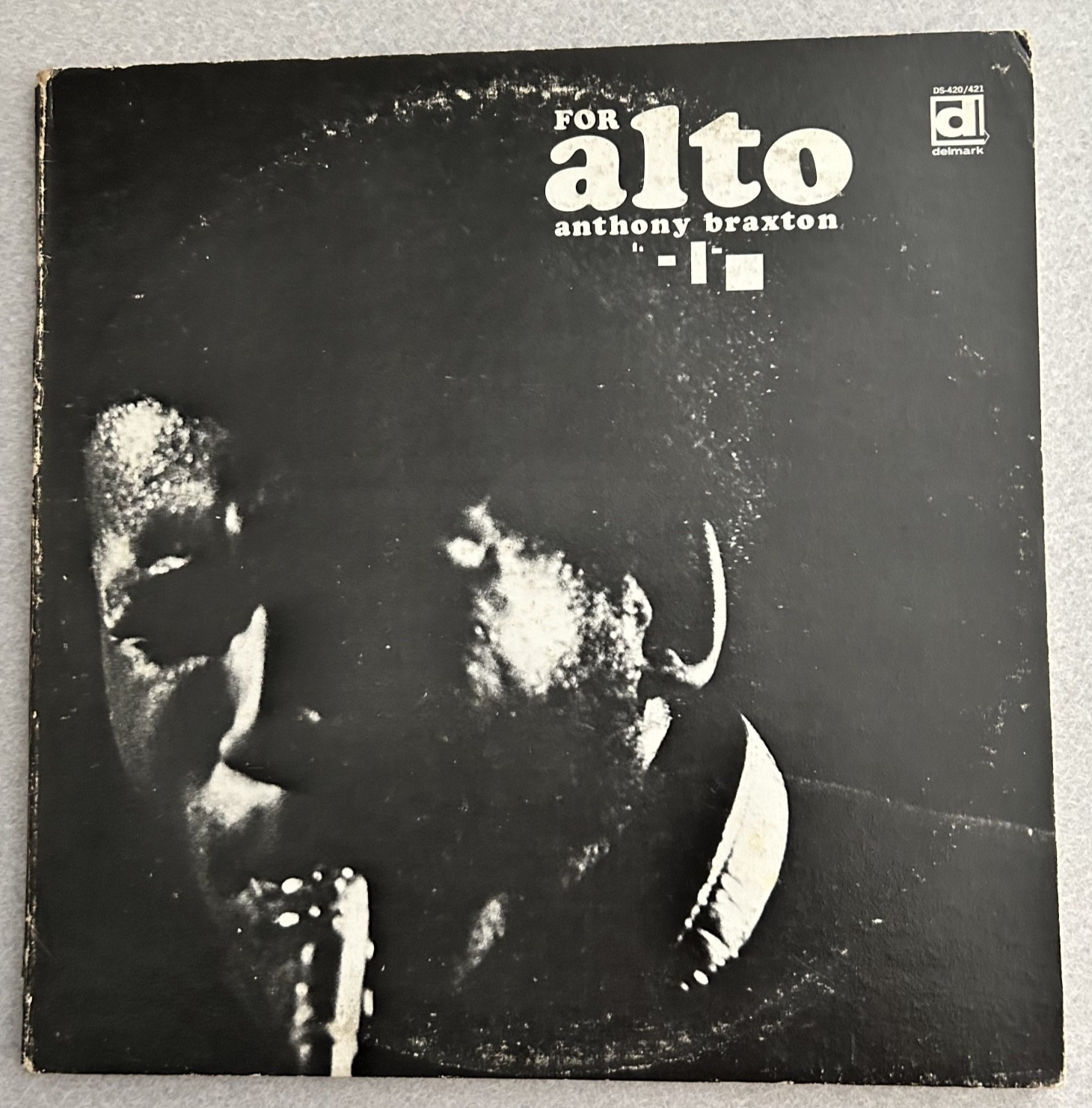
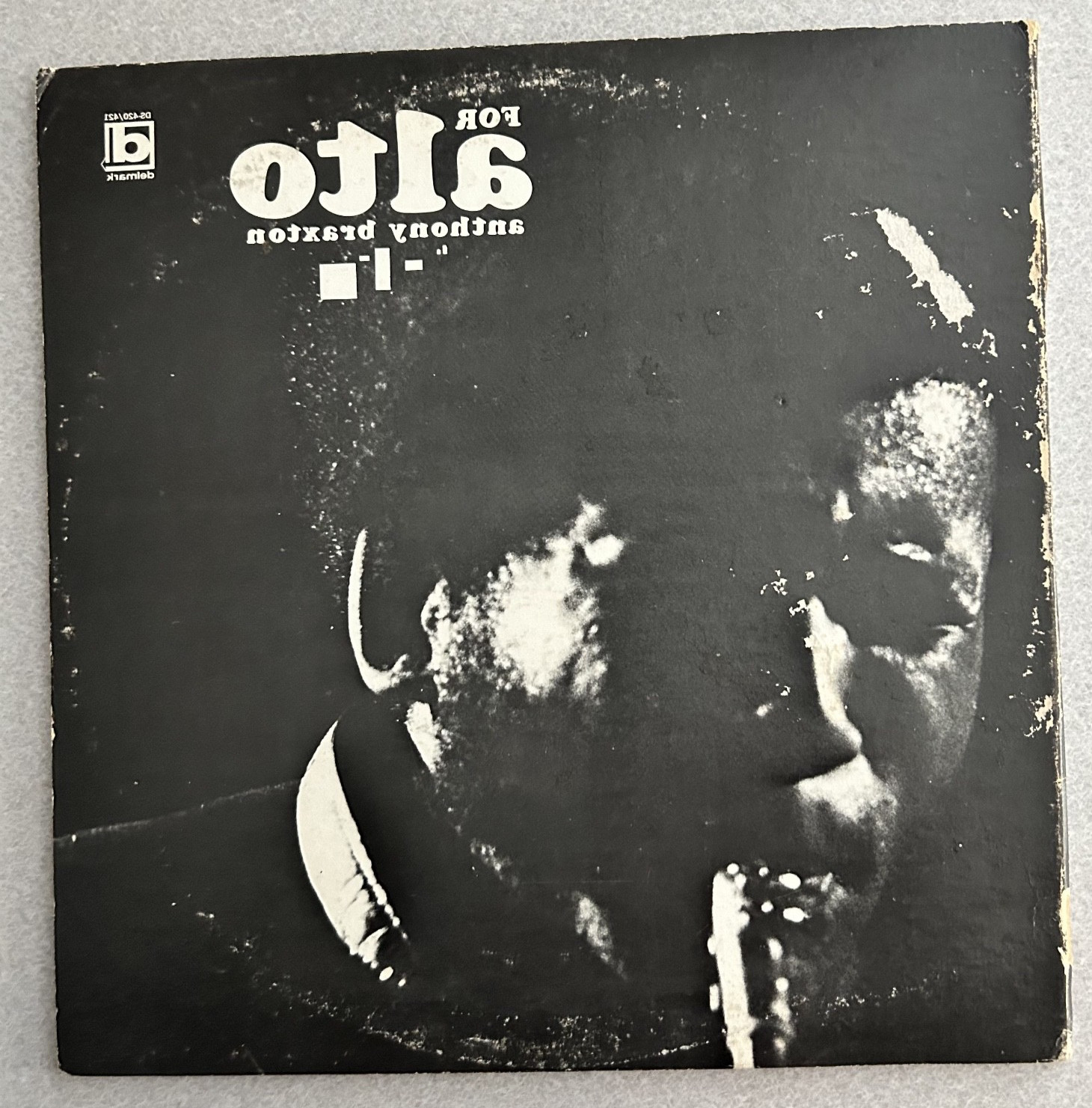
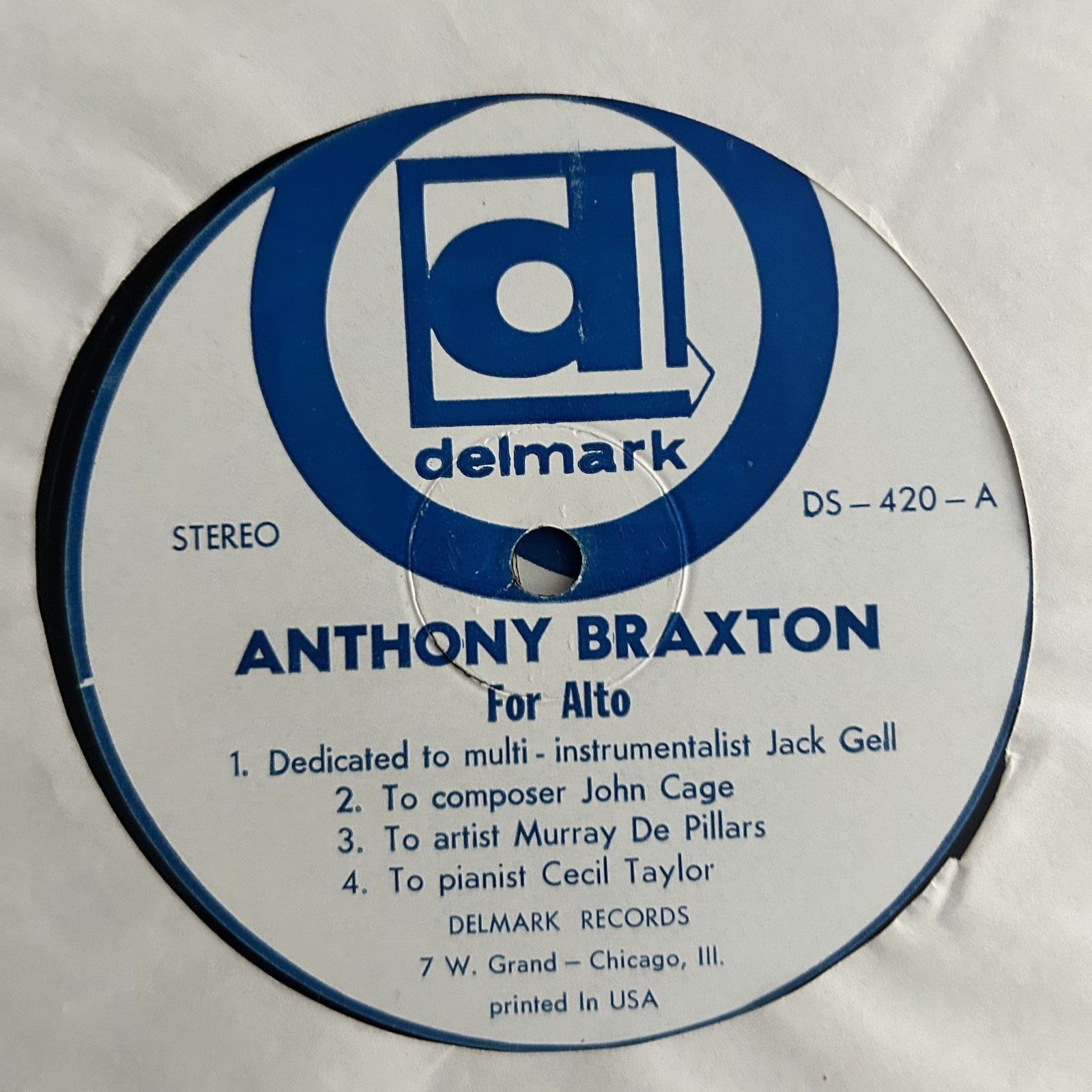
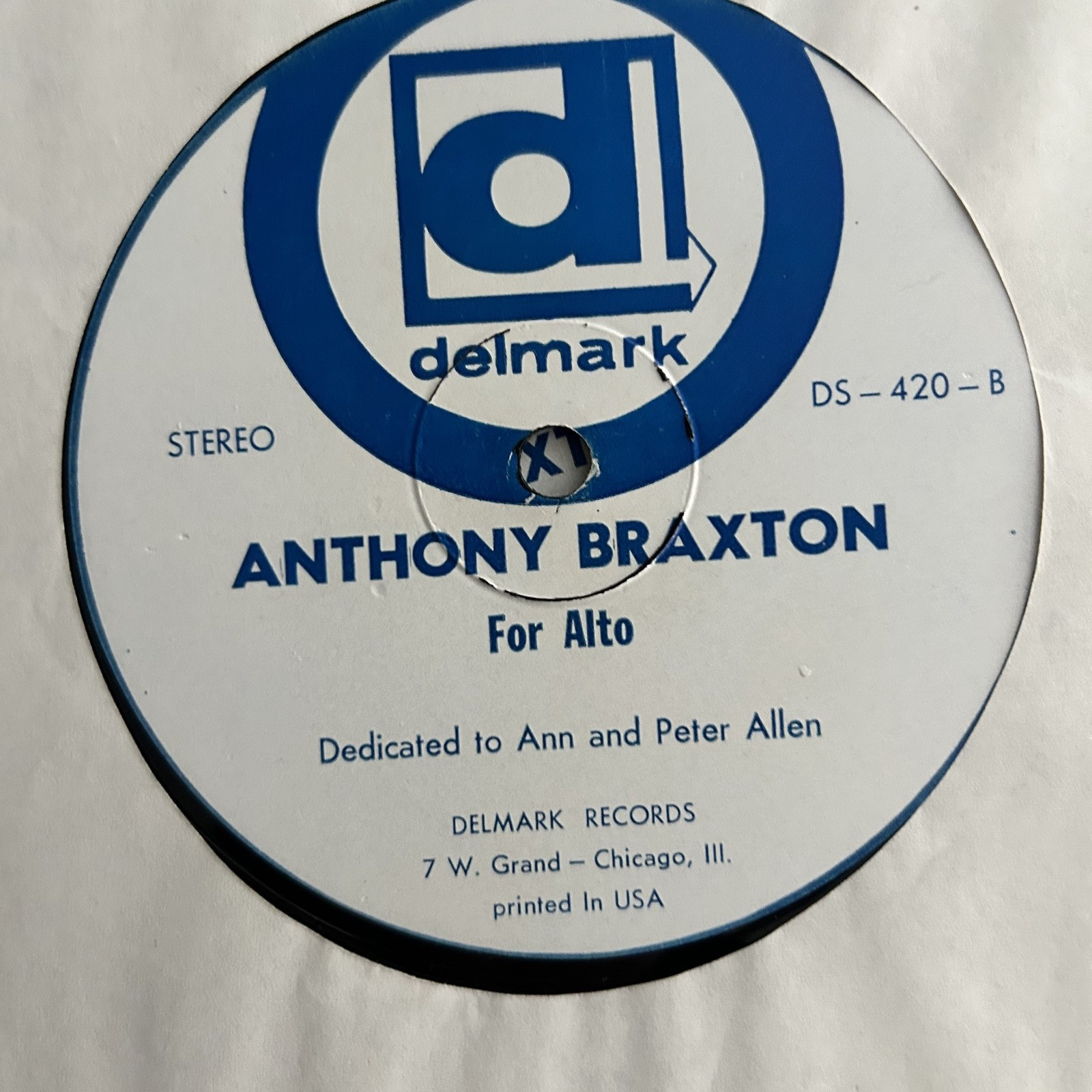
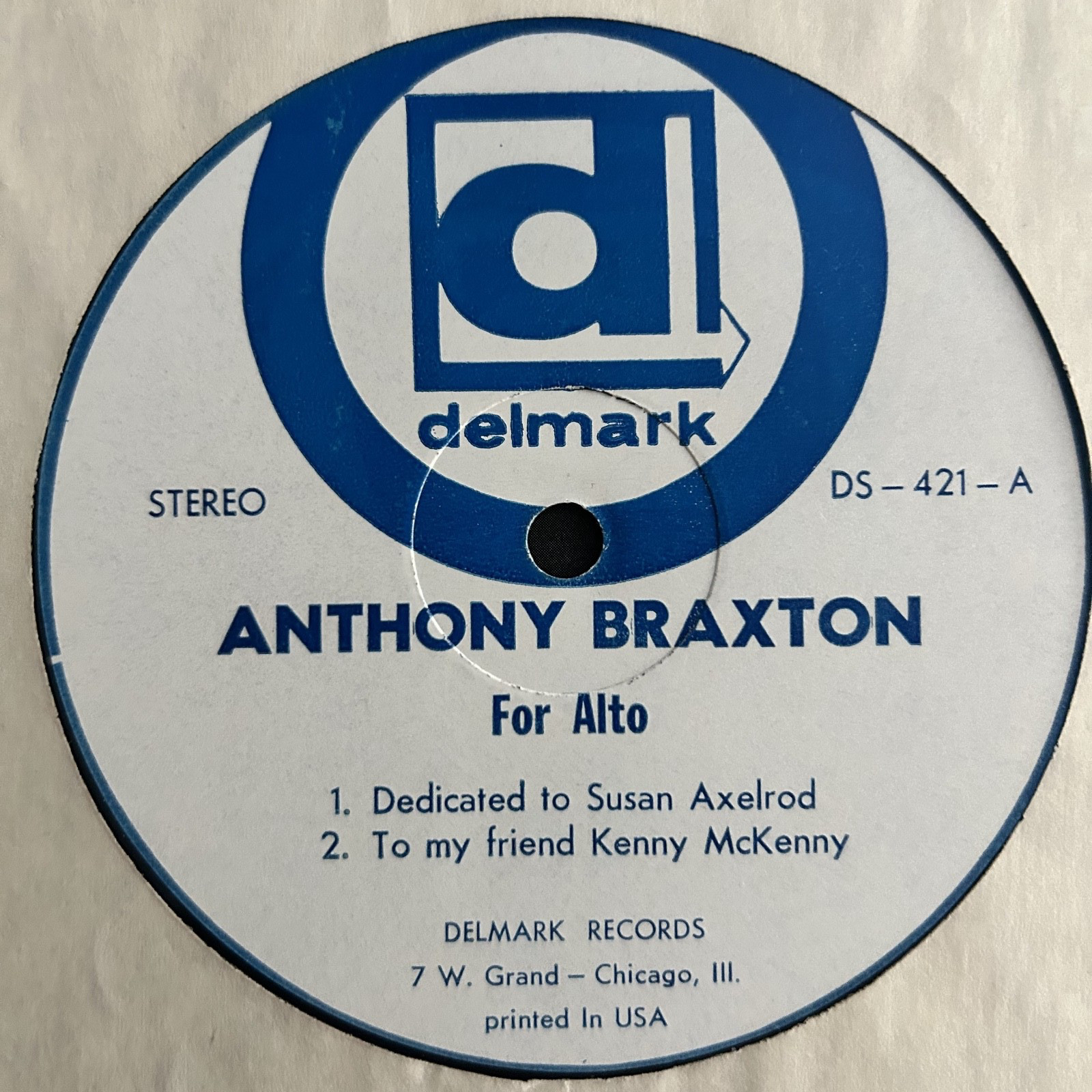
Anthony Braxton – For Alto 2xLP 1971 Delmark 1st Press Masterpiece of Jazz
$
90
Favourite Auctions
To save auctions to your favourites, please login
If you don't have an account, please register
Description
Anthony Braxton – For Alto 2xLP 1971 Delmark 1st Press Masterpiece of Jazz. Archival Sleeves
"For Alto is dizzying and maddening, dense and challenging, inventive and offputting. It's also among a handful of great solo saxophone recordings in jazz, alongside the unaccompanied tunes on Eric Dolphy's Far Cry. The sheer amount of music here is overwhelming... For Alto is a riveting blast of fresh air, radically adventurous early gems from one of the most important thinkers in jazz."
For Alto is a jazz double-LP by composer/ multi-reedist Anthony Braxton, recorded in 1969 and released on Delmark Records in 1971. Braxton performs the pieces on this album entirely on alto saxophone, with no additional musicians, instrumentation or overdubbing. Although other jazz musicians, such as Coleman Hawkins, Sonny Rollins, and Eric Dolphy, had recorded unaccompanied saxophone solos, For Alto was the first jazz album composed solely of solo saxophone music.
According to Braxton, For Alto came about as a result of his fascination with the solo piano music of Arnold Schoenberg, Fats Waller, and Karlheinz Stockhausen. However, feeling that his skills on the piano were inadequate, he decided to create "a particular language for the saxophone." He also cited the experience of a 1967 improvised solo saxophone concert during which he ran out of ideas. He recalled: "I imagined I was just going to get up there and play for one hour from pure invention, but after ten minutes I'd run through all my ideas and started to repeat myself. I felt like, 'Oh my God, and there's still fifty minutes to go!'" This led to a project in which he catalogued specific, easily identifiable musical elements (for example, long sounds, trills, multiphonics, short attacks) which could then be used as "starting points or springboards to musical activity." The concept would become known as "Language Music," of which For Alto is an early example.
Braxton later stated that he recorded the music himself in the basement of the Parkway Community Center in Chicago, and that he "basically gave it to Delmark Records." Although the published liner notes consist only of a series of diagrams, he had originally intended to include a convoluted, winding essay in which, among other things, he stated: "If this record doesn't sell a million copies I will be very disappointed. Already I am making room on my mantle for a gold record and I am going to have parties and I am preparing an acceptance speech." Braxton would go on to record a number of additional solo alto saxophone albums, such as Saxophone Improvisations Series F (1972) and Alto Saxophone Improvisations 1979, and For Alto would inspire other saxophonists, such as Joe McPhee, Evan Parker, and Steve Lacy, to record their own solo albums.
After issuing Anthony Braxton's Three Compositions of New Jazz in 1968, Chicago's Delmark Records took an enormous chance by issuing the first lengthy solo saxophone improvisation record in 1969 -- and as a double LP no less! And while it's true that hindsight is 20/20, For Alto is still, over 30 years later, a record that is ahead of its time. There is nothing tame or nostalgic about these blasts of jazz futurism from the young Braxton, who sounds here like he's trying to blow his way out of Chicago. Most of the pieces on this set are over nine minutes, and all are dedicated to various influences and friends in the saxophonist's circle. Perhaps the most frightening -- and enlightening -- improvisation here is "To Composer John Cage." Braxton attempts to literally change the entire tonal terrain on which the saxophone plays solo. His skittering skeins of cascading runs are interspersed with huge shouts and screeches all played at lightning speed with a deftness and angularity of approach that is far superior to most of his peers at the time, Messrs. Mitchell and Jarman included. Braxton was introducing tonal possibilities and deconstructions on this record; a solid listen to "Dedicated to Multi-Instrumentalist Leroy Jenkins," with its deep color palette and textural shifts and shapes, is enough to disorient one still. Also, the use of trills as interval markers in "To Artist Murray De Pillars" is remarkable -- especially now, as no one would follow this logic for such an extended period anymore. The reinvention of blues theory on this piece that becomes a kind of muted expressionism is truly remarkable. Many of the recordings from the magical period of the '60s and early-'70s creative movement sound dated now, quaint and diffuse from their original power. For Alto is not one of those records; it still has the literacy and vision to teach us about concentration, vision, emotional aesthetics, and even spiritual possibilities in the world of sound and how that world, that universe, interacts and dovetails with our lives. For Alto is one of the greatest solo saxophone records ever made, and maybe one of the greatest recordings ever issued, period.
price rating