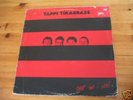
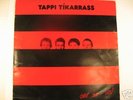
BJORK RELATED LP FROM ICELAND "TAPPI TÍKARRASS" Björk
$
430


Favourite Auctions
To save auctions to your favourites, please login
If you don't have an account, please register
Description
In ok condition.
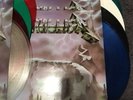
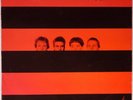
Record - good Cover - ok Origins: Tappi Tíkarrass came into being by September 1981 with vocalist Eyþór Arnalds, who was replaced a few months later by Björk and a year later, Oddur was replaced in drums by Guðmundur Þór Gunnarsson.
The name Tappi Tíkarrass, which in Icelandic means “Cork the Bitch’s Arse” was given after Jakob’s father claimed that the band’s music “fitted like a cork in a bitch’s arse”.
Tappi Tíkarrass combined elements of punk and pop music to create an exotic post punk with references to Siouxsie & the Banshees and the first stage of The Cure.
Releases: Bítið Fast í Vítið and Miranda:
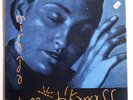
They started to record in August 1982 and released an EP titled Bítið Fast í Vítið which went out through label Spor. This 12” vinyl was formed of 5 tracks performed by Björk, who replaced the original vocals by Eyþór. The only song in English was “London”.
They followed up in 1983 with the release of their first album titled Miranda, which was released by Gramm. This record consisted of 13 tracks and even though Tappi Tíkarrass was the less experimenting project of singer Björk, this album outstands with songs like “Kríó” which feature pop melodies, and “Tjet”, a song that renders a mellow start and ends with disco references.
Featuring and appearances on film:
Tappi Tíkarrass appeared on Rokk í Reykjavík, a TV documentary directed by Friðrik Þór Friðriksson. Tappi Tíkarrass was one of the 19 bands featured in the film and collaborated with two songs: “Hrollur” and “Dúkkulísur”, both of them sung by Björk and Eyþór with Oddur replacing Guðmundur in drums.
In 1983 they appeared on Nýtt Líf, a comedy directed by Þráinn Bertelsson. The film was shot in the Westman Islands and Tappi Tíkarrass played on stage two songs “Sperglar” and “Kukl” (better known as “Seiður”), under the supervision of Megas.
Despite the raise on the interest on this band as Björk developed into an international music artist, the discography of Tappi Tíkarrass has never been reissued and all the original releases are widely unavailable.
The band has appeared only in two Icelandic compilations, Satt 3 which was released in 1984 and featured two live B-sides: “Sperglar” and “Seiður”. Finally, by 1998 record label Spor released Nælur, another compilation which contained the songs “Iltí Ební” and “London”, both of them taken from Bítið Fast í Vítið.
Tappi Tíkarrass split up and the fate of its members:
By July 1983 the band split up when Björk joined Purrkur Pillnikk’s singer Einar Örn Benediktsson, Þeyr’s guitarist Guðlaugur Kristinn Óttarsson and drummer Sigtryggur Baldursson, with Medúsa’s keyboardist Einar Arnaldur Melax, and finally Birgir Mogensen bassist from Spilafífl. Together they formed a goth-oriented and more experimental band called KUKL.
Jakob Magnússon and Guðmundur joined Bubbi Morthens to play in Das Kapital until 1985, then Jakob followed up with Bubbi & MX-21, and worked as a session player for several artists. In 2003 he released his first solo album, Bassajól. After playing in Das Kapital, Guðmundur withdrew from the music scene.
After leaving the band, Eyþór Arnalds studied cello and continued with the band Todmobile and later joined singer Móa Julíusdóttir to form a band called Bong which achieved relative success in Iceland and England. He has released a few solo albums and then collaborated with Móa’s debut album Universal in 1998 and has worked in the Icelandic music industry as sound engineer. More recently, he got involved in politics running for mayor in the town of Árborg.
Eyjólfur Jóhannsson continued playing with bands like Dá, The Wunderfoolzs, and in 2002 joined S.S.Sól. Oddur joined a heavy metal band called Foringjarnir, and he became an electrician. More recently he followed up with another band called Santiago releasing an album in 2002.
The last performance of Tappi Tíkarrass took place in 1987 when the band reunited to play at a night club called Safari.