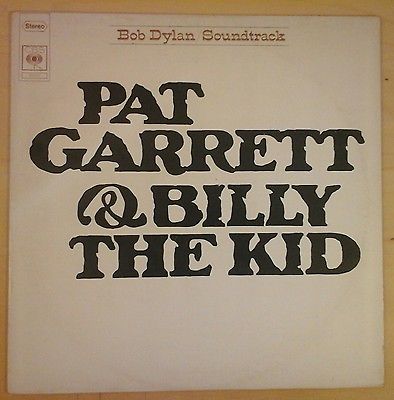
BOB DYLAN - PAT GARRETT & BILLY THE KID cbs S 69042 LP 1977 IT
€
19
$
22


Favourite Auctions
To save auctions to your favourites, please login
If you don't have an account, please register
Description
<div style="text-align:center"><img src="http://ti2.auctiva.com/sw/java.gif" border="0"><br><table align="center"><tr><td><a style="text-decoration:none" href="http://store.auctiva.com/endrucomics"><img src="http://ti2.auctiva.com/sw/browse1.gif" border="0"></a></td><td height="23px" valign="middle" align="center"><font face="arial" size="2"><b><a href="http://store.auctiva.com/endrucomics">endrucomics</a> Store</b></font></td></tr></table></div>
<img src="http://ti2.auctiva.com/web/aswCredit.gif" border="0"><br><a href="http://www.auctiva.com?how=scLnk2" target="_blank"><img src="http://ti2.auctiva.com/images/sc1line2.gif" border="0"></a> PREMESSA: LA SUPERIORITA' DELLA MUSICA SU VINILE E' ANCOR OGGI SANCITA, NOTORIA ED EVIDENTE. NON TANTO DA UN PUNTO DI VISTA DI RESA, QUALITA' E PULIZIA DEL SUONO, TANTOMENO DA QUELLO DEL RIMPIANTO RETROSPETTIVO E NOSTALGICO , MA SOPRATTUTTO DA QUELLO PIU' PALPABILE ED INOPPUGNABILE DELL' ESSENZA, DELL' ANIMA E DELLA SUBLIMAZIONE CREATIVA. IL DISCO IN VINILE HA PULSAZIONE ARTISTICA, PASSIONE ARMONICA E SPLENDORE GRAFICO , E' PIACEVOLE DA OSSERVARE E DA TENERE IN MANO, RISPLENDE, PROFUMA E VIBRA DI VITA, DI EMOZIONE E DI SENSIBILITA'. E' TUTTO QUELLO CHE NON E' E NON POTRA' MAI ESSERE IL CD, CHE AL CONTRARIO E' SOLO UN OGGETTO MERAMENTE COMMERCIALE, POVERO, ARIDO, CINICO, STERILE ED ORWELLIANO, UNA DEGENERAZIONE INDUSTRIALE SCHIZOFRENICA E NECROFILA, LA DESOLANTE SOLUZIONE FINALE DELL' AVIDITA' DEL MERCATO E DELL' ARROGANZA DEI DISCOGRAFICI .
BOB DYLAN
pat garrett & billy the kid
ost / soundtrack
Disco LP 33 giri , CBS , S 69042 , 1973, this is 1977 reissue, Italia
OTTIME CONDIZIONI, vinyl ex++/NM , cover ex++
Pat Garrett & Billy the Kid è un album di Bob Dylan del 1973. È la colonna sonora del film Pat Garrett & Billy the Kid.
Original SoundTrack di un western memorabile, dove Bob Dylan partecipò anche come comparsa. Chitarre acustiche, armoniche e percussioni per dieci belle canzoni fra le quali spicca, naturalmente, la meravigliosa "Knockin' On Heaven's Door".
Best known as the album with "Knockin' On Heaven's Door," Pat Garrett is a full-on gem, much like the film it's a soundtrack for. Made up of mostly instrumental pieces, the songs have an air of longing and emptiness; the variations on "Billy" are loose, arid and seem almost cast aside. When Dylan croaks in with the lyrics, it's completely gut-wrenching.
Catalogo: S 69042
Data di pubblicazione: 1977
Matrici: CI 69042 1L 2 / CI 69042 2L 2
Data matrici : 25/5/77
- Supporto:vinile 33 giri
- Tipo audio: stereo
- Dimensioni: 30 cm.
- Facciate: 2
- Orange label, white paper inner sleeve
All songs by Bob Dylan.
Side one
- "Main Title Theme (Billy)"
- "Cantina Theme (Workin' for the Law)"
- "Billy 1"
- "Bunkhouse Theme"
- "River Theme"
Side two
- "Turkey Chase"
- "Knockin' on Heaven's Door"
- "Final Theme"
- "Billy 7"
- "Billy 4"
Personnel
- Bob Dylan - (Rhythm) Guitar
- Booker T. Jones - Bass
- Bruce Langhorne - Acoustic Guitar
- Roger McGuinn - Guitar
- Russ Kunkel - Tambourine, bongos
- Carol Hunter - 12 string guitar, voices
- Donna Weiss - Voices
- Priscilla Jones - Voices
- Byron Berline - Voices, Fiddle
- Jolly Roger - Banjo
- Terry Paul - Voices
- Jim Keltner - drums
- Brenda Patterson - Voices
- Carl Fortina - Harmonium
- Terry Paul - Bass
- Gary Foster - Recorder, Flute
- Fred Katz - Cello
- Ted Michel - Cello
Bob Dylan was the source of pop music's unpredictability in the Sixties. Never as big a record-seller as commonly imagined, his importance was first aesthetic and social, and then as an influence. It was from that vantage point that he accumulated unprecedented power and authority, to the point where it must have eventually threatened his peace of mind.
Janis Joplin couldn't survive having so many people dependent on her to fulfill their fantasies; fate, in the form of a motorcycle accident, spared Dylan from the ultimate confrontation with his and our fantasies of his immortality and gave him a second chance to define the terms on which he accepted us and we accepted him. Since then he has been locked in a wrestling match with himself, over whether to perpetuate or abandon his place in the rock pantheon. In that light, the original soundtrack of Pat Garrett & Billy the Kid is an extension of its myth-destroying predecessor Self-Portrait, a record which further eliminates the possibility of anyone placing Bob Dylan on a pedestal. It is every bit as inept, amateurish and embarrassing as the earlier album. And it has all the earmarks of a deliberate courting of commercial disaster, a flirtation that is apparently part of an attempt to free himself from previously imposed obligations derived from his audience.
The early Bob Dylan was compulsively drawn to the conflict between stability and the search for immortality. When he ended three of his mid-Sixties albums with songs rejecting the audience in the guise of lovers he revealed his exceptional fear of our collective capacity to both save and destroy him, the exact corollary to the way in which many of his admirers saw him. Since 1967, his career has been a curious mixture of serious or half-serious attempts to extend his music and eradicate his earlier image—John Wesley Harding, Nashville Skyline and New Morning—and deliberate attempts to stop his career short—Self-Portrait and now Pat Garrett & Billy the Kid.
In the meantime he has contributed his anonymous instrumental talents to so many records that he is now pretending to be just one of the guys. By playing with sometimes manifestly inferior artists, a few of whom are simply exploiting his name, he has pushed the demythologizing of his legendary status to an extreme. But rather than emerging as a more modest and real talent, shorn of the extramusical import his earlier critics and audiences bestowed upon him, he has only succeeded in redefining himself as limited and not terribly relevant.
True to its soundtrack genre, much of the record is made up of instrumental music never intended to stand on its own and useless on an album. The actual songs are remarkable only for the fact that Dylan no longer describes himself as an outlaw, nor seems to overidentify with same ("John Wesley Harding") but has written, in the form of direct address, a tribute to another, real outlaw. "Billy No. 1," "Billy No. 4" and "Billy No. 7" (thank God he spared us all the Billys in between) are redundant variations of a not particularly successful cowboy song, one version languid, another dramatic, another simply sung straight. Taken together, they constitute a simplistic attempt to play the tune for more than it's worth. Oddly, he avoided writing a song about the film's real subject, Sheriff Pat Garrett. "Heaven's Door" is better and "River Theme" and "Final Theme" are interesting snatches of program music, even if they don't hold one's attention for more than a few plays.
Pat Garrett & Billy the Kid is reminiscent of Another Side of Bob Dylan, but only in its rambling rhythms and undisciplined and flat vocal style. It doesn't contain any of the earlier work's redeeming emotional freedom and sense of abandon. And his harmonica playing is at its worst, another small sign of the album's almost willful badness, which is as mysterious as it is confounding to those who respect his past accomplishments.
It is ironic that the most significant white rock figure of the Sixties has turned himself into one of the least significant of the Seventies. But the most perplexing aspect of it all seems to be the deliberate intent behind the decline. I can think of no other way to explain the gap between the man's earlier accomplishments and the recent dissipation of the quality of his work. But whatever the explanation, one can only note with sadness that in the midst of the summer morass of predictable popular music, Bob Dylan has once again broken the mold, only this time, with the least acceptable method available to him, an album neither exceptional, nor truly different, but merely awful.
This album was unusual on several counts. For starters, it was a soundtrack (for Sam Peckinpah's movie of the same title), a first venture of its kind for Bob Dylan. For another, it was Dylan's first new LP in three years he hadn't been heard from in any form other than the single "George Jackson," his appearance at the Bangladesh benefit concert in 1971, in all of that time. Finally, it came out at an odd moment of juxtaposition in pop culture history, appearing in July 1973 on the same date as the release of Paul McCartney's own first prominent venture into film music, on the Live and Let Die soundtrack (the Beatles bassist had previously scored The Family Way, a British project overlooked amid the frenzy of the Beatles' success). Interestingly, each effort reunited the artist with a significant musician/collaborator from his respective past: McCartney with producer George Martin and Dylan with guitarist Bruce Langhorne, who'd played with him on his early albums up to Bringing It Al...l Back Home, before being supplanted by Mike Bloomfield, et al. But that was where the similarities between the two projects ended apart from the title song, Live and Let Die was Martin's project rather than McCartney's, whereas Dylan was all over Pat Garrett Billy the Kid as a composer, musician, etc. Additionally, whereas McCartney's work was a piece of pure poporiented rock in connection with a crowdpleasing actionfantasy film, Dylan's work comprised an entire LP, and the resulting album was a beautifully simple, sometimes roughattheedges and sometimes gently refined piece of country and folkinfluenced rock, devised to underscore a very serious historical film by one of the movies' great directorial stylists. It was also as strong as any of his recent albums, featuring not just Langhorne but also such luminaries as Booker T. Jones, Roger McGuinn, and Byron Berline. "Knockin' on Heaven's Door" was the obvious hit off the album, and helped drive the sales, but "Billy 1," "Billy 4," and "Billy 7" were good songs, too had any of them shown up on bootlegs, they'd have kept the Dylan semiologists and hagiographers busy for years working over them. The instrumentals surrounding them were also worth hearing as manifestations of Dylan's musicmaking; "Bunkhouse Theme" was downright gorgeous. It was the first time since New Morning, in 1970, that Dylan had released more than five minutes of new music at once, and it was a gift to fans as well as to Peckinpah little did anyone realize at the time that it heralded a period of new recording and a national tour (with the Band), along with a brief label switch, and Dylan's greatest period of sustained musical visibility since 1966. This record also proved that Dylan could shoehorn his music within the requirements of a movie score without compromising its content or quality, something that only the Beatles, unique among rock artists, had really managed to do up to that time, and that was in their own movie, A Hard Day's Night. "Knockin' on Heaven's Door" may have been the biggest hit to come out of a Western in at least 21 years, since Dimitri Tiomkin and Ned Washington had given "High Noon" to Tex Ritter to sing in Fred Zinnemann's High Noon in 1952 (and Katy Jurado was in both movies), and he'd also outdone Ritter on two counts, writing the music a full score, to boot and getting a cameo appearance in the film. The album was later kind of overlooked and neglected in the wake of the tour that followed and the imposing musical attributes of, say, Blood on the Tracks and Desire, but heard on its own terms it holds up 30plus years later. - Bruce Eder, All Music GuidePat Garrett & Billy the Kid is a soundtrack album released by Bob Dylan in 1973 for the Sam Peckinpah film of the same name. Dylan himself appeared in the film as the character "Alias". Consisting of primarily instrumental music and inspired by the movie itself, the soundtrack birthed one of Dylan's most beloved songs — and biggest hits — "Knockin' On Heaven's Door", which became a trans-atlantic Top 20 hit.
A gold record, Pat Garrett & Billy the Kid reached #16 US and #29 UK.
Casting and filming Bob Dylan in Pat Garrett and Billy the Kid
Sometime in 1972, Rudy Wurlitzer approached Dylan about contributing music to Pat Garrett and Billy the Kid. An old friend of Dylan's, Wurlitzer had written the film's original screenplay.
"Rudy needed a song for the script," Dylan said in an interview taken in 1973. "I wasn't doing anything. Rudy sent the script, and I read it and liked it and we got together. And then I saw The Wild Bunch and Straw Dogs and Cable Hogue and liked them. The best one is Ride the High Country...So I wrote ['Billy'] real quick."
Soon, Dylan was interested in contributing more than just "Billy" (described by Clinton Heylin as "a fine return to the ballad form he had forsaken after John Wesley Harding"). Dylan asked Wurlitzer if acting in the film was possible, an idea Wurlitzer was reluctant to support.
Around Thanksgiving Day, Dylan and his wife travelled to Durango, Mexico, where Peckinpah was filming Pat Garrett and Billy the Kid. Dylan had always expressed an interest in Mexican culture, and he was more than willing to make the trip.
After his arrival, Dylan met with Peckinpah and played him "Billy" and "Goodbye Holly," both written specifically for the picture. According to Kris Kristofferson and James Coburn - each of whom were cast in one of the title roles - Peckinpah was not enthusiastic about Dylan's participation.
"Sam says, 'Who's Bob Dylan?,'" recalls Coburn. "'Oh yeah, the kids used to listen to his stuff. I was kinda thinkin' of that guy Roger whatsisname, King of the Road guy, to do it.' And we all said, 'What!! You gotta see Dylan,'...He said, 'Okay, bring Dylan down.'...So the night we were over at Sam's house and we were all drinking tequila and carrying on and halfway through dinner, Sam says, 'Okay, kid, let's see what you got. You bring your guitar with you?' They went in this little alcove. Sam had a rocking chair. Bobby sat down on a stool in front of this rocking chair. There was just the two of them in there...And Bobby played [his songs]. And Sam came out with his handkerchief in his eye: 'Goddamn kid! Who the hell is he? Who is that kid? Sign him up!'"
Peckinpah then offered Dylan a role in film, but it was left to Wurlitzer to find one that was suitable. Wurlitzer ultimately suggested 'Alias.' Dylan would later claim "that there was nobody in that story that was the character I played." However, as Heylin reports, "not only did Alias appear in Wurlitzer's original version of the script, but he was a real historical character, mentioned by Garrett himself in his own Authentic Life of Billy the Kid. More than merely a member of Billy's gang, he was Billy's right-hand man."
However, Dylan would spend two and a half difficult months in Durango, Mexico, filming his role. During the course of production, his part was severely reduced. Wurlitzer claims this was done at Dylan's request, but Pat Garrett and Billy the Kid was also plagued with conflict between Peckinpah and MGM Studios. This resulted in MGM refusing Peckinpah's request to reshoot a substantial amount of footage lost to technical error. "Somebody dropped the main camera and for a while we had focusing problems," recalls Coburn. "The left and right of the screen were fine, but the bottom wasn't in focus. We needed to reshoot when we finally got the camera fixed." Peckinpah attempted to reshoot a portion of the tainted footage, but a majority of it was ultimately left lost.
The stress also took its toll of Peckinpah, and it would ultimately impact Dylan's role in the film as well. "[Peckinpah] was never able to sit down and figure out what Dylan was in the movie," recalls Kristofferson. "Bob kept sayin' to me, 'Well, at least you're in the script.'"
Recording sessions
As Pat Garrett and Billy the Kid neared completion, Dylan held a recording session on January 20 at Columbia's recording studio in Mexico City. Filming had been so difficult, both of the film's stars and Wurlitzer accompanied Dylan out of Durango. Wurlitzer said at the time, "Sam knows he's losing to Dylan...but I don't care, man. I've got to get away."
Backed by local Mexican musicians and members of Kris Kristofferson's band, Dylan had difficulty recording a satisfactory take of "Billy." Eventually, he began paring down the arrangement , and by the last take, he was backed only by bassist Terry Paul. This final take was used for the film and later included on the soundtrack album as "Billy 4." A brief instrumental, "Billy Surrenders," would also be featured in the film. The session would continue until 4 a.m., but it would not produce anything else that would be considered usable.
Meanwhile, Peckinpah hired Jerry Fielding to advise Dylan on his work. Fielding was experienced in film scoring, but he held very conservative views regarding popular music. Dylan was fully aware of Fielding's opinions regarding his work ("a lot of nonsense which is strictly for teenyboppers"), but he did not resist Fielding's recommendations on how to score the film.
On Fielding's advice, Dylan sang "a relevant verse" of the "Billy" ballad "as it fit the story at [four] separate points throughout the picture." Fielding had also heard Dylan's new composition, "Goodbye Holly," which was written for an important scene involving the character, Holly. Fielding recommended dropping this song and writing a new one for a scene involving the death of Sheriff Baker.
"I set up two dubbing sessions," recalls Fielding. "Dylan had this song ['Billy'] he'd written for which he had a limitless number of verses that he would sing in random order...So I had to tape Dylan's song, because he had nothing written down, and have it transcribed...At the same time I asked that he write at least one other piece of music because you cannot possibly hope to deal with an entire picture on the basis of that one ballad. So finally he brought to the dubbing session another piece of music - 'Knock-Knock-Knockin' on Heaven's Door.' Everybody loved it. It was shit. That was the end for me."
Dylan recorded the final version of "Knockin' on Heaven's Door" at a session in February, this time on Warner Bros. Records' soundstage in Burbank, California. "It was very early in the morning," recalls drummer Jim Keltner. "I think the session was 10 a.m. and again it all fell into place...There weren't any overdubs on that, the singers were singing live, little pump organ, Roger McGuinn I think played [guitar]. This was for a particular scene in the movie when Slim Pickens is dying and that's the first time I ever cried while I played. It was the combination of the words, Bob's voice, the actual music itself, the changes, and seeing the screen...In those days you were on a big soundstage, and you had this massive screen that you can see on the wall, [with] the scene...running when you're playing. I cried through that whole take."
The sessions at Burbank lasted several days. Though they were much more relaxed and amiable than the Mexico City session, the process was still irritating to Dylan. At one point, he told producer Gordon Carroll that "this is the last time I work for anyone in a movie on the music. I'll stick to acting." Though Dylan would produce his own films and later contribute songs to other soundtracks, he would never take sole responsibility for an entire soundtrack again.
Outtakes
The Mexico City session produced two notable outtakes: "Peco's Blues," an instrumental based on the traditional "What Does The Deep Sea Say?," and the song "Goodbye Holly." Both tracks were rejected but eventually bootlegged.
The Burbank sessions yielded a few spontaneous recordings, including a jam titled "Sweet Amarillo" and a simple, improvised song titled "Rock Me Mama." Neither one was seriously considered for the soundtrack as they were borne more out of leisure than actual work. The latter was eventually written fully and recorded as "Wagon Wheel" by Nashville roots rock band Old Crow Medicine Show, then subsequently by artists such as Against Me! and others.
Aftermath
After Peckinpah completed his own cut of Pat Garrett and Billy the Kid, MGM re-cut the film without his input, removing several significant scenes and re-shuffling most of Dylan's music in the process. "I could tell that it had been chopped to pieces,' recalled Dylan in 1985. "Someone other than Sam had taken a knife to some valuable scenes that were in it. The music seemed to be scattered and used in every other place but the scenes in which we did it for."
Severely re-edited, Peckinpah's film was released to mixed reviews and poor box-office receipts. Years later, critical re-evaluation of Peckinpah's film would lead many to regard it as one of his major works, a revisionist view aided by the restoration of Peckinpah's original cut in 1986.
As for Dylan, even though the experience was difficult, it proved to be a turning point, writes Clinton Heylin, "pushing him to finally abandon New York for sunnier climes, and providing him with a most unexpected return to the charts."
A soundtrack album was released to rather mixed reviews. It had been three years since his last 'proper' album, New Morning, and many critics hoping for another were disappointed in settling for a 'mere' soundtrack. "At least the strings on this soundtrack are mostly plucked and strummed, rather than bowed en masse," wrote Robert Christgau, "but it's still a soundtrack: two middling-to-excellent new Dylan songs, four good original Bobby voices, and a lot of Schmylan music."
Jon Landau was far more damning in his review published in Rolling Stone, writing "it is every bit as inept, amateurish and embarrassing as Self Portrait. And it has all the earmarks of a deliberate courting of commercial disaster, a flirtation that is apparently part of an attempt to free himself from previously imposed obligations derived from his audience...It is ironic that the most significant white rock figure of the Sixties has turned himself into one of the least significant of the Seventies. But the most perplexing aspect of it all seems to be the deliberate intent behind the decline. I can think of no other way to explain the gap between the man's earlier accomplishments and the recent dissipation of the quality of his work. But whatever the explanation, one can only note with sadness that in the midst of the summer morass of predictable popular music, Bob Dylan has once again broken the mold, only this time, with the least acceptable method available to him, an album neither exceptional, nor truly different, but merely awful."
Despite the album's lukewarm reception, it did spawn a significant hit in "Knockin' On Heaven's Door," which would be covered by acts such as Eric Clapton and Guns and Roses. Years later, "Knockin' On Heaven's Door," would endure as a popular favorite among critics and fans as well as a concert staple, with its inspirational tone and lyrics regarding impending death. Furthermore, such critics may have simply missed the point; with the exception of its lone hit, Pat Garrett and Billy the Kid was a spare, mostly instrumental soundtrack album that many would later find to be of great integrity, once viewed through the prism of not expecting the work to be just another of Bob Dylan's "modern poetry" works.
After witnessing first hand Peckinpah's battles with MGM, Dylan would have his own problems with Columbia Records. After years of minimal activity, Dylan had lost Columbia's patience, and when negotiations for a renewed contract began in 1972, the label (except for Clive Davis) had little interest in being generous. "Early in 1973 I finally did conclude negotiations for a new contract with Bob," wrote Clive Davis in his autobiography. "Basically, it was limited to a commitment for two more albums, plus the Billy the Kid soundtrack album - there was no time period involved...the guarantee was about $400,000 per album. Columbia [then] backed out of the deal after I left. Since the Billy the Kid movie had just been released, Dylan's lawyer [David Braun], screamed that the soundtrack album commitment had to be honored; they couldn't go elsewhere in so short a time. So Columbia released it at the royalty rate agreed upon during my negotiations with Braun...When the single broke out of the album, and clearly showed Dylan's continued fertility, [Columbia head Goddard Lieberson] tried to resume negotiations."
Davis had been a longtime supporter of Dylan's, but he had been the victim of a corporate coup. While finalizing the details of Dylan's contract, Davis had been fired by CBS president Arthur Taylor on May 29. "Met at the door of Taylor's office by two CBS security men, he was then served with a civil complaint, alleging $94,000 worth of expense-account violations over six years," reported Heylin, "this from a man whose income in 1973 alone totaled over $300,000." Dylan would testify on Davis's behalf in a well-publicized civil trial held in July of 1975. In the meantime, the incident would sour Dylan's relationship with CBS, convincing him to sign with David Geffen's fledgling Los Angeles-based label Asylum Records. This switch would also coincide with Dylan's move to the West Coast.
Dylan had already purchased Malibu property in December 1971 as an investment, but by April 1973, he was beginning to settle there, leasing additional property on the adjoining land.
It was during this time that Dylan's songwriting began to increase in activity. "[I'd] been hanging out a lot with Bob in Malibu, playing basketball," recalls Roger McGuinn. "One day, he was sitting on the couch and we were trying to write a song together, and I asked him if he had anything and he said he had one that he'd started but he was probably gonna use it himself, and he started playing 'Never Say Goodbye.'" That song and two others, "Forever Young" and "Nobody 'Cept You," were soon demoed in June for his new publishing company, Ram's Horn Music. With a new label and renewed songwriting activity, the stage was set for his next project.
Pat Garrett and Billy the Kid
Released by MGM, 1973
Starring James Coburn, Kris Kristofferson, Bob Dylan, Jason Robards, Rita Coolidge, katy Jurado, Jack Elam & Rudy Wurlitzer
Screenplay by Rudy WurlitzerDirected by Sam Peckinpah
Produced by Gordon Carroll
An aging Pat Garrett is hired as a lawman on behalf of a group of wealthy New Mexico cattle barons — his sole purpose being to bring down his old friend Billy the Kid.
"Pat Garrett & Billy the Kid may be the most beautiful and ambitious film that Sam Peckinpah ever made. The time is 1881. Powerful interests want New Mexico tamed for their brand of progress, and Sheriff Pat Garrett (James Coburn) is commissioned to rid the territory of his old gunfighting comrades. He serves fair notice to William Bonney — Billy the Kid (Kris Kristofferson) — and his Fort Sumter cronies, but it's not in their nature, or his, to go quietly. Peckinpah's theme, more than ever, is the closing of the frontier and the nature of the loss that that entails. But this time his vision takes him beyond genre convention, beyond history and legend, to the bleeding heart of myth — and surely of himself. This is one strange and original movie." — Richard T. Jameson122 min., Color
Turner Preview VHS Version — 1988
VHS Director's Cut, ISBN 0 7928 0804 5 — 1991
DVD Two-Disk Special Edition Edition, ISBN 0 7907 4600 X — 2005
Various translations of "Pat Garrett and/Hunts Billy the Kid" — (West Germany, Sweden, Portugal, Italy, Canada, Poland, Spain, Finland, Denmark)
Bob Dylan's influence on popular music is incalculable. As a songwriter, he pioneered several different schools of pop songwriting, from confessional singer/songwriter to winding, hallucinatory, stream-of-conscious narratives. As a vocalist, he broke down the notions that in order to perform, a singer had to have a conventionally good voice, thereby redefining the role of vocalist in popular music. As a musician, he sparked several genres of pop music, including electrified folk-rock and country-rock. And that just touches on the tip of his achievements. Dylan's force was evident during his height of popularity in the '60s -- the Beatles' shift toward introspective songwriting in the mid-'60s never would have happened without him -- but his influence echoed throughout several subsequent generations. Many of his songs became popular standards, and his best albums were undisputed classics of the rock roll canon. Dylan's influence throughout folk music was equally powerful, and he marks a pivotal turning point in its 20th century evolution, signifying when the genre moved away from traditional songs and toward personal songwriting. Even when his sales declined in the '80s and '90s, Dylan's presence was calculable.
For a figure of such substantial influence, Dylan came from humble beginnings. Born in Duluth, MN, Bob Dylan (b. Robert Allen Zimmerman, May 24, 1941) was raised in Hibbing, MN, from the age of six. As a child he learned how to play guitar and harmonica, forming a rock roll band called the Golden Chords when he was in high school. Following his graduation in 1959, he began studying art at the University of Minnesota in Minneapolis. While at college, he began performing folk songs at coffeehouses under the name Bob Dylan, taking his last name from the poet Dylan Thomas. Already inspired by Hank Williams and Woody Guthrie, Dylan began listening to blues while at college, and the genre weaved its way into his music. Dylan spent the summer of 1960 in Denver, where he met bluesman Jesse Fuller, the inspiration behind the songwriter's signature harmonica rack and guitar. By the time he returned to Minneapolis in the fall, he had grown substantially as a performer and was determined to become a professional musician.
Dylan made his way to New York City in January of 1961, immediately making a substantial impression on the folk community of Greenwich Village. He began visiting his idol Guthrie in the hospital, where he was slowly dying from Huntington's chorea. Dylan also began performing in coffeehouses, and his rough charisma won him a significant following. In April, he opened for John Lee Hooker at ~Gerde's Folk City. Five months later, Dylan performed another concert at the venue, which was reviewed positively by Robert Shelton in the
-New York Times. Columbia AR man John Hammond sought out Dylan on the strength of the review, and signed the songwriter in the fall of 1961. Hammond produced Dylan's eponymous debut album (released in March 1962), a collection of folk and blues standards that boasted only two original songs. Over the course of 1962, Dylan began to write a large batch of original songs, many of which were political protest songs in the vein of his Greenwich contemporaries. These songs were showcased on his second album, The Freewheelin' Bob Dylan. Before its release, Freewheelin' went through several incarnations. Dylan had recorded a rock roll single, "Mixed Up Confusion," at the end of 1962, but his manager, Albert Grossman, made sure the record was deleted because he wanted to present Dylan as an acoustic folky. Similarly, several tracks with a full backing band that were recorded for Freewheelin' were scrapped before the album's release. Furthermore, several tracks recorded for the album -- including "Talking John Birch Society Blues" -- were eliminated from the album before its release.
Comprised entirely of original songs, The Freewheelin' Bob Dylan made a huge impact in the U.S. folk community, and many performers began covering songs from the album. Of these, the most significant were Peter, Paul Mary, who made "Blowin' in the Wind" into a huge pop hit in the summer of 1963 and thereby made Bob Dylan into a recognizable household name. On the strength of Peter, Paul Mary's cover and his opening gigs for popular folky Joan Baez, Freewheelin' became a hit in the fall of 1963, climbing to number 23 on the charts. By that point, Baez and Dylan had become romantically involved, and she was beginning to record his songs frequently. Dylan was writing just as fast, and was performing hundreds of concerts a year.
By the time The Times They Are A-Changin' was released in early 1964, Dylan's songwriting had developed far beyond that of his New York peers. Heavily inspired by poets like Arthur Rimbaud and John Keats, his writing took on a more literate and evocative quality. Around the same time, he began to expand his musical boundaries, adding more blues and RB influences to his songs. Released in the summer of 1964, Another Side of Bob Dylan made these changes evident. However, Dylan was moving faster than his records could indicate. By the end of 1964, he had ended his romantic relationship with Baez and had begun dating a former model named Sara Lowndes, whom he subsequently married. Simultaneously, he gave the Byrds "Mr. Tambourine Man" to record for their debut album. the Byrds gave the song a ringing, electric arrangement, but by the time the single became a hit, Dylan was already exploring his own brand of folk-rock. Inspired by the British Invasion, particularly the Animals' version of "House of the Rising Sun," Dylan recorded a set of original songs backed by a loud rock roll band for his next album. While Bringing It All Back Home (March 1965) still had a side of acoustic material, it made clear that Dylan had turned his back on folk music. For the folk audience, the true breaking point arrived a few months after the album's release, when he played ~the Newport Folk Festival supported by the Paul Butterfield Blues Band. The audience greeted him with vicious derision, but he had already been accepted by the growing rock roll community. Dylan's spring tour of Britain was the basis for D.A. Pennebaker's documentary Don't Look Back, a film that captures the songwriter's edgy charisma and charm.
Dylan made his breakthrough to the pop audience in the summer of 1965, when "Like a Rolling Stone" became a number two hit. Driven by a circular organ riff and a steady beat, the six-minute single broke the barrier of the three-minute pop single. Dylan became the subject of innumerable articles, and his lyrics became the subject of literary analyses across the U.S. and U.K. Well over 100 artists covered his songs between 1964 and 1966; the Byrds and the Turtles, in particular, had big hits with his compositions. Highway 61 Revisited, his first full-fledged rock roll album, became a Top Ten hit shortly after its summer 1965 release. "Positively 4th Street" and "Rainy Day Women 12 35" became Top Ten hits in the fall of 1965 and spring of 1966, respectively. Following the May 1966 release of the double-album Blonde on Blonde, he had sold over ten million records around the world.
During the fall of 1965, Dylan hired the Hawks, formerly Ronnie Hawkins' backing group, as his touring band. the Hawks, who changed their name to the Band in 1968, would become Dylan's most famous backing band, primarily because of their intuitive chemistry and "wild, thin mercury sound," but also because of their British tour in the spring of 1966. The tour was the first time Britain had heard the electric Dylan, and their reaction was disagreeable and violent. At the tour's Royal Albert Hall concert, generally acknowledged to have occurred in Manchester, an audience member called Dylan "Judas," inspiring a positively vicious version of "Like a Rolling Stone" from the Band. The performance was immortalized on countless bootleg albums (an official release finally surfaced in 1998), and it indicates the intensity of Dylan in the middle of 1966. He had assumed control of Pennebaker's second Dylan documentary, Eat the Document, and was under deadline to complete his book -Tarantula, as well as record a new record. Following the British tour, he returned to America.
On July 29, 1966, he was injured in a motorcycle accident outside of his home in Woodstock, NY, suffering injuries to his neck vertebrae and a concussion. Details of the accident remain elusive -- he was reportedly in critical condition for a week and had amnesia -- and some biographers have questioned its severity, but the event was a pivotal turning point in his career. After the accident, Dylan became a recluse, disappearing into his home in Woodstock and raising his family with his wife, Sara. After a few months, he retreated with the Band to a rented house, subsequently dubbed Big Pink, in West Saugerties to record a number of demos. For several months, Dylan and the Band recorded an enormous amount of material, ranging from old folk, country, and blues songs to newly written originals. The songs indicated that Dylan's songwriting had undergone a metamorphosis, becoming streamlined and more direct. Similarly, his music had changed, owing less to traditional rock roll, and demonstrating heavy country, blues, and traditional folk influences. None of the Big Pink recordings were intended to be released, but tapes from the sessions were circulated by Dylan's music publisher with the intent of generating cover versions. Copies of these tapes, as well as other songs, were available on illegal bootleg albums by the end of the '60s; it was the first time that bootleg copies of unreleased recordings became widely circulated. Portions of the tapes were officially released in 1975 as the double-album The Basement Tapes.
While Dylan was in seclusion, rock roll had become heavier and artier in the wake of the psychedelic revolution. When Dylan returned with John Wesley Harding in December of 1967, its quiet, country ambience was a surprise to the general public, but it was a significant hit, peaking at number two in the U.S. and number one in the U.K. Furthermore, the record arguably became the first significant country-rock record to be released, setting the stage for efforts by the Byrds and the Flying Burrito Brothers later in 1969. Dylan followed his country inclinations on his next album, 1969's Nashville Skyline, which was recorded in Nashville with several of the country industry's top session men. While the album was a hit, spawning the Top Ten single "Lay Lady Lay," it was criticized in some quarters for uneven material. The mixed reception was the beginning of a full-blown backlash that arrived with the double-album Self Portrait. Released early in June of 1970, the album was a hodgepodge of covers, live tracks, re-interpretations, and new songs greeted with negative reviews from all quarters of the press. Dylan followed the album quickly with New Morning, which was hailed as a comeback.
Following the release of New Morning, Dylan began to wander restlessly. In 1969 or 1970, he moved back to Greenwich Village, published -Tarantula for the first time in November of 1970, and performed at ~the Concert for Bangladesh. During 1972, he began his acting career by playing Alias in Sam Peckinpah's Pat Garrett and Billy the Kid, which was released in 1973. He also wrote the soundtrack for the film, which featured "Knockin' on Heaven's Door," his biggest hit since "Lay Lady Lay." The Pat Garrett soundtrack was the final record released under his Columbia contract before he moved to David Geffen's fledgling Asylum Records. As retaliation, Columbia assembled Dylan, a collection of Self Portrait outtakes, for release at the end of 1973. Dylan only recorded two albums -- including 1974's Planet Waves, coincidentally his first number one album -- before he moved back to Columbia. the Band supported Dylan on Planet Waves and its accompanying tour, which became the most successful tour in rock roll history; it was captured on 1974's double-live album Before the Flood.
Dylan's 1974 tour was the beginning of a comeback culminated by 1975's Blood on the Tracks. Largely inspired by the disintegration of his marriage, Blood on the Tracks was hailed as a return to form by critics and it became his second number one album. After jamming with folkies in Greenwich Village, Dylan decided to launch a gigantic tour, loosely based on traveling medicine shows. Lining up an extensive list of supporting musicians -- including Joan Baez, Joni Mitchell, Rambling Jack Elliott, Arlo Guthrie, Mick Ronson, Roger McGuinn, and poet Allen Ginsberg -- Dylan dubbed the tour ~the Rolling Thunder Revue and set out on the road in the fall of 1975. For the next year, ~the Rolling Thunder Revue toured on and off, with Dylan filming many of the concerts for a future film. During the tour, Desire was released to considerable acclaim and success, spending five weeks on the top of the charts. Throughout ~the Rolling Thunder Revue, Dylan showcased "Hurricane," a protest song he had written about boxer Rubin Carter, who had been unjustly imprisoned for murder. The live album Hard Rain was released at the end of the tour. Dylan released Renaldo and Clara, a four-hour film based on the ~Rolling Thunder tour, to poor reviews in early 1978.
Early in 1978, Dylan set out on another extensive tour, this time backed by a band that resembled a Las Vegas lounge band. The group was featured on the 1978 album Street Legal and the 1979 live album At Budokan. At the conclusion of the tour in late 1978, Dylan announced that he was a born-again Christian, and he launched a series of Christian albums that following summer with Slow Train Coming. Though the reviews were mixed, the album was a success, peaking at number three and going platinum. His supporting tour for Slow Train Coming featured only his new religious material, much to the bafflement of his long-term fans. Two other religious albums -- Saved (1980) and Shot of Love (1981) -- followed, both to poor reviews. In 1982, Dylan traveled to Israel, sparking rumors that his conversion to Christianity was short-lived. He returned to secular recording with 1983's Infidels, which was greeted with favorable reviews.
Dylan returned to performing in 1984, releasing the live album Real Live at the end of the year. Empire Burlesque followed in 1985, but its odd mix of dance tracks and rock roll won few fans. However, the five-album/triple-disc retrospective box set Biograph appeared that same year to great acclaim. In 1986, Dylan hit the road with Tom Petty the Heartbreakers for a successful and acclaimed tour, but his album that year, Knocked Out Loaded, was received poorly. The following year, he toured with the Grateful Dead as his backing band; two years later, the souvenir album Dylan the Dead appeared.
In 1988, Dylan embarked on what became known as "The Never-Ending Tour" -- a constant stream of shows that ran on and off into the late '90s. That same year, he released Down in the Groove, an album largely comprised of covers. The Never-Ending Tour received far stronger reviews than Down in the Groove, but 1989's Oh Mercy was his most acclaimed album since 1974's Blood on the Tracks. However, his 1990 follow-up, Under the Red Sky, was received poorly, especially when compared to the enthusiastic reception for the 1991 box set The Bootleg Series, Vols. 1-3 (Rare Unreleased), a collection of previously unreleased outtakes and rarities.
For the remainder of the '90s, Dylan divided his time between live concerts and painting. In 1992, he returned to recording with Good As I Been to You, an acoustic collection of traditional folk songs. It was followed in 1993 by another folk album, World Gone Wrong, which won the Grammy for Best Traditional Folk Album. After the release of World Gone Wrong, Dylan released a greatest-hits album and a live record.
Dylan released Time Out of Mind, his first album of original material in seven years, in the fall of 1997. Time Out of Mind received his strongest reviews in years and unexpectedly debuted in the Top Ten. Its success sparked a revival of interest in Dylan -- he appeared on the cover of Newsweek and his concerts became sell-outs. Early in 1998, Time Out of Mind received three Grammy Awards -- Album of the Year, Best Contemporary Folk Album and Best Male Rock Vocal. ~ Stephen Thomas Erlewine, All Music Guide
Published Screenplay of Pat Garrett and Billy the Kid by Rudolph Wurlitzer
Signet Film Series, 1973, New York, NY
<div style="text-align:center"><a style="text-decoration:none" href="http://www.kickitback.com/ebay-counters-buyers.aspx?how=deadcounter"><img src="http://www.sellathon.com/Resources/Images/countercredit.gif" border="0"></a></div>
price rating