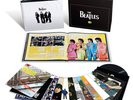
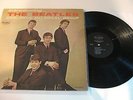
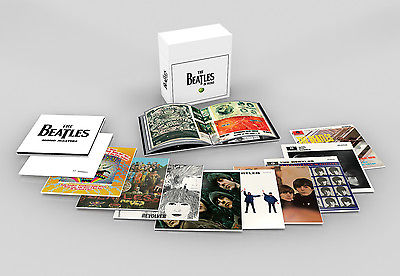
BRAND NEW/MINT/SEALED THE BEATLES IN MONO LIMITED EDITION 14X VINYL LP BOX SET
$
240


Favourite Auctions
To save auctions to your favourites, please login
If you don't have an account, please register
Description
Artist
THE BEATLES
Title
THE BEATLES IN MONO
Item
14 x vinyl LP Box Set
Released September 2014 Label Apple Records
Catalog
5099963379716
Condition NEW/SS (Brand new, original factory sealed condition)
Info
This is how most listeners first heard the group in the 1960s, when mono was the predominant audio format. Up until 1968, each Beatles album was given a unique mono and stereo mix, but the group always regarded the mono as primary. In September 2014, The Beatles’ nine U.K. albums, the American-compiled Magical Mystery Tour, and the Mono Masters collection of non-album tracks will be released in mono on 180-gram vinyl LPs with faithfully replicated artwork. Newly mastered from the analogue master tapes, each album will be available both individually and within a lavish, limited 14-LP boxed edition, The Beatles In Mono, which also includes a 108-page hardbound book.
In an audiophile-minded undertaking, The Beatles’ acclaimed mono albums have been newly mastered for vinyl from quarter-inch master tapes at Abbey Road Studios by GRAMMY(R)-winning engineer Sean Magee and GRAMMY(R)-winning mastering supervisor Steve Berkowitz. While The Beatles In Mono CD boxed set released in 2009 was created from digital remasters, for this new vinyl project, Magee and Berkowitz cut the records without using any digital technology. Instead, they employed the same procedures used in the 1960s, guided by the original albums and by detailed transfer notes made by the original cutting engineers.
Working in the same room at Abbey Road where most of The Beatles’ albums were initially cut, the pair first dedicated weeks to concentrated listening, fastidiously comparing the master tapes with first pressings of the mono records made in the 1960s. Using a rigorously tested Studer A80 machine to play back the precious tapes, the new vinyl was cut on a 1980s-era VMS80 lathe.
Manufactured for the world at Optimal Media in Germany, The Beatles’ albums are presented in their original glory, both sonically and in their packaging. The boxed collection’s exclusive 12-inch by 12-inch hardbound book features new essays and a detailed history of the mastering process by award-winning radio producer and author Kevin Howlett. The book is illustrated with many rare studio photos of The Beatles, fascinating archive documents, and articles and advertisements sourced from 1960s publications.
The Beatles In Mono
14-LP boxed edition, accompanied by an exclusive 108-page hardbound book.
Please Please Me (Mono) [Vinyl LP]
With The Beatles (Mono) [Vinyl LP]
A Hard Day's Night (Mono) [Vinyl LP]
Beatles For Sale (Mono) [Vinyl LP]
Help! (Mono) [Vinyl LP]
Rubber Soul (Mono) [Vinyl LP]
Revolver (Mono) [Vinyl LP]
Sgt. Pepper's Lonely Hearts Club Band (Mono) [Vinyl LP]
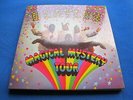
Magical Mystery Tour (Mono) [Vinyl LP]
The Beatles (The White Album) (Mono) [2LP Vinyl]
Mono Masters (Mono) [3LP Vinyl]
Please Please Me
A1 –The Beatles I Saw Her Standing There
Composed By – McCartney-Lennon*
2:58
A2 –The Beatles Misery
Composed By – McCartney-Lennon*
1:53
A3 –The Beatles Anna (Go To Him)
Composed By – Alexander*
3:00
A4 –The Beatles Chains
Composed By – Goffin-King*
2:29
A5 –The Beatles Boys
Composed By – Dixon*, Farrell*
2:29
A6 –The Beatles Ask Me Why
Composed By – McCartney-Lennon*
2:30
A7 –The Beatles Please Please Me
Composed By – McCartney-Lennon*
2:06
B1 –The Beatles Love Me Do
Composed By – McCartney-Lennon*
2:24
B2 –The Beatles P.S. I Love You
Composed By – McCartney-Lennon*
2:08
B3 –The Beatles Baby It's You
Composed By – Williams*, Bacharach*, David*
2:42
B4 –The Beatles Do You Want To Know A Secret
Composed By – McCartney-Lennon*
2:01
B5 –The Beatles A Taste Of Honey
Composed By – Scott*, Marlow*
2:06
B6 –The Beatles There's A Place
Composed By – McCartney-Lennon*
1:54
B7 –The Beatles Twist And Shout
Composed By – Russell*, Medley*
2:36
With The Beatles
C1 –The Beatles It Won't Be Long
Composed By – Lennon-McCartney
2:16
C2 –The Beatles All I've Got To Do
Composed By – Lennon-McCartney
2:06
C3 –The Beatles All My Loving
Composed By – Lennon-McCartney
2:13
C4 –The Beatles Don't Bother Me
Composed By – Harrison*
2:31
C5 –The Beatles Little Child
Composed By – Lennon-McCartney
1:50
C6 –The Beatles Till There Was You
Composed By – Willson*
2:19
C7 –The Beatles Please Mister Postman
Composed By – Holland*, Freddie Gorman, Georgia Dobbins, Robert Bateman, William Garrett
2:39
D1 –The Beatles Roll Over Beethoven
Composed By – Berry*
2:49
D2 –The Beatles Hold Me Tight
Composed By – Lennon-McCartney
2:35
D3 –The Beatles You Really Got A Hold On Me
Composed By – Robinson*
3:04
D4 –The Beatles I Wanna Be Your Man
Composed By – Lennon-McCartney
2:01
D5 –The Beatles Devil In Her Heart
Composed By – Drapkin*
2:30
D6 –The Beatles Not A Second Time
Composed By – Lennon-McCartney
2:12
D7 –The Beatles Money (That's What I Want)
Composed By – Gordy*, Bradford*
2:49
A Hard Day's Night
E1 –The Beatles A Hard Day's Night
Words By, Music By – John Lennon And Paul McCartney*
2:35
E2 –The Beatles I Should Have Known Better
Words By, Music By – John Lennon And Paul McCartney*
2:47
E3 –The Beatles If I Fell
Words By, Music By – John Lennon And Paul McCartney*
2:24
E4 –The Beatles I'm Happy Just To Dance With You
Words By, Music By – John Lennon And Paul McCartney*
2:00
E5 –The Beatles And I Love Her
Words By, Music By – John Lennon And Paul McCartney*
2:34
E6 –The Beatles Tell Me Why
Words By, Music By – John Lennon And Paul McCartney*
2:13
E7 –The Beatles Can't Buy Me Love
Words By, Music By – John Lennon And Paul McCartney*
2:17
F1 –The Beatles Any Time At All
Words By, Music By – John Lennon And Paul McCartney*
2:16
F2 –The Beatles I'll Cry Instead
Words By, Music By – John Lennon And Paul McCartney*
1:50
F3 –The Beatles Things We Said Today
Words By, Music By – John Lennon And Paul McCartney*
2:41
F4 –The Beatles When I Get Home
Words By, Music By – John Lennon And Paul McCartney*
2:21
F5 –The Beatles You Can't Do That
Words By, Music By – John Lennon And Paul McCartney*
2:39
F6 –The Beatles I'll Be Back
Words By, Music By – John Lennon And Paul McCartney*
2:23
Beatles For Sale
G1 –The Beatles No Reply
Composed By – Lennon-McCartney
2:21
G2 –The Beatles I'm A Loser
Composed By – Lennon-McCartney
2:38
G3 –The Beatles Baby's In Black
Composed By – Lennon-McCartney
2:12
G4 –The Beatles Rock And Roll Music
Composed By – Berry*
2:38
G5 –The Beatles I'll Follow The Sun
Composed By – Lennon-McCartney
1:55
G6 –The Beatles Mr. Moonlight
Composed By – Johnson*
2:41
G7 –The Beatles Kansas City / Hey-Hey-Hey-Hey!
Composed By – Lieber-Stoller*
Composed By [Uncredited] – Richard Penniman
2:38
H1 –The Beatles Eight Days A Week
Composed By – Lennon-McCartney
2:50
H2 –The Beatles Words Of Love
Composed By – Holly*
2:19
H3 –The Beatles Honey Don't
Composed By – Perkins*
3:04
H4 –The Beatles Every Little Thing
Composed By – Lennon-McCartney
2:08
H5 –The Beatles I Don't Want To Spoil The Party
Composed By – Lennon-McCartney
2:40
H6 –The Beatles What You're Doing
Composed By – Lennon-McCartney
2:38
H7 –The Beatles Everybody's Trying To Be My Baby
Composed By – Perkins*
2:27
Help!
I1 –The Beatles Help!
Composed By – Lennon-McCartney
2:23
I2 –The Beatles The Night Before
Composed By – Lennon-McCartney
2:37
I3 –The Beatles You've Got To Hide Your Love Away
Composed By – Lennon-McCartney
2:12
I4 –The Beatles I Need You
Composed By – Harrison*
2:33
I5 –The Beatles Another Girl
Composed By – Lennon-McCartney
2:09
I6 –The Beatles You're Going To Lose That Girl
Composed By – Lennon-McCartney
2:22
I7 –The Beatles Ticket To Ride
Composed By – Lennon-McCartney
3:08
J1 –The Beatles Act Naturally
Composed By – Russell*, Morrison*
2:34
J2 –The Beatles It's Only Love
Composed By – Lennon-McCartney
2:00
J3 –The Beatles You Like Me Too Much
Composed By – Harrison*
2:40
J4 –The Beatles Tell Me What You See
Composed By – Lennon-McCartney
2:40
J5 –The Beatles I've Just Seen A Face
Composed By – Lennon-McCartney
2:09
J6 –The Beatles Yesterday
Composed By – Lennon-McCartney
2:09
J7 –The Beatles Dizzy Miss Lizzy
Composed By – Williams*
3:03
Rubber Soul
K1 –The Beatles Drive My Car
Composed By – Lennon-McCartney
2:34
K2 –The Beatles Norwegian Wood (This Bird Has Flown)
Composed By – Lennon-McCartney
2:09
K3 –The Beatles You Won't See Me
Composed By – Lennon-McCartney
3:30
K4 –The Beatles Nowhere Man
Composed By – Lennon-McCartney
2:47
K5 –The Beatles Think For Yourself
Composed By – Harrison*
2:22
K6 –The Beatles The Word
Composed By – Lennon-McCartney
2:49
K7 –The Beatles Michelle
Composed By – Lennon-McCartney
2:40
L1 –The Beatles What Goes On
Composed By – Lennon*, McCartney*, Starkey*
2:52
L2 –The Beatles Girl
Composed By – Lennon-McCartney
2:34
L3 –The Beatles I'm Looking Through You
Composed By – Lennon-McCartney
2:34
L4 –The Beatles In My Life
Composed By – Lennon-McCartney
2:30
L5 –The Beatles Wait
Composed By – Lennon-McCartney
2:18
L6 –The Beatles If I Needed Someone
Composed By – Harrison*
2:25
L7 –The Beatles Run For Your Life
Composed By – Lennon-McCartney
2:31
Revolver
M1 –The Beatles Taxman
Composed By – Harrison*
2:42
M2 –The Beatles Eleanor Rigby
Composed By – Lennon-McCartney
2:09
M3 –The Beatles I'm Only Sleeping
Composed By – Lennon-McCartney
3:03
M4 –The Beatles Love You To
Composed By – Harrison*
3:08
M5 –The Beatles Here, There And Everywhere
Composed By – Lennon-McCartney
2:26
M6 –The Beatles Yellow Submarine
Composed By – Lennon-McCartney
2:42
M7 –The Beatles She Said She Said
Composed By – Lennon-McCartney
2:39
N1 –The Beatles Good Day Sunshine
Composed By – Lennon-McCartney
2:12
N2 –The Beatles And Your Bird Can Sing
Composed By – Lennon-McCartney
2:03
N3 –The Beatles For No One
Composed By – Lennon-McCartney
2:02
N4 –The Beatles Dr. Robert
Composed By – Lennon-McCartney
2:17
N5 –The Beatles I Want To Tell You
Composed By – Harrison*
2:32
N6 –The Beatles Got To Get You Into My Life
Composed By – Lennon-McCartney
2:39
N7 –The Beatles Tomorrow Never Knows
Composed By – John Lennon, Paul McCartney*
2:58
Sgt. Pepper's Lonely Hearts Club Band
O1 –The Beatles Sgt. Pepper's Lonely Hearts Club Band
Composed By – John Lennon & Paul McCartney*
2:03
O2 –The Beatles With A Little Help From My Friends
Composed By – John Lennon & Paul McCartney*
2:45
O3 –The Beatles Lucy In The Sky With Diamonds
Composed By – John Lennon & Paul McCartney*
3:28
O4 –The Beatles Getting Better
Composed By – John Lennon & Paul McCartney*
2:47
O5 –The Beatles Fixing A Hole
Composed By – John Lennon & Paul McCartney*
2:38
O6 –The Beatles She's Leaving Home
Composed By – John Lennon & Paul McCartney*
3:26
O7 –The Beatles Being For The Benefit Of Mr. Kite!
Composed By – John Lennon & Paul McCartney*
2:39
P1 –The Beatles Within You Without You
Composed By – George Harrison
5:08
P2 –The Beatles When I'm Sixty-Four
Composed By – John Lennon & Paul McCartney*
2:40
P3 –The Beatles Lovely Rita
Composed By – John Lennon & Paul McCartney*
2:46
P4 –The Beatles Good Morning Good Morning
Composed By – John Lennon & Paul McCartney*
2:35
P5 –The Beatles Sgt. Pepper's Lonely Hearts Club Band (Reprise)
Composed By – John Lennon & Paul McCartney*
1:19
P6 –The Beatles A Day In The Life
Composed By – John Lennon & Paul McCartney*
5:36
Magical Mystery Tour
Q1 –The Beatles Magical Mystery Tour
Composed By – John Lennon-Paul McCartney*
2:52
Q2 –The Beatles The Fool On The Hill
Composed By – John Lennon-Paul McCartney*
3:00
Q3 –The Beatles Flying
Composed By – Harrison*, Lennon*, McCartney*, Starr*
2:17
Q4 –The Beatles Blue Jay Way
Composed By – George Harrison
3:57
Q5 –The Beatles Your Mother Should Know
Composed By – John Lennon-Paul McCartney*
2:31
Q6 –The Beatles I Am The Walrus
Composed By – John Lennon-Paul McCartney*
4:36
R1 –The Beatles Hello Goodbye
Composed By – John Lennon-Paul McCartney*
3:31
R2 –The Beatles Strawberry Fields Forever
Composed By – John Lennon-Paul McCartney*
4:10
R3 –The Beatles Penny Lane
Composed By – John Lennon-Paul McCartney*
3:04
R4 –The Beatles Baby You're A Rich Man
Composed By – John Lennon-Paul McCartney*
3:09
R5 –The Beatles All You Need Is Love
Composed By – John Lennon-Paul McCartney*
3:59
The Beatles
S1 –The Beatles Back In The U.S.S.R.
Composed By – Lennon-McCartney
2:44
S2 –The Beatles Dear Prudence
Composed By – Lennon-McCartney
3:54
S3 –The Beatles Glass Onion
Composed By – Lennon-McCartney
2:18
S4 –The Beatles Ob-La-Di, Ob-La-Da
Composed By – Lennon-McCartney
3:09
S5 –The Beatles Wild Honey Pie
Composed By – Lennon-McCartney
0:54
S6 –The Beatles The Continuing Story Of Bungalow Bill
Composed By – Lennon-McCartney
3:14
S7 –The Beatles While My Guitar Gently Weeps
Composed By – G. Harrison*
4:48
S8 –The Beatles Happiness Is A Warm Gun
Composed By – Lennon-McCartney
2:44
T1 –The Beatles Martha, My Dear
Composed By – Lennon-McCartney
2:28
T2 –The Beatles I'm So Tired
Composed By – Lennon-McCartney
2:03
T3 –The Beatles Blackbird
Composed By – Lennon-McCartney
2:19
T4 –The Beatles Piggies
Composed By – G. Harrison*
2:03
T5 –The Beatles Rocky Raccoon
Composed By – Lennon-McCartney
3:33
T6 –The Beatles Don't Pass Me By
Composed By – R. Starkey*
3:46
T7 –The Beatles Why Dont We Do It In The Road
Composed By – Lennon-McCartney
1:42
T8 –The Beatles I Will
Composed By – Lennon-McCartney
1:45
T9 –The Beatles Julia
Composed By – Lennon-McCartney
2:54
U1 –The Beatles Birthday
Composed By – Lennon-McCartney
2:43
U2 –The Beatles Yer Blues
Composed By – Lennon-McCartney
4:14
U3 –The Beatles Mother Nature's Son
Composed By – Lennon-McCartney
2:46
U4 –The Beatles Everybody's Got Something To Hide Except Me And My Monkey
Composed By – Lennon-McCartney
2:25
U5 –The Beatles Sexy Sadie
Composed By – Lennon-McCartney
3:15
U6 –The Beatles Helter Skelter
Composed By – Lennon-McCartney
3:39
U7 –The Beatles Long, Long, Long
Composed By – G. Harrison*
3:05
V1 –The Beatles Revolution 1
Composed By – Lennon-McCartney
4:16
V2 –The Beatles Honey Pie
Composed By – Lennon-McCartney
2:41
V3 –The Beatles Savoy Truffle
Composed By – G. Harrison*
2:54
V4 –The Beatles Cry, Baby, Cry
Composed By – Lennon-McCartney
3:02
V5 –The Beatles Revolution 9
Composed By – Lennon-McCartney
8:32
V6 –The Beatles Good Night
Composed By – Lennon-McCartney
3:13
Mono Masters
W1 –The Beatles Love Me Do (Original Single Version)
Composed By – John Lennon And Paul McCartney*
2:25
W2 –The Beatles From Me To You
Composed By – John Lennon And Paul McCartney*
1:57
W3 –The Beatles Thank You Girl
Composed By – John Lennon And Paul McCartney*
2:04
W4 –The Beatles She Loves You
Composed By – John Lennon And Paul McCartney*
2:21
W5 –The Beatles I'll Get You
Composed By – John Lennon And Paul McCartney*
2:06
W6 –The Beatles I Want To Hold Your Hand
Composed By – John Lennon And Paul McCartney*
2:26
W7 –The Beatles This Boy
Composed By – John Lennon And Paul McCartney*
2:16
X1 –The Beatles Komm, Gib Mir Deine Hand
Composed By – John Lennon And Paul McCartney*
2:26
X2 –The Beatles Sie Liebt Dich
Composed By – John Lennon And Paul McCartney*
2:19
X3 –The Beatles Long Tall Sally
Composed By – Enotris Johnson, Richard Penniman, Robert Blackwell
2:03
X4 –The Beatles I Call Your Name
Composed By – John Lennon And Paul McCartney*
2:11
X5 –The Beatles Slow Down
Composed By – Larry Williams (3)
2:57
X6 –The Beatles Matchbox
Composed By – Carl Perkins
1:59
X7 –The Beatles I Feel Fine
Composed By – John Lennon And Paul McCartney*
2:23
X8 –The Beatles She's A Woman
Composed By – John Lennon And Paul McCartney*
3:04
Y1 –The Beatles Bad Boy
Composed By – Larry Williams (3)
2:20
Y2 –The Beatles Yes It Is
Composed By – John Lennon And Paul McCartney*
2:42
Y3 –The Beatles I'm Down
Composed By – John Lennon And Paul McCartney*
2:38
Y4 –The Beatles Day Tripper
Composed By – John Lennon And Paul McCartney*
2:52
Y5 –The Beatles We Can Work It Out
Composed By – John Lennon And Paul McCartney*
2:15
Y6 –The Beatles Paperback Writer
Composed By – John Lennon And Paul McCartney*
2:26
Y7 –The Beatles Rain
Composed By – John Lennon And Paul McCartney*
3:01
Z1 –The Beatles Lady Madonna
Composed By – John Lennon And Paul McCartney*
2:17
Z2 –The Beatles The Inner Light
Composed By – George Harrison
2:36
Z3 –The Beatles Hey Jude
Composed By – John Lennon And Paul McCartney*
7:20
Z4 –The Beatles Revolution
Composed By – John Lennon And Paul McCartney*
3:25
Ä1 –The Beatles Only A Northern Song
Composed By – George Harrison
3:26
Ä2 –The Beatles All Together Now
Composed By – John Lennon And Paul McCartney*
2:11
Ä3 –The Beatles Hey Bulldog
Composed By – John Lennon And Paul McCartney*
3:14
Ä4 –The Beatles It's All Too Much
Composed By – George Harrison
6:22
Ö1 –The Beatles With Billy Preston Get Back
Composed By – John Lennon And Paul McCartney*
3:11
Ö2 –The Beatles With Billy Preston Don't Let Me Down
Composed By – John Lennon And Paul McCartney*
3:33
Ö3 –The Beatles Across The Universe
Composed By – John Lennon And Paul McCartney*
3:50
Ö4 –The Beatles You Know My Name (Look Up The Number)
Composed By – John Lennon And Paul McCartney*
4:24
Companies, etc.
Made By – Optimal Media GmbH
Mastered At – Abbey Road Studios
Phonographic Copyright (p) – Calderstone Productions Limited
Copyright (c) – Calderstone Productions Limited
Copyright (c) – Apple Corps Ltd.
Credits
Liner Notes [Mastering Process] – Kevin Howlett
Mastered By – Sean Magee
Mastered By [Supervisor] – Steve Berkowitz
Notes
The Mono Mixes from the original masters. 11 Albums pressed on heavyweight 180 g vinyl. Replicas of the original LP sleeves and artwork. The Mono Masters compilation released on vinyl for the first time.
The collection includes a lavishly 12×12 illustrated 108 page hardback book.
Artwork © Apple Corps ltd.
Please Please Me ?1963 ©2014 Calderstone Productions Limited
With The Beatles ?1963 ©2014 Calderstone Productions Limited
A Hard Day's Night ?1964 ©2014 Calderstone Productions Limited
Beatles for Sale ?1964 ©2014 Calderstone Productions Limited
Help! ?1965 ©2014 Calderstone Productions Limited
Rubber Soul ?1965 ©2014 Calderstone Productions Limited
Revolver ?1966 ©2014 Calderstone Productions Limited
Sgt. Pepper's Lonely Hearts Club Band ?1967 ©2014 Calderstone Productions Limited
Magical Mystery Tour ?1967 ©2014 Calderstone Productions Limited
The Beatles ?1968 ©2014 Calderstone Productions Limited
Mono Masters ?1962 ?1963 ?1964 ?1965 ?1966 ?1968 ?1969 ?1970 ?2009 ©2014 Calderstone Productions Limited
Barcode and Other Identifiers
Barcode: 5099969945120
Rights Society: SDRM BIEM
Label Code: LC 01846
Other (Please Please Me, Disc No.): 5099963379815
Matrix / Runout (Please Please Me, Side 1, Etched): 6337981 BD16687-01 A1 SF N.S. W
Matrix / Runout (Please Please Me, Side 2, Etched): 6337981 BD16687-01 B1 H.M. N i...i
Other (With The Beatles, Disc No.): 5099963379914
Matrix / Runout (With The Beatles, Side 1, Etched): 6337991 BD16694-01 A1 ST N.S. L
Matrix / Runout (With The Beatles, Side 2, Etched): 6337991 BD13970-01 B1 D i...i
Other (A Hard Day's Night, Disc No.): 5099963380019
Matrix / Runout (A Hard Day's Night, Side 1, Etched): 6338001 BD13968-01 A1 N.S. U
Matrix / Runout (A Hard Day's Night, Side 2, Etched): 6338001 BD16691-01 B1 T=1 8 i...i
Other (Beatles For Sale, Disc No.): 5099963380118
Matrix / Runout (Beatles For Sale, Side 1, Etched): 6338011 BD13966-01 A1 N.S. E
Matrix / Runout (Beatles For Sale, Side 2, Etched): 6338011 BD11920-01 B1 A i...i
Other (Help!, Disc No.): 5099963380217
Matrix / Runout (Help!, Side 1, Etched): 6338021 BD11631-01 A1 R N.S.
Matrix / Runout (Help!, Side 2, Etched): 6338021 BD13958-01 B1 A i...i
Other (Rubber Soul, Disc No.): 5099963380316
Matrix / Runout (Rubber Soul, Side 1, Etched): 6338031 BD14114-01 A1 N N.S.
Matrix / Runout (Rubber Soul, Side 2, Etched): 6338031 BD14114-01 B1 K i...i
Other (Revolver, Disc No.): 5099963380415
Matrix / Runout (Revolver, Side 1, Etched): 6338041 BD11539-01 A1 M G.E.
Matrix / Runout (Revolver, Side 2, Etched): 6338041 BD11539-01 B1 D. i...i
Other (Sgt. Pepper's..., Disc No.): 5099963380514
Matrix / Runout (Sgt. Pepper's..., Side 1, Etched): 6338051 BD14108-01 A2 G.E. O
Matrix / Runout (Sgt. Pepper's..., Side 2, Etched): 6338051 BD14108-01 B1 D i...i
Other (Magical Mystery Tour, Disc No.): MAL-2835 (5099963380613)
Matrix / Runout (Magical Mystery Tour, Side 1, Etched): 6338061 BD18305-01 A1 O G.E.
Matrix / Runout (Magical Mystery Tour, Side 2, Etched): 6338061 BD18305-01 B1 B i...i
Other (The Beatles, Disc One No.): 5099963380712
Matrix / Runout (The Beatles, Side 1, Etched): 6338071 BD14117-01 A2 G.E. K.S. B.S. O
Matrix / Runout (The Beatles, Side 2, Etched): 6338071 BD14117-01 B1 A i...i
Other (The Beatles, Disc Two No.): 5099963380811
Matrix / Runout (The Beatles, Side 3, Etched): 6338081 BD14120-01 A1 E
Matrix / Runout (The Beatles, Side 4, Etched): 6338081 BD14120-01 B1 A i...i
Label Code (Mono Masters): LC 0299
Other (Mono Masters, Disc One No.): 5099908271518
Matrix / Runout (Mono Masters, Side 1, Etched): 0827151 BD20087-01 A2 51 Y
Matrix / Runout (Mono Masters, Side 2, Etched): 0827151 BD20087-01 B2 IV i...i
Other (Mono Masters, Disc Two No.): 5099908271617
Matrix / Runout (Mono Masters, Side 3, Etched): 08281617 BD20088-01 A2 T 3=1
Matrix / Runout (Mono Masters, Side 4, Etched): 08271617 BD20088-01 B2 B i...i 5+=
Other (Mono Masters, Disc Three No.): 00602537734504
Matrix / Runout (Mono Masters, Side 5, Etched): 4090231 BD20091-01 A1 1+T ?
Matrix / Runout (Mono Masters, Side 6, Etched): 08271617 BE48109-01 B1 i...i
Payment & Shipping PayPal is the preferred method of payment.
All items are packed with individual care in sturdy protective mailers and shipped promptly upon receipt of payment
100% positive feedback rated seller since 1998.
With ManhattanMusic, you can bid with confidence!
Be sure to check out ManhattanMusic's other items currently available for your consideration.
Bio
The Beatles were a rock and pop group formed in Liverpool, England in 1960 who became one of the most commercially successful and critically acclaimed bands in the history of popular music. During their years of stardom,the band consisted of John Lennon (rhythm guitar, vocals), Paul McCartney (bass guitar, piano, vocals), George Harrison (lead guitar, vocals) and Ringo Starr (drums, vocals). Although their initial musical style was rooted in 1950s rock and roll and skiffle, the group worked with different musical genres, ranging from Tin Pan Alley to psychedelic rock. Their clothes, style and statements made them trend-setters, while their growing social awareness saw their influence extend into the social and cultural revolutions of the 1960s.
Returning to Liverpool following periods of Hamburg residency during 1960, 1961 and 1962, the group appointed Brian Epstein manager, and he negotiated a record contract with EMI's George Martin; Epstein would manage the band until his death in 1967, and Martin produced all but one of the groups studio albums. The single "Please Please Me" achieved UK chart success in late 1962. The group attracted fervent interest, termed "Beatlemania", during tours of the UK and Europe throughout the next year. "I Want to Hold Your Hand" found U.S. chart success at the close of 1963, spearheading the group's international popularity, and they toured the U.S. and other countries over the next three years. During this period, Lennon, McCartney, Harrison and Starr were each honoured with an MBE. In 1966 the group found themselves mired in controversy, including widespread antipathy in the U.S. after a magazine published a quote from Lennon's remarks on Christianity. They ceased to perform commercial concerts after the 1966 U.S. tour, concentrating instead on studio work and enjoying continued international chart success. In 1967 the group met Maharishi Mahesh Yogi, who introduced them to Transcendental Meditation. The same year, Epstein died from an overdose of a prescription drug. The group spent time in India, treating the Maharishi as their guru for a short time, but became disillusioned with him. Increasingly dominated by conflict, and further alienated from one another by a disagreement about the appointment of a new financial adviser, the group disintegrated in 1970. All four members embarked upon successful solo careers.
The Beatles sold between 600 million and one billion records internationally. In the United Kingdom they released more than 40 different singles, albums, and EPs that reached number one, earning more number one albums (15) than any other group in UK chart history. According to the Recording Industry Association of America, they have sold more albums in the United States than any other artist. In 2004, Rolling Stone magazine ranked them number one in its list of 100 Greatest Artists of All Time, and four of their albums appeared in the top ten of the magazine's 500 Greatest Albums of All Time list. According to that same magazine, The Beatles' innovative music and cultural impact helped define the 1960s, and their influence on pop culture is still evident today. In 2008, Billboard magazine released a list of top-selling Hot 100 artists to celebrate the chart's fiftieth anniversary, with The Beatles at #1. The Beatles were collectively included in Time magazine's list of The Most Important People of the 20th Century.
In March 1957, John Lennon formed a skiffle group called The Quarrymen. In July of the same year, Lennon met Paul McCartney, who agreed to join as a guitarist. McCartney invited George Harrison to watch the group during February 1958, and Harrison joined as lead guitarist. The group's drummer, Colin Hanton, left in 1959, after which they had difficulty finding a permanent replacement. Stuart Sutcliffe, a fellow student of Lennon's at the Liverpool College of Art, joined on bass in January 1960. During the year they went through a succession of name-changes. Sutcliffe suggested "The Beetles" as a tribute to Buddy Holly and The Crickets, and for the first few months of 1960 they were known as "The Beatals". Other names included "Johnny and the Moondogs", "Long John and The Beetles" and "The Silver Beatles". The band finally became "The Beatles" in August 1960. The lack of a permanent drummer posed a problem when the group's unofficial manager Allan Williams booked them to perform as resident band for a period in Hamburg, West Germany.
The group auditioned drummer Pete Best on 12 August 1960. Four days after hiring Best, they left for Hamburg, contracted to fairground showman Bruno Koschmider for a 48-night residency.
"Hamburg in those days did not have rock'n'roll music clubs. It had strip clubs," says biographer Philip Norman. "Bruno had the idea of bringing in rock groups to play in various clubs. They had this formula. It was a huge nonstop show, hour after hour, with a lot of people lurching in and the other lot lurching out. And the bands would play all the time to catch the passing traffic. In an American red-light district, they would call it nonstop striptease."
"Many of the bands that played in Hamburg were from Liverpool...It was an accident. Bruno went to London to look for bands. But he happened to meet a Liverpool entrepreneur in Soho, who was down in London by pure chance. And he arranged to send some bands over. That's how the connection was established. And eventually the Beatles made a connection not just with Bruno, but with other club owners as well. They kept going back, because they got a lot of alcohol and a lot of sex."
Initially placing them at the Indra Club, Koschmider moved them to the Kaiserkeller in October after the Indra was closed due to complaints about the noise. When they violated their contract by performing at the rival Top Ten Club, Koschmider reported the under-age Harrison to the German authorities, leading to his deportation on 21 November 1960. McCartney and Best were arrested for arson a week later when they set fire to a condom hung on a nail in their room. They too were deported. Lennon returned to Liverpool in mid-December. Sutcliffe remained in Hamburg with his new German fiancée Astrid Kirchherr, and the rest of the group played an engagement on 17 December 1960 at Liverpool's Casbah Coffee Club, with Chas Newby substituting for Sutcliffe.
During 1961 and 1962, the group were engaged for further periods in Hamburg. They also became increasingly popular in Liverpool, making frequent appearances at The Cavern Club, where Brian Epstein first saw them perform. Returning to Hamburg's Top Ten club in April 1961, they were recruited by singer Tony Sheridan, also resident at the club, to act as his backing band on a series of recordings for the German Polydor Records label. Bert Kaempfert, acting as producer, contracted the group to Polydor at the first session on 22 June 1961. The single "My Bonnie", released on 31 October, entered the German charts. When the group returned to Liverpool, Sutcliffe stayed in Hamburg with Kirchherr, so McCartney switched from guitar to bass.
The Beatles signed a five-year contract with Epstein on 24 January 1962. Kaempfert agreed to release them from their Polydor contract, but Decca Records A&R executive Dick Rowe turned Epstein down, informing him that "Guitar groups are on the way out, Mr. Epstein." (See The Decca audition.) Epstein then approached an EMI marketing executive, Ron White, who contacted EMI producers Norrie Paramor, Walter Ridley, and Norman Newell, all of whom declined to record the band. EMI's fourth staff producer, George Martin, was on holiday at the time. In April the group returned to Hamburg for a seven-week residency at the Star-Club. Upon their arrival, they were informed of Sutcliffe's death from a brain haemorrhage.
Epstein went to the HMV store on Oxford Street in London to transfer the songs recorded at Decca's studio to discs. He was referred to Sid Coleman, who ran EMI's publishing department. Epstein eventually met Martin, who signed the group to EMI's Parlophone label on a one-year renewable contract. After the first recordings, Martin complained to Epstein about Best's drumming, and suggested that the band use a session drummer in the studio. Epstein was already exasperated with Best's refusal to adopt the groups's unified look onstage, and when the group heard about Martin's feelings they asked Epstein to dismiss Best, which he did on 16 August 1962, replacing him with Ringo Starr. As drummer for Rory Storm and the Hurricanes Starr had performed occasionally with The Beatles when Best was ill. After joining the band, he played during the second EMI recording session, on 4 September 1962. Martin then hired session drummer Andy White for the 11 September session, although White's only released performances were recordings of "Love Me Do" and "P.S. I Love You". "Love Me Do" would reach the top of the U.S. singles chart in May 1964, but in 1962 produced only a minor UK hit, peaking at number seventeen on the chart. On 26 November 1962 the band recorded their second single, "Please Please Me", which reached number two in the UK. The follow-up single, "From Me to You", gave them their first UK number one. On 17 October 1962 they made their TV debut with a performance on the regional news programme People and Places, transmitted live from Manchester by Granada Television. As their popularity spread, the frenzied adulation of the group was dubbed "Beatlemania". The last two Hamburg stints, in November and December 1962, involved another 90 hours of performing. All told, they performed for 270 nights in just over a year and a half, performing live an estimated 1,200 times.
In 1963, The Beatles' iconic "drop-T" logo made its appearance. Based on an impromptu design sketched by Ivor Arbiter when Epstein and Starr purchased a new drum kit from his London shop, the logo was first used on the front of Starr's bass drum. The band toured the UK four times during the year. February's four-week tour was followed by three-week tours in March and May and a six-week tour in November. As well as the four tours, the group gave numerous one-off shows across the UK. Performances everywhere were attended with riotous enthusiasm by screaming fans. Police found it necessary to use high-pressure water hoses to control the crowds, and there were debates in Parliament over the thousands of police officers putting themselves at risk to protect the group. Although not billed as tour leaders, The Beatles overshadowed the other acts, including Tommy Roe, Chris Montez and Roy Orbison, U.S. artists who had established great popularity in the UK.
The first single releases in the United States were delayed when Capitol Records, although owned by EMI, declined to issue either "Please Please Me" or "From Me to You". Negotiations with independent record labels produced some releases, but there were other obstacles to commercial success including issues with royalties and derision of the Beatle haircut. In December 1963, Capitol rush-released "I Want to Hold Your Hand" after a news broadcast about Beatlemania in the UK triggered sudden demand, and U.S. chart success followed rapidly.
On 7 February 1964, the day of the first Beatles trip to the United States, an estimated four thousand fans congregated at Heathrow Airport, waving and screaming as the aircraft left the ground. "I Want to Hold Your Hand" had sold 2.6 million copies in the U.S. over the previous two weeks, but the group were still nervous about how they would be received. Their arrival at John F. Kennedy Airport was greeted by another large, vociferous crowd, estimated at about three thousand in number. Two days after landing in the U.S. they gave their first live American television performance on The Ed Sullivan Show, watched by approximately seventy-four million viewers—a number representing about half the American population at the time. The morning after the show, one newspaper wrote that The Beatles "could not carry a tune across the Atlantic", but their first U.S. concert, staged a day later at Washington Coliseum, Washington, D.C., saw Beatlemania start in the United States too. After performing at Carnegie Hall, New York the following day, the band appeared on the weekly Ed Sullivan Show for the second time, returning to the UK on 22 February 1964. During the week of 4 April 1964, The Beatles held twelve positions on the Billboard Hot 100 singles chart, including the top five positions. Their popularity generated unprecedented interest in British music, and a number of other UK acts made their own U.S. debuts with successful tours over the next three years in what was termed the British Invasion.
The Beatles toured internationally from 4 to 30 June 1964, performing in Denmark, Hong Kong, Australia and New Zealand. After a handful of concerts back in the UK, they gave two performances in Sweden. In August they returned to the United States, building on February's shows with a thirty-concert tour of twenty-three cities. Before returning to the UK they were introduced to Bob Dylan when New York journalist Al Aronowitz arranged a meeting at their hotel.
United Artists Records, noticing Capitol's lack of interest in U.S. record releases in 1963, had encouraged United Artists' film division to offer The Beatles a motion picture deal in the hope that it would lead to a record deal. The first film, A Hard Day's Night, premiered in London and New York in July and August 1964 and was an international success.
In June 1965, Queen Elizabeth II appointed the four Beatles "Members of the Order of the British Empire", MBE. They were nominated by the Prime Minister, Harold Wilson. The appointment—at that time primarily bestowed upon military veterans and civic leaders—sparked controversy and some conservative MBE recipients returned their insignia in protest.
On 15 August 1965, The Beatles marked the start of their third U.S. visit with the first major stadium concert in history. Shea Stadium in New York saw a crowd of 55,600 for the performance. A further nine successful concerts followed in other U.S. cities. Towards the end of the tour the group accepted an invitation to visit Elvis Presley, meeting him at his home on 27 August. At Presley's suggestion, guitars were set up in his living room and the gathering played music for an hour, following which they discussed the music business and exchanged anecdotes.
On-stage amplification in the 1960s was modest compared to modern day equipment. The Beatles used only small Vox amplifiers which struggled to compete with the volume of sound generated by screaming fans. By 1965 the band, forced to accept that neither they nor their audiences could hear the details of their performance, were experiencing boredom during concerts.
The Beatles' sixth album, Rubber Soul, was released in early December 1965, and was critically hailed as a major leap forward in the maturity and complexity of the band's music.
In July 1966, during a tour of the Philippines, The Beatles unintentionally snubbed the nation's first lady, Imelda Marcos, who had expected the group to attend a breakfast reception at the Presidential Palace. When presented with the invitation, Epstein politely declined on behalf of the group, as it had never been his policy to accept such official invitations. The group soon found that the Marcos regime was unaccustomed to accepting "no" for an answer; the resulting riots endangered the group and they escaped the country with difficulty.
Almost as soon as they returned from the Philippines, they faced a wave of antipathy from religious and social conservatives in the U.S. following publication of a comment made by Lennon earlier in the year. In an interview with British reporter Maureen Cleave, Lennon offered his opinion that Christianity was dying and that The Beatles were "more popular than Jesus now". When U.S. teenage fan magazine Datebook quoted his comment a backlash developed in the American South's "Bible belt" and South Africa banned airplay of Beatles records in a prohibition that would last until 1971. Epstein publicly criticized Datebook, saying they had taken Lennon's words out of context, and at a press conference on the eve of the group's final U.S. tour, Lennon pointed out, "If I'd said television was more popular than Jesus, I might have got away with it". Lennon said he had only been referring to how other people saw The Beatles, but "if you want me to apologize, if that will make you happy, then okay, I'm sorry".
Capitol Records' release of the Beatles album Yesterday and Today created an uproar, as the cover portrayed the group dressed in butcher's overalls, with raw meat, and mutilated plastic dolls. A popular, though apocryphal, rumour was that this was meant as a response to the way Capitol had "butchered" their albums. Thousands of copies of the album had a new cover pasted over the original. Today, uncensored copies of Yesterday and Today command a high price, and one copy sold for $10,500 at a December 2005 auction.
In August 1966, The Beatles performed their final commercial concert. Staged at Candlestick Park, San Francisco at the close of the 1966 U.S. tour, the performance marked the end of a four-year period dominated by touring and concerts including nearly sixty U.S. appearances and over one thousand four hundred internationally. In November, moving into the phase of their career that would later be known as their studio years, they began recording Sgt. Pepper's Lonely Hearts Club Band. Nearly seven hundred hours of studio time were devoted to recording the album, and the elaborate musical complexity of the result, created using only four-track recording technology, astounded contemporary artists seeking to outdo The Beatles. After hearing "Strawberry Fields Forever", Beach Boys' leader Brian Wilson abandoned all attempts to compete with the band.
Sgt. Pepper was released in June 1967, and the same month, the group performed "All You Need Is Love" to TV viewers worldwide using the first live global television link. In August 1967, The Beatles met Maharishi Mahesh Yogi for the first time.
While The Beatles were at a weekend Transcendental Meditation retreat with the Maharishi in Bangor, Epstein's assistant Peter Brown called to tell them that Epstein had died. The coroner ruled Epstein's death an accidental overdose, but the press speculated it was a suicide at least in part because of a rumour that a suicide note was discovered among Epstein's possessions.
Lennon said that Epstein's death marked the beginning of the end for the group: "I knew that we were in trouble then ... I thought, We've f***in' had it now". Epstein had been in a fragile emotional state due to issues surrounding his personal life, and stress related to his business relationship with The Beatles, as his management contract with them was due to expire in the fall of 1967, and he worried that The Beatles might not renew his contract, based on their discontent with his handling of business matters, including Seltaeb; the company that handled Beatle merchandising rights in the United States. Epstein's death left the group disoriented and fearful about the future. Lennon said later, "I didn't have any misconceptions about our ability to do anything other than play music and I was scared".
In the winter of 1967–1968, The Beatles received their first major negative reviews for the Magical Mystery Tour TV film.
After relying on Epstein since the start of their success, the group turned to Maharishi Mahesh Yogi as their guru. They arranged to spend three months in India with him at his ashram in Rishikesh. Although Starr returned to England after ten days, the time the remaining members spent in India was one of their most creative periods. During February, March and April 1968, they composed dozens of songs, seventeen of which were recorded for The Beatles (popularly known as The White Album).
Yanni Alexis Mardas, The Beatles' electronics technician referred to as Magic Alex or "the Greek wizard", had accompanied the group to the ashram. Mardas expressed the view that the Maharishi was attempting to manipulate them. Near the end of the three-month visit he convinced the group that the Maharishi was not all he had seemed. Lennon's anger led him to write a song called "Maharishi" to make his opinion known, but the title was changed to avoid a legal suit, becoming "Sexy Sadie". McCartney said, "We made a mistake. We thought there was more to him than there was".
On returning from India The Beatles formed Apple Corps, which Epstein had planned to do, as a way of creating a tax-effective company structure. The album Magical Mystery Tour proved popular in the U.S., setting a new record in its first three weeks for highest initial sales of any Capitol album. The Beatles, the first Apple Records album release, was also popular, reaching #1 in the UK and the U.S. among other countries. But during recording sessions for the album, divisions and dissent had started to drive the group apart, and Starr had quit the band for a period, leaving McCartney to perform drums on several tracks.
In January 1969, The Beatles began a film project documenting the making of Let It Be, an album originally to have been titled Get Back. During the recording, the band gave their final live performance on the rooftop of the Apple building at 3 Savile Row, London, on 30 January 1969. Most of the performance was filmed and later included in the film Let It Be. The project was put aside, later to be mixed and orchestrated by the American producer Phil Spector, who had produced Lennon's solo single "Instant Karma!". Conflict arose within the band regarding the appointment of a financial adviser, the need for which had become evident without Epstein to manage business affairs. Lennon favoured Allen Klein, who had negotiated contracts for several UK bands including The Rolling Stones during the British Invasion, but McCartney's choice was John Eastman. Agreement could not be reached, so both were appointed, but further conflict ensued and financial opportunities were lost.
The Beatles recorded their final album, Abbey Road, in the summer of 1969. The completion of the song "I Want You (She's So Heavy)" for the album, on 20 August 1969, was the last time all four Beatles were together in the same studio. Lennon announced his departure to the rest of the group on 20 September 1969, but agreed that no public announcement would be made until a number of legal matters were resolved. Their final new song was Harrison's "I Me Mine", recorded 3 January 1970 and released on Let It Be. It was recorded without Lennon, who was in Denmark at the time.
To complete the Let It Be album, Klein gave the Get Back session tapes to Spector in March 1970, resulting in a Wall of Sound production that went against McCartney's original intent. McCartney was deeply dissatisfied with Spector's addition of fifty musicians to "The Long and Winding Road", and attempted to halt the release of Spector's version, but was unable to do so. He gave this as one of the three reasons he left the group. McCartney publicly announced his departure on 10 April 1970, a week before releasing his first solo album, McCartney. Pre-release copies of McCartney's album included a press release with a self-written interview, explaining the end of his involvement with The Beatles and his hopes for the future. On 8 May 1970, the Spector-produced Let It Be was released, followed on 20 May by the documentary film of the same name.
McCartney filed a suit for the dissolution of The Beatles on 31 December 1970. Legal disputes continued long after the band's breakup, and the dissolution of the partnership finally took effect in 1975.
Lennon, McCartney, Harrison and Starr all released solo albums in 1970, and continued to release further albums as they developed their post-Beatles musical careers. Some featured contributions by other former Beatles; Starr's Ringo (1973) was the only one to include compositions and performances by all four, albeit on separate songs. Harrison arranged the Concert For Bangladesh in New York City in August 1971 with sitar maestro Ravi Shankar. Other than an unreleased jam session in 1974 (later bootlegged as A Toot and a Snore in '74), Lennon and McCartney never recorded together again.
In the wake of the 1975 expiration of The Beatles' contract with EMI-Capitol, the American Capitol label, rushing to cash in on its vast Beatles holdings and freed from the group's creative control, released five LPs: Rock 'n' Roll Music (a compilation of their more up-tempo numbers) The Beatles at the Hollywood Bowl (containing previously unreleased portions of two shows at the Hollywood Bowl during their 1964 and 1965 U.S. tours), Love Songs (a compilation of their slower numbers) Rarities (a compilation of tracks that either had never been released in the U.S. or had gone out of print) and Reel Music (a compilation of songs from their films). There was also a non-Capitol-EMI release entitled Live! at the Star-Club in Hamburg, Germany; 1962, a compilation of recordings made during the group's Hamburg residency, taped on a basic recording machine with one microphone. Of all these post-breakup LPs, only the Hollywood Bowl LP had the approval of the group members. Upon the American release of the original British CDs in 1986, Capitol deleted the post-breakup American compilation LPs from its catalogue.
Lennon was shot and killed on 8 December 1980, in New York City. As a personal tribute to Lennon, Harrison wrote new lyrics for "All Those Years Ago", a song about his time with The Beatles recorded the month before Lennon's death. The song, featuring Starr on drums, was overdubbed with the new lyrics before being released as a single in May 1981. McCartney and his wife, Linda McCartney, contributed backing vocals to the track. McCartney's own tribute, "Here Today", appeared on his Tug of War album released in April 1982.
In 1988, their first year of eligibility, The Beatles were inducted into the Rock and Roll Hall of Fame. Harrison and Starr attended the ceremony along with Lennon's widow, Yoko Ono, and his two sons, Julian Lennon and Sean Lennon. McCartney did not attend, issuing a press release saying, "After 20 years, the Beatles still have some business differences which I had hoped would have been settled by now. Unfortunately, they haven't been, so I would feel like a complete hypocrite waving and smiling with them at a fake reunion." The following year, EMI-Capitol settled a decade-long lawsuit by The Beatles concerning royalties; this cleared the way to commercially package previously unreleased material, leading to the Live at the BBC album and the Anthology project.
In 1994 McCartney, Harrison and Starr reunited for the Anthology project, the culmination of a work begun in the late 1960s by Neil Aspinall. Initially The Beatles' road manager, and then their personal assistant, Aspinall began to gather material for a documentary after he became director of Apple Corps in 1968. The Long and Winding Road, as Aspinall provisionally titled his Beatles history, was shelved, but as executive producer for the Anthology project Aspinall was able to complete his work. Documenting the history of The Beatles in the band's own words, the project saw the issue of previously unreleased Beatles recordings, and McCartney, Harrison and Starr also added new instrumental and vocal parts to two demo songs recorded by Lennon in the late 1970s. During 1995 and 1996 the project yielded a five-part television series, an eight-volume video set, three two-CD box sets and two singles. The CD box sets featured artwork by Klaus Voorman, known by The Beatles since their Hamburg days and creator of the Revolver album cover in 1966. The releases were commercially successful and the television series was viewed by an estimated 400 million people worldwide.
1, a compilation album of virtually every Beatles #1 British and American hit was released on 13 November 2000. Its reception surpassed all critical and commercial expectations. It broke a considerable number of sales and chart records. It sold 3.6 million units in its first week and more than 12 million in three weeks worldwide, reaching #1 in over 35 countries, including the United States and the United Kingdom. It became the fastest-selling album of all time and the highest-selling of 2000 and of the decade so far.
Harrison died on 29 November 2001 after being diagnosed with lung cancer in the late 1990s.
Between 2004 and 2006, Martin and his son Giles Martin remixed 130 original Beatles recordings to create "a way of re-living the whole Beatles musical lifespan in a very condensed period" as a soundtrack for Cirque du Soleil's theatrical production Love. The soundtrack was released as the album Love in 2006. McCartney and Starr gave their thoughts on the show in a 2007 interview on Larry King Live, and Beatle widows Yoko Ono and Olivia Harrison appeared with McCartney and Starr in Las Vegas for the one-year anniversary of Love. Also in 2007, reports circulated that McCartney was hoping to complete "Now and Then", a third Lennon track worked on during the Anthology sessions, which would be credited as a "Lennon/McCartney composition" by writing new verses, and reworked by laying down a new drum track recorded by Starr and utilising archival recordings of Harrison's guitar work.
Lawyers for The Beatles sued on 21 March 2008 to prevent the distribution of unreleased recordings purportedly made during Starr's first performance with the group in 1962. The dispute between Apple Corps Ltd. and Fuego Entertainment Inc. of Miami Lakes stemmed from recordings apparently made during a performance at the Star-Club in Hamburg, Germany. In November 2008, McCartney revealed the existence of a 14-minute experimental recording The Beatles made at Abbey Road Studios in 1967 called "Carnival of Light", saying he would like to see it released but it would require approval from Starr, Yoko Ono and Olivia Harrison.
On 4 April 2009, McCartney headlined a charity concert at Radio City Music Hall for the David Lynch Foundation with special guest performers including Starr. On 14 April 2009, Tom Petty, Jeff Lynne, Eric Idle, Jim Keltner, McCartney, and Joe Walsh joined Harrison's widow, Olivia, and his son, Dhani, for the Hollywood Walk of Fame star dedication for Harrison in Los Angeles.
The Beatles: Rock Band, a video game in the style of Rock Band and based solely on The Beatles, will be released on 9 September 2009. On the same day, remastered CDs of the twelve original albums (from Please Please Me to Abbey Road) plus Magical Mystery Tour and Past Masters will be issued. Stereo versions will be available both individually and as a boxset, while a second collection comprises all mono titles along with the original stereo mixes of Help! and Rubber Soul.
When the group were still called The Quarrymen and were making the transition from skiffle, among the rock and roll songs they began to incorporate into their act were those of Elvis Presley and Little Richard, and from 1957 until their last commercial concert in 1966, the group performed more covers by Chuck Berry than by any other artist. The Beatles appeared with Little Richard at the Star Club in Hamburg from April to May 1962, and during the residency friendships were formed and the singer gave advice regarding techniques for performing his songs. Of Presley, Lennon said, "Nothing really affected me until I heard Elvis. If there hadn't been Elvis, there would not have been The Beatles": "It was Elvis who really got me buying records. I thought that early stuff of his was great. The Bill Haley era passed me by, in a way. When his records came on the wireless, my mother used to hear them, but they didn’t do anything for me. It was Elvis who got me hooked on beat music. When I heard 'Heartbreak Hotel', I thought ‘this is it’ and I started to grow sideboards and all that gear...".
Other early influences include Buddy Holly, Eddie Cochran, Carl Perkins, and Roy Orbison.
Among inspirations for the Beatles' music may have been the music in the Black clubs of Liverpool in the late 1950s, which in turn may have drawn partly on Irish and Welsh singers. Liverpool-born Black men to a large extent are descended from African seafarers who worked in the Africa-U.S. slave trade about a century earlier and married local Irish and English white women as well as Afro-Caribbean immigrants after World War II. Their work and their relationships with other people in Liverpool and England likely influenced their music, thence the Beatles' music.
The Beatles continued to absorb influences long after their initial success, often finding new musical and lyrical avenues by listening to their contemporaries, including Bob Dylan Frank Zappa (Freak Out!), the Byrds and the Beach Boys, whose album Pet Sounds amazed and inspired McCartney. Martin stated that "Without Pet Sounds, Sgt. Pepper wouldn't have happened... Pepper was an attempt to equal Pet Sounds."
In their initial incarnation as cheerful, wisecracking moptops, the Fab Four revolutionized the sound, style, and attitude of popular music and opened rock and roll's doors to a tidal wave of British rock acts. Their initial impact would have been enough to establish the Beatles as one of their era's most influential cultural forces, but they didn't stop there. Although their initial style was a highly original, irresistibly catchy synthesis of early American rock and roll and R&B, the Beatles spent the rest of the 1960s expanding rock's stylistic frontiers, consistently staking out new musical territory on each release. The band's increasingly sophisticated experimentation encompassed a variety of genres, including folk-rock, country, psychedelia, and baroque pop, without sacrificing the effortless mass appeal of their early work.
Originating as a skiffle group, the band evolved to embrace 1950s rock and roll. As rock and roll faded and Tin Pan Alley's influence resurfaced in the 1960s, the band's repertoire expanded to include pop. Demonstrating other styles explored by the group, Lennon said of the 1964 album Beatles for Sale, "You could call our new one a Beatles country-and-western LP", while Allmusic cite The Beatles as a major influence on The Byrds and the folk rock movement, calling the 1965 Rubber Soul "one of the classic folk-rock records". Beginning with the use of a string quartet in the 1965 romantic ballad "Yesterday", they started to incorporate elements of classical music into their songs. As Gould points out, however,
It was obviously not the first romantic ballad the Beatles ever recorded; McCartney had made a subspecialty of this genre from "A Taste of Honey" on. Neither was "Yesterday" even remotely the first pop record to make prominent use of strings—although it was the first Beatles recording to do so. There were violins in popular music long before there were electric guitars, and "sweetened", string-heavy pop arrangements had become a musical status symbol in the decade before the Beatles [...] Finally, for all its musical integrity and tunefulness (the musicologist Wilfred Mellers characterized the song as a "small miracle"), "Yesterday" did not represent some sort of a compositional quantum leap on the part of the Beatles; it was rather that the more traditional sound of strings allowed for a fresh appreciation of their talent as composers by listeners who were otherwise allergic to the din of drums and electric guitars.
Nor can Beatles songs featuring strings be grouped into a single musical genre. Gould says that "The significant musical difference between 'Eleanor Rigby' and 'She's Leaving Home' involves the fact that whereas the earlier track was a true hybrid, conforming to no recognizable style or genre of song, 'She's Leaving Home' is cast in the mold of a sentimental Victorian ballad, its words and music filled with the clichés of musical melodrama".
The band's stylistic range began to include psychedelic rock in 1966 with "Rain", described by Martin Strong in The Great Rock Discography as "the first overtly psychedelic Beatles record" and later followed by "Tomorrow Never Knows", "Lucy in the Sky with Diamonds", "Strawberry Fields Forever" and "I Am the Walrus".
As the relationship of the band waned, their individual influences became more apparent. The minimalistic cover artwork for the 1968 The Beatles contrasted with the complexity and diversity of the album's music, ranging from Lennon's musique concrète composition "Revolution 9" to the "roaring proto-metal" of McCartney's "Helter Skelter".
George Martin's close involvement with The Beatles in his role as producer earned him the monicker "the fifth Beatle". He realized the significance of the band's sessions in the recording studio in between other demands on their time, later saying, "Coming into the studio was a refuge for them. It was the time and place when nobody could get at them. The strange hours for their sessions were really necessary because of the frenetic life they were forced into. Recording was important but it had to be squeezed in between everything else". As he worked with the band, Martin brought his classical musical training to bear. They were initially unenthusiastic when he suggested adding a string quartet accompaniment to "Yesterday", but the result was a revelation to them. Martin began to use the sessions to act as their music teacher and this, coupled with his willingness to experiment with suggestions they started to make such as adding "something baroque", enabled their creativity to develop in new directions.
The Beatles took innovative approaches to the use of technology, treating the studio as an instrument in itself and working closely with recording engineers, urging experimentation and regularly demanding, "Just try it […] it might just sound good". At the same time they constantly sought ways to put chance occurrences to creative use, examples being accidental guitar feedback, a resonating glass bottle or a tape loaded the wrong way round so that it played backwards, and incorporated the resulting sounds into their music. The Beatles' desire to create new sounds on every new recording, combined with Martin's arranging abilities and the studio expertise of EMI staff engineers such as Norman Smith, Ken Townsend and Geoff Emerick, all played significant parts in the innovative sounds of the albums Rubber Soul (1965), Revolver (1966) and Sgt. Pepper's Lonely Hearts Club Band (1967).
Along with studio tricks such as sound effects, unconventional microphone placements, tape loops, double tracking and vari-speed recording, The Beatles began to augment their recordings with instruments that were unconventional for rock music at the time. These included string and brass ensembles as well as Indian instruments such as the sitar in "Norwegian Wood (This Bird Has Flown)" and the swarmandel in "Strawberry Fields Forever". They also used early electronic instruments such as the Mellotron, with which McCartney supplied the flute voices on the intro to "Strawberry Fields Forever", and the clavioline, an electronic keyboard that created the unusual oboe-like sound on "Baby You're a Rich Man".
The Beatles' influence on popular culture was—and remains—immense. Former Rolling Stone associate editor Robert Greenfield said, "People are still looking at Picasso. People are still looking at artists who broke through the constraints of their time period to come up with something that was unique and original. In the form that they worked in, in the form of popular music, no one will ever be more revolutionary, more creative and more distinctive than The Beatles were." From the 1920s, the United States had dominated popular entertainment culture throughout the world, with the show business and superstars of Broadway, Tin Pan Alley and Hollywood and the music of Memphis, Tennessee. Known as the "Birthplace of the Blues", the city of Memphis had led a musical evolution from blues in the 1920s, through rock and roll in the 1950s to, in the early 1960s, soul. British bands in the 1960s, among them The Beatles, aspired to emulate the sounds of Memphis musicians including Elvis Presley—without whom, according to Lennon, "there would not have been the Beatles". But The Beatles, triggering the British Invasion, became a major new influence in the United States and internationally, establishing the popularity of British bands and inspiring the music of other bands worldwide—including those subsequently formed in Memphis. The Beatles redefined the album as something more than just a small number of hits padded out with "filler" tracks, and they were the originators in the United Kingdom of the now common practice of releasing video clips to accompany singles. They became the first entertainment act to stage a large stadium concert when they opened their 1965 North American tour at Shea Stadium. A large number of artists have acknowledged The Beatles as a musical influence or have had chart successes with covers of Beatles songs. The band also affected attitudes to fashion worldwide when in the 1960s there was widespread imitation of their haircuts and clothing.
The arrival of The Beatles is seen in radio as a touchstone in music signalling an end to the rock-and-roll era of the 1950s. Program Directors like Rick Sklar of WABC in New York went as far as forbidding DJs from playing any "pre-Beatles" music.
During their periods of Hamburg residency between 1960 and 1962, The Beatles used Preludin both recreationally and to maintain their energy through all-night performances. Bob Dylan introduced them to cannabis during a 1964 visit to New York. In April 1965, Lennon and Harrison's dentist spiked their coffee with LSD while they were his guests for dinner. The two later experimented with the drug voluntarily, joined by Starr on one occasion. McCartney was reluctant to try it, but eventually did so in 1966, and was the first Beatle to talk about it in the press, saying in June 1967 that he had taken it four times. Later in 1967, all four Beatles and Epstein added their names to a petition published as a full-page advertisement in The Times calling for the legalisation of cannabis, the release of all imprisoned because of possession, and research into the drug's medical uses, signed by sixty-five people including fifteen physicians, psychiatrist R.D. Laing, clergymen, painters, Graham Greene and other writers, a Nobel laureate and two MPs.
The Beatles appeared in five motion pictures, all of which featured associated soundtrack albums. The band played themselves in two films directed by Richard Lester, A Hard Day's Night (1964) and Help! (1965). The group produced, directed, and starred in the hour-long television movie Magical Mystery Tour (1967). The psychedelic animated film Yellow Submarine (1968) followed the adventures of a cartoon version of the band; the members did not provide their own voices, appearing only in a brief live-action epilogue. Their final film, the documentary Let It Be, released in 1970, followed the rehearsals and recording sessions for the early 1969 Get Back project and won the Academy Award in 1971 for Best Original Song Score.
From 1965 until 1969, The Beatles were the subject of their own Saturday morning cartoon series, which loosely continued the kind of slapstick antics of A Hard Day's Night. Two Beatles songs were played in each half-hour show, with The Beatles' cartoon counterparts "lip-synching" the actual Beatles recordings. Some of the song performances, such as those from A Hard Day's Night, appeared to have been rotoscoped. The regular speaking voices of the characters were not supplied by The Beatles themselves, but rather by voice artists Paul Frees and Lance Percival.
In 1963 Lennon and McCartney agreed to assign their song publishing rights to Northern Songs, a company created by music publisher Dick James. The company was administered by James' own company Dick James Music. Northern Songs went public in 1965, with Lennon and McCartney each holding 15% of the company's shares Dick James and the company's chairman, Charles Silver, held a controlling 37.5%. In 1969, following a failed attempt by Lennon and McCartney to buy the company, James and Silver sold Northern Songs to British TV company Associated TeleVision (ATV), from which Lennon and McCartney received stock.
In 1985, after a short period in which the parent company was owned by Australian business magnate Robert Holmes à Court, ATV Music was sold to Michael Jackson for a reported $47 million (trumping a joint bid by McCartney and Yoko Ono), including the publishing rights to over 200 songs composed by Lennon and McCartney.
In 1995, Jackson and Sony merged their music publishing businesses. Since then Jackson and Sony have jointly owned most of the Lennon-McCartney songs recorded by The Beatles, although Lennon's estate and McCartney still receive their respective shares of the royalties. Despite his ownership of most of the Lennon-McCartney publishing, Jackson only recorded one Lennon-McCartney composition himself, "Come Together", which was featured in his film Moonwalker, and HIStory album.
Although the Jackson-Sony catalogue includes most of The Beatles' greatest hits, four of their earliest songs had been published by one of EMI's publishing companies (Ardmore and Beechwood) prior to Lennon and McCartney signing with Dick James – and McCartney later succeeded in personally acquiring the publishing rights to "Love Me Do", "Please Please Me", "P.S. I Love You", and "Ask Me Why" from EMI.
Harrison and Starr did not renew their songwriting contracts with Northern Songs in 1968, signing with Apple Publishing instead. Harrison later created Harrisongs, which still owns the rights to his post-1967 songs such as "While My Guitar Gently Weeps" and "Something". Starr also created his own company, called Startling Music. It holds the rights to his two post-1967 songs recorded by The Beatles, "Don't Pass Me By" and "Octopus's Garden".
Studio albums
* Please Please Me (Parlophone, 1963)
* With The Beatles (Parlophone, 1963)
* A Hard Day's Night (Parlophone, 1964)
* Beatles for Sale (Parlophone, 1964)
* Help! (Parlophone, 1965)
* Rubber Soul (Parlophone, 1965)
* Revolver (Parlophone, 1966)
* Sgt. Pepper's Lonely Hearts Club Band (Parlophone, 1967)
* Magical Mystery Tour (U.S./Canada only. Released as a Double EP in the UK) (Capitol, 1967)
* The Beatles ("The White Album") (Apple, 1968)
* Yellow Submarine (Apple, 1969)
* Abbey Road (Apple, 1969)
* Let It Be (Apple, 1970)
In 1987, EMI released all of The Beatles' studio albums on CD worldwide, and Apple Corps decided to standardise The Beatles catalogue throughout the world, choosing to release the twelve original studio albums as released in the United Kingdom, as well as the Magical Mystery Tour U.S. album, which had been released as a shorter Double EP in the UK. All of the remaining Beatles material from the singles and EPs from 1962–1970 which had not been issued on the original British studio albums were gathered on the Past Masters double album compilation:
* Past Masters, Volume One (1988)
* Past Masters, Volume Two (1988)
The U.S. album configurations from 1964-65 were released as box sets in 2004 and 2006 (The Capitol Albums Volume 1 and Volume 2 respectively); these included both stereo and mono versions based on the mixes that were prepared for vinyl at the time of their original 1960s releases in the United States.
On 7 April 2009, it was announced through The Beatles' website and email newsletter that their entire back catalogue is to be re-released on 9 September 2009, following an extensive digital remastering process that lasted four years. Stereo editions of all twelve original UK studio albums by The Beatles, along with Magical Mystery Tour and a combined two-CD set of Past Masters, will be released on compact disc both individually and as a boxset. A second collection includes all mono tracks. The digital remasters will replace the 1987 CD masters. Mojo magazine's Mat Snow was invited to hear ten remastered tracks from the 1968 album The Beatles and stated that they were "better even than we'd hoped." The stereo versions have been treated with gentle peak limiting, to keep the overall volume of each track consistent with that of the other tracks, but not to make the tracks louder. The mono versions, to be collected on The Beatles in Mono, have not been treated with peak limiting. For a limited time, each CD album will also contain a brief documentary.
The Beatles are one of the few major artists whose recorded catalogue is not available through online music services such as iTunes and Napster. Apple Corps' dispute with Apple, Inc. (the owners of iTunes) over the use of the name "Apple" has played a particular part in this, although in November 2008 McCartney said the main obstacle was that EMI, in their negotiations with Apple Corps, "want something we're not prepared to give them". In March 2009 The Guardian reported that "the prospect of an independent, Beatles-specific digital music store" has been raised by Dhani Harrison, quoted by the newspaper as recently saying "we're losing money every day. [...] So what do you do? You have to have your own delivery system, or you have to do a good deal with [Apple Inc. CEO] Steve Jobs. [...Jobs] says that a download is worth 99 cents, and we disagree". The Beatles' own website has also reported ongoing discussions regarding digital distribution of the catalogue.
- wikipedia
price rating