Bert Lown And His Orchestra, 1929-1932 - LP 1971, Limited Edition Jazz, NM Vinyl
$
20



Favourite Auctions
To save auctions to your favourites, please login
If you don't have an account, please register
Description
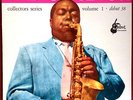
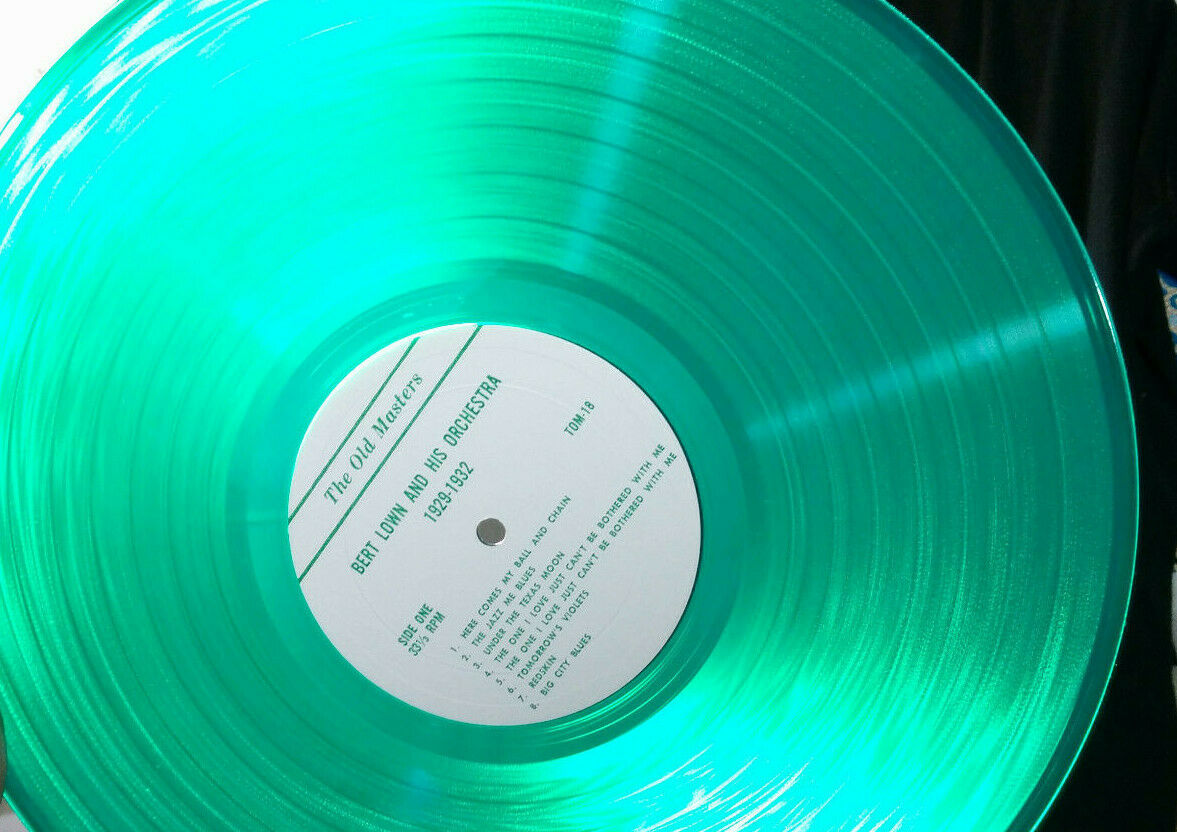
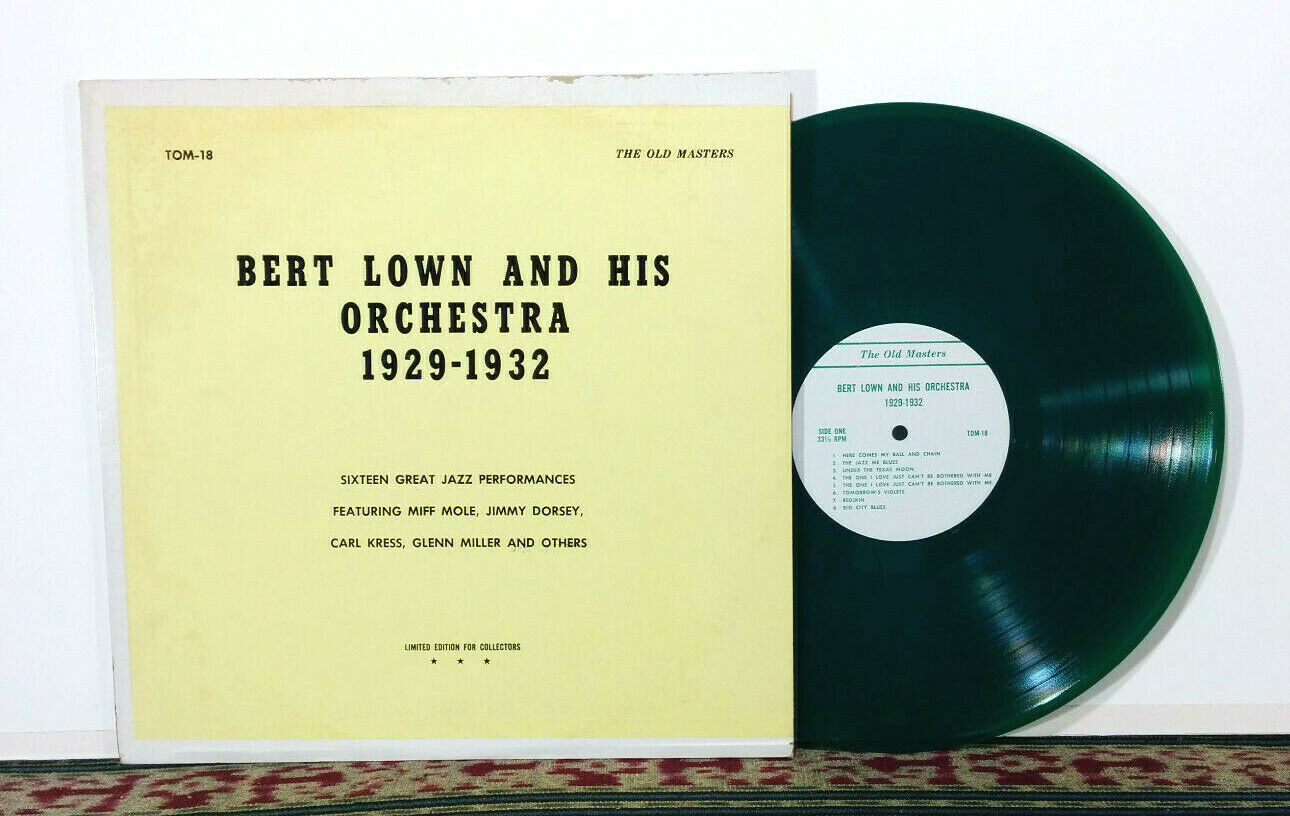
(Visually Graded) Vinyl looks Near Mint and sleeve looks EX(promo corner) See pics and info for details.
Bert Lown And His Orchestra ?– 1929-1932
Label:
The Old Masters ?– TOM-18
Format:
Vinyl, LP, Limited Edition, Clear Green Colored Vinyl, Mono, 12", 33 RPM
Country:
US
Released:
1971
Genre:
Jazz
Style:
Swing, Big Band
Tracklist
A1 Here Comes My Ball And Chain
A2 The Jazz Me Blues
A3 Under The Texas Moon
A4 The One I Love Just Can't Be Bothered With Me
A5 The One I Love Just Can't Be Bothered With Me
A6 Tomorrow's Violets
A7 Redskin
A8 Big City Blues
B1 Under The Moon It's You
B2 I'll Be Blue Just Thinking Of You
B3 Loving You The Way I Do
B4 Crying Myself To Sleep
B5 Blues In My Heart
B6 The More You Hurt Me
B7 Lonesome Lover
B8 Tired
Credits
Musician [Featuring] – Carl Kress, Glenn Miller, Jimmy Dorsey, Miff Mole
Notes
Limited Edition for collectors
Release artist is "Bert Lown And His Orchestra" on cover, but "Ben Selvin And His Orchestra" on both labels.
- Big Band Music Description should be used to describe recordings by a large orchestra which feature brass sections with multiple trumpets and trombones and a large reed section. A feature is that whole sections (the brass, the reeds) often play some parts of the tune in unison while leaving room for soloists at certain times. This style of orchestra began to be developed in the early 1920s by prominent dance band leaders such as Paul Whiteman and Fletcher Henderson, but the majority of 1920s dance bands were smaller groups and did not play in the "big band" style.
It was not until 1929/30 or so that the majority of dance bands adopted this configuration (examples are the Casa Loma Orchestra, Mills Blue Rhthm Band, Duke Ellington's Orchestra) and big bands became the norm from the mid-1930s onwards. This style should be use sparingly before about 1930 as while there were other orchestras recorded similar to those led by Whiteman and Henderson (already mentioned) the majority of 1920s dance bands are not "big bands". From the 1930s onwards this style can be applied to recordings by any large orchestra.
There were both jazz big bands (such as Benny Goodman, Tommy Dorsey, Glenn Miller, Jimmy Lunceford, Count Basie, etc.) and "sweet" big bands (such as Freddy Martin, Sammy Kaye, and Guy Lombardo's Royal Canadians). This style is often linked to the "swing" style (as in "big bands of the swing era") but it is better to avoid use the big band and swing tags together as they do not mean exactly the same thing.
In reality not all swing groups were big bands, and some big bands featured small groups made up of star musicians from the larger orchestra (Benny Goodman Trio/Quartet/Sextet, Tommy Dorsey's Clambake Seven, Artie Shaw's Gramercy Five, etc.) and it is these smaller groups which played in the "swing" style. A useful distinction is that big band recordings feature large amounts of section work (notably the brass and/or the reeds) while smaller "swing" groups were more about featured soloists backed by a rhythm section.
The big band style was most prominent during the 1930s and 1940s but was still very popular up into the 1950s and many big band style recordings continued to be made during the 1960s and later. - discogs
- We really want you to be happy with your purchase. If the vinyl does not live up to our grading upon receipt, please email us through EBAY before leaving a Feedback or Rating so that we may correct it for you. We have a 30 day return policy.
---------------------------------
- General Standards For Record Grading -
M
(MINT) New, May be sealed. Perfection, no flaws, defects, marks, scuffs or otherwise indications of being handled or played. Any scuffs, hairline scratches or other marks disqualify discs from this category. New looking sleeve, usually in original shrink wrap.
NM-
(NEAR MINT) The vinyl is almost flawless, bright and shiny. A very light minor, barely visible mark or two may be permitted. The disc should play with no audible noise. The label is bright, clean and unmarked. Sleeve looks almost Mint.
VG++/EX
(VERY GOOD ++/ Excellent) Disc plays near perfectly, but may have minor, light scuffs that do not interfere with the sound quality. There can possibly be a light hairline scratch or two but nothing that is obvious or affects play. Vinyl is bright and shiny; label is clean and unmarked. Sleeve is Excellent.
VG+
(VERY GOOD PLUS) Some visible surface wear, very minor scratches and scuffs, but minimal impact on the sound quality. Vinyl will still have good luster; labels may have minor imperfections (small labels or initials, etc.) but otherwise clean. Sleeve may have some shelf wear, or minor writing, no seem splits.
price rating