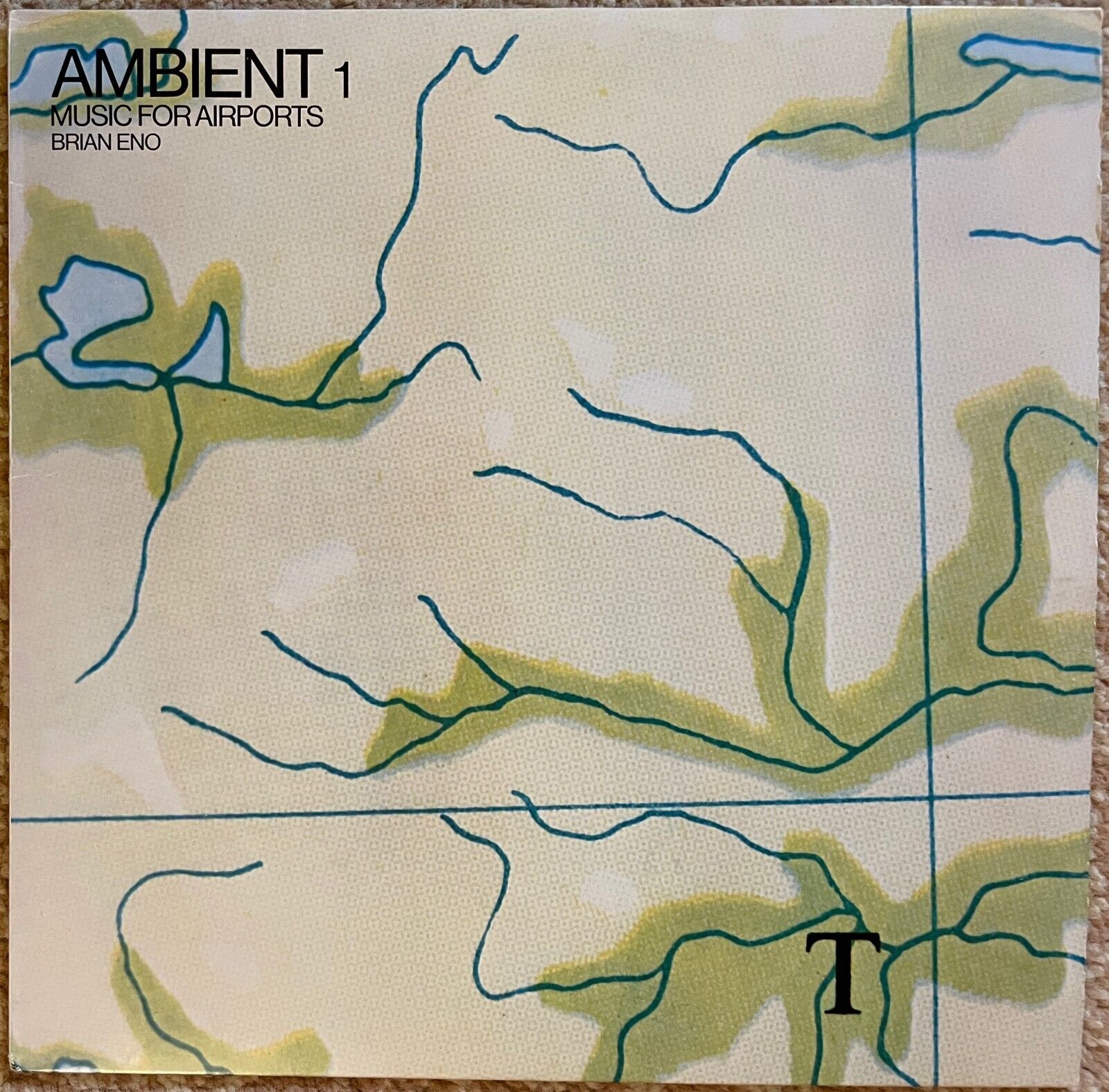
Brian Eno AMBIENT 1 Music For Airports 1978 EG Records PVC 7908 Vinyl LP EX/EX
$
40


Favourite Auctions
To save auctions to your favourites, please login
If you don't have an account, please register
Description
AMBIENT 1 Music For Airports by Brian Eno
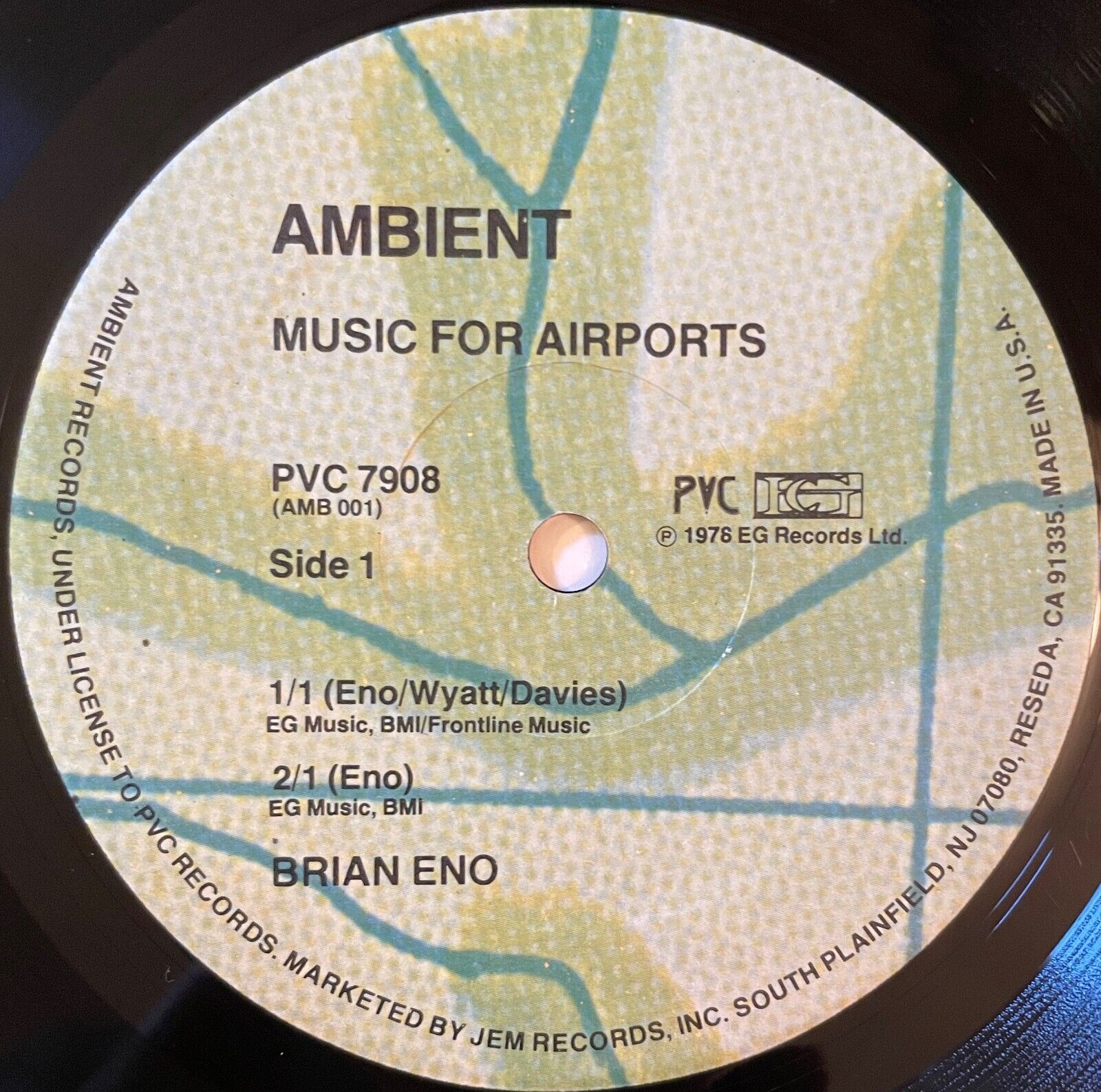
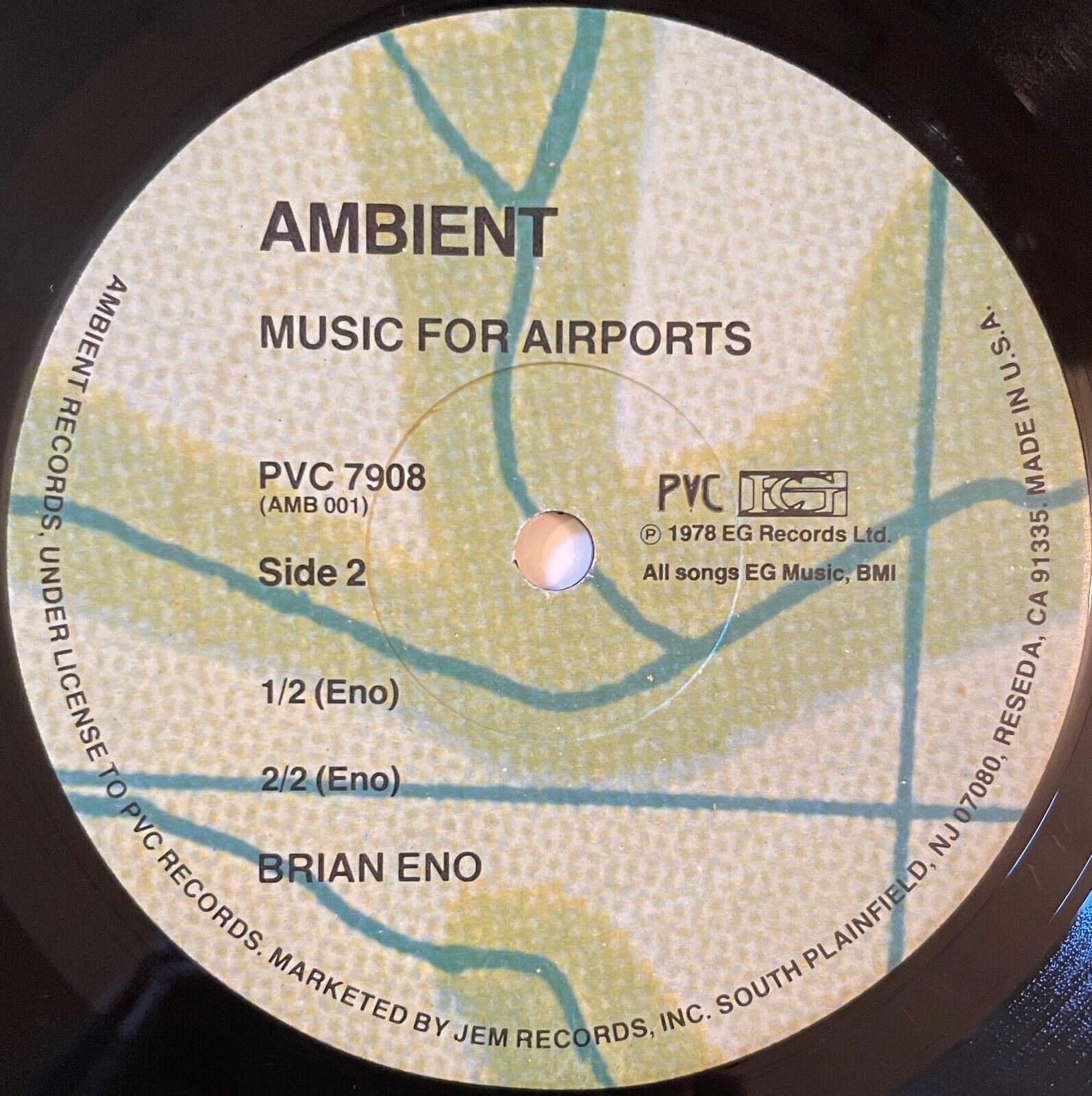
Label: EG Records – PVC 7908
Format: Vinyl, LP, Album
Country: US
Released: 1979
Genre: Electronic
A1 - 1/1 - Piano [Acoustic] – Robert Wyatt - 16:30
A2 - 2/1 - Voice – Christa Fast, Christine Gomez, Inge Zeininger - 8:20
B1 - 1/2 - Voice – Christa Fast, Christine Gomez, Inge Zeininger - 11:30
B2 - 2/2 - 6:00
Vinyl - EX - Almost NM, Small hairline on side 1, Clean labels
Sleeve (outer) - EX - Almost NM, No writing, No stains, No split edges
Inner Lyric Sleeve - Present, split down the sides
Please review pictures for greater details
Free USA Shipping
>>>>
Ambient 1: Music for Airports is the sixth studio album by the English musician Brian Eno, released in 1978 by Polydor Records. It is the first of Eno's ambient music albums, a term he coined to describe music intended to "induce calm and a space to think" while remaining "as ignorable as it is interesting". While not Eno's earliest entry in the style, it is credited with establishing the term. The album consists of four compositions created by layering tape loops of differing lengths, and was designed to be continuously looped as a sound installation, with the intent of defusing the tense, anxious atmosphere of an airport terminal. Eno defined his approach in opposition to "canned" Muzak and easy listening practices. The album was the first of four albums released in Eno's Ambient series, which concluded with 1981's Ambient 4: On Land. In 2004, Rolling Stone credited the album with defining the ambient genre. In 2016, Pitchfork ranked it the greatest ambient album of all time. Eno became interested in ambience when he suffered an automobile accident that sent him to the hospital in the mid-1970s. His friend Judy Nylon visited Eno in the hospital and left an album playing quietly before leaving. The sound blended with the rain outside the room and, unable to get up and adjust the volume, Eno allowed it to create an ambience aligned with his fluctuating attention. The album Discreet Music (1975), per Eno's own judgement, was his first foray into ambient music. After spending several hours waiting for a flight at Germany's Cologne Bonn Airport and becoming annoyed by its uninspired atmosphere, Eno conceived an album of music "designed for airports". He intended for the album to still function within various other situations. Ambient music was then a "relatively modest field", "more a concept than a genre", and mostly created against the context of dominant muzak practices. Eno's concept was distinct from elevator music and easy listening's "derivative" background noise approach, and was instead to be used as a means of creating space for thought.
Ambient 1 was included in the book 1001 Albums You Must Hear Before You Die. Chuck Eddy from Spin later named it the fourth most essential ambient album. In September 2016, Pitchfork named the record the best ambient album of all time. The album has been recognized as a seminal and influential release, an icon of the genre and Eno's discography. J. D. Considine wrote in The Rolling Stone Album Guide that the record defined the ambient aesthetic while providing a name for the genre. Chris Richards of The Washington Post wrote that it "taught an entire generation of musicians to consider music as a texture". Reflecting on the album, Jon Caramanica called it the best of Eno's work which shortly followed Roxy Music. Due in part to Music for Airports, perception of Eno's career shifted and he became aligned with highly influential minimalist composers: Steve Reich, Philip Glass, Terry Riley, and La Monte Young. Artists such as Pauline Oliveros, Riley and Harold Budd would expand on Eno's style of ambient music, which would feature prominently on his following albums; Music for Airports acted as a genesis for Eno and collaborators exploring the style, such as in the numbered Ambient series (1978–82). His conception would soon become more mallable and less reliant upon locations. Over the years, the album has sold over 200,000 copies, making it one of his best-selling solo albums.
>>>>
Brian Eno is a British musician, composer, record producer and visual artist best known for his contributions to ambient music and work in rock, pop and electronica. A self-described "non-musician", Eno has helped introduce unconventional conceptual and recording approaches to contemporary music. He has been described as one of popular music's most influential and innovative figures. Born in Suffolk, Eno studied painting and experimental music at the art school of Ipswich Civic College in the mid 1960s, and then at Winchester School of Art. He joined glam rock group Roxy Music as its synthesiser player in 1971, recording two albums with the group before departing in 1973. Eno then released a number of solo pop albums beginning with Here Come the Warm Jets (1974) and, also in the mid-1970s, began exploring a minimalist direction on influential recordings such as Discreet Music (1975) and Ambient 1: Music for Airports (1978), coining the term "ambient music" with the latter. Alongside his solo work, Eno collaborated frequently with other musicians in the 1970s, including Robert Fripp, Harmonia, Cluster, Harold Budd, David Bowie, David Byrne and Judy Nylon. He also established himself as a sought-after producer, working on albums by John Cale, Jon Hassell, Laraaji, Talking Heads, Ultravox, and Devo, as well as the no wave compilation No New York (1978). In subsequent decades, Eno continued to record solo albums and produce for other artists, most prominently U2 and Coldplay, alongside work with artists such as Daniel Lanois, Laurie Anderson, Grace Jones, Slowdive, Karl Hyde, James, Kevin Shields, and Damon Albarn. Dating back to his time as a student, Eno has also worked in other media, including sound installations, film, and writing. In the mid-1970s, he co-developed Oblique Strategies, a deck of cards featuring aphorisms intended to spur creative thinking. From the 1970s onwards, Eno's installations have included the sails of the Sydney Opera House in 2009 and the Lovell Telescope at Jodrell Bank in 2016. An advocate of a range of humanitarian causes, Eno writes on a variety of subjects and is a founding member of the Long Now Foundation. In 2019, Eno was inducted into the Rock and Roll Hall of Fame as a member of Roxy Music.
price rating