CAPITOL P-8506 LP: Michael Rabin, violin - Mosaics - Leon Pommers - 1959 CANADA
$
300


$ 300
Sold For
Jan 20, 2020
Sold Date
Nov 5, 2019
Start Date
1
Number Of Bids
USA
Country Of Seller
eBay
Sold at
Favourite Auctions
To save auctions to your favourites, please login
If you don't have an account, please register
Description
****Welcome to our listing, thanks very much for looking!
****See our own website! We have lots of out of print LPs and CDs! Find us on the web at -
hearthedifference.net
****Shipping cost is only an estimate - it depends on the actual weight and size of the package as well as the service required. We do not profit from shipping costs, so if we overcharge, we will refund the difference back to you. It's always best to wait for our invoice before paying for your item. We will combine shipping for multiple items purchased.
****Please see our other listings - new items added daily!
****To access our eBay store click on the little red door at the top right section of any of our eBay listings or, click on -
http://stores.ebay.com/Hear-The-Difference
Background -
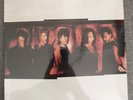
This is a very rare LP pressing on the CAPITOL record label (P 8506). The LP was made in CANADA with a date of issue indicated on the back of the jacket. The record jacket is in excellent shape with a partial seam splits along the top seam. The jacket has a small number written on the back of the jacket and it has a slight discoloration due to age. The vinyl itself appears in excellent plus overall shape, with a few light marks and some spider marks evident (these are caused by sliding the LP in and out of the paper inner sleeve - most of the time these types of marks don’t sound, but it really depends on the sensitivity of your audio gear).Michael Rabin managed to be one of the most talented and tragic violin virtuosi of his generation. Hailed as a child prodigy, his talent matured gracefully into an adult level, but he failed to follow in his emotional growth, resulting in a cutting short of his career. He never reached the age of 36, yet remains one of the most fondly remembered of virtuoso violinists for listeners and fellow musicians such as Pinchas Zukerman, with whom he shared a teacher.
Rabin's father was a violinist in the New York Philharmonic, and his mother a Juilliard-trained pianist. When he was a year old, Rabin was able to beat perfect time, and at three he demonstrated his possession of perfect pitch; by five he was studying the piano, and not long after, while visiting a doctor whose hobby was the violin, Rabin took up a miniature version of the instrument that was in the office and began tuning and playing it, refusing to return it. His father began teaching him the instrument soon after, but before their fifth lesson, the elder Rabin realized that his son's musicianship exceeded his own. Ultimately Rabin studied with Ivan Galamian, the future teacher of Itzhak Perlman and Pinchas Zukerman.
Rabin made his first professional appearance in 1947, at age ten, with the Havana Philharmonic under Artur Rodzinski, performing the Wieniawski Concerto No. 1. He made his recording debut two years later, on the Columbia Masterworks label, with a set of 11 of Paganini's Caprices for solo violin. The following year came Rabin's Carnegie Hall debut, at age 13, with the Vieuxtemps Concerto No. 5, in a performance that had him hailed in The New York Times as "already an accomplished artist...play[ing] with real grace and beauty of tone." No less a figure than the conductor George Szell declared Rabin the greatest violin talent that had come to his attention in the previous 30 years, and Dimitri Mitropoulos called Rabin "the genius violinist of tomorrow."
In the 1950s, Rabin signed with Capitol-EMI, for which he recorded the most important part of his legacy, including the Paganini Violin Concerto No. 1, the first and second violin concertos of Wieniawski, and the Tchaikovsky, Mendelssohn, and Glazunov concertos. At the end of the 1950s, Rabin suddenly cut short his recording career, for reasons that were never clear. He continued to perform regularly in concerts around the world, and even made broadcast recitals during the 1960s revealed his talents undiminished. There were accounts of his emotional instability, and an unstable personal life -- he had a rough time adjusting to the change from child prodigy to adult virtuoso, though his talent showed no signs of abatement; during the late '60s there were stories of chronic drug use; he also displayed some unusual neuroses, including a fear of falling off the stage, but none of that should have affected his recording career while leaving his concert career intact. In any case, Rabin never entered a recording studio again after 1959, and in 1972, while still in the prime of his life died in a fall when he slipped on a parquet floor and struck his head on a chair.
Rabin's legacy on record is principally concentrated in EMI's catalog. The complete Paganini 24 Caprices for solo violin are available as a single CD, while the rest of his output has been released in a six-CD set, containing virtually all of his concerto recordings. They remain seminal recordings of each of the pieces. - Bruce Eder
Michael Rabin was a child prodigy and one of the most phenomenal violinists to grace the earth. While he sadly passed away very young he was much more accomplished than other wunderkids and achieved many things throughout his extensive (and often demanding) career.
He made a name for himself with the Paganini Caprices and was routinely invited to lead many concertos internationally. However, his most beloved recording is a very perculiar set of smaller pieces or miniatures accompanied by pianist Leon Pommers simply compiled by Capitol Records as Mosaics.
What is truly fascinating about this recording is that it not only captures Rabin’s marvelous playing at the height of his mastery but it is a very intimate album where Rabin seems to finally be able to express himself fully and freely. The whole thing beautifully captured by Capitol. Indeed, already a shy boy by nature, it seems Rabin’s overbearing mother/manager and his incessant schedule combined to an incapacitating fear of the public stage, never allowed the boy to evolve and mature like others around him. According to his biography (an incredible story by Feinstein) he only felt comfortable around his professor Galamian who rigourisly trained him in technique but encouraged him to express his artistry through these quaint but complex miniature pieces. Rabin also had a special relationship with accompanying pianist Leon Pommers and had done enough sales to gain the trust of Capitol Records to release such a unique type of record.
Although the album features a few virtuoso pieces like Elgar’s Caricieuse and Paganini’s Caprice in A minor, the most touching pieces are the broody Chopin Nocturne op.27 (transcribed by Milstein who also worked with Pommers) and the mournful Sea-Shell by Engels. Rabin’s technique is so engrained that you can hear him flawlessly execute sections so difficult that others would be too focused to let emotions grace the record, whereas he almost seems to finally loosen his grip and let his instrument speak for his soul. This gem of a vinyl record is extremely sought after, I count myself fortunate to own a copy because it has since reached over the 1k$ mark online. For combining technical,interprative and studio brilliance to unique pieces almost never heard on vinyl, Mosaics is clearly an immaculate recording. - DJ Asma
-
LP made by CAPITOL Records, in CANADA
-
LP released in 1959
-
LP is recorded in MONO
-
Record Catalog Number: P 8506
Various Composers // Michael Rabin / Leon Pommers
LP Title -
Mosaics
Tracks -A1. Nocturne, Op. 27 - Composed By – Chopin Transcription By [Violin] – August Wilhelmj
A2. Caprice In A Minor - Composed By – Wieniawski Transcription By [Violin] – Fritz Kreisler
A3. Jeunes Filles Au Jardin - Composed By – Mompou Transcription By [Violin] – Joseph Szigeti
A4. Etude In Thirds - Composed By – Scriabin Transcription By [Violin] – Joseph Szigeti
A5. La Plus Que Lente - Composed By – Debussy
A6. Habanera - Composed By – Sarasate
B1. La Capricieuse - Composed By – Elgar B2. Sea-Shell - Composed By – Engel Transcription By [Violin] – Efrem Zimbalist B3. Zapateado - Composed By – Sarasate
B4. Pièce En Forme De Habanera - Composed By – Ravel
B5. March (Love For Three Oranges) - Composed By – Prokofiev Transcription By [Violin] – Jascha Heifetz
B6. Burleska - Composed By – Suk
Performers / Credits / Other Information -
• Copyright (c) – Capitol Records, Inc.
• Piano – Leon Pommers
• Producer – Richard Jones
• Sleeve Notes – James Lyons
• Violin – Michael Rabin
© 1959, Capitol Records, Inc.
Manufactured in Canada
Cat. #s:
Jacket: P 8506 (Back)
Jacket: P8506 (Spine & Front)
Labels: P-8506
Jacket printed in Canada.
Cover photo printed in U.S.A.
CONDITION Details:
The LP jacket is in excellent condition. The jacket is tight and clean, with just a partial seam split on the top seam. The corners are solid with slight ring wear. The colors on the jacket are sharp and clean with just light shelf wear and a bit of discoloration due to age - see pictures as they are of the actual item.
The LP is in excellent overall condition! There are some light marks on the vinyl and some spider marks on the LP as well (caused by sliding the LP in and out of the inner sleeve) and perhaps a finger print or two. Most of the time, spider marks are not audible, but it really depends on the sensitivity of your audio gear. Considering the vintage of this LP, the vinyl looks excellent, not perfect, but excellent. However, this is not a new audiophile LP....some extraneous sound is inevitable and should be expected for a vintage LP. This LP retains much of the original gloss and sheen! There are NO serious spindle marks on the record labels either.A Short Note About LP GRADING -
- Mint = Only used for sealed items.
- Near Mint = Virtually flawless in every way.
- Near Mint Minus = Item has some minor imperfections, some audible.
- Excellent = Item obviously played and enjoyed with some noise.
- Very Good Plus = Many more imperfections which are noticeable and obtrusive.
For best results, always thoroughly clean your LPs before playing them.
LPs can be audiophile quality pressings (any collector of fine MFSL, half speeds, direct to discs, Japanese/UK pressings etc., can attest to the difference a quality pressing can make to an audio system).
Don't let this rarity slip by!!!price rating

![John Wesley Ryles I Kay [2 EYE] LP Columbia Records EX IN Shrink](https://www.popsike.net/php/thumbnail.php?url=https://www.popsike.pics/pix/20161021/381822658972.jpg)