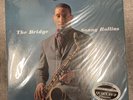
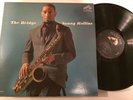
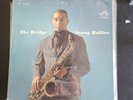
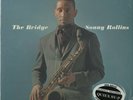
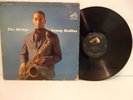
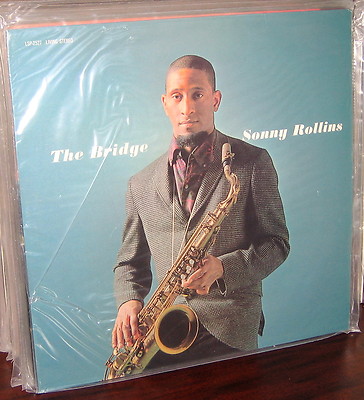
CLASSIC RECORDS LP LSP-2527: Sonny Rollins - The Bridge - OOP 1990s USA SEALED
$
200


$ 200
Sold For
Jun 15, 2013
Sold Date
Jun 11, 2013
Start Date
1
Number Of Bids
Canada
Country Of Seller
eBay
Sold at
Favourite Auctions
To save auctions to your favourites, please login
If you don't have an account, please register
Description
****Welcome to our eBay listing, thanks very much for looking!
****FREE SHIPPING to the USA and/or CANADA - all other locations are subject to a reasonable shipping charge.
****Please check out our other eBay store listings and eBay auctions for more great LPs and CDs - new items added daily!
****To access our eBay store either click on the little red door at the top right section of any of our eBay listings or, click on -
http://stores.ebay.com/Hear-The-Difference
Background on this eBay item -
Theodore Walter "Sonny" Rollins (born September 7, 1930 in New York City) is an American jazz tenor saxophonist. Rollins is widely recognized as one of the most important and influential jazz musicians. A number of his compositions, including "St. Thomas", "Oleo", "Doxy", and "Airegin", have become jazz standards.Although Rollins was born in New York City, his parents were born in the United States Virgin Islands. Rollins received his first saxophone at age 13. He attended Benjamin Franklin High School in East Harlem. He said that a concert by Frank Sinatra there, accompanied by a plea for racial harmony, changed his life.
Rollins started as a pianist, changed to alto saxophone, and finally switched to tenor in 1946. During his high-school years, he played in a band with other future jazz legends Jackie McLean, Kenny Drew and Art Taylor. He was first recorded in 1949 with Babs Gonzales ( J. J. Johnson was the arranger of the group). In his recordings through 1954, he played with performers such as Miles Davis, Charlie Parker and Thelonious Monk.
In 1950, Rollins was arrested for armed robbery and given a sentence of three years. He spent 10 months in Rikers Island jail before he was released on parole. In 1952 he was arrested for violating the terms of his parole by using heroin. Rollins was assigned to the Federal Medical Center, Lexington, at the time the only assistance in the U.S. for drug addicts. While there he was a volunteer for then-experimental methadone therapy and was able to break his heroin habit. Rollins himself initially feared sobriety would impair his musicianship, but then went on to greater success. As a saxophonist he had initially been attracted to the jump and R&B sounds of performers like Louis Jordan, but soon became drawn into the mainstream tenor saxophone tradition. Joachim Berendt has described this tradition as sitting between the two poles of the strong sonority of Coleman Hawkins and the light flexible phrasing of Lester Young, which did so much to inspire the fleet improvisation of be-bop in the 1950s.
Rollins began to make a name for himself in 1949 as he recorded with J. J. Johnson and Bud Powell what would later be called "Hard Bop", with Miles Davis in 1951, with the Modern Jazz Quartet and with Thelonious Monk in 1953, but the breakthrough arrived in 1954 when he recorded his famous compositions "Oleo" "Airegin" and "Doxy" with a quintet led by Davis. Rollins then joined the Miles Davis Quintet in the summer of 1955, but left after a short stay to deal with his drug problems. Rollins was invited later in 1955 to join the Clifford Brown–Max Roach quintet; studio recordings documenting his time in the band are the albums Clifford Brown and Max Roach at Basin Street and Sonny Rollins Plus 4. After Brown's death in 1956 Rollins began his subsequent career as a leader, his first long-playing albums released on Prestige Records. He also recorded during the 1950s for Blue Note, Riverside, and the Los Angeles label Contemporary.
The Bridge, 1962, was the first release of jazz giant Sonny Rollins following his unexpected early retirement in 1959 and his first recording for Bluebird/RCA Victor. The saxophonist was joined by the musicians with whom he would record for the next segment of his career: Jim Hall on guitar, Bob Cranshaw on bass and Ben Riley on drums.
In 1959, feeling pressured by the unexpected swiftness of his rise to fame, Rollins took a three-year hiatus to focus on perfecting his craft. A resident of the Lower East Side of Manhattan with no private space to practice, he took his saxophone up to the Williamsburg Bridge to practice alone: “I would be up there 15 or 16 hours at a time spring, summer, fall and winter”. His first recording after his return to performance took its name from those solo sessions. Critical reception to the album, which was not the revolutionary new jazz approach many expected, was mixed. Rollins, who had been considered groundbreaking in his thematic improvisations, was supplanted in critical buzz by the growing popularity of Ornette Coleman's free jazz. However, if not a tremendous departure from Rollins' earlier style, the album was nevertheless quite successful. Tagged by All Music as “a near-classic”, the recording was declared by Inkblot Magazine to be “one of the greatest albums from one of jazz's greatest musicians”. It is one of the albums for which the long-active and prolific Rollins receives his greatest praise.
-
CLASSIC RECORDS / RCA Records LP item.
-
Record Made in the USA
-
Pressing is in STEREO
-
Record Speed: 33 1/3 rpm
-
Earliest (and best) version of this audiophile reissue by Classic Records - using 180-gram pure virgin vinyl, this title is long out of print.
-
Record Made in: mid 1990s - original LP were issued in 1962 by RCA Records.
-
Record Catalog Number: LSP 2527
Featured on this item -
Sonny Rollins
Sonny Rollins – tenor saxophone
Jim Hall – guitar
Bob Cranshaw – bass
Ben Riley – drums
Harry "H.T." Saunders – drums (replaces Riley on "God Bless the Child")
Production -
George Avakian – producer, liner notes
Bob Prince – session producer
Ray Hall – engineer
Chuck Stewart – cover photography
LP Title & Music on this LP -
The Bridge
Track Listing -
- "Without a Song" (Edward Eliscu, Billy Rose, Vincent Youmans) – 7:28
- "Where Are You?" (Harold Adamson, Jimmy McHugh) – 5:10
- "John S." (Sonny Rollins) – 7:45
- "The Bridge" (Rollins) – 5:58
- "God Bless the Child" (Arthur Herzog Jr., Billie Holiday) – 7:29
- "You Do Something to Me" (Cole Porter) – 6:49
- "God Bless the Child" recorded on January 30, 1962
- "Where Are You?", "John S." and "You Do Something to Me" recorded on February 13,
- "Without a Song" and "The Bridge" on February 14, 1962 in a New York City studio.
-
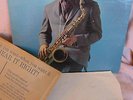
The LP jacket is in Mint, FACTORY SEALED condition!
-
The jacket has NO seam splits - it is completely intact (see picture for more detail).
-
The jacket has NO drill holes or saw marks of any kind.
-
The outer plastic cellophane (bag) wrap is NOT torn in any way.
-
There is NO hand writing on the front or back of the jacket.
-
The cover has clean and sharp colors - see pictures with this listing for more detail.
-
The LP is assumed to be in MINT condition as well as this item is FACTORY SEALED!!
-
This is the mint copy you have always wanted in your collection - any super picky audiophile would be happy with this one!
A Short Note About LP GRADING -
- Mint = Only used for sealed items.
- Near Mint = Virtually flawless in every way.
- Near Mint Minus = Item has some minor imperfections, some audible.
- Excellent = Item obviously played and enjoyed with some noise.
- Very Good Plus = Many more imperfections which are noticeable and obtrusive.