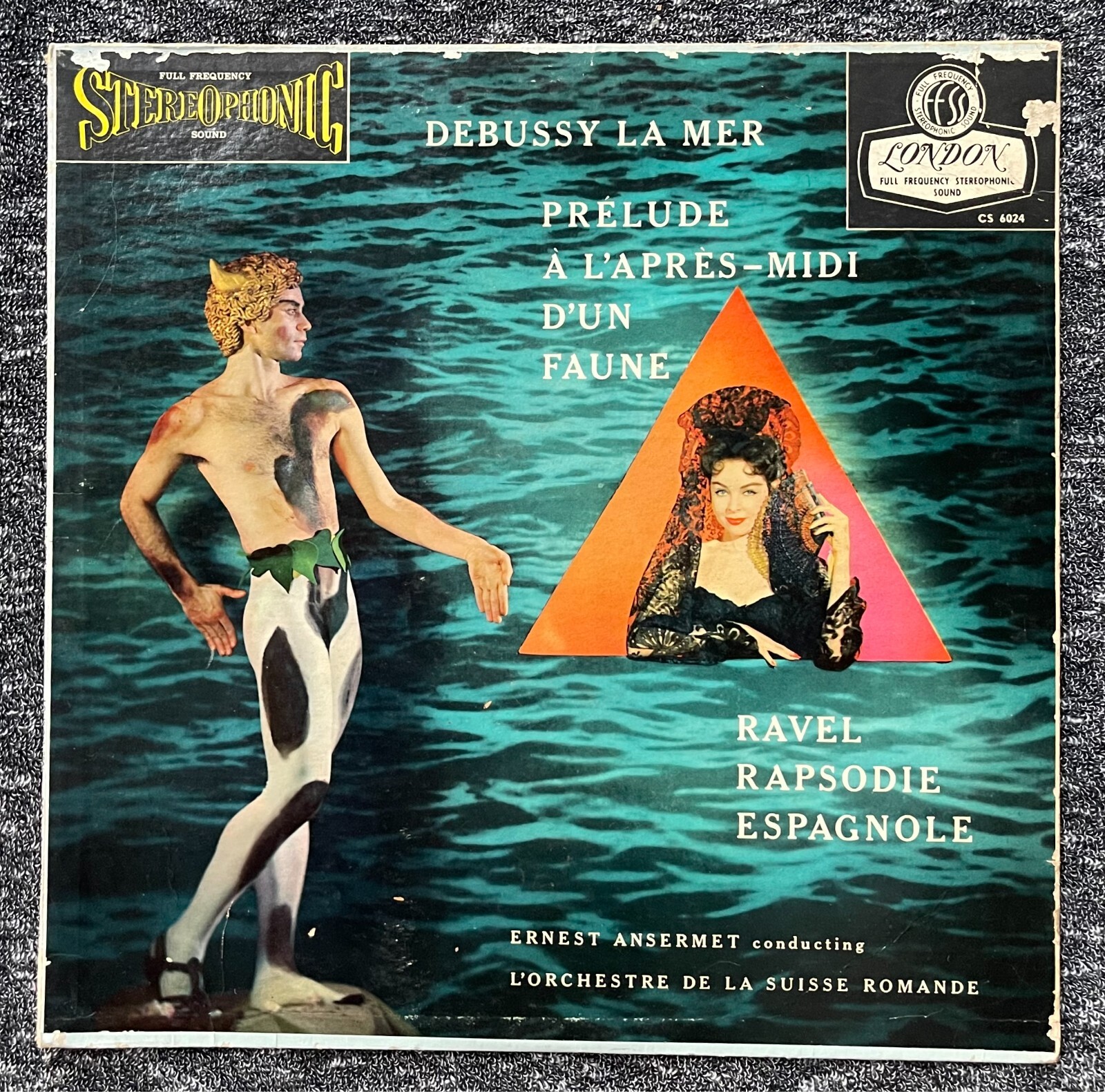
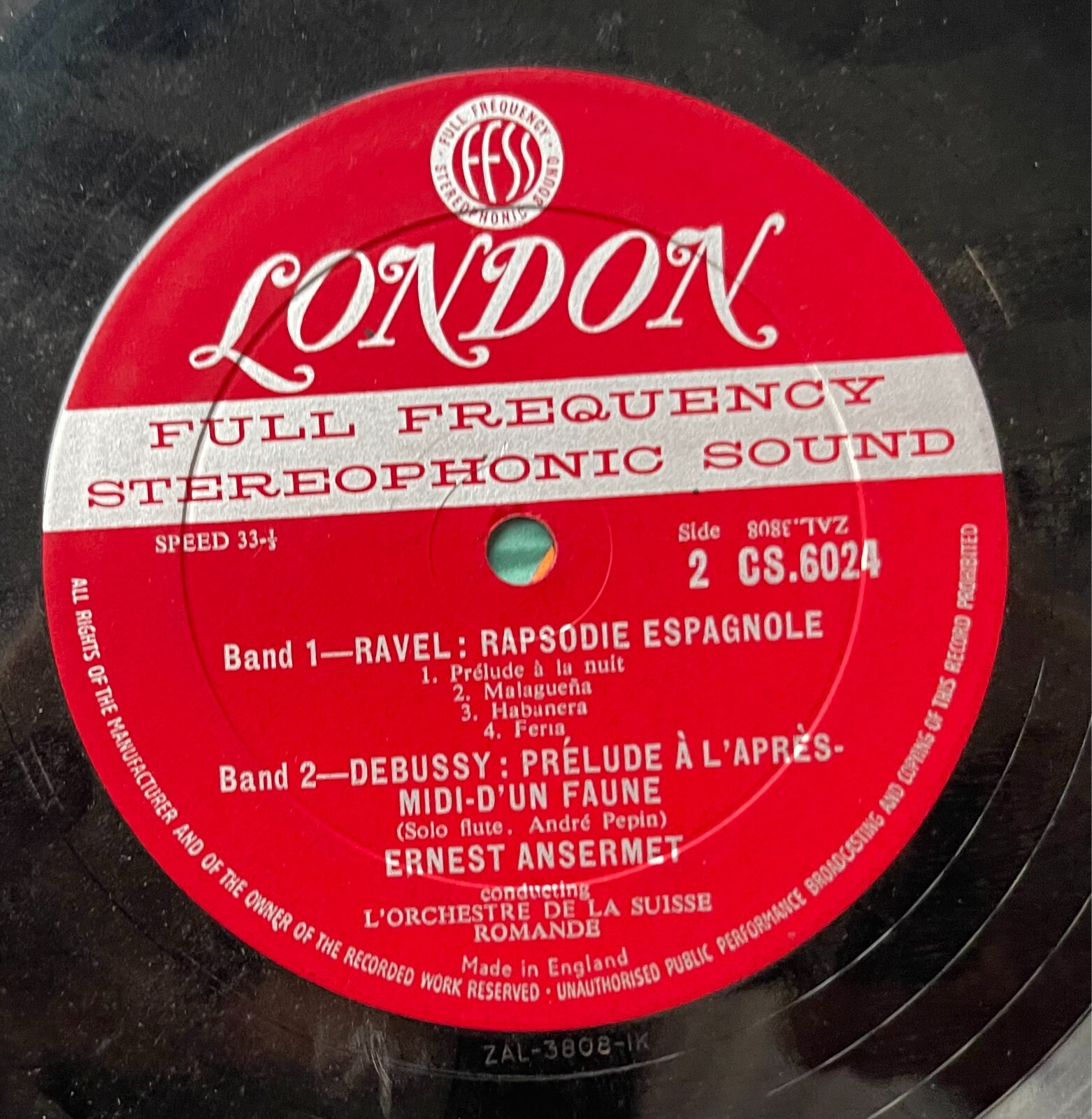
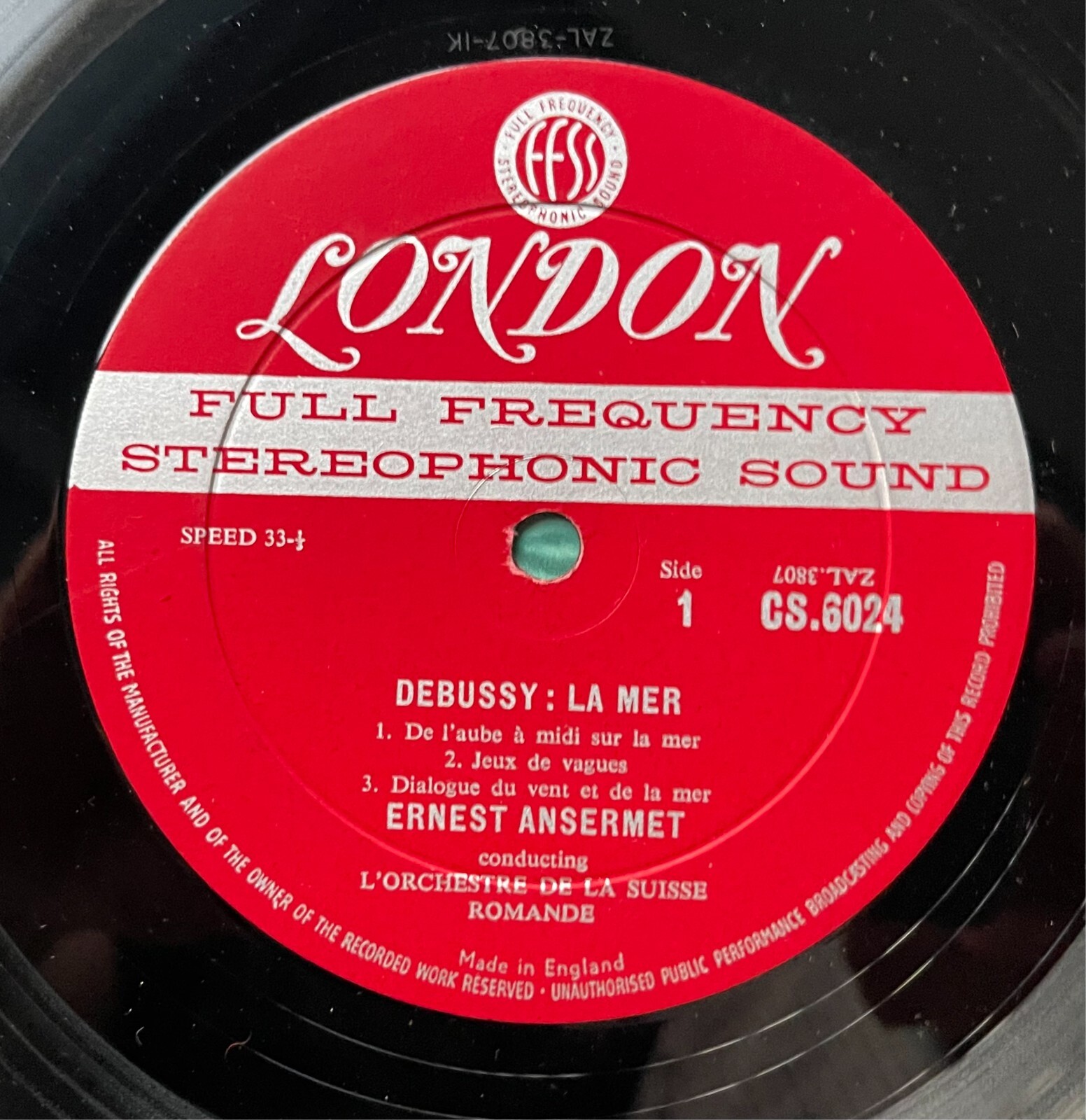
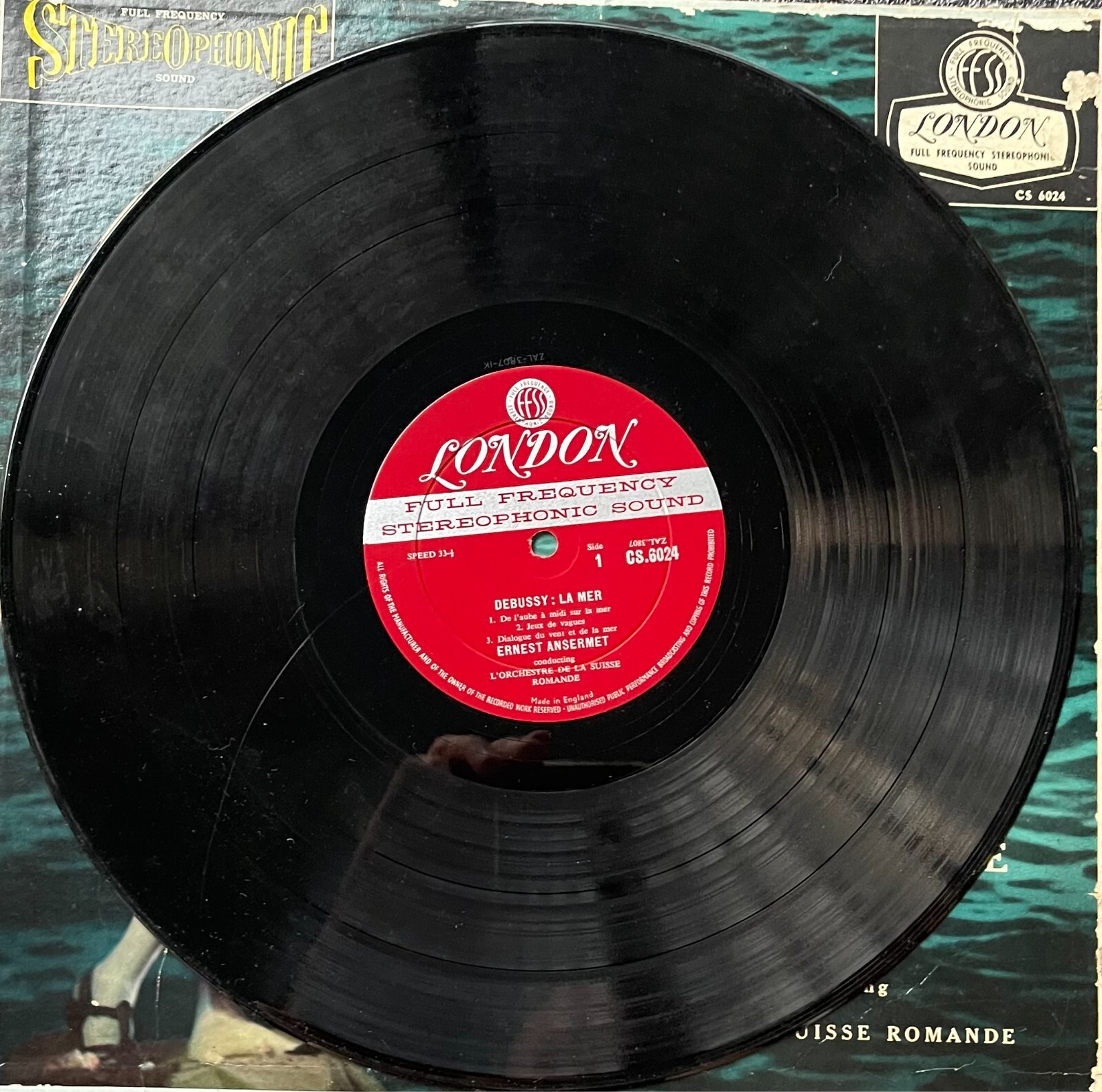
DEBUSSY LA MER PRELUDE AL'APRES-MIDI D'UN FAUNE 33 LP RAVEL RAPSODIE ESPAGNOLE
$
30
Favourite Auctions
To save auctions to your favourites, please login
If you don't have an account, please register
Description
This is a DEBUSSY LA MER PRELUDE AL'APRES-MIDI D'UN FAUNE 33 LP RAVEL RAPSODIE ESPAGNOLE
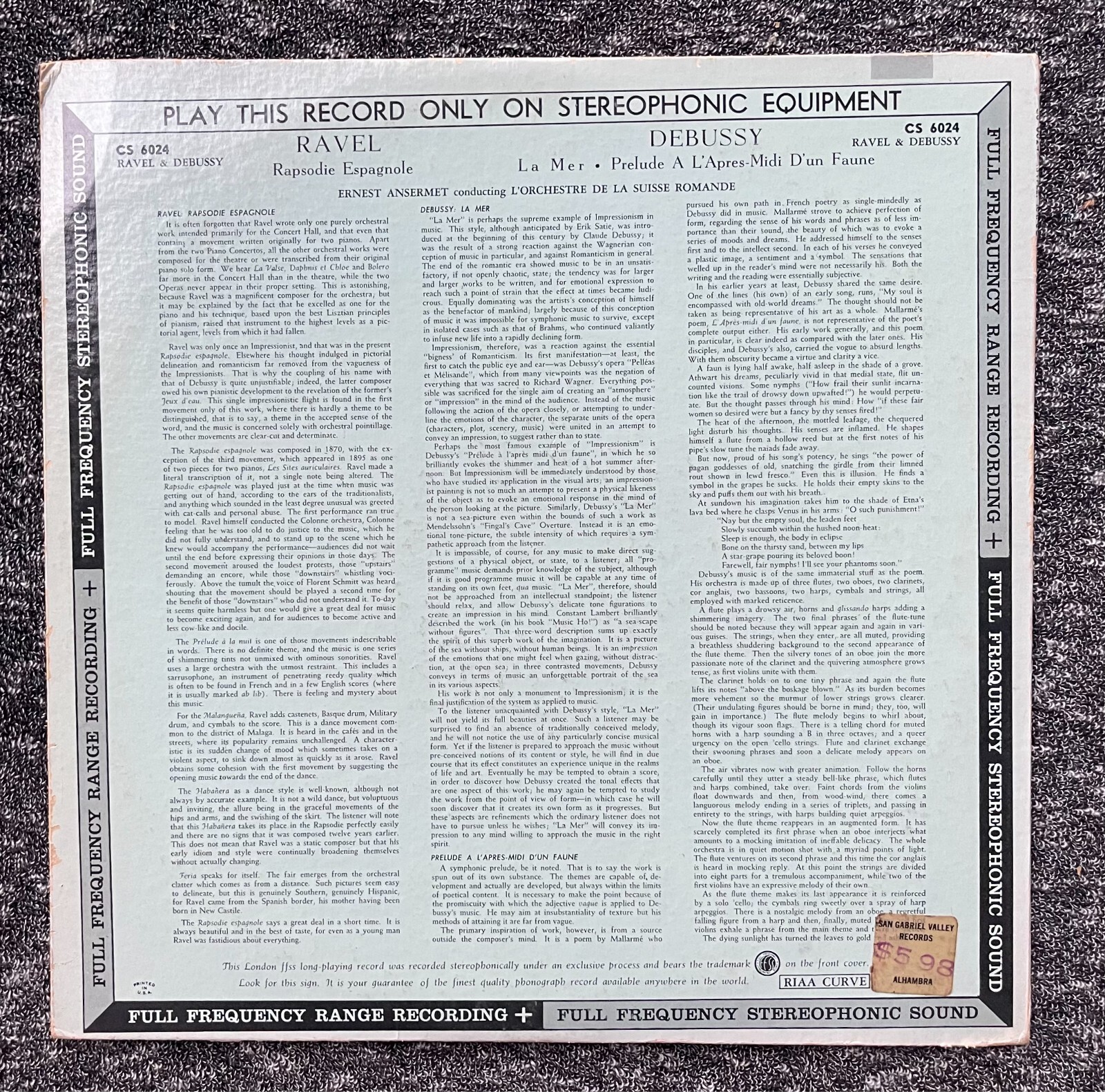
It is often forgotten that Ravel wrote only one purely orchestral work intended primarily for the Concert Hall, and that even that contains a movement written originally for two pianos.
Apart from the two Piano Concertos, all the other orchestral works were composed for the theatre or were transcribed from their original piano solo form.
We hear La Valse, Dapbnis et Cbloe and Bolero far more in the Concert Hall than in the theatre, while the two Operas never appear in their proper setting.
This is astonishing, because Ravel was a magnificent composer for the orchestra; but it may be explained by the fact that he excelled as one for the piano and his technique, based upon the best Listian principles of pianism, raised that instrument to the highest levels as a pictorial agent, levels from which it had fallen Ravel was only once an Impressionist, and that was in the present Rapsodie espagnole.
Elsewhere his thought indulged in pictorial delineation and romanticism far removed from the vagueness of the Impressionists.
That is why the coupling of his name with that of Debussy is quite unjustifiable; indeed, the latter composer owed his own pianistic development to the revelation of the former's Jeux d'eau.
This single impressionistic flight is found in the first movement only of this work, where there is hardly a theme to be distinguished, that is to say, a theme in the accepted sense of the word, and the music is concerned solely with orchestral pointillage.
The other movements are clear-cut and determinate.
The Rapsodie espagnole was composed in 1870, with the exception of the third movement, which appeared in 1895 as one of two pieces for rwo pianos, Les Sites auriculaires.
Ravel made a literal transcription of it, not a single note being altered.
The Rapsodie espagnole was played just at the time when music was getting out of hand, according to the ears of the traditionalists, and anything which sounded in the least degree unusual was greeted with cat-calls and personal abuse. The first performance ran true to model.
Ravel himself conducted the Colonne orchestra, Colonne feeling that he was too old to do justice to the music, which he did not fully understand, and to stand up to the scene which he knew would accompany the performance-audiences did not wait until the end before expressing their opinions in those days.
The demanding vener aro, sed tec loud downstairs, hose "ing vog" ferously. Above the tumult the, voice of Florent Schmitt was heard shouting that the movement should be played a second time for the benefit of those "downstairs" who did not understand it.
To-day it seems quite harmless but one would give a great deal for music to become exciting again, and for audiences to become active and less cow-like and docile.
Visible Cover Edge Wear please see pics
PLEASE SEE PICS FOR CONDITION>
THIS RECORD IS IN VINTAGE GOOD CONDITION
I have no way to test this item
ITEM SOLD AS-IS
.
price rating


![Wardruna - Kvitravn - First Flight Of The White Raven [New Vinyl LP] Gatefold LP](https://www.popsike.net/php/thumbnail.php?url=https://www.popsike.pics/pix/20230729/385854915216.jpg)




![Debussy: Boulez [Vinyl LP] La Mer Great Performances](https://www.popsike.net/php/thumbnail.php?url=https://www.popsike.pics/pix/20200602/283899550986.jpg)
