FACTORY SAMPLE JOY DIVISION CABARET VOLTAIRE JOHN DOWIE
£
122
$
162



Favourite Auctions
To save auctions to your favourites, please login
If you don't have an account, please register
Description
YOU ARE BIDDING ON AN EXCELLENT CONDITION
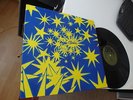
COMPILATION DOUBLE 7"
A FACTORY SAMPLE
DIGITAL - JOY DIVISION
GLASS - JOY DIVISION
NO COMMUNICATION - THE DURUTTI COLUMN
THIN ICE (DETAIL) - THE DURUTTI COLUMN
ACNE - JOHN DOWIE
IDIOT - JOHN DOWIE
HITLER'S LIVER - JOHN DOWIE
BAADER-MEINHOFF - CABARET VOLTAIRE
SEX IN SECRET - CABARET VOLTAIRE
RELEASED ON FACTORY RECORDS
FAC-2
THESE RECORDS COME IN A GATEFOLD SLEEVE WITH PLASTIC BAG COVER
Formed in the wake of the punk explosion in England, Joy Division became the first band in the post-punk movement by later emphasizing not anger and energy but mood and expression, pointing ahead to the rise of melancholy alternative music in the '80s. Though the group's raw initial sides fit the bill for any punk band, Joy Division later incorporated synthesizers (taboo in the low-tech world of '70s punk) and more haunting melodies, emphasized by the isolated, tortured lyrics of its lead vocalist, Ian Curtis. While the British punk movement shocked the world during the late '70s, Joy Division's quiet storm of musical restraint and emotive power proved to be just as important to independent music in the 1980s.
The band was founded in early 1977, soon after the Sex Pistols had made their first appearance in Manchester. Guitarist Bernard Albrecht (b. Bernard Dicken, January 4, 1956) and bassist Peter Hook (b. February 13, 1956) had met while at the show and later formed a band called the Stiff Kittens; after placing an ad through a Manchester record store, they added vocalist Ian Curtis (b. July 15, 1956) and drummer Steve Brotherdale. Renamed Warsaw (from David Bowie's "Warszawa"), the band made its live debut the following May, supporting the Buzzcocks and Penetration at Manchester's Electric Circus. After the recording of several demos, Brotherdale quit the group in August 1977, prompting the hire of Stephen Morris (b. October 28, 1957). A name change to Joy Division in late 1977 — necessitated by the punk band Warsaw Pakt — was inspired by Karol Cetinsky's World War II novel The House of Dolls. (In the book, the term "joy division" was used as slang for concentration camp units wherein female inmates were forced to prostitute themselves for the enjoyment of Nazi soldiers.)
Playing frequently in the north country during early 1978, the quartet gained the respect of several influential figures: Rob Gretton, a Manchester club DJ who became the group's manager; Tony Wilson, a TV/print journalist and owner of the Factory Records label; and Derek Branwood, a record executive with RCA Northwest, who recorded sessions in May 1978, for what was planned to be Joy Division's self-titled debut LP. Though several songs bounded with punk energy, the rest of the album showed at an early age the band's later trademarks: Curtis' themes of post-industrial restlessness and emotional despair, Hook's droning bass lines, and the jagged guitar riffs of Albrecht.
The album should have been hailed as a punk classic, but when a studio engineer added synthesizers to several tracks — believing that the punk movement had to move on and embrace new sounds — Joy Division scrapped the entire LP. (Titled Warsaw for a 1982 bootleg, the album was finally given wide issue ten years later.) The first actual Joy Division release came in June 1978, when the initial mid-1977 demos were released as the EP An Ideal for Living, on the band's own Enigma label. Early in 1979, the buzz surrounding Joy Division increased with a session recorded for John Peel's BBC radio show.
The group began recording with producer Martin Hannett and released Unknown Pleasures on old friend Tony Wilson's Factory label in July 1979. The album enjoyed immense critical acclaim and a long stay on the U.K.'s independent charts. Encouraged by the punk buzz, the American Warner Bros. label offered a large distribution contract that fall. The band ignored it but did record another radio session for John Peel on November 26th. (Both sessions were later collected on the Peel Sessions album.)
During late 1979, Joy Division's manic live show gained many converts, partly due to rumors of Curtis' ill health. An epilepsy sufferer, he was prone to breakdowns and seizures while on stage — it soon grew difficult to distinguish the fits from his usual on-stage jerkiness and manic behavior. As the live dates continued and the new decade approached, Curtis grew weaker and more prone to seizures. After a short rest over the Christmas holiday, Joy Division embarked on a European tour during January, though several dates were cancelled because of Curtis. The group began recording its second LP after the tour ended (again with Hannett), and released "Love Will Tear Us Apart" in April. The single was again praised but failed to move beyond the independent charts. After one gig in early May, the members of Joy Division were given two weeks of rest before beginning the group's first U.S. tour. Two days before the scheduled flight, however, Curtis was found dead in his home, the victim of a self-inflicted hanging.
Before Curtis' death, the band had agreed that Joy Division would cease to exist if any member left, for any reason. Ironically though, the summer of 1980 proved to be the blooming of the band's commercial status, when a re-release of "Love Will Tear Us Apart" rose to number 13 on the British singles chart. In August, the release of Closer finally united critics' positivity with glowing sales, as the album peaked at number six. Before the end of the summer, Unknown Pleasures was charting as well.
By January of the following year, Hook, Morris, and Albrecht (now Bernard Sumner) had formed New Order, with Sumner taking over vocal duties. Also in 1981, the posthumous release of Still — including two sides of rare tracks and two of live songs — rose to number five on the British charts. As New Order's star began to shine during the '80s, the group had trouble escaping the long shadow of Curtis and Joy Division. "Love Will Tear Us Apart" charted for the third time in 1983, and 1988 also proved a big year for the defunct band: the reissued single "Atmosphere" hit number 34 and a double-album compilation entitled Substance reached number seven in the album charts. Seven years later, the 15th anniversary of Curtis' death was memorialized with a new JD compilation (Permanent: Joy Division 1995), a tribute album (A Means to an End), and a biography of his life (Touching From a Distance) written by his widow, Deborah Curtis. In 1999, the Factory label began a program of concert-performance reissues — all overseen by the remainder of the original lineup — with Preston Warehouse 28 February 1980.
The Durutti Column was primarily the vehicle of Vini Reilly, a guitarist born in Manchester, England, in 1953. As a child, Reilly first took up the piano, drawing inspiration from greats like Art Tatum and Fats Waller, before learning to play guitar at the age of ten. Despite an early affection for folk and jazz, Reilly ultimately became swept up by the punk movement, and in 1977 he joined the group Ed Banger & the Nosebleeds. In 1978, Factory Records founder Tony Wilson invited Reilly to join a group dubbed the Durutti Column, the name inspired by the Spanish Civil War anarchist Buenaventura Durruti and a Situationists Internationale comic strip of the 1960s. Along with Reilly, the nascent band included guitarist Dave Rowbotham, drummer Chris Joyce, vocalist Phil Rainford, and bassist Tony Bowers; following a handful of performances, Rainford was fired, and after recording a pair of tracks for the EP A Factory Sampler, Rowbotham, Joyce, and Bowers broke off to form the Moth Men, leaving the Durutti Column the sole province of Vini Reilly. (Joyce and Bowers would later join the more popular Simply Red.)
Recorded with the aid of a few session musicians and released in a sandpaper sleeve, the debut The Return of the Durutti Column, a collection of atmospheric instrumentals, appeared in 1980. With 1981's pastoral LC, recorded with drummer Bruce Mitchell (who remained a frequent collaborator), Reilly attempted vocals on a few tracks, and continued expanding his palette with a pair of explorations of chamber music, 1982's Another Setting and 1984's Without Mercy. Electronic rhythms, meanwhile, emerged as the pivotal element of 1985's Say What You Mean, Mean What You Say. After 1985's live effort Domo Arigato, Circuses and Bread marked a return to the densely constructed guitar textures of previous works, while 1987's eclectic The Guitar and Other Machines ranked among the Durutti Column's most ambitious works to date. In 1988, Reilly backed Morrissey (also an alumnus of the Nosebleeds) on his solo debut, Viva Hate, before returning to the Durutti Column for the release of a 1989 LP titled Vini Reilly, another diverse affair that incorporated vocal samples from Otis Redding, Annie Lennox, Tracy Chapman, and opera star Joan Sutherland.
Released in 1990, the aggressive Obey the Time preceded 1991's Lips That Would Kiss Form Prayers to Broken Stone, a collection of singles, rarities, and unreleased material. After a long layoff (during which Rowbotham happened to be slain by an axe murderer, inspiring the Happy Mondays' "Cowboy Dave"), the Durutti Column returned in 1995 with Sex and Death, followed a year later by Fidelity, which fused dance beats with Reilly's guitar lines. Reilly issued several albums throughout the 2000s, from archival concert recordings to such studio efforts as Treatise on the Steppenwolf, a soundtrack augmenting the experimental theater production of the same name, as well as 2009's heart-wrenching effort Love in the Time of Recession. The instrumental suite Paean to Wilson, composed in 2009, was some of Reilly's most personal work, written for his late friend and most passionate supporter, the late Tony Wilson. Initially scheduled for limited release in 2009, it was granted wider distribution early the following year.
Known for his comic sketches and poetry, Birmingham-born John Dowie has sparked laughter in the most stoic Englishman or woman. His repertoire includes such off-the-way singles as "Acne, Idiot, Hitler's Liver" and "It's Hard To Be Egg". Having made his debut, as a solo singer-songwriter, at a free, September 1969, pop festival at the Midland Arts Centre in Birmingham, Dowie became a regular performer on the city's thriving music scene. In addition to solo performances at folk clubs, universities and arts centres, he showed talent as an actor, appearing in the premier of David Edgar's musical, Blood Sports. Forming a Bonzo Dog Band-inspired group, Mr. John Dowie And The Big Girl's Blouse, Dowie recorded an 1971 EP, Another Close Shave that included his tongue-in-jowl ditty, "British Tourist (I Hate The Dutch". He subsequently collaborated with British comedienne Victoria Wood and comedy rock band, Alberto Y Los Trios Paranoias, with whom he toured three times as official" opening act. Their last outing came as supporting act for Police, in the early 1980s. After taking a hiatus from music, to recuperate from a nervous breakdown, Dowie, resumed his career as a stand-up musical comedian. In addition to releasing an extremely funny single, "It's Hard To Be An Egg", he recorded a live album, Good Grief, at the Zap Club in Brighton, and an album, Hard To Swallow, of his comedy routines. Dowie continued to develop as a thespian, as well. He starred, in the title role, of London-based theater group's production, James Bond — The Pants, at the Institute of Contemporary Arts in London and on tour. Making his directorial debut in poet/painter/playwright Heathcote Williams's 1990 show, Whale Nation & Falling For A Dolphin, he wrote and performed in Take Them To The Garden and Why I Stopped Being A Stand-Up Comedian. Beginning with his directing of Neil Innes' More Jam Tomorrow, in 1992, Dowie has collaborated with the former Bonzo Dog Band multi-instrumentalist/vocalist/songwriter. He wrote lyrics for Innes's meloodies, and starred in the PVictor Spinetti-directed musical comedy, Dogman, and directed Innes/Rutles' globally-televised comic spoof, All You Need Is Cash, in 1978. Other musical comedies that Dowie has been involved with include The Joseph Story, performed as Jesus My Boy at the Apollo Theater, and Arthur Smith Sings Leonard Cohen, which he co-wrote and directed. A poet since childhood, Dowie is the author of a children's book, Poems To Read To Your Parents. A semi-regular performer on British television and radio shows, including Now and Something Else Dowie hosted a radio series, A World Of Dowie.
Though they're one of the most important groups in the history of industrial and electronic music, Cabaret Voltaire are sometimes forgotten in the style's timeline — perhaps because they continued recording long after other luminaries (Throbbing Gristle, Suicide, Chrome) called it quits. Also related to the fact is that CV rarely stayed in one place for long, instead moving quickly from free-form experimentalism through arty white-boy funk and on to house music in the late '80s and electronica the following decade. The band, formed by guitarist Richard H. Kirk, bassist Stephen Mallinder and tape manipulator Chris Watson, were influenced by the Dadaist movement (whence came their name) and as such, came closer to performance art than music during many of their early performances. After several years of recording with no contract, the group signed to the newly formed Rough Trade label in 1978 and began releasing records that alternated punk-influenced chargers with more experimental pieces incorporating tape loops and sampled effects.
Following Watson's departure, the remaining duo inaugurated a new contract with Some Bizzare/Virgin in 1983 by shifting their sound, away from raging industro-funk and towards a more danceable form. The singles "Sensoria" and "James Brown" hit the indie charts during 1984, and Cabaret Voltaire moved to EMI/Parlophone in 1986 for The Code. Two years later, the band traveled to Chicago to record Groovy, Laidback & Nasty with Marshall Jefferson, one of the mavericks in the new house sound blowing up in the British charts. After another break of several years, the new-electronica label Instinct released a trio of CV LPs during 1993-94, after which the band's future appeared cloudy. Kirk continued his solo career (recording as Electronic Eye, Sandoz and himself) while Mallinder moved to Australia.