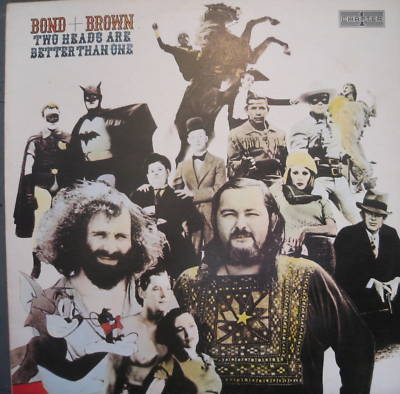
GRAHAM BOND PETE BROWN TWO HEADS CHAPTER ONE CHS-R-813
£
139
$
184


Favourite Auctions
To save auctions to your favourites, please login
If you don't have an account, please register
Description
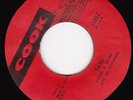
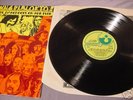
YOU ARE BIDDING ON AN EXCELLENT CONDITION LP
BOND & BROWN
TWO HEADS ARE BETTER THAN ONE
LOST TRIBE
IG THE PIG
OOBATI
AMAZING GRASS
SCUNTHORPE CRABMEAT TRAIN SIDEWAYS BOOGIE SHUFFLE STOMP
C.F.D.T. (COLONEL FRIGHTS' DANCING TERRAPINS)
MASS DEBATE
LOOKING FOR TIME
RELEASED ON CHAPTER 1 RECORDS
CHS-R-813
MATRIX NUMBERS: XZAL-11669P-1W,
XZAL-11670 P-2W
One of the key eccentrics of the Harvest stable and a successful collaborative lyricist for Cream ("I Feel Free," "Sunshine of Your Love"), poet/percussionist/vocalist/trumpet player Pete Brown was one of the many artists to arise from the British beat movement in the mid- to late '60s. Like a lot of his peers, Brown's spin on progressive rock came from backgrounds in folk, jazz, and blues.
Brown was kicking around the scene as a poet until being approached by Cream to assist in songwriting. Upon achieving chart success with the trio, Brown decided to go the musician route. Graham Bond asked Brown to help out with some songs for the Graham Bond Organisation, and he was eventually invited to sing with the group on-stage. Once they broke up, Brown helped form the Battered Ornaments, hoping to work with musicians whose skills didn't dwarf his own. The group fell in with Harvest, the progressive subsidiary of EMI that housed the likes of Syd Barrett, Deep Purple, and Roy Harper. The Battered Ornaments' only record with Brown, A Meal You Can Shake Hands With in the Dark, was released in 1969.
The Battered Ornaments booted Brown from the band on the night prior to a supporting gig for the Rolling Stones at Hyde Park; his vocals on the recording of the group's second record were eventually wiped off. The sacked singer immediately set about forming Piblokto!, a group that, for 1970's Things May Come and Things May Go But the Art School Dance Goes on Forever, comprised bassist Roger Bunn, guitarist Jim Mullen, organist Dave Thompson, and Battered Ornaments drummer Rob Tait. Bunn was replaced by Steve Glover for Thousands on a Raft, which was released six months after the debut. Another shake up in the lineup predated the final Piblokto! release, the single "Flying Hero Sandwich."
Brown teamed up again with Graham Bond for 1972's one-off Two Heads Are Better Than One, which featured contributions from several of Brown's former bandmates. With keyboardist Ian Lynn, who played on Thousands on a Raft, he formed Back to the Front, a group that performed but never recorded in their original form. The group lasted until 1977; Brown faded away from music, at least in a performance sense, until 1983's Party in the Rain, which featured most of Back to the Front behind him.
The '90s saw Brown working again with Phil Ryan, a keyboardist who played with Man, the Eyes of Blue, and the final lineup of Piblokto! They made two records together, Ardours of the Lost Rake and Coals to Jerusalem. Toward the end of the decade, he formed the Interoceters, a group that performed songs from his lengthy career. Brown has also maintained a working relationship with Jack Bruce and has participated in the making of several records by other artists.
An important, underappreciated figure of early British R&B, Graham Bond is known in the U.S., if at all, for heading the group that Jack Bruce and Ginger Baker played in before they joined Cream. Originally an alto sax jazz player -- in fact, he was voted Britain's New Jazz Star in 1961 -- he met Bruce and Baker in 1962 after joining Alexis Koerner's Blues Incorporated, the finishing school for numerous British rock and blues musicians. By the time he, Bruce, and Baker split to form their own band in 1963, Bond was mostly playing the Hammond organ, as well as handling the lion's share of the vocals. John McLaughlin was a member of the Graham Bond Organization in the early days for a few months, and some live material that he recorded with the group was eventually issued after most of their members had achieved stardom in other contexts. Saxophonist Dick Heckstall-Smith completed Bond's most stable lineup, who cut a couple of decent albums and a few singles in the mid-'60s.
In their prime, the Graham Bond Organization played rhythm & blues with a strong jazzy flavor, emphasizing Bond's demonic organ and gruff vocals. The band arguably would have been better served to feature Bruce as their lead singer -- he is featured surprisingly rarely on their recordings. Nevertheless, their best records were admirably tough British R&B/rock/jazzsoul, and though Bond has sometimes been labeled as a pioneer of jazz-rock, in reality it was much closer to rock than jazz. The band performed imaginative covers and fairly strong original material, and Bond was also perhaps the very first rock musician to record with the Mellotron synthesizer. Hit singles, though, were necessary for British bands to thrive in the mid-'60s, and Bond's group began to fall apart in 1966, when Bruce and Baker joined forces with Eric Clapton to form Cream. Bond attempted to carry on with the Organization for a while with Heckstall-Smith and drummer Jon Hiseman, both of whom went on to John Mayall's Bluesbreakers and Colosseum.
Bond never recaptured the heights of his work with the Organization. In the late '60s he moved to the U.S., recording albums with musicians including Harvey Brooks, Harvey Mandel, and Hal Blaine. Moving back to Britain, he worked with Ginger Baker's Airforce, the Jack Bruce Band, and Cream lyricist Pete Brown, as well as forming the band Holy Magick, who recorded a couple albums.
price rating