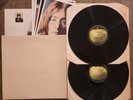
Gato Barbieri Yesterdays LP 1974 1st Press Gatefold Ron Carter Jorge Dalto
$
20


Favourite Auctions
To save auctions to your favourites, please login
If you don't have an account, please register
Description
Gato Barbieri Yesterdays LP 1974 1st Press Gatefold Ron Carter Jorge Dalto
Fantastic recording top players and Gatos gritty self I especially like Marnie from the Hitchcock film
Gato Barbieri's early 70s output was nothing less than stellar, and if not underrated, then certainly understated in terms of sustained quality. "Yesterdays" continued where the incredible "Latin America" series of releases on Flying Dutchman left off. This is accessible, high-intensity, (tenor) sax-first hardcore latin / afro-cuban jazz that veers off into fusion, jazz-rock, as well as hard-bop and modal elements. Backed by the usual top-tier instrumentalists, Barbieri blows with such passion and vibrancy, it's hard not to be drawn into the hard, emotional sax passages. Barbieri smartly gives some room for guitar, keyboard and percussive expression across the four long jams, but never relinquishes control of the narrative. This is astoundingly raw stuff - and very few saxophonists were competing at this level at that time or since.
Yesterday's is an album by Argentinian jazz composer and saxophonist Gato Barbieri featuring performances recorded in New York in 1974 and first released on the Flying Dutchman label. The album was rereleased in 1988 as The Third World Revisited with two additional tracks from El Pampero. Leandro "Gato" Barbieri (November 28, 1932 – April 2, 2016) was an Argentine jazz tenor saxophonist who rose to fame during the free jazz movement in the 1960s and is known for his Latin jazz recordings of the 1970s. His nickname, Gato, is Spanish for "cat".
Born to a family of musicians, Barbieri began playing music after hearing Charlie Parker's "Now's the Time". He played the clarinet and later the alto saxophone while performing with Argentine pianist Lalo Schifrin in the late 1950s. By the early 1960s, while playing in Rome, he also worked with the trumpeter Don Cherry. By now influenced by John Coltrane's late recordings, as well as those from other free jazz saxophonists such as Albert Ayler and Pharoah Sanders, he began to develop the warm and gritty tone with which he is associated. In the late 1960s, he was fusing music from South America into his playing and contributed to multi-artist projects like Charlie Haden's Liberation Music Orchestraand Carla Bley's Escalator over the Hill. His score for Bernardo Bertolucci's 1972 film Last Tango in Paris earned him a Grammy Award and led to a record deal with Impulse! Records.
price rating