Heidsieck: Faure 8 Nocturnes for Piano - ASDF 800 (ds), lovely
$
75


Favourite Auctions
To save auctions to your favourites, please login
If you don't have an account, please register
Description
ITEM DESCRIPTION:
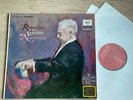
This superb LP from La Voix de son Maitre (ASDF 800, French Pathé-Marconi pressing, red/white semi-circle label, stereo, dowel spine) features the splendid pianist Eric Heidsieck in a masterly presentation of eight Nocturnes for Solo Piano by composer Gabriel Fauré, recorded at the Salle Wagram, Paris on 22 November 1960. This is deeply poetic playing, with Heidsieck bringing out the haunting langour, and power, of these pieces to perfection.
It is an inexcusable omission that so little of Heidsieck’s EMI discography – apart from his superlative Beethoven Piano Sonata cycle – has been issued on CD. One hoped in vain for a “Les Introuvables” issue from French EMI, but that never materialized. He is clearly a truly remarkable pianist and his early discography deserves renewed apprecation and re-issue.
The exact contents are as follows:
Nocturne No. 1 in E-flat Major Op. 33 No. 1
Nocturne No. 2 in B Major Op. 33 No. 2
Nocturne No. 3 in A-flat Major Op. 33 No. 3
Nocturne No. 4 in E-flat Major Op. 36
Nocturne No. 5 in B-flat Major Op. 37
Nocturne No. 6 in D-flat Major Op. 63
Nocturne No. 7 in C-sharp minor Op. 74
Nocturne No. 8 in D-flat Major Op. 84
Of the World Record Club re-issue of these performances, the critic F.A. wrote in his review for the December 1969 issue of The Gramophone: “All who looked in on BBC Television's "Rubinstein Speaking" a few months ago are unlikely to forget the ever-youthful octogenarian pianist discoursing on matters connected with his musical career. His lively mind and spontaneous frankness have always made him God's Gift to Interviewers, as I can vouch from personal experience. But one quite indelible impression of that particular interview was the unsolicited testimonial he gave a junior colleague, Eric Heidsieck, and the way he gave it. It was in the nature of a touching reminiscence. Rubinstein explained that "the public is suspicious of players with rich parents". "It's a great handicap for the rich", he said, and went on to recount how he had ignored an invitation from the head of the famous champagne firm of Heidsieck to hear his aspiring son play the piano. Later, by chance, he happened to hear Eric Heidsieck play, and remembered his father's unanswered letter. "His son is a great pianist and a wonderful pianist. I was ashamed when I heard him that 1 had been such a fool". Was there ever a more fulsome amende honorable!
“Heidsieck has had to earn his success the hard way because of the prejudice that undoubtedly exists—more strongly, in fact, among eminent musicians like Rubinstein, than amongst the general public—against a pampered career. In EnIand, he took his chance with all the other debutants at the Wigmore Hall, and earned golden opinions. I missed his first concert, but chalked up a good mark for him because he included Roussel's' Sonatine. Now he shows a no less individual and enquiring attitude to the piano repertoire in offering this set of some of the most beautiful piano pieces ever written.
Fauré's Nocturnes span four decades and cover all three phases of his long composing career. All are essentially drawing-room pieces, but some, like the Seventh for example, seem of greater moment and extend the scope of the piano night-piece of Field and Chopin.
“With the best will in the world, I fear that I can give the first record of this twodisc Set only a qualified welcome. It will certainly serve as a generally reliable guide to these pieces, but neither Heidsieck nor the recording is blameless. Dealing with the playing first, I suspect that the pianist is now so familiar with the Nocturnes that he plays them by heart rather than from the copy. The result is that a new scale of dynamics often usurps the composer's own marked requirements. And with Fauré this is a more grievous fault than with some other composers. (Woe betided any pianist who indulged in an unmarked ritardando, even at a cadence, in the composer's presence. As often as not, he would find the keyboardlid dropped on his lagging fingers.) In the second Nocturne, for example, on page 13 of the collection of the first Hull Nocturnes, both the piano and the forte are upscaled to forte and doublefortissimo. The piano markings on-page 16 are all upscaled, and, despite a feeling for the music and pianistic fluency, there can be no question that Mr Heidsieck begins the coda, on page 20, mezzoforte at least: it is marked double pianissimo. On the other hand, a crescendo inolto in the Third Nocturne (p.23) goes unobserved. On the first page of the Fourth Nocturne, Fauré's markings range from mezzoforte to pianissimo, but no such gradations are to be found in this reading. In the very beautiful Sixth Nocturne, Mr Heidsieck's fortissimi (pages 46, 47 and 55) are, if anything, too restrained, whereas a mere forte in the Seventh Nocturne (p.61) is louder than any fortissimo in the Sixth. The Eighth Nocturne, which appeared as one of the Sept Pièces Brlves, is entirely successful. So fluently does Mr Heidsieck maintain its flow, that one is tempted tt wonder why he consistently breaks up similar sextuplets in the First Nocturne, where, almost invariably, instead of observing Fauré's marked phrasing, he breaks off the first note, and seems to begin a quintuplet on the second.
I see that I have mentioned every Nocturne on this first record except the Fifth. Here there is a more serious fault, but not, I think, intended by the player: I suspect that nine missing bars, beginning meno piano at the very end of page 42, were cut not by Mr Heidsieck but by the tape editor, inadvertently. They happen to be an exact repetition of the previous nine bars. I am unaware of any performing tradition that discards them. Generally speaking, the recorded piano tone on both sides of this first disc is unseductive, too close and therefore too loud. And because of the high level at which it is recorded, there is a certain amount of tape-hiss.
“I feel much happier about the playing and recording of the later Nocturnes, on the first side of the second disc. How strangely modern, compared with the earlier pieces, these five later pieces, composed between 1908 and 1922, sound. And how scrupulously Mr Heidsieck observes the dynamic markings. The result is an immense service to the still virtually unknown later Fauré. The melancholy resignation of the Eleventh Nocturne is realised as successfully as the nervous agitation of the Twelfth. Mr Heidsieck also proves a wonderfully persuasive advocate for the great Thirteenth and final Nocturne. These late works are far more difficult to bring off than the mellifluous Theme et Variations, which, had it been written by a German, would, I think, be as well known as Schumann's Etudes symphoniques. But here, again, on the second side of the second disc, Mr Heidsieck plays it so beautifully and with such musicianly feeling as to justify everything Mr Rubinstein declared about him publicly to those millions of television-viewers.”
CONDITION – PLEASE READ CAREFULLY:
The gradations of condition I use are as follows: MINT, Near-Mint, Excellent, Very Good, Good, Fair, Poor.
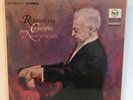
The condition of the jacket is VERY GOOD. There is bumping/wear at corners, particularly to the lower-right corner, as well as minor edgewear and some discoloration. However, there are no bends, seamplits, owners’ markings, or other defects, and the album remains pefectly solid and very handsome in appearance – overall, this rates as a very good collector’s copy.
The condition of the dowel spine is VERY GOOD. There is a 2” seamsplit to the lower edge of the sleeve and the printing on the dowl is a bit faded, but that is all. The whole remains solid and a good collector’s copy.
The condition of the LP itself is EXCELLENT. Although the surfaces are not absolutely silent, really this is a fine copy and the playback is quite superb. Those requiring CD silent surfaces are kindly advised to look elsewhere. Overall, this rates as an excellent collector's copy.
The images I've provided are of the actual item you are potentially bidding on - these are not stock images or images I've taken from other sites. Bid with confidence!
PAYMENT:
Payment by PayPal is greatly preferred. Payment should be made within 5 days.
SHIPPING:
Shipping is free to anywhere in the world; this is true regardless of the number of LPs you buy, be it 1 or a 100. All LPs will be sent via standard airmail (7-10 days delivery). Note: There is no tracking number provided with standard airmail. Should you wish to have your item(s) sent via certified airmail (i.e., with a tracking number), please contact me. The fee for this $5.00 USD.
FEEDBACK:
I will promptly leave feedback for all buyers. Please do not leave negative, or even neutral, feedback without first giving me an opportunity to resolve any dissatisfaction you might have with an item or transaction. I do understand that, on occasion, a buyer might believe the item description to be inaccurate or that a buyer may be disappointed in some other way regarding the sale. I promise I will do my very best to resolve any unhappiness you've experienced in your buying experience with me to your complete satisfaction. Thank you.
REFUNDS:
Returns are honored, and any buyer you makes a return will be refunded in full. Please contact me before making a return.
Please see my other classical LP and CD auctions, and feel free to write with any questions, I'll be glad to help.
price rating


![Ava Max - Heaven & Hell [Transparent Orange Vinyl] NEW Sealed Vinyl LP Album](https://www.popsike.net/php/thumbnail.php?url=https://www.popsike.pics/pix/20230625/235064239781.jpg)