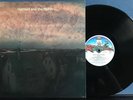
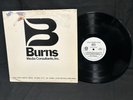
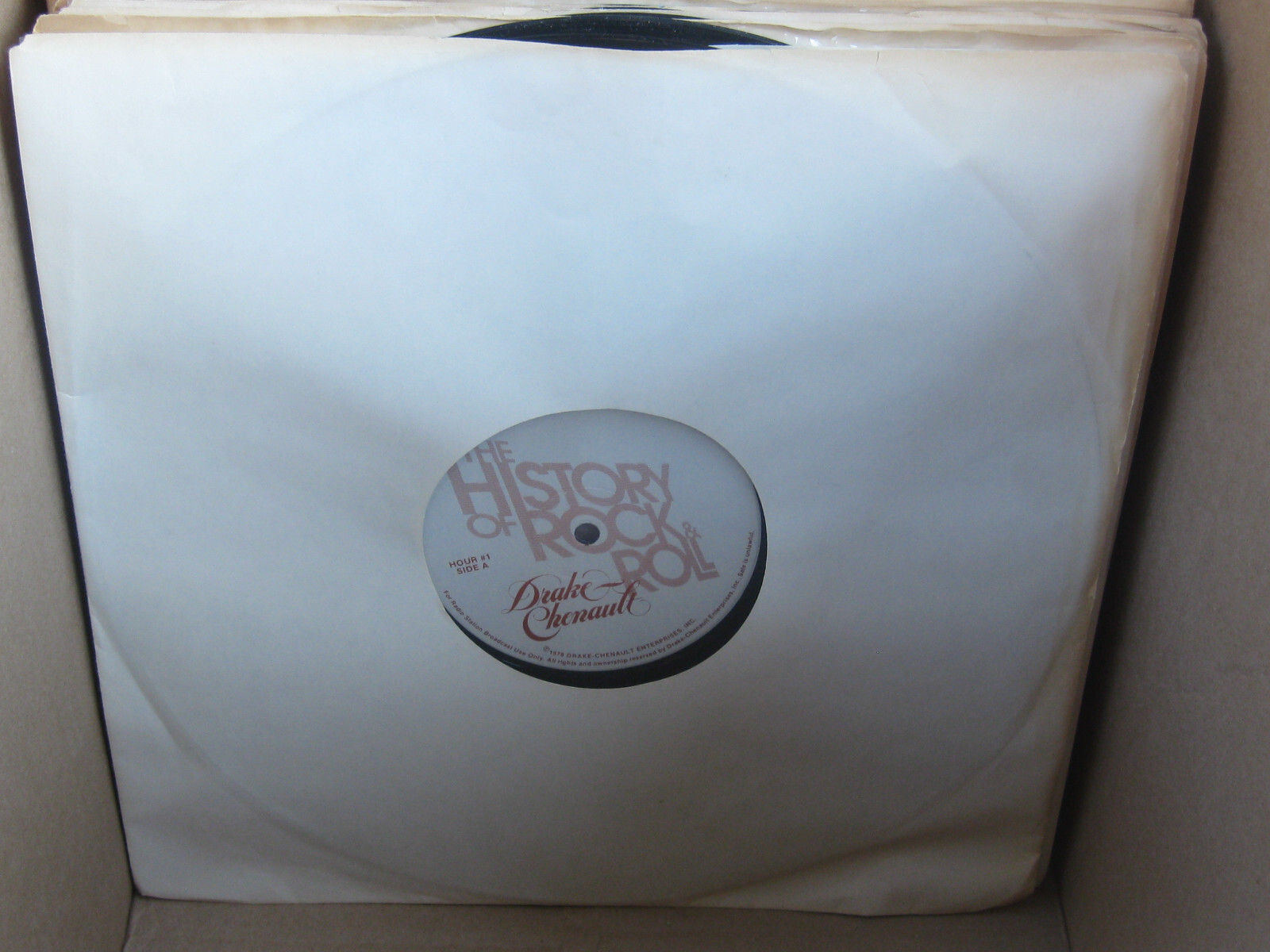
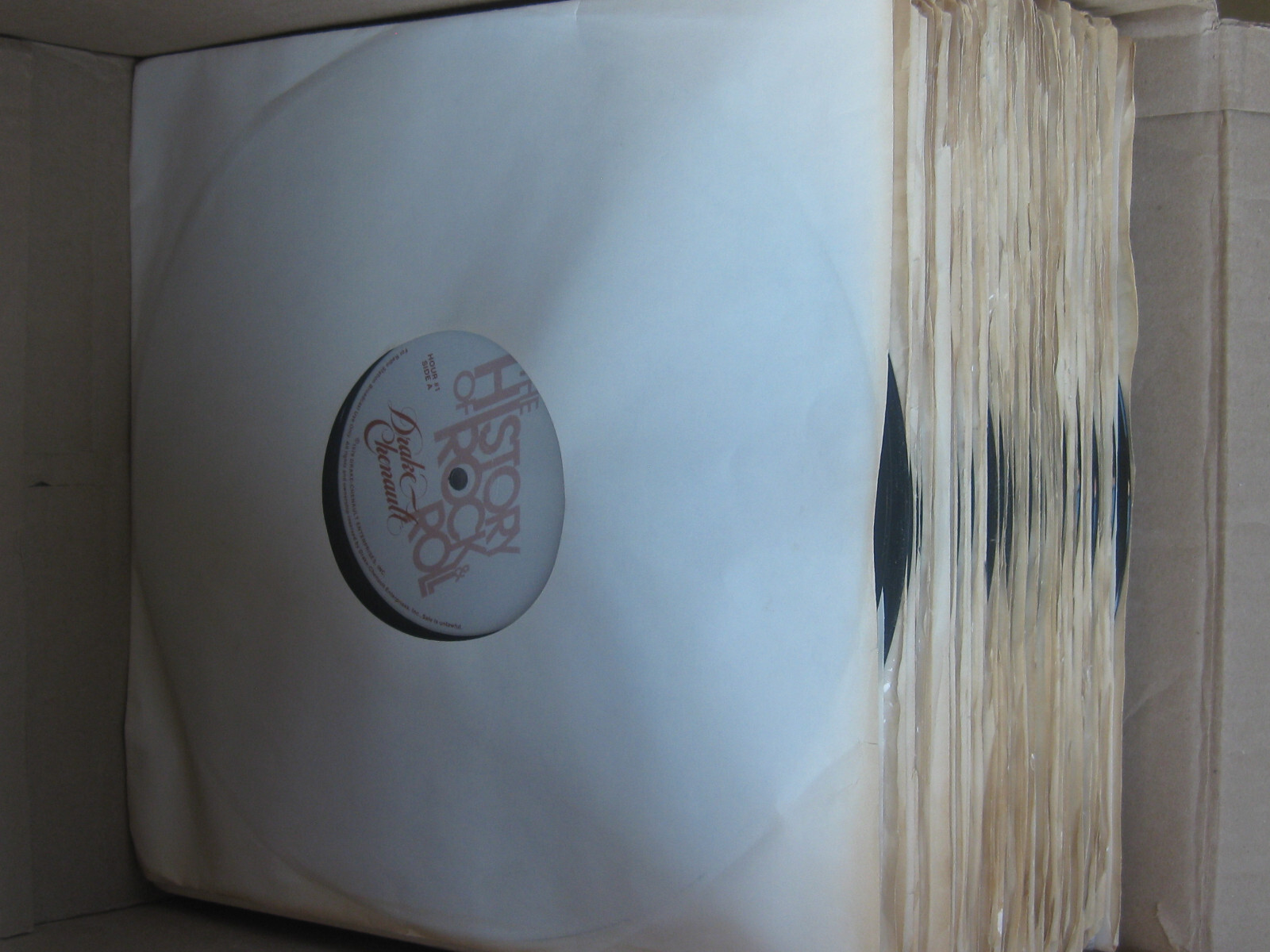
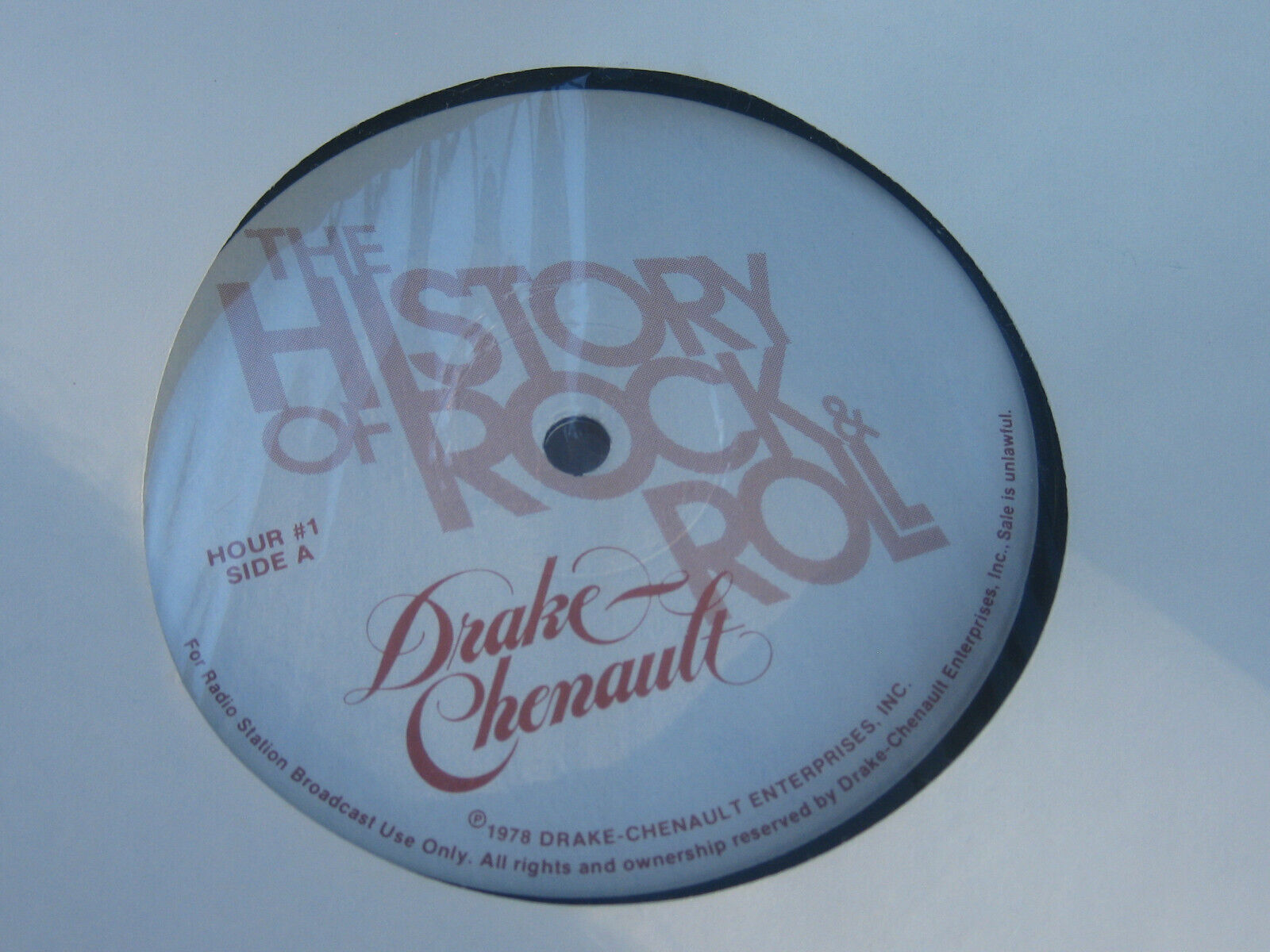
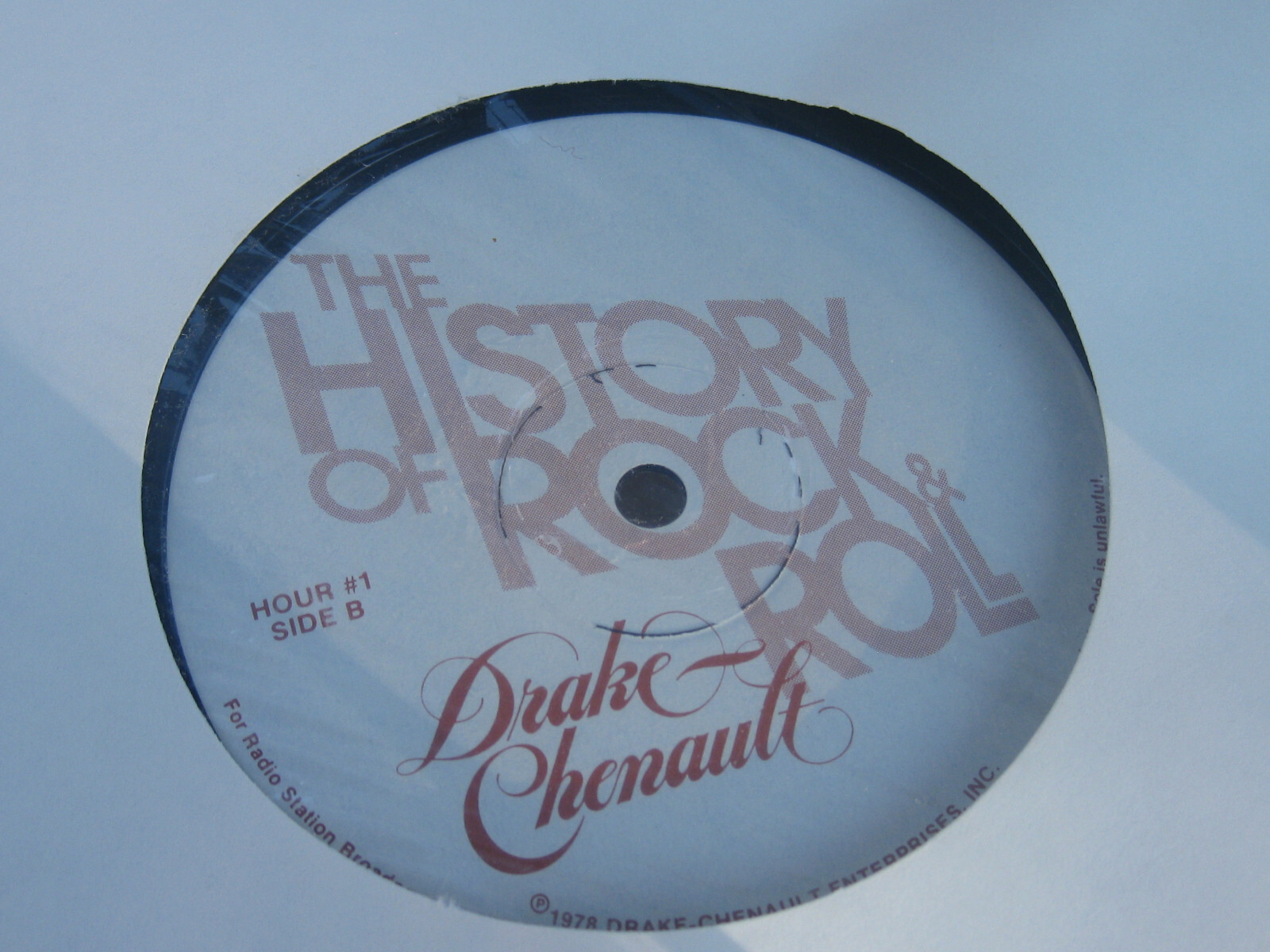
History Of Rock And Roll (1978) Drake-Chenault Ent. 52xLP vinyl complete set
$
1,700

Favourite Auctions
To save auctions to your favourites, please login
If you don't have an account, please register
Description
History Of Rock And Roll (1978) Drake-Chenault Enterprises 52xLP complete set!
- this is the ORIGINAL edition of this series, not the revised and reissued sets in 1981 and 1986.
- this is a complete set of the original 52 hour long broadcasts on vinyl released in 1978
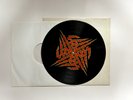
- vinyl are brand new, never been played but housed in single inner sleeves as they were distributed to radio stations only
The History of Rock & Roll first aired on the weekend of February 21–23, 1969, on 93 KHJ Los Angeles, hosted by Robert W. Morgan. It aired for 48 hours and was later syndicated. Later that year, with slight modifications to the script, another version was aired hosted by Humble Harve Miller. The program was then syndicated nationally in the fall of 1969 by parent company RKO General. KHJ repeated this in 12-hour blocks. This version was syndicated throughout the early 1970s, and was sent to stations on large 10 1⁄2" reels of 1/4" tape, in full-track mono. Stations were required to return the tapes immediately after airing, though (surprisingly) several stations offered copies of the show as prizes. The original KHJ show also carried promos awarding copies of the show as prizes to a handful of listeners, on reel-to-reel tape AND a tape recorder to play it on.
Writer Pete Johnson said that "I included nearly every record I ever remember hearing".The History of Rock and Roll billed itself as "modern music's first rockumentary" when it first aired on February 21, 1969. However, it had some competition for that title from the Pop Chronicles which began airing on February 9, 1969, on rival Los Angeles AM station KRLA. But since The History of Rock and Roll completed its first broadcast that weekend, it was the first of these rockumentaries to be broadcast in full.
1978:
In 1975, Drake-Chenault began the process of updating the documentary. Finding that the 1969 script contained inaccuracies and omissions, programmer/DJ/music historian Gary Theroux researched, rewrote, and rebuilt the program entirely from scratch. The new version expanded the story with fresh interviews, insightful narration, more music, and a host of innovations—all in a modular format which allowed stations more programming flexibility. Drake knew that the rising popularity of stereo FM rock stations made it necessary to redo the show in stereo. The revised show was also completely remixed and re-edited from scratch, using a homebuilt control room assembled together by engineer Mark Ford at the company headquarters in Canoga Park, California, and a library of thousands of LPs and 45 singles. The program employed a systematic approach covering each year with a focused half-hour as well as separate segments devoted to key artists or trends. The result, hosted by Bill Drake, was an enormously successful ratings hit.
Since the documentary was in development at the time Elvis Presley died in August 1977, Drake-Chenault was able to quickly produce and distribute material from the documentary as "Elvis: A Three Hour Special".
Among other things, Theroux had Drake-Chenault chief engineer Mark Ford assemble two kinds of annual montages: one of each chart-topping hit of a given year (in sequence) and the other of other key songs there was no time to play in full. Those #1 hit montages were reprised for the climactic final hour of the show—edited together back to back to create a fast-moving 45-minute medley of every chart-topping hit from 1955 to the fall of 1977. The riveting nature of Theroux's much-bootlegged ending later inspired a series of hits medleys by many artists including Elvis Presley, The Beatles, Stars on 45, and Jive Bunny & the Mixmasters. The 1978 edition of "The History of Rock & Roll" debuted as a marathon broadcast over more than 400 domestic stations and another 400 overseas, and won Billboard magazine's "Top Special Program of the Year" award.
A brief history from Wikipedia:
The History of Rock & Roll first aired on the weekend of February 21–23, 1969, on 93 KHJ Los Angeles, hosted by Robert W. Morgan. It aired for 48 hours and was later syndicated. Later that year, with slight modifications to the script, another version was aired hosted by Humble Harve Miller. The program was then syndicated nationally in the fall of 1969 by parent company RKO General. KHJ repeated this in 12-hour blocks. This version was syndicated throughout the early 1970s, and was sent to stations on large 10 1⁄2" reels of 1/4" tape, in full-track mono. Stations were required to return the tapes immediately after airing, though (surprisingly) several stations offered copies of the show as prizes. The original KHJ show also carried promos awarding copies of the show as prizes to a handful of listeners, on reel-to-reel tape AND a tape recorder to play it on.
Writer Pete Johnson said that "I included nearly every record I ever remember hearing".The History of Rock and Roll billed itself as "modern music's first rockumentary" when it first aired on February 21, 1969. However, it had some competition for that title from the Pop Chronicles which began airing on February 9, 1969, on rival Los Angeles AM station KRLA. But since The History of Rock and Roll completed its first broadcast that weekend, it was the first of these rockumentaries to be broadcast in full.
1978:
In 1975, Drake-Chenault began the process of updating the documentary. Finding that the 1969 script contained inaccuracies and omissions, programmer/DJ/music historian Gary Theroux researched, rewrote, and rebuilt the program entirely from scratch. The new version expanded the story with fresh interviews, insightful narration, more music, and a host of innovations—all in a modular format which allowed stations more programming flexibility. Drake knew that the rising popularity of stereo FM rock stations made it necessary to redo the show in stereo. The revised show was also completely remixed and re-edited from scratch, using a homebuilt control room assembled together by engineer Mark Ford at the company headquarters in Canoga Park, California, and a library of thousands of LPs and 45 singles. The program employed a systematic approach covering each year with a focused half-hour as well as separate segments devoted to key artists or trends. The result, hosted by Bill Drake, was an enormously successful ratings hit.
Since the documentary was in development at the time Elvis Presley died in August 1977, Drake-Chenault was able to quickly produce and distribute material from the documentary as "Elvis: A Three Hour Special".
Among other things, Theroux had Drake-Chenault chief engineer Mark Ford assemble two kinds of annual montages: one of each chart-topping hit of a given year (in sequence) and the other of other key songs there was no time to play in full. Those #1 hit montages were reprised for the climactic final hour of the show—edited together back to back to create a fast-moving 45-minute medley of every chart-topping hit from 1955 to the fall of 1977. The riveting nature of Theroux's much-bootlegged ending later inspired a series of hits medleys by many artists including Elvis Presley, The Beatles, Stars on 45, and Jive Bunny & the Mixmasters. The 1978 edition of "The History of Rock & Roll" debuted as a marathon broadcast over more than 400 domestic stations and another 400 overseas, and won Billboard magazine's "Top Special Program of the Year" award.
1981:
The final Drake-Chenault version was released in the spring of 1981 (this edition), named the Silver Anniversary Edition of the History of Rock & Roll, so-called as it was released 25 years after Elvis Presley's first #1 hit. Not wishing to increase the size of the program, and with an attempt to place greater emphasis on the current musical trends, the controversial decision was made to severely cut back the sections devoted to the 1950s and early 1960s (prior to the advent of the Beatles). All of the pre-1978 content in the "Silver Anniversary Edition," therefore, was actually a recycled cut-down of Theroux, Ford and Drake's award-winning work. Only their two-hour profile of Elvis Presley remained relatively intact. The half-hour recaps of chart highlights from each year between 1956 and 1963 were condensed into a single half hour, while new chart sweeps for 1978, 1979, and 1980 were expanded to a full hour each. The final hour, the "time sweep", brought the number one song montage up to date through Eddie Rabbitt's "I Love a Rainy Night", the song that was number one in early 1981, at the time this version was prepared. The program closed with The Beatles' version of "Rock and Roll Music". LP #01
The Birth of Rock and Roll - Country Rock - 1950's Rhythm and Blues - Chuck Berry - Fats Domino - Little Richard - Bill Haley - Johnny Cash - Jerry Lee Lewis - The Coasters - The Drifters - Ray Charles
56:00 LP #02
1950's Rockabilly - Late 50's and Early 1960's (Buddy Holly - Eddie Cochran - Everly Brothers - Roy Orbison - Paul Anka - Bobby Darin - Sam Cooke - Jackie Wilson - Dion and the Belmonts - Checker 56:00 LP #03
The Hits 1956 - 1963 / Girl Groups and Phil Spector 56:00 LP #04
Elvis Presley (Part 1) 56:00 LP #05
Elvis Presley (Part 2) 56:00 LP #06
The Motown Sound (Part 1) 56:00 LP #07
The Four Seasons / Beach Boys 56:00 LP #08
The Beatles (Part 1) 56:00 LP #09
The Hits of '64 - '65 56:00 LP #10
Rolling Stones (Part 1) 56:00 LP #11
The Motown Sound (Part 2) 56:00 LP #12
The Beatles (Part 2) 56:00 LP #13
Bob Dylan / Folk Rock (Lovin' Spoonful / The Byrds / Donovan / Simon & Garfunkel) 56:00 LP #14
The Beatles (Part 3) 56:00 LP #15
Solo Careers of John Lennon, George Harrison & Ringo Starr 56:00 LP #16
San Francisco Sound / Soft British Rock (Jefferson Airplane / Janis Joplin / Creedence Clearwater Revival / Bee Gees / Hollies / Moody Blues) 56:00 LP #17
60's Hard Rock (Part 1) (Cream / Guess Who / etc. ) 56:00 LP #18
60's Hard Rock (Part 2) (Who / Led Zeppelin / etc. ) 56:00 LP #19
The Hits of '66 / '67 56:00 LP #20
Rock Groups of the 60's ( Raiders / Monkees / Rascals / Turtles / etc.) 56:00 LP #21
Soul in the 60's ( Arthur Conley / Joe Tex / James Brown / Wilson Pickett / Aretha Franklin / Sly and the Family Stone ) 56:00 LP #22
The Hits of '68 / '69 56:00 LP #23
The Hits of '70 / '71 56:00 LP #24
The Hits of '72 / '73 56:00 LP #25
Singer - Songwriters of the 70's (Jim Croce / Carly Simon / James Taylor / Carole King ) 56:00 LP #26
The Hits of '74 / '75 56:00 LP #27
The Hits of '76 / '77 56:00 LP #28
Mellow Rock of the 70's (Part 1) (Neil Diamond / Bread / Carpenters / Glen Campbell ) 56:00 LP #29
Mellow Rock of the 70's (Part 2) (Gordon Lightfoot / Joni Mitchell / Seals & Crofts / etc. ) 56:00 LP #30
70's R&B ( B.B. King / Jackson Five / Isaac Hayes / etc. ) 56:00 LP #31
Hard Rock of the 70's (Part 1) 56:00 LP #32
Hard Rock of the 70's (Part 2) 56:00 LP #33
Rolling Stones (Part 2) 56:00 LP #34
Paul McCartney and Wings 56:00 LP #35
Stevie Wonder 56:00 LP #36
Elton John 56:00 LP #37
Spinners / Dionne Warwick 56:00 LP #38
Barry Manilow 56:00 LP #39
Chicago / Diana Ross 56:00 LP #40
Fleetwood Mac / Linda Ronstadt 56:00 LP #41
The Eagles 56:00 LP #42
The Hits of '78 56:00 LP #43
Michael Jackson / Disco 56:00 LP #44
The Commodores / Earth, Wind and Fire 56:00 LP #45
The Hits of '79 56:00 LP #46
The Bee Gees 56:00 LP #47
Barbara Streisand / Donna Summer 56:00 LP #48
The Hits of '80 56:00 LP #49
Rod Stewart / Bob Seger / Electric Light Orchestra 56:00 LP #50
Olivia Newton-John / Andy Gibb / Kenny Rogers 56:00 LP #51
The Doobie Brothers / Billy Joel 56:00 LP #52
Finale (Timesweep of #1 Records) 56:00
price rating