I AM THE WALRUS / HELLO GOODBYE 45 + SLEEVE Psych BEATLES MAGICAL MYSTERY PSYCH
$
32


$ 32
Sold For
Jan 10, 2021
Sold Date
Jan 7, 2021
Start Date
$ 10
Start price
11
Number Of Bids
USA
Country Of Seller
eBay
Auctioned at
Favourite Auctions
To save auctions to your favourites, please login
If you don't have an account, please register
Description
- PLAYS CLEAN ~~ ORIGINAL 1967 FIRST PRESS ..|/\|...............................................|/\|..
- = THE BEATLES=
HELLO GOODBYE- B/W
- I AM THE WALRUS
- ..|/\|...............................................|/\|..
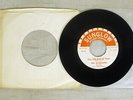
- USA - CAPITOL RECORDS - 2056
- DOUBLE "A" SIDE WINNER
- CLEAN 1967 ORIGINAL with RARE SLEEVE!
" I AM THE WALRUS "
"I Am the Walrus" by the Beatles was written for their 1967 film Magical Mystery Tour. Written by John Lennon and credited to Lennon–McCartney, it was released as the B-side to the single "Hello, Goodbye".
Lennon wrote the song to confound listeners who had been affording serious scholarly interpretations of the Beatles' lyrics. He was partly inspired by two LSD trips and Lewis Carroll's 1871 poem "The Walrus and the Carpenter". Compositional, every musical letter of the alphabet is invoked and every chord is a major or a seventh. Producer George Martin arranged and added orchestral accompaniment that included violins, cellos, horns, and clarinet. The Mike Sammes Singers, a 16-voice choir of professional studio vocalists, also joined the recording, variously singing nonsense lines and shrill whooping noises.
Since the "Hello, Goodbye" single and the Magical Mystery Tour EP both reached the top two slots on the British singles chart in December, "I Am the Walrus" holds the distinction of reaching numbers one and two simultaneously. Shortly after release, the song was banned by British radio for the line "Boy, you've been a naughty girl, you let your knickers down".
The "model" for "I Am the Walrus" was most likely Procol Harum's "A Whiter Shade of Pale", which was a hit single during the summer of 1967 and Lennon's favorite song of the period. The lyrics came from three song ideas that Lennon had been working on, the first of which was inspired by hearing a police siren at his home in Weybridge U.K.; Lennon wrote the lines "Mis-ter cit-y police-man" to the rhythm and melody of the siren. The second idea was a short rhyme about Lennon sitting amidst his garden, while the third was an ACID lyric about sitting on a corn flake. Unable to finish the three different songs, he combined them into one. The lyrics also included the phrase "Lucy in the sky", a reference to the Beatles' earlier song "Lucy in the Sky with Diamonds".
The walrus refers to Lewis Carroll's poem "The Walrus and the Carpenter" (from the book Through the Looking-Glass). Lennon later expressed dismay upon belatedly realizing that the walrus was a villain in the poem.
The final piece of the song came together during a visit from Pete Shotton, Lennon's friend and former fellow member of the Quarrymen, when Lennon asked him about a playground nursery rhyme they sang as children. Shotton recalled the rhyme as follows:
Yellow matter custard, green slop pie,
All mixed together with a dead dog's eye,
Slap it on a butty, ten-foot thick,
Then wash it all down with a cup of cold sick.
Lennon borrowed a couple of images from the first two lines. Shotton was also responsible for suggesting that Lennon change the lyric "waiting for the man to come" to "waiting for the van to come". The Beatles' official biographer, Hunter Davies, was present while the song was being written and wrote an account in his 1968 book The Beatles. According to this biography, Lennon remarked to Shotton, "Let the fuckers work that one out." While the band were studying Transcendental Meditation in India in early 1968, George Harrison told journalist Lewis Lapham that one of the lines in "I Am the Walrus" incorporated the personal mantra he had received from their meditation teacher, Maharishi Mahesh Yogi. According to Pattie Boyd, Harrison's wife at the time, the words "semolina pilchard" refer to Sergeant Pilcher of the London Drug Squad, who waged a campaign against British rock stars and underground figures during the late 1960s.
Lennon claimed he wrote the first two lines on separate acid trips;
The first line was written on one acid trip one weekend. The second line was written on the next acid trip the next weekend, and it was filled in after he met Yoko ... Lennon: "I'd seen Allen Ginsberg and some other people who liked Dylan and Jesus going on about Hare Krishna. It was Ginsberg, in particular, I was referring to.The words 'Element'ry penguin' meant that it's naïve to just go around chanting Hare Krishna or putting all your faith in one idol. In those days I was writing obscurely, à la Dylan. [...] It never dawned on me that Lewis Carroll was commenting on the capitalist system. I never went into that bit about what he really meant, like people are doing with the Beatles' work. Later, I went back and looked at it and realized that the walrus was the bad guy in the story and the carpenter was the good guy. I thought, Oh, shit, I picked the wrong guy. I should have said, 'I am the carpenter.' But that wouldn't have been the same, would it? [Sings, laughing] 'I am the carpenter ...' "
" HELLO GOODBYE "
The Beatles began recording "Hello, Goodbye" at EMI Studios (now Abbey Road Studios) in October 1967, towards the end of filming for their Magical Mystery Tour television special. The latter was a film project that McCartney had initiated in an effort to focus the group in the wake of Epstein's death that August. Under the working title "Hello Hello", the Beatles taped the basic track for the song on 2 October, with George Martin producing the session and Geoff Emerick and Ken Scott as engineers. The production and recording was unusually straightforward, relative to the experimentalism that had characterized much of the Beatles' studio work since completing Sgt. Pepper. The line-up on the take selected for overdubs, take 14, was McCartney on piano, Lennon on Hammond organ, George Harrison on maracas, and Ringo Starr on drums.
The band members then added tambourine, conga drum and bongos over the coda. This last section of the song came about while the group were working in the studio. Lennon, who was otherwise highly critical of "Hello, Goodbye", approved of the addition, saying: "The best bit was the end, which we all ad-libbed in the studio, where I played the piano. Like one of my favorite bits on 'Ticket to Ride', where we just threw something in at the end." In McCartney's recollection, the coda "didn't sound quite right" until Emerick increased the reverberation on the tom-tom drums, at which point, "it just came alive."Everett cites the "Maori finale" as an example of the Beatles' pioneering use of codas in their recordings; in this instance, they provided "the cold ending followed by an unrelated coda", having similarly pioneered the "fade-out–fade-in coda" at the end of "Rain" and "Strawberry Fields Forever".
The Beatles returned to the song on 19 October, two days after attending a memorial service for Epstein at the New London Synagogue on Abbey Road. At this session, Harrison added his lead guitar parts (treated with Leslie effect), McCartney recorded the lead vocal, and Lennon, McCartney and Harrison supplied backing vocals; hand-claps were also overdubbed.
Two violas were added to "Hello, Goodbye" at Abbey Road on 20 October.These string parts were played by classical musicians Kenneth Essex and Leo Brinbaum, and scored by Martin, who based the arrangement on a melody McCartney supplied on piano. McCartney overdubbed bass guitar on 25 October and, following a trip to Nice in France to film his "Fool on the Hill" segment for Magical Mystery Tour, added further bass to the track on 2 November. A mono mix of "Hello, Goodbye" was completed that same day, and the stereo version on 6 November.
- CONDITION:
- The cover: rated: CLEAN VG(+) mainly clean, a little handling visual, a bit of paper loss at bottom cener near seam, original store price sticker that served to "seal" the record, wraps around both sides, and is dated 1968 which dates the item to the '60s release. Overall a light wear , the item from 53 years ago. There are no delete marks, no split seams, and no writing ...
- The vinyl: Rated: near VG+ to VG++ plays with CLEAN AUDIO
- both Capitol labels are clean
A cool addition to anyone's music library!
SEE: SELLERS OTher items for similar cool sounds for "head" people... EFFICIENT/CAREFUL GRADING All imperfections are noted both cover & record NOTE: All Items backed by money back guarantee! IF you have a problem PLEASE let us solve for you BEFORE leaving ANY negative feedback. Thanks! GRADING SCALE: M, M-, EX, VG++,VG+, VG, VG- M Completely clean, no marks M- Carefully used, looks clean, plays clean, shiny gloss, no marks EX Faint scuff or superficial mark, near M-, high gloss, plays clean VG++ Glossy with minimal scuffing or light mark playing very nice, clean VG+ a bit more scuff or markls still plays well with very minimal surface at worse VG more marks/scratches only minor, nothing deep, no loud clicks or pops this grade is abused by many, VG here does not mean "trashed" VG- surface noise present, will not have skips or jumps ALL PAYMENTS SHOULD BE MADE WITHIN 5 DAYS Of AUCTIONS END BIDDERS PLEASE = Do Not Bid If You Are Not Serious About Following Through The Transaction! ALL ITEMS GUARANTEED FOR WINNING BID - LESS SHIPPING!
price rating