IAN CARR NUCLEUS we´ll talK abouT iT UK VeRTiGO SWiRL
€
34
$
38


Favourite Auctions
To save auctions to your favourites, please login
If you don't have an account, please register
Description
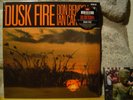
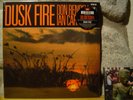
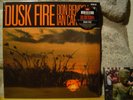
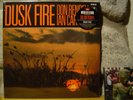
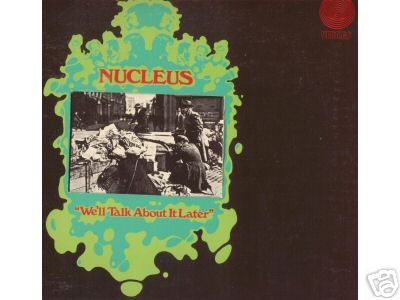
NUCLEUS
- LP-
„We`ll Talk About It Later“
Original swirl Vertigo Label !
( Vertigo 6360027 )
1970 !
With original foldout-gatefold-cover !
GIMMIX COVER
Mit super Klapp-Cover!
2 kleine sichtbare kratzer-ränder leicht abgeschabt!
Zustand-condition:
mint-/vg(+)
Super rare Progressiv – Rock LP !
rare,rare.rare!!!
das Ding.
Jazzrock, die Vermischung von Jazz und Rock, Jazzmusiker, die elektrisch verstärkte Instrumente benutzen, Rockmusiker, die Holz- und Blechbläser integrieren und anfangen zu improvisieren. Irgendwann Ende der 60er, Anfang der 70er Jahre entstand dieser neue Stil. In England waren auch einige Musiker aus Canterbury an dieser Verschmelzung beteiligt, hauptsächlich Musiker, die einstmals zusammen in einer Band aus nämlicher Stadt spielten, den Wilde Flowers. Auf diese Formation gehen vor allem zwei Schlüsselbands des britischen Jazzrock zurück: Caravan und Soft Machine. Die Musik dieser beiden und der von ihren Mitgliedern später gebildeten Gruppen trägt seither den Namen der Stadt, in der alles seinen Ursprung genommen hat - Canterbury. Eine Ganze Reihe weiterer Bands wurden und werden mit in diese Stilschublade gesteckt, auch wenn sie ursprünglich gar nichts mit der nordenglischen Stadt zu schaffen hatten. Nucleus ist eine von diesen.
Die Band um Ian Carr (der aus übrigens Newcastle stammt) entstand 1969 in London und war auch später dort beheimatet. Da aber vier Nucleus-Mitglieder später bei mehr oder weniger echten Canterbury-Bands spielten (Soft Machine und Gilgamesh Alben - letztere Band aus London wurde auf ähnliche Weise von Canterbury vereinnamt), wurde Nucleus auch eine solche. Nun, stilistisch ist das vielleicht auch gar nicht so falsch. Canterbury ist das Resultat der Bemühungen nordostenglischer Jazz- und Rockmusiker in den frühen 70ern ihre Stile zu vereinen und das auf recht eigene, von der US-amerikanischen Miles Davis-Schule unabhängige Art und Weise. Da sowohl London als auch Canterbury im Nordosten Englands liegen, geht die Stilbezeichnung wohl auch geographisch in Ordnung.
1970 kam die erste LP von Nucleus - "Elastic Rock" - heraus, im selben Jahr wie "Third" von Soft Machine (und auch "Bitches Brew" von Miles Davis). Sie gehört damit nicht nur zu den frühesten Scheiben mit Musik, die Jazz und Rock miteinader verband, sondern auch zu den ersten Platten, auf denen diese Synthese auch wirklich gelungen war. Im Gegensatz zu denen von Soft Machine, kamen die Musiker von Nucleus meist vom Jazz. Das hört man der Musik auch deutlich an. Sehr jazzig geht es hier zur Sache, ist die Musik um einges delikater und verspielter als die der meisten anderen Canterbury-Bands, fehlen rockende Härte oder extremere Ausbrüche weitestgehend. Vielmehr erzeugen Keyboards (meist E-Piano), E-Gitarre, Bass und Schlagzeug ein dicht verwobenes Geflecht von eher sanft vorantreibenden Klängen, zu denen Carrs Trompete, verschiedene Saxophone, eine Flöte und die Oboe von Karl Jenkins (der übrigens die meisten Stücke hier komponiert hat) virtuos solieren. Dieses begleitende Geflecht, die mitunter recht einfachen, repetitiven Riffs von E-Piano, Gitarre und Bass und das punktgenaue Schlagzeugspiel von Marschall, geben der Musik aber einen deutlichen Rockcharakter. Eher milde, entspannt Musik ist das Ergebnis, die diese typische, Canterburesque Weichheit und Wärme ausstrahlt, die z.B. auch die Musik auf den ersten 3 LPs von Caravan auszeichnet, dabei allerdings nie in Gefahr gerät ins Seichte abzugleiten.
"Elastic Rock" ist eine sehr elegante, hervorragend produzierte Scheibe, eingespielt von ebenso hervorragenden Musikern. Wer gegen Jazziges nicht alergisch ist, sich für die Entstehung des Jazzrock - nicht nur in England - und die Canterbury-Szene interessiert, der sollte dieser wunderbaren Platte dringend ein Ohr leihen!,
super sammlerstück!
einmalige gelegenheit
andere auktionen beachten!!
more prog psych space rock!
if u need more information plz e-mail me!
happy bidding!
Versandkosten / Shipping:
VERSICHERTER KURIERVERSAND EUR 5,90
International Shipping Rates:
Europe EUR 9,50 unsecured airmail!!
We accept PayPal worlwide and international bank transfer within the EU.
Nucleus
In the spring of 1969, after five years co-leading the Ian Carr/Don Rendell, trumpet player Ian Carr (born Dumfries, Scotland, April 21st 1933) felt it was time for something new. "I didn't know what kind of band or what kind of music I wanted. At that stage, I knew only what I didn't want... I wanted to abandon the old jazz formula : theme/solos all round/theme again. It didn't interest me anymore, and I felt that the whole idea of structure and the relationship of written or predetermined passages with improvised passages needed drastic rethinking... I certainly didn't want to limit myself to playing "free" jazz (improvisation without tonalities, harmonies, time signatures or predetermined structures)... I was interested in an inclusive, pluralistic conception".
The first line-up of Nucleus was assembled in September 1969, with Karl Jenkins on reeds and keyboards, John Marshall on drums, Jeff Clyne on bass, Brian Smith on tenor sax and Bernie Holland on guitar. The latter left after three months and was replaced by Chris Spedding, after which the personnel remained stable for about fifteen months. Thanks to Pete King, the manager of the Ronnie Scott Club, the band signed with Vertigo Records to record their debut album, Elastic Rock, in January 1970. John Peel and his producer John Walters heard Nucleus, liked the music and offered the group a broadcast on Peel's Top Gear show, at that time the most popular show on Radio One. Then the BBC chose Nucleus to represent Great Britain at the International Jazz Festival at Montreux in June, and they won, which meant that they would next appear at the Newport Festival. They did, to enthusiastic reviews from the American media.
Back in England, however, Nucleus remained virtually unknown. They spent the rest of 1970 playing at a couple of festivals on the Continent (in Italy and Germany), doing a few gigs in England and recording two more albums, We'll Talk About It Later in September, and Solar Plexus in December, the latter the result of Carr receiving an Arts Council grant. But after such a busy year, 1971 would prove to be much more difficult. Chris Spedding, who was much in demand as a session guitarist, left in April 1971, quickly followed by Jeff Clyne. Their places were taken by Dave MacRae on electric piano and Roy Babbington on bass. In October 1971, John Marshall left to join the Jack Bruce band, and proved more difficult to replace, not to mention Jenkins being upset at his leaving (in June 1972, they were reunited when Jenkins joined Soft Machine, Marshall having joined them a few months earlier). Marshall was replaced by Martin Ditcham, then either Clive Thacker or Tony Levin (sometimes both).
In June 1972, Nucleus recorded the album Belladonna (which was actually released as a Ian Carr solo album). This was the band's first recording session for eighteen months because management problems had made it impossible for the band to record in the interim. Actually, Nucleus had hardly worked for the six months prior to the recording. The line-up on the album was Carr, Smith, MacRae, Babbington and Thacker, plus Trevor Tomkins (percussion), Gordon Beck (electric piano) and Allan Holdsworth (guitar). At the beginning of 1973, the band found a new manager and optimism returned. Another commission was completed with the recording of Labyrinth in March, and by August Nucleus was back in the studio to record the album Roots.
In 1974, an augmented version of the band toured the UK for the Arts Council Contemporary Music Network, performing Labyrinth. At that point, keyboard player Geoff Castle had joined Nucleus and was to become a fixture of the group until 1982, as was drummer Roger Sellars. In the second half of the seventies, Nucleus kept touring around Europe, including Scandinavia and the Eastern block. In 1978, the band spent three weeks in India, playing two nights at the first "Jazz Yatra" in Bombay, followed by concerts in Calcutta and Delhi. Meanwhile, more albums were recorded : Under The Sun (1974), Snakehips Etcetera (1975), Alleycat (1975), In Flagranti Delicto (1977), Out Of The Long Dark (1979) and Awakening (1980).
The band continued touring into the eighties, with new members joining - saxophonist Phil Todd (formerly of Jeff Clyne's Turning Point), bassist Paul Carmichael (later in Allan Holdsworth's band IOU and briefly in Soft Machine) and guitarist Mark Wood - and old members rejoining - bassist Dill Katz (who had been in Nucleus in 1978-79, then played with Barbara Thompson's Paraphernalia) and drummer John Marshall (who since the end of Soft Machine had played with Eberhard Weber's Colours). In 1984, Nucleus did a 7-week South American tour funded by the British Council. The following year, they spent a week at the Rome Spring Festival and recorded a live album, Live At The Theaterhaus, at a festival in Stuttgart. In 1987, Nucleus toured England and Germany, as well as playing at the Montreux and Red Sea Festivals.
Old Heartland (1988) featured a mixture of jazz and strings, with three tracks by Nucleus and a lengthy composition entitled "Northumbrian Sketches", written in 1986 and performed at the Bracknell classical and jazz festivals. This marked the end of Nucleus : Carr subsequently led the Ian Carr Group, still featuring Phil Todd, from 1989 and 1992. In parallel, he has been a member of Jon Hiseman and Barbara Thompson's United Jazz and Rock Ensemble since its foundation in 1975, participating in its extensive twentieth anniversary tour in 1994-95.
price rating