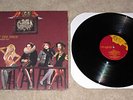
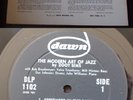
John Hicks – After The Morning LP 1st Press 1979 Very Rare Jazz Piano Trio
$
100




Favourite Auctions
To save auctions to your favourites, please login
If you don't have an account, please register
Description
John Hicks – After The Morning LP 1st Press 1979 Very Rare Jazz Piano Trio Archival Sleeve Play Tested This is one of my favorite Piano Trio session
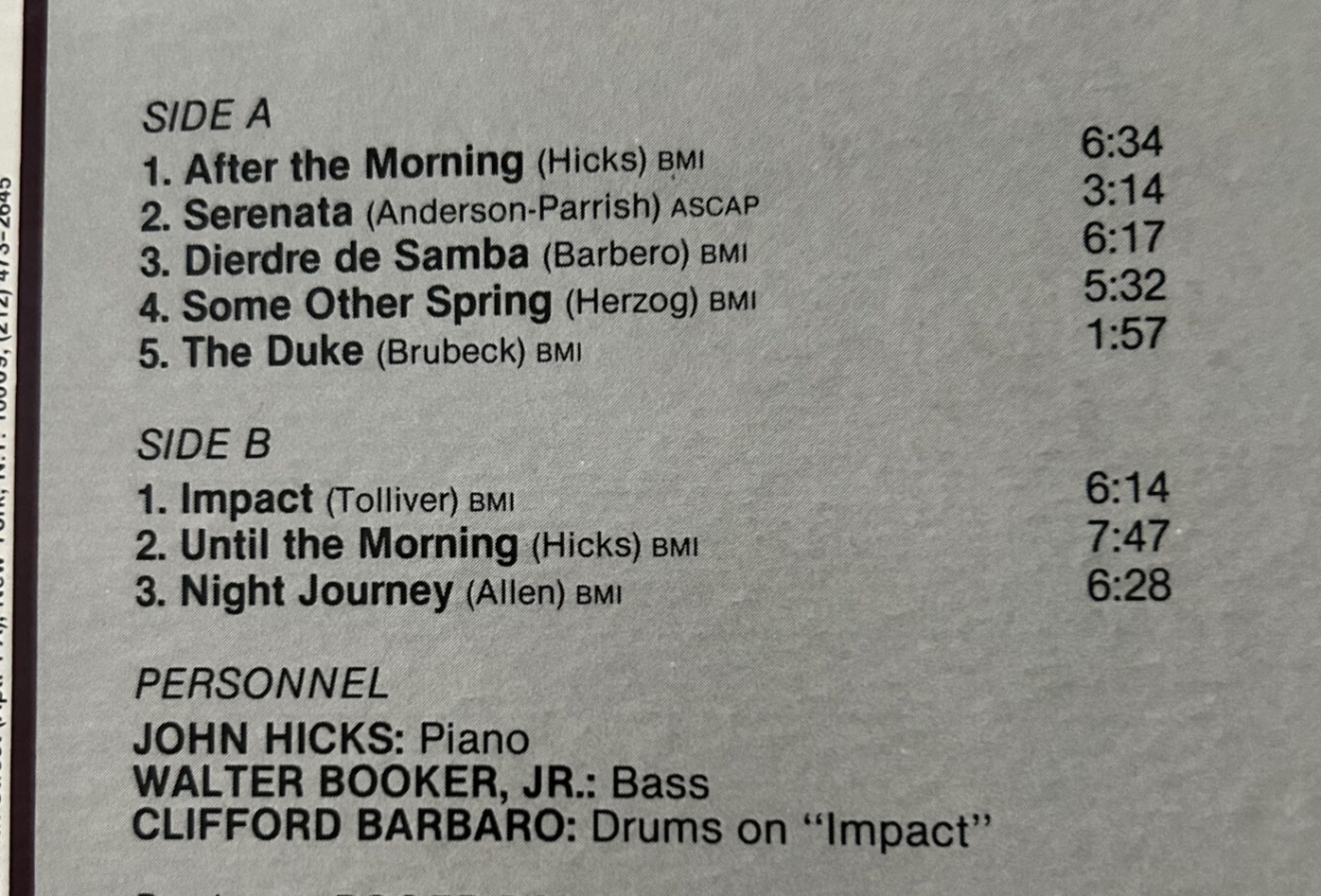
After the Morning is the debut release by American pianist John Hicks recorded in 1979 and released on the West 54 label. Two earlier sessions led by Hicks were released on Strata-East Records following this album Allmusic awarded the album 4½ stars stating "This first album is a real keeper. Great piano playing throughout.
John Josephus Hicks Jr. (December 21, 1941 – May 10, 2006) was an American jazz pianist, composer, and arranger. He was leader of more than 30 recordings and played as a sideman on more than 300.
After early experiences backing blues musicians, Hicks moved to New York in 1963. He was part of Art Blakey's band for two years, accompanied vocalist Betty Carterfrom 1965 to 1967, before joining Woody Herman's big band, where he stayed until 1970. Following these associations, Hicks expanded into freer bands, including those of trumpeters Charles Tolliver and Lester Bowie. He rejoined Carter in 1975; the five-year stay brought him more attention and helped to launch his recording career as a leader. He continued to play and record extensively in the United States and internationally. Under his own leadership, his recordings were mostly bebop-influenced, while those for other leaders continued to be in a diversity of styles, including multi-year associations with saxophonists Arthur Blythe, David Murray, David "Fathead" Newman, and Pharoah Sanders.
In New York, Hicks first accompanied singer Della Reese. He then played with Joe Farrell and toured with trombonist Al Greyand tenor saxophonist Billy Mitchell. In 1963 he was also part of saxophonist Pharoah Sanders' first band, and appeared on CBC Television backing vocalist Jimmy Witherspoon. After periods with Kenny Dorham and Joe Henderson, Hicks joined Art Blakey's Jazz Messengers in 1964. His recording debut was with Blakey in November that year on the album 'S Make It.Early in 1965, Hicks toured with Blakey to Japan, France, Switzerland, and England. Blakey encouraged his band members, including Hicks, to compose for the band, although they also played compositions by previous members of the band. He stayed with Blakey for two years, during which time his playing was compared with that of McCoy Tyner, for the level of energy displayed and for some of the intervals that they used.
In the period 1965 to 1967, Hicks worked on and off with vocalist Betty Carter; her liking for slow ballads helped him develop his sense of time. He then joined Woody Herman's big band, where he stayed until 1970, playing as well as writing arrangements for the band. Hicks also began recording as a sideman with a wide range of leaders – in the 1960s these included Booker Ervin, Hank Mobley, and Lee Morgan – a trend that continued for the remainder of his career. From 1972 to 1973, Hicks taught jazz history and improvisation at Southern Illinois University. From the 1970s, he also played in more avant garde bands, beginning with recordings led by Oliver Lake and performances and recordings in the Netherlands with Charles Tolliver. He played with Blakey again in 1973. Hicks' debut recording as leader was on May 21, 1975, in England. The session resulted in two albums – the trio Hells Bells, with bassist Clint Houston and drummer Cliff Barbaro, and the solo piano Steadfast – that were released by Strata-East Records several years later.
Hicks reunited with Carter in 1975, including accompanying her in a musical play, Don't Call Me Man, that year. After recording with Carter on her Now It's My Turn in 1976, Hicks returned to her band full-time; this raised his profile and led to his own recording – After the Morning. His sideman recording also continued, including with Carter Jefferson (1978) and Chico Freeman (1978–79).
price rating