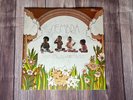
Jon Raven Nic Jones Tony Rose ?Songs Of A Changing World Trailor LER2083 Album
£
15
$
20


Favourite Auctions
To save auctions to your favourites, please login
If you don't have an account, please register
Description
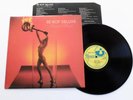
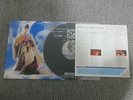
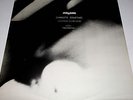
Jon Raven Nic Jones Tony Rose ?Songs Of A Changing World Trailor LER 2083 Vinyl LP Album
Vinyl Record = VG surface wear vinyl blemish Sleeve = G storage age edge and ring wear (see photos)
Tracklist
A1 –Jon Raven The Rosemary 3:44 A2 –Jon Raven Wedgefield Wakes 3:57 A3 –Jon Raven Travelling People 2:42 A4 –Jon Raven The Bad Squire 4:09 A5 –Jon Raven The Lancashire Lads 2:31 A6 –Tony Rose (2) Wife For Sale 5:05 B1 –Jon Raven, Nic Jones, Tony Rose (2) Poverty Knock 5:08 B2 –Jon Raven The Grinders 2:33 B3 –Jon Raven, Nic Jones, Tony Rose (2) Hold The Fort 2:12 B4 –Nic Jones The Nailmaker's Strike 2:34 B5 –Tony Rose (2) Jolly Joe The Collier's Son 3:19 B6 –Nic Jones You Won't Get Me Down In Your Mine 1:36 B7 –Jon Raven The Blantyre Explosion 3:04Credits
- Concertina, Vocals – Tony Rose (2)
- Fiddle, Guitar, Vocals – Nic Jones
- Guitar, Vocals – Jon Raven
Jon Raven was the brother of author and musician Michael Raven, and father of the late Ministry and Killing Joke bassist Paul Raven,[1] and Gundogs bassist Daniel Raven. Raven was born in Wales and educated at Wolverhampton Municipal Grammar School. Alongside brother, Michael, Jon formed a Wolverhampton folk music group before producing many records and books and having numerous television and radio appearances. He was diagnosed with Parkinsons disease in 1996 and died in August 2015 at Compton Hospice in Wolverhampton.[2] Writing[edit] Raven is the author of several non-fiction books, the majority related to Black Country history, customs, folklore and music and on industry typical of the Black Country area such as coal mining and nail making. His books include "The Folklore and Songs of the Black Country Colliers", "Customs of the Black Country", and "Aynuk's First Black Country Waerd Book".
Nicolas Paul "Nic" Jones was born in 1947 in Kent, the youngest of three children. When Nic was two, his family moved to Harold Wood in Essex and then to Brentwood. He was educated at Brentwood School and at the age of about fourteen his musical interest was aroused when listening to Ray Charles singing What’d I Say. After being thrown off the grand piano for trying to emulate Charles in the hallowed halls of Brentwood, he duly acquired his first guitar and proceeded to strum along with Duane Eddy and Hank Marvin, trying to perfect the art of walking in a circle, a la Shadows, whilst playing. He left school at sixteen to become a trainee accountant in Smithfield Market in London. He didn’t take to that or to being a clerk in the insurance office at the Nurses Pension Fund, so Nic abandoned office life in the City and moved outdoors to become a pump attendant at his local petrol station before becoming a lifeguard at the Chelmsford Swimming Pool. Nic Jones developed an intricate, rhythmically complex fingerpicking and strumming guitar style. He started off playing in standard guitar tuning (EADGBE) but then gravitated towards a variety of open tunings after hearing the recordings of Martin Carthy, whom he acknowledges as an important influence. These included tunings such as the well-known DADGAD, but also variants of C and G major/minor/modal tunings heard on such tracks as "Canada-I-O" and "Billy Don't Weep For Me".[12] Jones was also influenced by classical and flamenco guitar playing. Early in his career he played a small-bodied Epiphone acoustic guitar.[citation needed] He then played a Fylde Oberon acoustic guitar,[13] before moving on to a Fylde Orsino, which better suited his style.[citation needed] He used a plastic thumb pick and "bare" fingers. Jones plucked the strings with some force causing the strings to lift up and rebound against the fingerboard – accounting for the "spitting", slapping sound characteristic of Jones' guitar accompaniments. Another important feature was a regular percussive sound made by striking downwards with the middle and ring fingers of the right hand on damped bass strings close to or above the bridge of the guitar. This is akin to the technique used by banjo players called frailing. This can be heard to good effect on such Jones tracks as "Ten Thousand miles" (on The Noah's Ark Trap, 1977) and "Master Kilby" (on From the Devil to a Stranger, 1978). Jones also skilfully used selective string damping to achieve other percussive effects such as on "Billy Don't Weep For Me" (on From the Devil to a Stranger). A feature of his later, mature guitar style is the introduction of subtle counterpoint lines that complement the lead vocals. This can be heard on such songs as "Miles Weatherhill", "The Golden Glove", "Courting is a pleasure" and others.[14] Discography[edit] Jones' first four albums were originally released on vinyl on the Trailer Records label. Currently only the first two are available on CD. Legal wrangles continue to impede Jones' full back-catalogue from being re-released.
b. Anthony Rose, 1 May 1941, Exeter, Devon, England, d. 6 June 2002, England. Rose specialised in songs of the west country of England. Performing on guitar and concertina, and often unaccompanied, he established a reputation for quality translations of traditional songs. Rose found his interest in folk music through jazz, blues and skiffle via the American folk song tradition. He started singing at the Oxford University Heritage Society in 1960 and was also a member of the resident group, the Journeymen. During the early 60s, he worked semi-professionally while still at Oxford, and from 1965-69 taught in London. He was a resident at a number of clubs during this time, including Cecil Sharp House, Karl Dallas’ Goodge Street Centre, and the Mercury Theatre (along with Young Tradition, Andy Irvine, and Lou Killen).
Rose finally turned professional in September 1969, and based himself in London. He was asked by Bill Leader to record for his Trailer Records label and Young Hunting resulted. The following year, Under The Greenwood Tree, featuring songs of the west country, was released to critical acclaim from the folk press. In 1978 he joined Nic Jones, Pete Coe and Chris Coe, in the short-lived Bandoggs who released just one self-titled album. Despite its short lifespan, the group is still fondly remembered.
Rose changed labels to Dingles Records for his fourth solo release, Poor Fellows, which featured contemporary material. He latterly turned to journalism and teaching, but continued to perform live and made a welcome return to the studio in 1999 with a low key set of re-recorded material. Rose succumbed to cancer three years later.
I am here to make the buying process easier Don’t be afraid to ASK ME by email if you have questions. Same day answers generally except on Sundays when we are closed for queries Collectible music from #crucialmusic - just that little bit different WE give a 100% guarantee on everything we sell and give refunds or replacements as appropriate REMEMBER that this is just a small sample of our extensive stock of collectable records and deleted CDs. keep checking back for more of the same Join us on Twitter Facebook and/or our infrequent mailing list
price rating