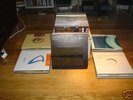
Karajan/BPO: 6 complete symphony cycles - DG 2720 104 (28 LP box set), sealed
$
300


Favourite Auctions
To save auctions to your favourites, please login
If you don't have an account, please register
Description
PLEASE NOTE:
My store policy of providing a 15% refund to any customer who buys 2 or more items does not apply to this item. This is a stand-alone item. You are welcome to buy other items, but the 15% refund will not be applied to this sale, only to the other items you might buy.
ITEM DESCRIPTION:
This amazing 28LP box set – an unplayed, still-sealed copy – from Deutsche Grammophon (2720 104, German pressing, white circle labels, stereo) gathers together Herbert von Karajan and the Berlin Philharmonic Orchestra’s 1970s symphony cycles of Beethoven, Brahms, Mozart, Mendelssohn, Schumann, and Tchaikovsky. This was a good period for Karajan and the Berliners and any one of these cycles could serve as a reference version.
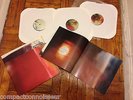
The set consists of a handsome, sturdy outer slipcase that houses 6 individual box sets, each with their own art work and booklet. The 6 individual box sets are completely sealed. The cellophane wrap around the larger outer box is quite torn and falling off, but this is a true, unplayed copy.
A small note: When making "best offer" offers, please keep in mind that it will cost @ $110.00 USD to ship the set outside of Europe (it will be sent by certified airmail).
The exact contents are listed below. I have also included reviews that cover, if not the entire cycle, at least certain performances from each.
Beethoven: The 9 Symphonies - DG 2740 241 (8LP box set)
Symphony No. 1 in C Major Op. 21 – rec. 23 January 1975
Symphony No. 2 in D Major Op. 36 – rec. 24 January 1975
Symphony No. 3 in E-flat Major Op. 55 "Eroica" – rec. 7 May 1976
Symphony No. 4 in B-flat Major Op. 60 – rec. 23 September 1976
Symphony No. 5 in C minor Op. 67 – rec. 20 October 1976
Symphony No. 6 in F Major Op. 68 "Pastorale" – rec. 19 October 1976
Symphony No. 7 in A Major Op. 92 – rec. 22 October 1976
Symphony No. 8 in F Major Op. 93 – rec. 21 October 1976
Symphony No. 9 in D minor Op. 125 "Choral" – rec. 22 September 1976
> with Anna Tomowa-Sintow (Soprano), Agnes Baltsa (Mezzo Soprano), Peter Schreier (Tenor), José van Dam (Bass Baritone), and the Singverein der Gesellschaft der Musikfreunde Wien (Chorus Master: Reinhold Schmid)
Reviewing the Eighth and Ninth Symphonies in the March 1978 issue of The Gramophone, veteran critic Edward Greenfield wrote:
“The notable gains for me in this version of the Ninth over Karajan's previous performances on record lie mainly in the Adagio and the choral finale. In the first movement the closer recording of the new version as against the earlier DG version (in an identical coupling2707 013, 2/63) seems to me a questionable advantage even with wider-ranging sound, and the absence of even the first-section repeat in the Scherzo (which was observed in the earlier account) runs the risk of seeming perfunctory. But the moment the Adagio begins Karajan conveys an Innigkeit of an intensity that was missing before. The stopwatch confirms the extra spaciousness this time (over half a minute difference in a 16-minute movement is substantial) and the seanotlessness is enhanced by Karajan's almost imperceptibly subtle moulding of sections. As for the finale it culminates in a coda of almost frenzied urgency. Only in the live 1951 Bayreuth performance of Meistersinger, a masterly reading unavailable in the UK, can I recall an instance of Karajan giving way so freely to the excitement of the moment. My intellect tells me that the more controlled performance of 1962 should be preferred, but my instinct affirms the opposite.
“Not that the performance as a whole could in any way be counted as lacking in control; quite the opposite, and I suspect that with most listeners the most noteworthy differences will be those of recorded sound. I am disappointed that the 1977 sound is not more obviously an improvement on 1962—in many ways the earlier Berlin sound is cleaner, better balanced and snore atmospheric—and in the finale the soloists are now placed a shade too close to sound quite natural. All the same, unlike RO who reviewed this version as part of the complete set, I do distinctly prefer the new quartets of soloists to the old. Gundula Janowitz, singing with heady beauty of tone and tender expressivesness in the 1962 version, may not quite be matched by Tomova-Sintov, but Agnes Baltsa and Peter Schreier strike my ear far more sweetly than do the veteran HiIde ROssl-Majdan and the throaty Waldemar Kmennt. Hearing the contribution of Peter Schreier again so soon after the first release last autumn I have had my admiration reinforced. As for Jose Van Dam he may not have so weighty a voice as Walter Berry in 1962, but to my ear it is more cleanly pitched, and unlike Berry he does include the necessary anacrusis on the rising fifth of "0 Freunde".
“On the Eighth I am rather less certain that I prefer the new performance to the old. Except in the fresher and brisker account of the third movement, the slightly more tense manner this time is a shade disturbing next to the pure joy of the earlier account. But anyone who wants Karajan in Beethoven's Ninth need not hesitate over this version, for relatively any reservations are tiny. It is a great performance, above all in the hushed intensity of the Adagio, more spiritual than we sometimes expect of this most sophisticated of great conductors.”
----------------------------------------------------
Brahms: The 4 Symphonies – DG 2740 242 (4LP box set)
Symphony No. 1 in C minor Op. 68 – rec. 20 October 1977
Symphony No. 2 in D Major Op. 73 – rec. 19 October 1977
Symphony No. 3 in F Major Op. 90 – rec. 18 October 1977
Symphony No. 4 in E minor Op. 98 – rec. 19 October 1977
Wrote the eminent critic Robert Layton in his review for the May 1979 issue of The Gramophone:
“RO has already reported in detail on these performances and I discussed them in my Quarterly Retrospect of November last year. Karajan's admirers are likely to have made their decision so that for them critical advice is wholly supererogatory. Yet for the uncommitted some words may still be useful now that the discs have become available separately and thus face a different competitive arena.
“Generally speaking, it would seem that my own responses to the set were more positive than RO's, and it is only fair to him to add that the wider consensus of critical opinion has tended to side with his rather than my view. However, we must all report as we find, and as far as I am concerned, these performances would rank high in the undoubtedly stiff competitive situation each faces with roughly two dozen other versions on the market. There are better recordings than these in terms of transparency of texture and richness of sonority. Both Boult on HMV and Maazel on Decca score here, and indeed in terms of tonal opulence, these new readings are only marginally better recorded than their DG predecessors from the mid 1960s. They have greater immediacy and more vivid presence, the lower strings are generally more glowing and rich-hued, but the differences, though noticeable, are by no means dramatic. There are moments, particularly in the First Symphony, when one feels that the upper strings need to be rendered a little less fierce above the stave. Also there is no doubt that in this respect dynamic contrasts are occasionally reinforced by the engineers. However, too much should not be made of these reservations: as recordings these are still eminently competitive and wide-ranging.
“Taking each symphony in turn, No. 1 must be accounted among the very strongest now on the market. Karajan's reading has an impassioned eloquence and breadth, and as a performance it strikes me as tauter and more concentrated than the Boult recording (ASD2871, 4/73) superb though that is. Though I retain a strong affection for the finely characterized and splendidly warm Sanderling account with the Dresden orchestra (RCA SB6873, 4/73), now alas deleted, as well as the old Cantelli, Toscanini and Furtwangler readings, this new Karajan version would figure high on my shopping list. His Second Symphony would figure even higher, for here, I think, he surpasses the lyricism and strength of his classic 1963 account with the Berlin orchestra (DG 138 925, 11/64). Boult (ASD2746, 12/71) and to some extent Klemperer (HMV Concert Classics SXLP30238, 8/77) are strong contenders here but the Karajan strikes me as having great architectural strength. Here I part company with RO.
“The Third Symphony is more powerfully dramatic than either his Vienna (Decca Ace of Diamonds SDD284, 9/62) or earlier Berlin account (DG 138 926, 1/65): its outer movements have greater concentration and the slow movement has a more autumnal feel to it—its contours are more firmly etched than they were in the Vienna account. The Tragic Overture fill-up is glorious, fiery and intense. I do retain a greater affection for his earlier account of the Fourth Symphony (DG 138 927, 11/64) though again there is no doubt as to the superiority of the recording quality in the Decca Solti issue (5XL6890, 8/78) as well as the Boult/HMV version (A5D2901, 6/73). There is no lack of fine Fourths including Bohm's (DG 2530 894, 3/78) which though it may not be the equal of his pre-war 78 set with the Dresden Staatskapelle (HMV DB4684-9S, 5/40), is certainly the finest of his cycle. Klemperer, Reiner, Sanderling and the earlier Karajan are strong front-runners here but this newcomer is not an inconsiderable contender itself.“
----------------------------------------------------
Mozart: Symphonies Nos. 32, 35, 36, 38-41 – DG 2740 244 (3LP box set)
Symphony No. 32 in D Major K. 318 – rec. 18 October 1977
Symphony No. 35 in D Major K. 385 “Haffner” – rec. 25 May 1976
Symphony No. 36 in C Major K. 425 “Linz” – rec. 17 October 1977
Symphony No. 38 in D Major K. 504 “Prague” – rec. 21 February 1977
Symphony No. 39 in E-flat Major K. 543 – rec. 5 December 1975
Symphony No. 40 in G minor K. 550 – rec. 25 May 1976
Symphony No. 41 in C Major K. 551 “Jupiter” – rec. 10 May 1976
In reviewing the Karajan’s complete set, while also comparing it to Bohm’s traversal, the critic T.H. wrote in his review for the January 1979 issue of The Gramophone:
“Pity the poor reviewer! This one has at the moment three boxes, each containing Mozart's last six symphonies, all played by the same orchestra and two sets even with the same conductor recorded only seven years apart. Where does one begin? Perhaps with a few plain facts. First, this latest Karajan set has a small bonus in that it also contains one of the short Salzburg Symphonies, No. 32, a very good one at that: on the other hand the earlier Karajan box (on HMV) has a free rehearsal record included. Then, the Bohm DG records were not originally issued as a set but were available separately from various dates between 1960 and 1967, and so slightly vary in acoustic and quality, those from 1960 (the Linz and No. 39) being slightly less good.
“As it is only seven years since Karajan's last recording of the same music you won't expect any drastic differences; nor, as far as I can see, are there. (I reviewed both the earlier Karajan and Bohm sets, so contented myself this time with listening to the new issue completely and dipping into the others when it seemed necessary.) From Karajan there is the same superb playing as before, the same striding vitality. I do suspect that he is now digging a little more deeply into the music, especially in the expressiveness of slow movements. Yet sometimes his way of approach is less successful, especially the very soft string playing he exacts. It is very beautiful but in such a predominantly soft movement as the second of No. 39 I thought it got dull. But so many of the andante move-ments are very beautiful and are taken with admirably flowing tempi. Minuets are generally taken extremely slowly, especially those of the earlier symphonies—court minuets rather than symphonic ones. If you prefer something faster, then go for Bohm.
“Not that Bohm takes livelier speeds in general —indeed, his tempo for the first movement of the G minor, No. 40, strikes me as absurdly slow for a piece marked allegro molto. Not that I much prefer Karajan in this symphony. The opening quavers are just an accompaniment (Bruno Walter used to ask for dark tone and that set the mood for the whole movement— but perhaps Karajan may think that too romantic for the date) while the finale opening sounds positively dainty.
“In the first movement of the Linz I am not happy about Karajan's considerably broadened tempo for the E minor subject at bar 71. True, the music is grandiose; but it briefly (for he cannot sustain it) disturbs the flow of the music. Moreover he does not do the same in the similar place later on.
“Recordings are very good but I would often like the woodwind rather more forward, especially the bassoons who are so important. Yet I would not altogether prefer this new DG recording to the not much older HMV, especially in a solid tutti like the opening of No. 39, which has a brighter sound in the latter.”
----------------------------------------------------
Mendelssohn: The 5 Symphonies – DG 2740 243 (4LP box set)
Symphony No. 1 in C Major Op. 11 – rec. 9 September 1972
Symphony No. 2 in B-flat Major Op. 52 “Lobgesang” – rec. 10 September 1972
> with Edith Mathis (Soprano), Liselotte Rebman (Soprano), Werner Hollweg (Tenor), and the German Opera Chorus
Symphony No. 3 in A minor Op. 56 “Scottish” – rec. 7 January 1971
Symphony No. 4 in A Major Op. 90 “Italian” – rec. 2 January 1971
Symphony No. 5 in D Major Op. 107 “Reformation” – rec. 14 February 1972
In reviewing the complete cycle, the critic T.H. wrote in his review for the December 1973 issue of The Gramophone:
“This is a superb boxed set--and, as regular readers must know, I am in general against such sets, on the grounds that no one conductor can interpret all the aspects of a composer's symphonies and that anyway, one doesn't want only one conductor's view of a composer's music. But Mendelssohn's symphonies do not range all that wide; and they need just the sort of playing that the Berlin Philharmonic under Karajan can give them, while Karajan himself is very much suited to this music.
“I reviewed the first two symphonies (the second is Mendelssohn's Choral Symphony, the Hymn of Praise) under Kurt Masur (RCA SER5683-4) as recently as November (page 928) and I might have modified my remarks had I received this issue at that time. For the plain truth is that, while the Leipzig Gewandhaus Orchestra may be as fine as the Berlin Philharmonic, it is not as inspired under Masur as the Berlin players are with Karajan. Karajan, certainly in Mendelssohn, is by a good way the greater conductor. But if you have bought the records, you may not be unhappy, since you will probably already have versions of the Scotch and the Italian though, less likely, one of No. 5, the Reformation. I may have some less than enthusiastic comments about this or that: but make no mistake about it, these are Mendelssohn performances of the greatest distinction.
“The First Symphony is delightful Mendelssohn. I thought that Masur took the first movement just too quickly, so that rushing passages were not always cleanly enough articulated. Karajan's tempo is perfect, with every note clear: and if anyone writes to say that in fact they both take precisely the same time over the movement, I shall answer that if that is so, then my impression must be due to the fact that the Berlin Philharmonic Orchestra play it more cleanly. The original minuet, so-called but marked allegro molto, is splendidly robust while the finale is a tour deforce of orchestral playing with, for contrast, a creamy clarinet solo over pizzicato strings in the second subject. The recording sets the standard for the rest of these performances, with its brilliance, warmth and clarity of texture, and I need say no more about this aspect of the production. (Note the pp timpani in this Symphony and elsewheie.)
“The Hymn of Praise is a work which I always look forward to hearing, in the hope that it may be more convincing than when I last heard it—but I won't repeat my views set out in the November issue. The playing of the orchestral movements is very good indeed, though I wish either DG or Karajan had got the ppp figure in the third movement clear from the violins (when the music gets into D minor'), so that all the accompaniment didn't sound merely like a dotted rhythm. It is considerable trouble for a composer to write down such a rhythmic figure for bars on end and the least one can do is to make sure it is audible. Then comes the choral part, the Lobgeang itself. Why do solo sopranos often vocalise on vowels? The contrast comes at once when the tenor, Werner Hollwcg, follows with his aria, in which he is very good indeed. The chorus of the German Opera is first-rate, with some extremely good soft entries in an imaginative treatment from Karajan. But the well-known duet, "I waited for the Lord", succumbs to the Karajan failing of too slow a speed—and Edith Mathis who leads off quite obviously takes a bar or so to settle to it. At this tempo, it surely lacks the quietly confident joy that the words imply. So it is a performance of the Hymn of Praise of great quality but with some reservations here and there.
“The Scotch (No. 3) and the Italian (No. 4) are so well-known that they must be dealt with briefly. The opening of the allegro of the first movement of the Scotch may be almost too soft to be true; but how good it is and how well Karajan makes it a bit agitato, as Mendelssohn marked. The scherzo is predictably marvellous, while the slow movement is ravishing, for it 'sings' so beautifully. As to the finale, it's full of vivacity while—most important for me— the final 6/8 is completely unpompous: Karajan isn't influenced by Mendelssohn's "maestoso" but takes note of the quite swift metronome mark, so making simply a brilliant culmination to the whole symphony.
“The Italian is a winner and is also immaculately played, yet with a joyous freedom of expression. I regret the lack of the repeat in the first movement since it means the loss of no less than 21 bars of charming Mendelssohn, music which he wouldn't have bothered to write had he not expected it to be played. Karajan's fast tempo also means that there can be no real "pus arsimato poco a poco" at the end. Still, this finale is a real 'fizzer', as it should be. The woodwind playing is of the utmost dexterity and virtuosity, while the swirling PP strings are marvellous.
“The Reformation gets us back to Mendelssohn in his religious mood, though to nothing like the extent of the Hymn of Praise. (I need hardly say how exquisitely the Berlin strings play the "Dresden Amen".) The second movement shows the greatest woodwind delicacy; a dance of what one might call restrained jollity. But later there is empty fugal writing of the sort that Mendelssohn would never have dreamt of writing when he was thinking of the beauties of nature rather than dealing with a hymn time by Luther. But there are marvellous things in this performance: and the set as a whole is greatly to be treasured.”
And in reviewing Karajan’s “Italian” Symphony, the distinguished critic Ivan March wrote in the July 1988 issue of The Gramophone:
“Mendelssohn's Italian Symphony is also brightly lit, but so polished and elegant is the BPO violin playing that the metaphor of Italian sunshine comes readily to mind. Again, Karajan's tempos are very well judged; the finale is exhilarating but not breathless and there is some positively gorgeous horn playing in the Trio of the third movement, while the Andante like the Larghetto of the Schumann is both elegant and songful. A most enjoyable disc.”
----------------------------------------------------
Schumann: The 4 Symphonies – DG 2740 245 (3LP box set)
Symphony No. 1 in B-flat Major Op. 38 “Spring” – rec. 4 January 1971
Symphony No. 2 in C Major Op. 61 – rec. 16 January 1971
Symphony No. 3 in E-flat Major Op. 97 “Rhenish” – rec. 6 January 1971
Symphony No. 4 in D minor Op. 120 – rec. 4 January 1971
Wrote the great critic Ivan March in his review for the July 1988 issue of The Gramophone:
“I have written before about the special distinction of Karajan's recordings of the Schumann symphonies (which are unsurpassed in the present catalogue) when discussing the coupling of the Rhenish with Mendelssohn's Reformation Symphony in April. The Spring is no exception: it is as fresh as it should be, beautifully paced, and the playing of the Berlin Philharmonic is magnificent.”
And wrote the distinguished critic, the late John Steane, in his review for the July 1990 issue of The Gramophone:
“Tough, thrusting power in allegros and fluid beauty of sound for cantabiles are the concerns of Karajan's Schumann. It's an oversimplification, of course, but it is affirmed by engineering which offers an immediate perspective for the former and bathes the latter in a golden glow of ambience....
“Few could resist the beauty of the Berlin strings in the soaring main theme of the Adagio of No. 2 or the blazing determination at the end of the finale. Karajan's Rhenish opens with an intoxicating surge and swagger, Sawallisch's horns are a bit tame for their fortissimo entries here and at the start of the development. I loved, too, the sense of gradual distancing Karajan achieves at the end of the Scherzo—as if the spectator is travelling on, leaving the dancing behind. Karajan is slower than most rivals in the Cologne cathedral movement, and woodwind tuning is surprisingly suspect for a few moments (at about 5'12''), but what solemn grandeur, and how marvellous to hear the flutes shine through the majestic brass summons near the end.
“No less impressive is Karajan's transition from the Scherzo to the finale of No. 4 beginning with an unmatched hushed intensity, and building gradually to a peak just before the stringendo that precedes the main allegro.”
----------------------------------------------------
Tchaikovsky: The 6 Symphonies – DG 2740 246 (6LP box set)
Symphony No. 1 in G minor Op. 13 “Winter Daydreams” – rec. 9 December 1977
Symphony No. 2 in C minor Op. 17 “Little Russian” – rec. 25 January 1979
Symphony No. 3 in D Major Op. 29 “Polish” – rec. 12 December 1977
Symphony No. 4 in F minor Op. 36 – rec. 9 December 1976
Symphony No. 5 in E minor Op. 64 – rec. 22 October 1975
Symphony No. 6 in B minor Op. 74 “Pathetique” – rec. 5 May 1976
In reviewing Karajan’s recordings of the first three symphonies the superb critic Ivan March wrote in his review for the December 2000 issue of The Gramophone:
“Karajan was unquestionably a great Tchaikovsky conductor. Yet although he recorded the last three symphonies many times, he did not turn to the first three until the end of the 1970s and then proved an outstanding advocate. In the Mendelssohnian opening movement of the First, the tempo may be brisk, but the music's full charm is displayed and the melancholy of the Andante is touchingly caught. Again at the opening of the Little Russian, horn and bassoon capture that special Russian colouring, as they do in the engaging Andantino marziak, and the crisp articulation in the first movement allegro is bracing. The sheer refinement of the orchestral playing in the scherzos of all three symphonies is a delight, finales have great zest with splendid bite and precision in the frigate passages and a convincing closing peroration.
“The so-called Polish Symphony is the least tractable of the canon, but again Karajan's apt tempos and the precision of ensemble makes the first movement a resounding success. The Alla tedesca brings a hint of Brahms, but the Slavic dolour of the Andante elegiaco is unmistakeable and its climax blooms rapturously. I am sure that the reason these early symphonies sound so fresh is because the Berlin orchestra was not over-familiar with them, and clearly enjoyed playing them. The sound throughout is excellent.”
And writing of Karajan’s “Pathetique” the learned critic Edward Greenfield wrote in his review for the June 1977 issue of The Gramophone:
“The game of spot-the-Karajan-version grows ever more complicated. Following his triplication of stereo versions of the Tchaikovsky Fifth, Karajan performs the same feat with the Pathetique. Though recommending this as first choice is not quite so automatic as I had anticipated, the combination of Karajan at his most polished and most intense, served by superb DG recording, at once warmly atmospheric and clearly defined, will be irresistible for almost everyone.
“Karajan's first DG version, which appeared here in 1964, disappointed me (and still does) for relatively trifling points, which alienate my sympathies at key moments. At the very start of the Allegro non troppo in the first movement, for example, the hairpin markings on the opening phrases are exaggerated to a degree which makes the result mannered. The HMV version at that point, only microscopically different, sounds altogether more spontaneous, but this latest Berlin version back on the yellow label comes nearer to the first reading. What I count the next danger point in the Karajan interpreta tion comes in the middle section of the second group in that first movement, where over resilient staccatos flute and clarinet in turn have a rising motif with prominent triplets. The first DG version was depressingly sluggish there, almost oily at a very slow tempo, where the HMV was refreshingly more urgent at a noticeably faster tempo. This time Karajan has returned to a relatively slow tempo, but the poise and delicacy are such that the sluggishness does not sound self-conscious.
“Another danger point is in the third movement Scherzo, where Karajan's insistence on keeping the big march entries a tempo instead of broadening them a little can give an impression of goose-stepping. That was so in the first DG with its brutally prominent timpani, while in the HMV version the relatively cloudy recording masked any such impression. This time we are back to keener clarity, and I am not entirely sympathetic to the result, but the electric urgency of the performance sweeps away any reservation, and there is no question of the timpani balance being objectionable. I have picked out these tiny but significant points merely to reinforce that for the rest, this is easily the best version of the Pathetique that Karajan has yet given us. It is not just that the latest DG recording allows far more detail through than the HMV and there is no suspicion of saturated string tone, but that the actual performance is a fraction crisper. There are various passages in some other versions where I might prefer them to Karajan (notable is the latest reissue of the magnificent Kletzki version, now on CFP40220, 11/61) and I still wish that Karajan would take a more expansively noble view of the great second theme in the last movement (with him quite justifiably it is a forward-flowing Andante from the start). But this new disc is now an essential inclusion in any short-list of versions of this symphony, and for many will be the best general recommendation of them all.”
----------------------------------------------------
CONDITION – PLEASE READ VERY CAREFULLY:
The gradations of condition I use are as follows: MINT, Near-Mint, Excellent, Very Good, Good, Fair, Poor.
The condition of the outer box is EXCELLENT. The cellophane wrapping no longer covers either the top or bottom of the box, and so there is some discoloration and shelfwear there. There is also slight bumping at corners, but really that is all. There are no corner breaks, seamsplits, bends, or owners’ markings, and the box remains extremely solid, bright, glossy, and highly attractive – overall, this rates as a fine collector's copy.
The condition of the 6 individual inner boxes is near-MINT. These remain perfectly sealed and are superb, unplayed collector’s copies. Each comes with its own booklet, obviously in pristine condition.
The condition of the 28 LPs is MINT throughout. These are still-sealed, unplayed, pristine copies – ideal collector’s copies.
The images I've provided are of the actual item you are potentially bidding on - these are not stock images or images I've taken from other sites. Bid with confidence!
PAYMENT:
Payment by PayPal is greatly preferred. Payment should be made within 5 days.
SHIPPING:
Shipping is free to anywhere in the world; this is true regardless of the number of LPs you buy, be it 1 or a 100. This particular item will be sent by certified airmail (with a tracking number) - again, there are no shipping charges.
FEEDBACK:
I will promptly leave feedback for all buyers. Please do not leave negative, or even neutral, feedback without first giving me an opportunity to resolve any dissatisfaction you might have with an item or transaction. I do understand that, on occasion, a buyer might believe the item description to be inaccurate or that a buyer may be disappointed in some other way regarding the sale. I promise I will do my very best to resolve any unhappiness you've experienced in your buying experience with me to your complete satisfaction. Thank you.
REFUNDS:
Returns are honored, and any buyer you makes a return will be refunded in full. The buyer pays the full cost of the return postage. Please contact me before making a return.
Please see my other classical LP and CD auctions, and feel free to write with any questions, I'll be glad to help.
price rating