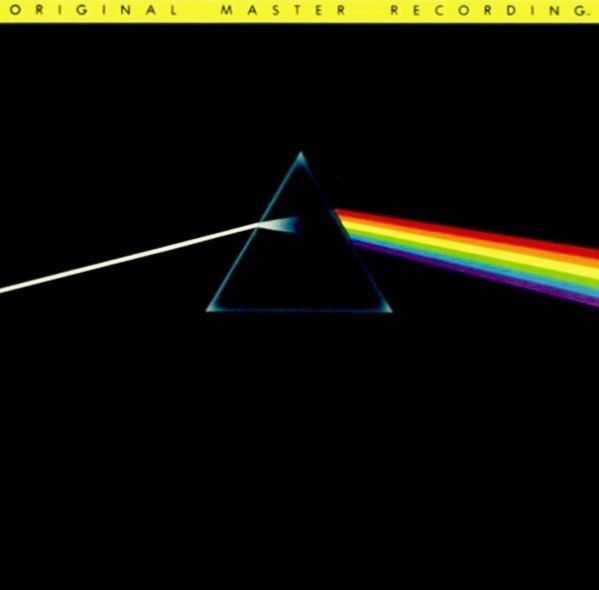
MFSL LP 1-017: PINK FLOYD - Dark Side of the Moon - JAPAN 1979 1st ISSUE MOFI NM
C$
375
$
272


C$ 375
Sold For
Sep 15, 2018
Sold Date
May 29, 2018
Start Date
C$ 400
Start price
1
Number Of Bids
Canada
Country Of Seller
eBay
Sold at
Favourite Auctions
To save auctions to your favourites, please login
If you don't have an account, please register
Description
****Welcome to our listing, thanks very much for looking!
****See our own website! We have lots of out of print LPs and CDs! You can find us on the world wide web at -
hearthedifference.net
****Shipping cost is only an estimate - it depends on the actual weight and size of the package as well as the service required. We do not profit from shipping costs, so if we overcharge, we will refund the difference back to you. It's always best to wait for our invoice before paying for your item. We will combine shipping for multiple items purchased.
****Please see our other listings for more great LPs and CDs - new items added daily!****To access our eBay store click on the little red door at the top right section of any of our eBay listings or, click on -
http://stores.ebay.com/Hear-The-Difference
Background -
From Mobile Fidelity Sound Lab: "In June, 1979 Mobile Fidelity Sound Lab releases what is to become the benchmark phonograph for the audiophile LP industry for years to come -- Pink Floyd's Dark Side of the Moon. The response is astounding as sales exceed all expectations. Mobile Fidelity is now at the helm of a newly emerging market for audiophile recordings featuring popular music."***This is the ULTRA-RARE, "ORIGINAL" MFSL/MOFI FIRST ISSUE of Dark Side of the Moon on JVC Super Vinyl! Please note - This is THE VERY RARE 1st ISSUE from 1979, not the 2nd pressing released in 1981 - the 1981 issue has the SLANTED font of the "Original Master Recording" note at the top, front of the jacket, the 1979 issue has the STRAIGHT font.
Some bands turn into shorthand for a certain sound or style, and Pink Floyd belongs among that elite group. The very name connotes something specific: an elastic, echoing, mind-bending sound that evokes the chasms of space. Pink Floyd grounded that limitless sound with exacting explorations of mundane matters of ego, mind, memory, and heart, touching upon madness, alienation, narcissism, and society on their concept albums of the '70s. Of these concept albums, Dark Side of the Moon resonated strongest, earning new audiences year after year, decade after decade, and its longevity makes sense. That 1973 album distilled the wild psychedelia of their early years -- that brief, heady period when they were fronted by Syd Barrett -- into a slow, sculpted, widescreen epic masterminded by Roger Waters, the bassist who was the band's de facto leader in the '70s. Waters fueled the band's golden years, conceiving such epics as Wish You Were Here and The Wall, but the band survived his departure in the '80s, with guitarist David Gilmour stepping to the forefront on A Momentary Lapse of Reason and The Division Bell. Throughout the years, drummer Nick Mason and keyboardist Rick Wright appeared in some capacity, and the band's sonic signature was always evident: a wide, expansive sound that was instantly recognizable as their own, yet was adopted by all manner of bands, from guitar-worshiping metalheads to freaky, hippie, ambient electronic duos. Unlike almost any of their peers, Pink Floyd played to both sides of the aisle: they were rooted in the blues but their heart belonged to the future, a dichotomy that made them a quintessentially modern 20th century band.
That blues influence, quickly sublimated and only surfacing on the occasional Gilmour guitar solo, was the foundation for the band's very name, as the group decided to splice the names of two old bluesmen -- Pink Anderson and Floyd Council -- as a tribute to the American music they loved. These members of the early Floyd -- guitarist / singer Syd Barrett, bassist Roger Waters, keyboardist Rick Wright, and drummer Nick Mason -- were all architecture students at London Polytechnic, with the exception of Barrett, who was an art student and a friend of Waters since childhood. This version of the band started gigging regularly in 1965, with Barrett becoming the group's lead singer quite quickly. During this time, the group relied on blues and R&B covers, not unlike many of their British peers, but they wound up extending the time of their sets through extended instrumental jams, planting the seeds of space rock that would come to fruition not much later. In 1966, the group's increasingly adventurous sets became something of a sensation in the London underground, leading to a contract with EMI early in 1967. Their first single, "Arnold Layne," backed with "Candy and a Currant Bun," appeared in March of 1967, and it was banned from some radio stations due to its gender-bending lyrics, but the single wound up in the U.K. Top 20, and the group's second single, "See Emily Play" -- a menacing, mincing stomp with a profound, lasting influence -- went into the Top Ten, paving the way for the release of The Piper at the Gates of Dawn. On their full-length LP, Pink Floyd veered toward the experimental and avant-garde, particularly on the elastic, largely instrumental vamps "Astronomy Domine" and "Interstellar Overdrive," resulting in an album that had a significant influence not only upon its release but well beyond. It was also a hit in the U.K., reaching number six on the British charts.
This was a sudden rush to stardom and complications arose nearly as quickly. Not long after the release of Piper, Barrett began showing clear signs of mental illness, to the point he would often freeze on-stage, not playing a note. At this point, David Gilmour -- a friend and associate of the band -- was brought in as a second guitarist, with the intention that he'd buttress the group's live performances while Barrett continued to write and record new material. This soon proved to be an impossible situation, and Barrett left the group, at which point the band's management also jumped ship, leaving them without any kind of leader.
In the wake of Barrett's departure, the remaining members of Pink Floyd developed a different musical identity, one that was expansive and eerie, characterized by the band's spacy, somber explorations and, eventually, Waters' cutting, sardonic lyrics. This transition took some time. In 1968, they released A Saucerful of Secrets, which contained Barrett's final composition for the group, "Jugband Blues," and it found the group moving forward, particularly on the instrumental sections. A Saucerful of Secrets also saw the group begin a long, fruitful collaboration with Storm Thorgerson's design team Hipgnosis; they'd wind up designing many iconic album covers for the band, including Dark Side of the Moon and Wish You Were Here. Hipgnosis emphasized album art, and albums are where Pink Floyd concentrated from this point forward. After the soundtrack to More, the group moved to EMI's progressive rock imprint Harvest and became the label's flagship artist beginning with the 1969 double-LP Ummagumma. Divided between live performances and experimental compositions from each member, the record wound up in the Top Ten in Britain and sowed the seeds of a cult following in the United States.
Pink Floyd's next album, Atom Heart Mother, featured extensive contributions from composer Ron Geesin and wound up as the band's first number one album in the U.K. The band embarked on an extensive supporting tour for the album and when they returned they delved even further into studio experimentation, learning the contours of the studio. Their next studio album, 1971's Meddle, bore the fruit of this labor, as did 1972's Obscured by Clouds, which was effectively a soundtrack to Barbet Schroeder's film La Vallee. All the experiments of the early '70s were consolidated on their 1973 album Dark Side of the Moon, an album for which there simply was no precedent in their catalog. Deepening their music while sharpening their songwriting, Floyd created a complex, luxurious album with infinite space and depth. Partially helped by the single "Money," it was an immediate success, reaching number one on the U.S. Billboard charts and peaking at number two in the U.K., but what was striking was its longevity. Dark Side of the Moon found space on the Billboard charts and then it just stayed there, week after week for years -- a total of 741 weeks in all (once it finally dropped off the charts, Billboard began the Catalog charts, where Dark Side was a fixture as well). Dark Side of the Moon was a staple on classic rock radio but it also was a rite of passage, an album passed down to teenagers when they were turning to serious music, and it was an album that stayed with listeners as they aged.
Now established superstars, Pink Floyd dug deep on Wish You Were Here, their 1975 sequel to Dark Side of the Moon, which functioned as an album-long tribute to Syd Barrett. Compared to Dark Side, Wish You Were Here wasn't quite a blockbuster but it was certainly a hit, debuting at number one in the U.K. and reaching that peak in the U.S. as well. Floyd continued to tour steadily, often working out new material on the road. This is particularly true of 1977's Animals, which had its roots in several songs aired during the 1975 tour. During the Animals tour, Waters had a difficult experience with a Montreal crowd where he spit on a heckler, and he used this incident as the genesis for 1979's rock opera The Wall. Co-produced by Bob Ezrin, The Wall may be Floyd's most ambitious album, telling a semi-autobiographical story about a damaged rock star, and it's one of the band's most successful records, topping the charts throughout the '80s and turning into a pop music perennial along the lines of Dark Side. Part of its success in 1980 was due to "Another Brick in the Wall, Pt. 2," where an instrumental motif from the album was given a disco beat and an anti-authoritarian spin, leading to a genuine number one hit single from the band. Certainly, the single had more to do with the album's success than the live production of the album, as Pink Floyd only did a handful of dates in major cities. Nevertheless, these shows, consisting of a wall being built across the stage during the first act and the band performing behind it during the second, were legendary (Waters would revive and update the production years later to great success).
Pink Floyd did attempt to film The Wall for a documentary film, but the footage was botched, so they decided to pursue a feature film directed by Alan Parker and featuring Boomtown Rat Bob Geldof in the lead role. The Wall arrived in theaters in 1982 and turned into a midnight movie staple. A year later, The Final Cut -- a further autobiographical work from Waters, its title a sly dig to his battles with Parker on the film -- arrived, but it didn't come close to matching the chart success of any of its predecessors. Behind the scenes, things were tense. Rick Wright had been fired during the making of The Wall -- he was hired as a contract player during the recording and tour -- and Waters split after the release of The Final Cut, assuming that it was the end of the band. Waters released his debut solo album, The Pros and Cons of Hitchhiking -- a piece that was pitched to Floyd in 1978, but the band chose The Wall instead -- in 1984, and not long afterward, Gilmour and Mason indicated they intended to carry on as Pink Floyd, so the bassist sued the duo for the rights to the Pink Floyd name. Waters lost and Pink Floyd released A Momentary Lapse of Reason in 1987, just months after Waters released his own Radio KAOS. Bad blood was evident -- T-shirts on Waters' tour bore the question, "Which One's Pink?," an old lyric that now had greater resonance -- but Pink Floyd emerged victorious, as A Momentary Lapse of Reason turned into an international hit, and racked up some hit singles, including "Learning to Fly," which was supported by the band's first music video. Most importantly, the band racked up significant box office returns on tour, playing to sold-out stadiums across the globe. This tour was documented on the Delicate Sound of Thunder live album.
The success of A Momentary Lapse of Reason allowed Pink Floyd to dictate their own schedule and they took their time to return with a new album, eventually emerging in 1994 with The Division Bell. Greeted by warmer reviews than its predecessor, The Division Bell was another international success, and the accompanying tour -- which featured a performance of the entirety of The Dark Side of the Moon -- was a smash success. As before, the tour was documented with a live album -- this one was called Pulse, packaged in eye-catching artwork with a pulsing LED light -- and it performed respectably. After that, Pink Floyd went into effective retirement. The group was inducted into the Rock and Roll Hall of Fame in 1996, while Gilmour released some solo albums, including the acclaimed On an Island, but most of their efforts were devoted to managing their catalog. Long a beloved band of audiophiles, Floyd saw their catalog boxed and remastered several times, including 5.1 mixes on SACD in the early 2000s.
As the new millennium progressed, a détente arose between the Floyd and Waters camps, culminating in an unexpected reunion of the original lineup of Waters, Gilmour, Mason, and Wright at the 2005 charity concert Live 8. The reunion was a rousing success, sparking rumors of a more permanent arrangement, but Gilmour declined. Instead, Waters ramped up his touring -- he performed Dark Side in its entirety, then turned his attention to The Wall, touring that for years. Gilmour and Mason wound up appearing at a 2011 show in London, signaling that there was no ill will between the members. Barrett passed in 2006 from cancer and, in 2008, Wright also died from the disease.
In 2011, Pink Floyd launched an ambitious reissue project called Why Pink Floyd…? spearheaded by multi-disc, rarity-laden box set reissues of Dark Side of the Moon, Wish You Were Here, and The Wall; newly released exclusives included the original Alan Parsons mix of Dark Side, heavily bootlegged live tracks like "Raving and Drooling," and demos. Three years later, in 2014, The Division Bell was reissued to celebrate its 20th anniversary, but the bigger news was the announcement of a new album called The Endless River. Constructed using outtakes from the recording sessions for The Division Bell, the primarily instrumental album was co-produced by Gilmour, Roxy Music's Phil Manzanera, Youth, and Andy Jackson, and featured heavy contributions from the late keyboardist Rick Wright along with new work from Gilmour and Mason. The Endless River saw release in November of 2014. Two years later, Pink Floyd released the mammoth box set The Early Years 1965-1972, which combined 28 CDs, DVDs, and Blu-rays to tell a complete audio and visual picture of the band's first act; six of the box's seven volumes were released individually in March 2017. Released alongside the box was Cre/Ation: The Early Years 1967-1972, a double-disc compilation of highlights from the set. - Stephen Thomas Erlewine
The Dark Side of the Moon is the eighth studio album by English rock band Pink Floyd, released on 1 March 1973 by Harvest Records. The album built on ideas explored in earlier recordings and live shows, but lacks the extended instrumental excursions that characterised their earlier work. Its themes explore conflict, greed, the passage of time, and mental illness, the latter partly inspired by the deteriorating mental state of founding member Syd Barrett.
Developed during live performances, an early version of the album was premiered several months before recording began; new material was recorded in two sessions in 1972 and 1973 at Abbey Road Studios in London. The group used some advanced recording techniques at the time, including multitrack recording and tape loops. Analogue synthesizers were prominent in several tracks, and snippets from recorded interviews with Pink Floyd's road crew and others provided philosophical quotations throughout. Engineer Alan Parsons was responsible for many distinctive sonic aspects and the recruitment of singer Clare Torry. The album's iconic sleeve was designed by Storm Thorgerson; following keyboardist Richard Wright's request for a "simple and bold" design, it depicts a prism spectrum, representing the band's lighting and the record's themes.
Upon its release, The Dark Side of the Moon was a commercial and critical success. It topped the Billboard Top LPs & Tapes chart for a week, and remained on the chart for 741 weeks from 1973 to 1988. Following a change in methodology in 2009, the album re-entered the chart and has since appeared for over 900 weeks. With an estimated 45 million copies sold, it is Pink Floyd's most successful album and one of the best-selling worldwide. It has been remastered and re-released several times, and covered in its entirety by several acts. It produced two singles – "Money" and "Us and Them" – and is often regarded as one of the greatest albums of all time.
The success of the album brought wealth to all four members of the band; Richard Wright and Roger Waters bought large country houses, and Nick Mason became a collector of upmarket cars. Some of the profits were invested in the production of Monty Python and the Holy Grail. Engineer Alan Parsons received a Grammy Award nomination for Best Engineered Recording, Non-Classical for The Dark Side of the Moon, and he went on to have a successful career as a recording artist with the Alan Parsons Project. Although Waters and Gilmour have on occasion downplayed his contribution to the success of the album, Mason has praised his role. In 2003, Parsons reflected: "I think they all felt that I managed to hang the rest of my career on Dark Side of the Moon, which has an element of truth to it. But I still wake up occasionally, frustrated about the fact that they made untold millions and a lot of the people involved in the record didn't."
Part of the legacy of The Dark Side of the Moon is in its influence on modern music, the musicians who have performed cover versions of its songs, and even in modern urban myths. Its release is often seen as a pivotal point in the history of rock music, and comparisons are sometimes drawn between Pink Floyd and Radiohead – specifically their 1997 album OK Computer – which has been called The Dark Side of the Moon of the 1990s, owing to the fact that both albums share themes relating to the loss of a creative individual's ability to function in the modern world.
By condensing the sonic explorations of Meddle to actual songs and adding a lush, immaculate production to their trippiest instrumental sections, Pink Floyd inadvertently designed their commercial breakthrough with Dark Side of the Moon. The primary revelation of Dark Side of the Moon is what a little focus does for the band. Roger Waters wrote a series of songs about mundane, everyday details which aren't that impressive by themselves, but when given the sonic backdrop of Floyd's slow, atmospheric soundscapes and carefully placed sound effects, they achieve an emotional resonance. But what gives the album true power is the subtly textured music, which evolves from ponderous, neo-psychedelic art rock to jazz fusion and blues-rock before turning back to psychedelia. It's dense with detail, but leisurely paced, creating its own dark, haunting world. Pink Floyd may have better albums than Dark Side of the Moon, but no other record defines them quite as well as this one. - Stephen Thomas Erlewine
One of Britain's most successful and long lived avant-garde rock bands, Pink Floyd emerged relatively unsullied from the mire of mid-Sixties British psychedelic music as early experimenters with outer space concepts. Although that phase of the band's development was of short duration, Pink Floyd have from that time been the pop scene's preeminent techno-rockers: four musicians with a command of electronic instruments who wield an arsenal of sound effects with authority and finesse. While Pink Floyd's albums were hardly hot tickets in the shops, they began to attract an enormous following through their US tours. They have more recently developed a musical style capable of sustaining their dazzling and potentially overwhelming sonic wizardry.
The Dark Side of the Moon is Pink Floyd's ninth album and is a single extended piece rather than, a collection of songs. It seems to deal primarily with the fleetingness and depravity of human life, hardly the commonplace subject matter of rock. "Time" ("The time is gone the song is over"), "Money" ("Share it fairly but don't take a slice of my pie"). And "Us And Them" ("Forward he cried from the rear") might be viewed as the keys to understanding the meaning (if indeed there is any definite meaning) of The Dark Side of the Moon.
Even though this is a concept album, a number of the cuts can stand on their own. "Time" is a fine country-tinged rocker with a powerful guitar solo by David Gilmour and "Money" is broadly and satirically played with appropriately raunchy sax playing by Dick Parry, who also contributes a wonderfully-stated, breathy solo to "Us And Them." The non-vocal "On The Run" is a standout with footsteps racing from side to side successfully eluding any number of odd malevolent rumbles and explosions only to be killed off by the clock's ticking that leads into "Time." Throughout the album the band lays down a solid framework which they embellish with synthesizers, sound effects and spoken voice tapes. The sound is lush and multi-layered while remaining clear and well-structured.
There are a few weak spots. David Gilmour's vocals are sometimes weak and lackluster and "The Great Gig in the Sky" (which closes the first side) probably could have been shortened or dispensed with, but these are really minor quibbles. The Dark Side of the Moon is a fine album with a textural and conceptual richness that not only invites, but demands involvement. There is a certain grandeur here that exceeds mere musical melodramatics and is rarely attempted in rock. The Dark Side of the Moon has flash-the true flash that comes from the excellence of a superb performance. - Lloyd Grossman, Rolling Stone
The official site for the umpteenth re-release of this old chestnut presents you with a daunting array of statistics that, if you're under the age of 30, will probably seem like the ravings of (appropriately enough) a lunatic. For if, by some freak circumstance (lost in Pacific jungle for thirty years/coma/just plain don't like lousy guitar bands etc.), you hold this CD in your hands for the first time, listen up: Dark Side Of The Moon spent an incredible ELEVEN CONSECUTIVE YEARS in the top 100 and has notched up a total of FOURTEEN YEARS lodged in the same place. That's a lot of Lear jets and football teams. But what new can be said?
Well, it now comes with an extra layer of new enhanced 5.1 surroundsound thingummy with (naturally) Dobly [sic]. And it's got a lovely new stained glass effect cover courtesy of Storm Thorgerson and his hilariously named Hipgnosis cohorts. And the music?
Contextually speaking this was the Floyd's saving grace. By 1972 they'd firmly claimed the avant garde (read: musically unadventurous but prone to hitting large gongs and setting fire to stuff onstage) art rock mainstream as their own playground. Yet these middle-class boys still craved, like, bread, man. After a prolonged period of fumbling soundtracks for European arthouse movies they'd finally emerged from under the shadow of founder/visionary/lost-marble icon, Syd Barrett with a coherently beautiful album, Meddle. Roger Waters had some big ideas about madness, life, death and all that deep stuff. EMI had a rather splendid studio with some top-notch engineers. Six months later...voila!
What made this concoction so popular at the time was a series of coincidences. The western world was now fully stereoed-up; the band hooked up with an immaculate engineer by the name of Alan Parsons (yes, that one with the project) and last, but not least, the band bothered to write some really fine songs. This was a long way from the half-baked nonsense that had plagued Ummagumma or Atom Heart Mother. Gilmour's guitar was now exquisitely tasteful (the heart still breaks over that little phrase about 36 seconds into ''Breathe'') and zen-like in what he could leave out (check the most underrated track ''Any Colour You Like''). The sound effects are as hackneyed as a 70s stereo demonstration record (that this album effectively replaced in most hi-fi stores at the time), yet the overall flow of the album still satisfies as it merges existential ballads (''Time'', ''Us And Them'') with cynical rockers (''Money'') and arena-impressing freak outs (''The Great Gig In The Sky'').
Too much scrutiny reveals a rhythm section that's laughably leaden, song structures that employ the same descending runs that appear on every Floyd album since Meddle (cf: ''Echoes'') and lyrics that embarrass with their sixth-form triteness. Yet how many writers will be saying the same of Radiohead's cosy attacks on globalisation and 21st century ennui on OK Computer (which owes such a huge amount to this album) in thirty years time? Ultimately it matters little. DSOTM is still a lovely record made brittle by overuse. One almost wishes that instead of spicing it up one more time, EMI had deleted it for a while to give us all room to breathe again… - Chris Jones, BBC
-
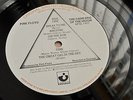
MFSL - Mobile Fidelity Sound Lab Record LP item - WHITE record labels with BLACK lettering
-
Record Made in JAPAN
-
Pressing is in STEREO - recording is from 1973 - originally issued on the EMI / HARVEST label
-
Limited Edition LP
-
Record Speed: 33 1/3 rpm
-
Record Made issued in: 1979
-
Record Catalog Number: MFSL 1-017
Featured on this item:
Pink Floyd
Title of this Audiophile LP -
Dark Side Of The Moon
Track Listings -
A1. Speak To MeA2. Breathe
A3. On The Run
A4. Time
A5. The Great Gig In The Sky - Vocals – Clare Torry
B1. Money - Saxophone – Dick Parry
B2. Us And Them - Saxophone – Dick Parry
B3. Any Colour You Like
B4. Brain Damage
B5. Eclipse
Performed By / Credits on this LP include -
Pink Floyd
• David Gilmour – vocals, guitars, Synthi AKS
• Nick Mason – drums, percussion, tape effects
• Richard Wright – organ (Hammond and Farfisa), piano, electric piano (Wurlitzer, Rhodes), vocals, VCS 3, Synthi AKS
• Roger Waters – bass guitar, vocals, VCS 3, tape effects
Additional musicians
• Dick Parry – saxophone on "Us and Them" and "Money"
• Clare Torry – vocals on "The Great Gig in the Sky"
• Doris Troy – backing vocals
• Lesley Duncan – backing vocals
• Liza Strike – backing vocals
• Barry St. John – backing vocals
Production
• Alan Parsons – engineering
• Peter James – assistant (incorrectly identified as "Peter Jones" on first US pressings of the LP)
• Chris Thomas – mix supervisor
Design
• Hipgnosis – sleeve design, photography
• George Hardie – sleeve art, stickers art
• Artwork [Sleeve Art, Stickers Art] – George Hardie N.T.A
• Bass, Vocals, Synthesizer [Vcs3], Effects [Tape], Lyrics By – Roger Waters • Keyboards, Vocals, Synthesizer [Vcs3] – Richard Wright • Lyrics By – Roger Waters
• Mastered By [Half-speed] – Stan Ricker
• Mixed By [Supervised] – Chris Thomas
• Percussion, Effects [Tape] – Nick Mason
• Producer, Music By – Pink Floyd
• Vocals, Guitar, Synthesizer [Vcs3] – David Gilmour
• Written-By – Gilmour (tracks: A2 to A4, B3), Mason (tracks: A1, A4, B3), Wright (tracks: A2, A4, A5, B2, B3), Waters (tracks: A2 to A4, B1, B2, B4, B5)
Other Information -
Originally released in 1973.
Standard gatefold sleeve with warranty card.
Recorded at Abbey Road Studios, London between June 1972 and January 1973.
States "Pressed in Japan" on the LP label, "imported pressing" and "Printed in the U.S.A." on spine of the sleeve.
Early releases by MFSL were pressed in Japan.
Came with MFSL style inner.
Super High Definition Vinyl, Static Free Inner Sleeve.
Source: the Original Stereo Master Tape.
Note on Credits:
Though not specified in the liner notes, Barry St. John, Doris Troy, Lesley Duncan, and Liza Strike perform backing vocals only on tracks A4, B2, B4, and B5.
The 1979 release has an insert titled: "An Audiophile's Dream Come True"
Also issued in 1981 with different inserts The Dark Side Of The Moon
• Recorded At – Abbey Road Studios
• Manufactured By – Mobile Fidelity Sound Lab
• Distributed By – Mobile Fidelity Sound Lab
• Phonographic Copyright (p) – The Gramophone Co. Ltd.
• Licensed From – Capitol Records, Inc.
• Published By – TRO-Hampshire House Publishing Corp.
• Copyright (c) – TRO-Hampshire House Publishing Corp.
CONDITION Details:
LP Jacket:-
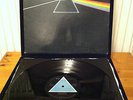
The GATE-FOLD jacket is in Near MINT condition - no seam splits or corner dings!
-
The jacket has NO splits of any kind - it is completely solid and intact, and shows only some very minimal shelf wear.
-
It has NO drill holes or saw marks of any kind.
-
There is NO writing on the front or back of the jacket.
-
The cover has clean and sharp colors - see picture with this listing for more detail.
-
The LP is in Near MINT condition - super glossy and appears never played!
-
This is the near mint copy you want for your collection - any super picky audiophile would be happy with this one!
-
As for any record, even brand new, sealed ones, we always recommend a proper record cleaning before playing!
A Short Note About LP GRADING -
- Mint = Only used for sealed items.
- Near Mint = Virtually flawless in every way.
- Near Mint Minus = Item has some minor imperfections, some audible.
- Excellent = Item obviously played and enjoyed with some noise.
- Very Good Plus = Many more imperfections which are noticeable and obtrusive.
price rating