MFSL UHQR RESPIGHI Feste Romane. NM LP Audiophile. Played once
$
130


Favourite Auctions
To save auctions to your favourites, please login
If you don't have an account, please register
Description
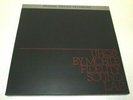
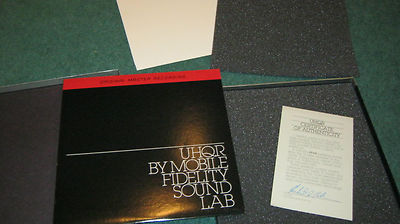
I am proud to have taken in such a classic in the UHQR version of RESPIGHI's Feste Romane on lp. #3115. I was told by the owner of the collection I purchased that he played most of his really hi-end lp's just once and based on how the spindle hole surroundings look, I must agree. I see a spindle mark on side 1 and nothing on side 2. The surface looks to be 100% perfect. It is a very, very clean copy that is mint IMO but I am assuming as I can see side 1 has been played once, I should rate NM. The outer box is indeed split at its top on both corners. Hard to find them these days that are not split as the boxes were not well adhered originally. All of you know how rare this is to find. All packing materials are included and the cert. of authenticity. This version completely blows away the original which was arguably decent at best. Again, I own several UGHR's and this is the cleanest and closest to 100% perfect as I have ever seen. Scoop below on the co' and the UHQR lp's.......
Half-Speed LP Mastering
MFSL initially became known to the public for the Half-Speed Mastering technique, which has since been employed by many other record companies. It was the first label to use this as standard on all of its LP releases. The use of this technique was pioneered by engineer Stan Ricker, who mastered all of the early MFSL releases. Ricker's work can be recognized by the signature "SR/2" carved between the run out grooves.
With some notable exceptions, MFSL uses the original master tape as its source. This tape was then played back at half its original speed (if the master tape were recorded at 30 inches per second, it would be played back at 15 ips.) Simultaneously the record cutting lathe runs at 16?? revolutions per minute (half of its regular speed of 33?? RPM.)
The Half-Speed Mastering technology allows for cleaner reproduction of high frequencies (by cutting the actual transfer frequency in half) and allows twice as much time to carve a groove that accurately represents the sound on the master tape. It also permits extended high frequency response, extending into the ultrasonic region.
Jack Hunt ("JH/2") mastered many of MFSL's releases in the 1970s and 1980s. Some later titles were mastered by John LeMay and Paul Stubblebine, with a few uncredited releases. Currently, Shawn R. Britton and Rob LoVerde are mastering most LPs for MFSL. CD, SACD, and audio cassette mastering has been done by a variety of engineers, most recently by Britton. The company has only had a handful of engineers in its history.
[edit]Supervinyl
Early MFSL titles were pressed by JVC in Japan on virgin 180 gram "SuperVinyl" LP discs. JVC originally developed this proprietary plastic compound in the early 1970s to reduce record wear on discrete 4-channel quadraphonic LP records. Supervinyl is a harder and more durable plastic than is normally used for LP records. The pressings exhibit a very low amount of surface noise, pops, clicks or other defects. Supervinyl remains a proprietary JVC technology and in the late 1980s JVC stopped production of the product. JVC has declined to license the use of Supervinyl to any other manufacturer, including MFSL.
[edit]
MFSL also released eight UHQR (Ultra High Quality Record) title on LP. Each was a single-record box set limited to 5000 copies and individually numbered. UHQRs were pressed on heavy-weight (200 gram) "virgin" vinyl and pressed on the master stamper, also at JVC in Japan.
price rating