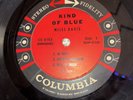
MILES DAVIS KIND OF BLUE LP COLUMBIA CL 1355 6-EYE MONO EARLY 1ST PRESSING—ORIG
$
100


Favourite Auctions
To save auctions to your favourites, please login
If you don't have an account, please register
Description
Early FIRST Pressing.
Original release recorded 02/03/1959 and 22/04/1959.
6-Eye label, mono pressing.
Tracks B1 and B2 reversed on cover
- Matrix / Runout (Side B (variant 1)): XLP47325-1AE
- Matrix / Runout (Side A (variant 5)): XLP47324-1D
The record is in VG+ condition.Some surface scratches but no FEELABLE scratches. It plays well with some surface noise.
A nice example of a record that is becoming harder and harder to find.
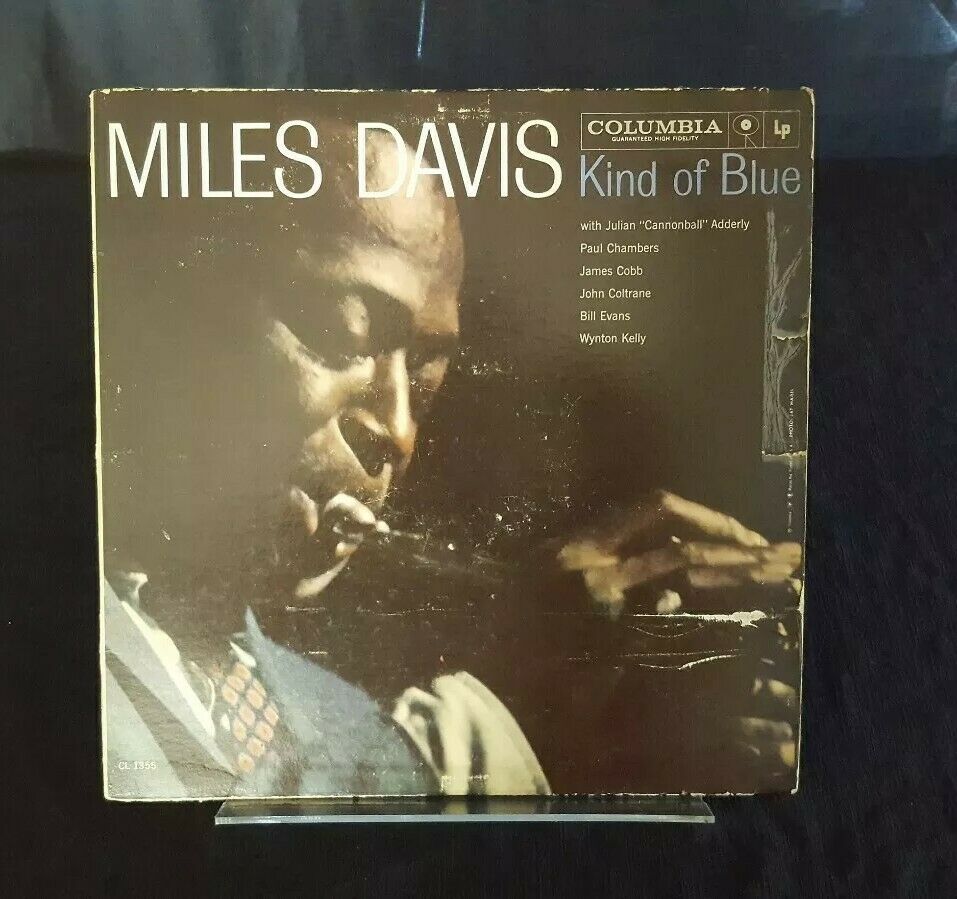
Record jacket is in VG to VG+ condition. No seam splits but corners and edges are shelf worn. some of the back slick is missing on the very bottom. See all photos before BIDDING!
Tape is on the front and back of the sleeve. Some abrasions on the front cover below Miles hands.
All records sold will be very well packed with heavy cardboard and bubble wrap and mailed in a record mailer made of heavy cardboard.
BEFORE YOU CAN FIGURE OUT what a record is worth, you need to grade
its vinyl, sleeves and labels. Play grading can be a definite advantage for a record that
looks much worse than it sounds. When you’re visually grading records, use a direct
light, such as a 100-watt desk lamp, as less direct lighting can hide defects.
Think like the buyer as you set your grades. If you’re on the fence, go with the
lower conservative grade under consideration. Records and covers always seem to
look better when you’re grading them to sell to someone else than when you’re on the
other side of the table, inspecting a record for purchase. And, if you have a Still Sealed
record, subject it to these same grading standards, short of breaking the seal.
MINT (M): Absolutely perfect in every way. Often rumored but
rarely seen, Mint should never be used as a grade unless
more than one person agrees the item truly is in this
condition. There is no hard-and-fast percentage
of the Near Mint value these can bring; it is best
negotiated between buyer and seller.
• Overall Appearance: Looks as if it
just came off the manufacturing line.
• Record: No scuffs or scratches.
• Labels: No writing, stickers or spindle
marks. Labels are perfectly placed.
• Cover/Sleeve: No blotches, stains,
discoloration, stickers, ring wear, dinged corners,
sleeve splits or writing.
NEAR MINT (NM) OR MINT
MINUS (M-): It’s estimated that no
more than 2 to 4 percent of all records
remaining from the 1950s and 1960s are
truly Near Mint. Many dealers won’t use
a grade higher than this, implying that
no record or sleeve is ever truly perfect.
• Overall Appearance: Looks as
if it were opened for the fi rst time. Includes
all original pieces (inner sleeve, lyric sheets,
inserts, cover, record, etc.).
• Record: Shiny surface, free of visible defects.
No surface noise at playback. Records can retain NM condition after
many plays provided the record has been played on a properly
equipped turntable and has been cared for properly.
• Labels: Properly pressed and centered on the record. Free of writing, stickers,
spindle marks, blemishes or other markings.
• Cover/Sleeve: Free of creases, ring wear and seam splits. Cut-out markings
are unacceptable. Picture sleeves look as if no record was ever housed inside. Hint:
If you remove a 45 from its picture sleeve and store it separately, you will reduce the
potential for damage to the sleeve.
VERY GOOD PLUS (VG+) OR EXCELLENT (E): Except for a few
minor condition issues, these records would be Near Mint. Most collectors who want
to play their records will be happy with a VG+ record, especially if it is toward the high
end of the grade, sometimes called VG++ or E+.
• Overall Appearance: Shows slight signs of wear.
• Record: May have light scuffs or very light scratches that don’t affect the
listening experience, or slight warps that don’t affect the sound. Expect minor signs of
handling, such as telltale marks around the center hole (but the hole is not misshapen).
Light ring wear or discoloration may be present, but barely noticeable.
• Labels: Free of writing, stickers or major blemishes.
• Cover/Sleeve: Outer cover may show some minor seam wear or a split less
than one inch long along the bottom, which is the most vulnerable location. A cut-out
marking may be present. Picture sleeves may show some slight creasing where it is
obvious the record once resided (or still does reside). May show minor seam wear or a
split less than 1 inch long along the bottom
VERY GOOD (VG): VG records have more obvious fl aws than records in better
condition. That said, VG records — which usually sell for no more than 25 percent of
their NM counterparts — are among the biggest bargains in record collecting, because
most of the “big money” goes for more perfect copies. For many listeners, a VG record
or sleeve will be worth the money. Many collectors who have jukeboxes will use VG
records in them and not think twice. They remain a fi ne listening experience, just not
the same as if it were in better shape.
• Overall Appearance: Shows signs of wear and handling, including visible
groove wear, audible scratches and surface noise, ring wear and seam splits.
• Record: Lacks the original glossy finish. Groove wear is evident on sight, and
light scratches are deep enough to feel with a fingernail. When played, a VG record
has surface noise, and some scratches may be audible, especially during a
song’s intro and ending, but the noise won’t overpower the music otherwise.
• Labels: May have minor writing, tape or a sticker.
• Cover/Sleeve: Expect obvious signs of human handling and
normal wear. Ring wear is expected in the middle or along the edges of
the cover where the labels or edges of a record would
rest. Seam splits may appear on all three sides,
but they won’t be obvious. Writing or a price
tag may be present. The cover may be dull
or discolored, have bent corners, stains or
other problems. If the record has more than
two of these problems, reduce its grade.
VERY GOOD MINUS (VG–),
GOOD PLUS (G+) OR GOOD
(G): Good does not necessarily mean bad! A
true G to VG- record still plays through without
skipping, so it can serve as fi ller until something
better comes along. If the record is common,
you may want to pass it up in this condition. If
you’ve sought for a long time, get it cheap and
upgrade later. And sellers? Don’t expect big
profi ts for records in these grades: They bring 10
to 15 percent of the Near Mint value at most.
• Overall Appearance: Shows
considerable signs of handling, including groove
wear, ring wear, seam splits and damaged labels
or covers.
• Record: The surface sheen is almost gone, but the record plays through
without skipping. Signifi cant surface noise and groove wear..
• Labels: Worn, possible stains, heavy writing, or obvious damage caused by
someone trying to remove tape or stickers and failing miserably.
• Cover/Sleeve: Shows ring wear to the point of distraction, has obvious seam
splits and may have even heavier writing, such as huge radio station letters (or the
former owner’s name) written across the front to deter theft. Expect dinged and dogeared
edges.
FAIR (F) OR POOR (P): These records go for 0 to 5 percent of the Near Mint
value — if they go at all. More likely, these records will end up going in the trash, or
having their covers, labels or discs turned into kitschy craft items like clocks, journals,
purses, jewelry, bowls or coasters.
• Overall Appearance: Beat, trashed and dull. Records may lack sleeves or
covers (or vice versa). You may want to call a CSI unit to identify “the victim.”
• Record: Expect the vinyl to be cracked, horrifically scratched and/or impossibly
warped. The record will skip and repeat when you attempt to play it.
• Labels: Stains, tears, stickers and damage are the least of your problems; the
label may be missing some sections altogether.
• Cover/Sleeve: So heavily damaged that you almost want to cry. Only the
most outrageously rare items ever sell for more than a few cents in this condition—
again, if they sell at all.
price rating