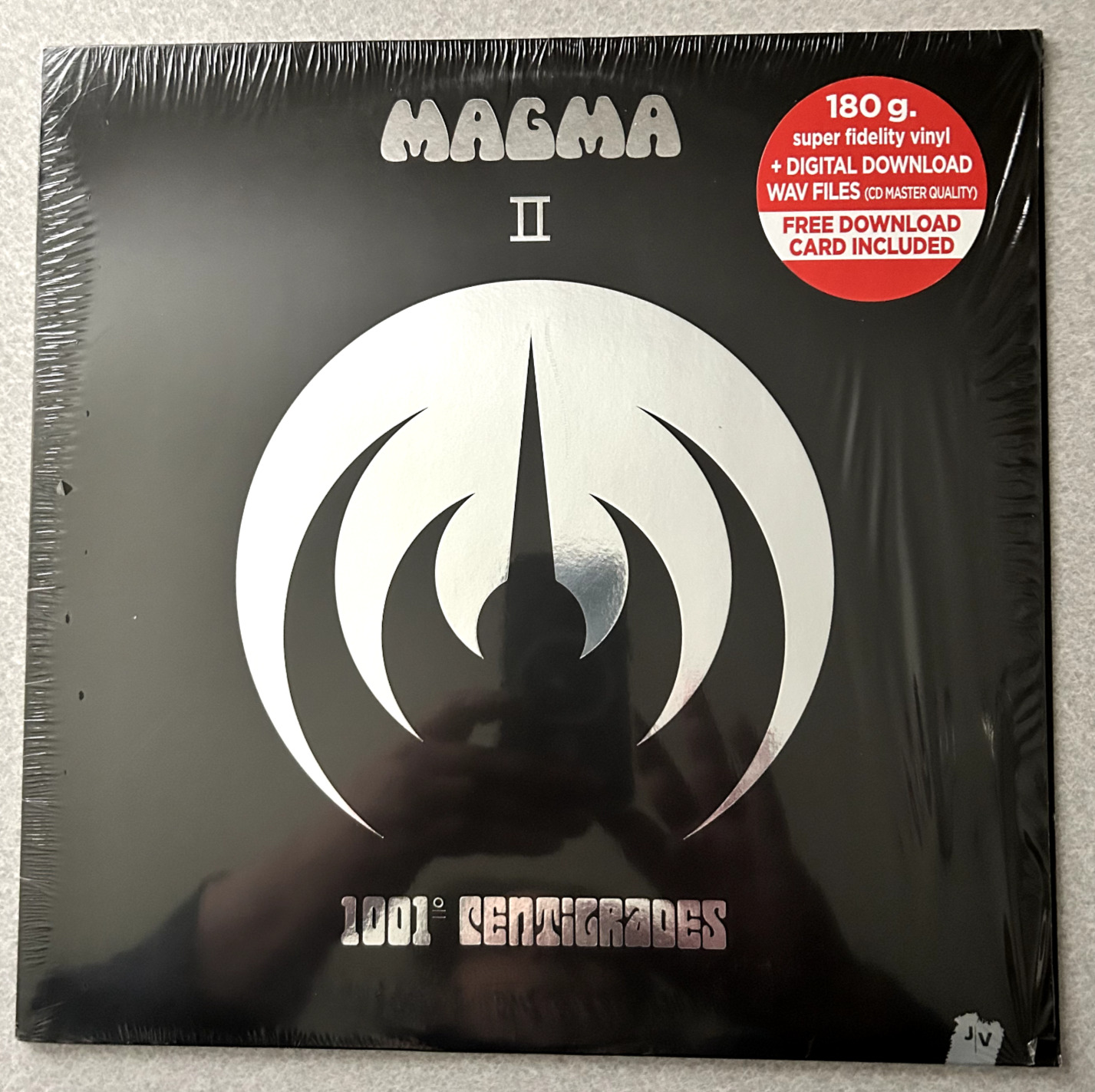
Magma – II - 1001° Centigrades French Import 180g RM Prog Rock Masterpiece
$
70


Favourite Auctions
To save auctions to your favourites, please login
If you don't have an account, please register
Description
Magma – II - 1001° Centigrades French Import 180g RM Prog Rock Masterpiece
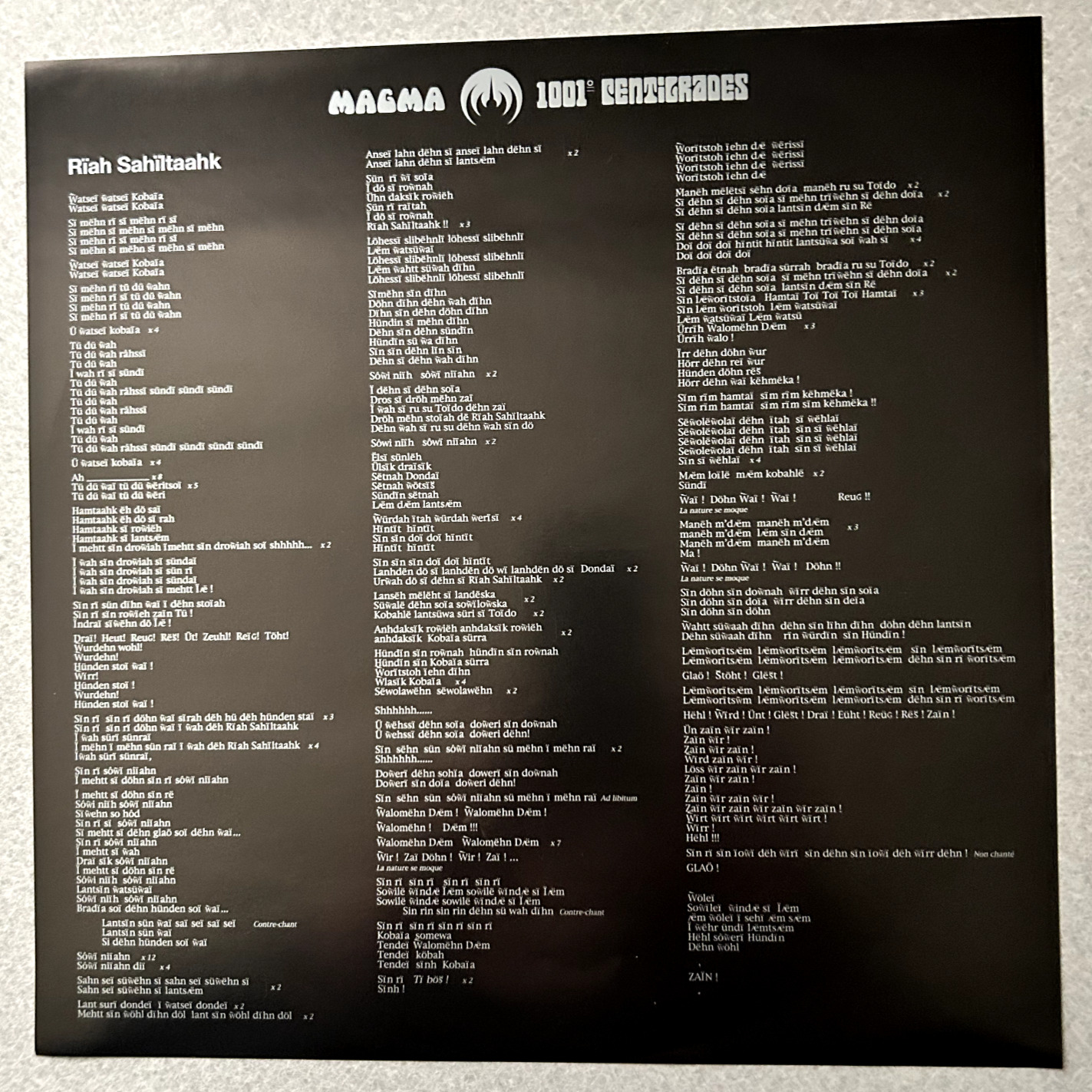
Recorded from 5 to 10 April 1971 at the studios of Michel Magne, Hérouville (Oise). Originally released April 10th, 1971. Foil sleeve, with lyric insert and download code ( don't know if active ) Pressing plant and cutting engineer are derived from matrix. 22 min side one is incredible I am surprised they never made it in the US.
1001° Centigrades, alternative title 2, is the second album by French rock band Magma, released on 5 October 1971. Future reissues use both titles as 2: 1001° Centigrades. Magma underwent several personnel changes: guitarist Claude Engeldeparted without being replaced, and Alain Charlery and Richard Raux made way for Louis Toesca (trumpet) and Jeff Seffer (sax, bass clarinet). This was the second installment in Magma's Kobaïan saga. With lyrics again performed in the band's invented language, the album chronicles the Kobaïan people's return to Earth to save the planet.
Magma is a French progressive rock band founded in Paris in 1969 by self-taught drummer Christian Vander, who claimed as his inspiration a "vision of humanity's spiritual and ecological future" that profoundly disturbed him. In the course of their first album, the band tells the story of a group of people fleeing a doomed Earth to settle on the planet Kobaïa. Later, conflict arises when the Kobaïans—descendants of the original colonists—encounter other Earth refugees. The style of progressive rock that Vander developed with Magma is termed "Zeuhl", and has been applied to other bands in France operating in the same period, and to some recent Japanese bands.
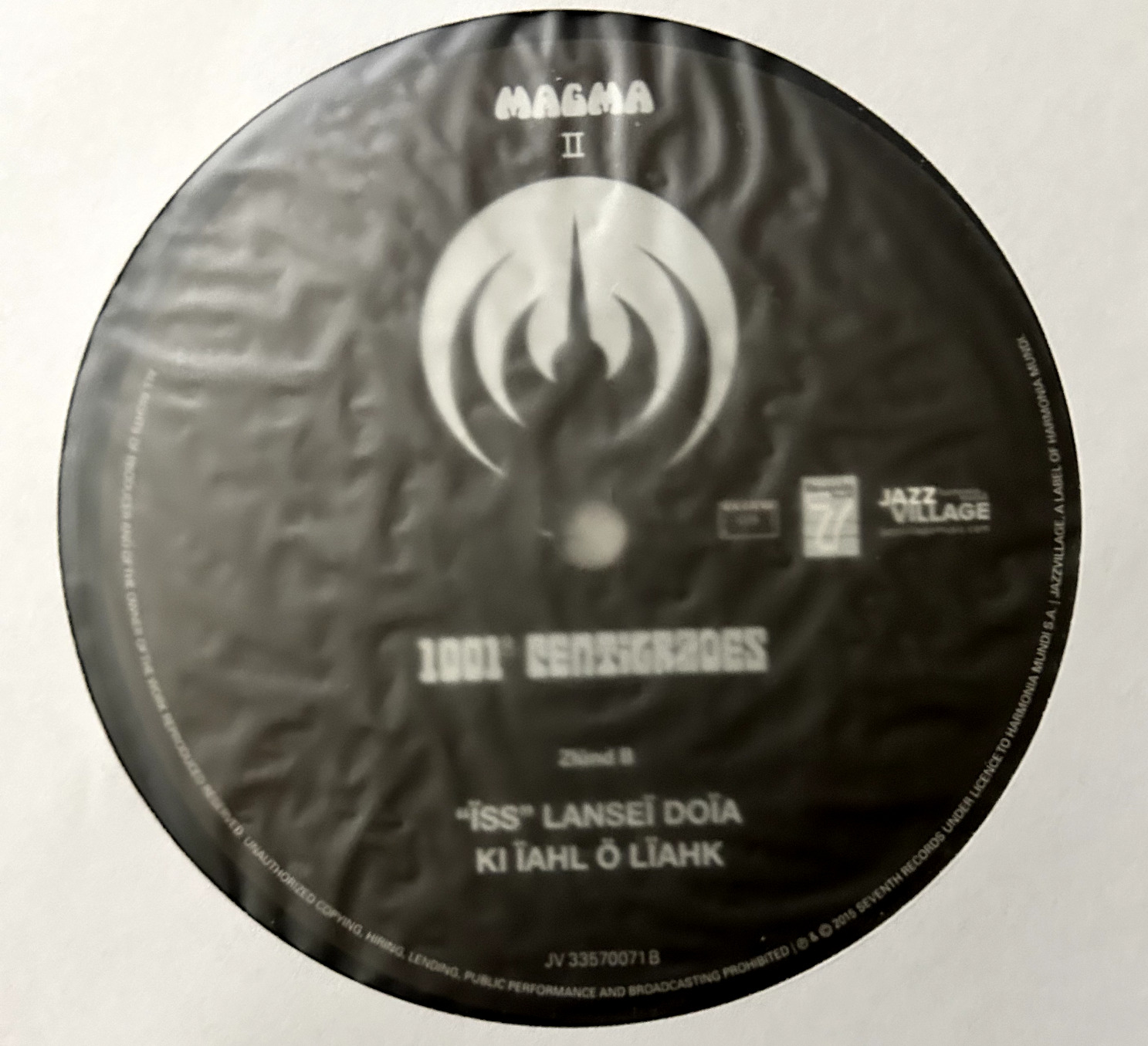
For 1,001 Degrees Centigrade, Magma underwent several personnel changes: guitarist Claude Engeldeparted without being replaced, and Alain Charlery and Richard Raux made way for Louis Toesca(trumpet) and Jeff Seffer (sax, bass clarinet). This was the second installment in Magma's Kobaïan saga. With lyrics again performed in the band's invented language, the album chronicles the Kobaïan people's return to Earth to save the planet. Despite that conceptual continuity with the group's self-titled debut, this was a somewhat transitional work in musical terms. It shares the first album's jazz direction but also anticipates Magma's subsequent journey into a genre of its own making, one that owed as much to Carl Orff as it did to rock music. 1,001 Degrees Centigrade's divergent sonic identities are encapsulated in the track distribution on the original vinyl release. Penned by Teddy Lasry (woodwinds) and François Cahen (keyboards) respectively, side two's "'Iss' Lanseï Doïa" and "Ki Ïahl Ö Lïahk" are fairly standard exercises in Soft Machine-style jazz-rock. The record's original side one, given over to the 22-minute Christian Vander composition "Rïah Sahïltaahk," is another story entirely. Again displaying a jazz orientation with its multiple phases, its abruptly changing time signatures, tempos and intensities, as well as its shifting instrumental emphases (horns, woodwind, electric piano), this epic track also breaks new ground for Magma. It more than hints at that album's strident, martial rhythms and its Carmina Burana-esque choral dimensions. Ultimately, 1,001 Degrees Centigrade is a classic Magma record, but "Rïah Sahïltaahk" stands out as an excellent document.
price rating