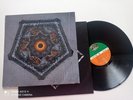
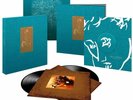
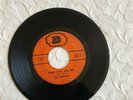
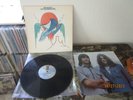
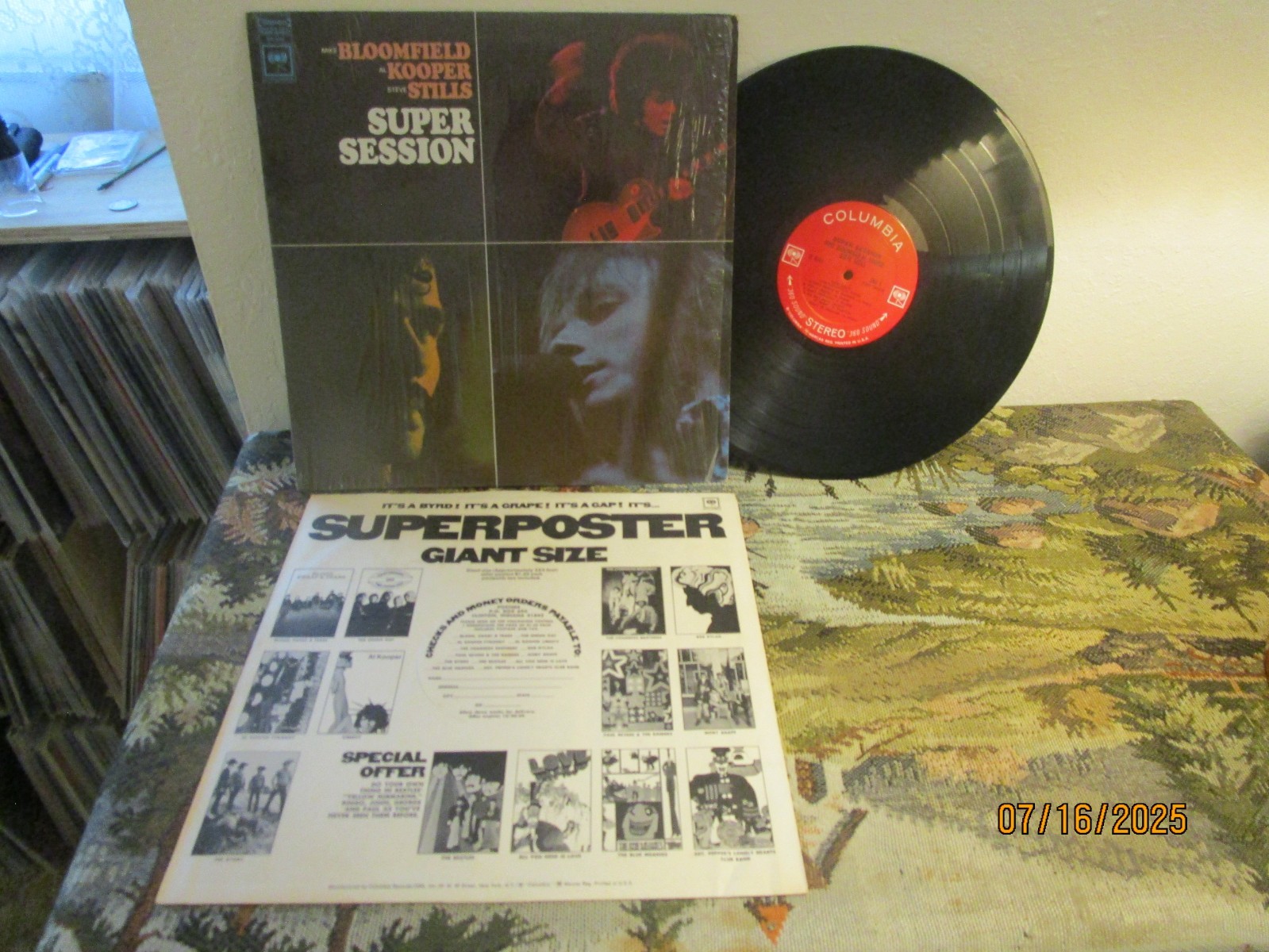
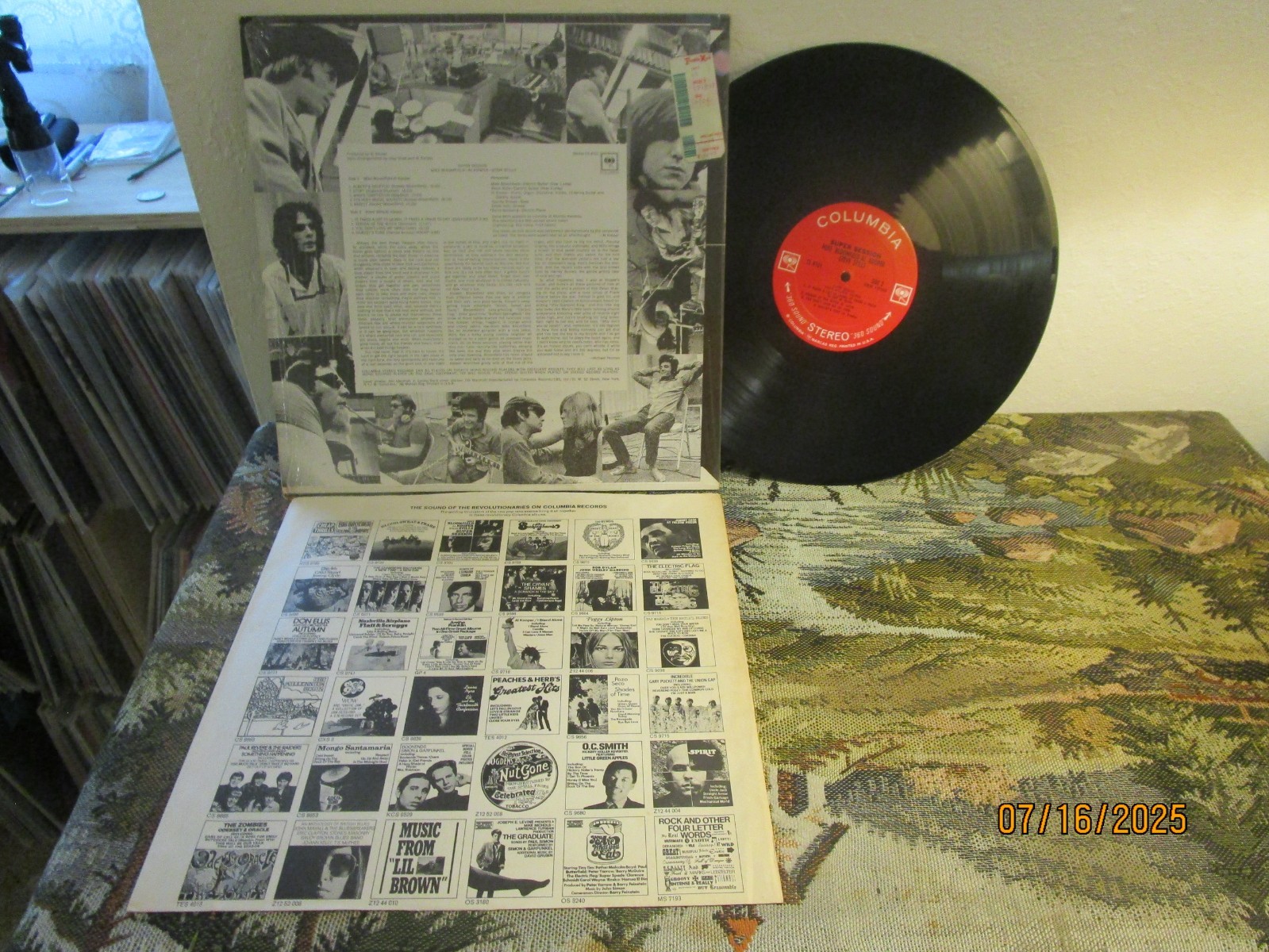
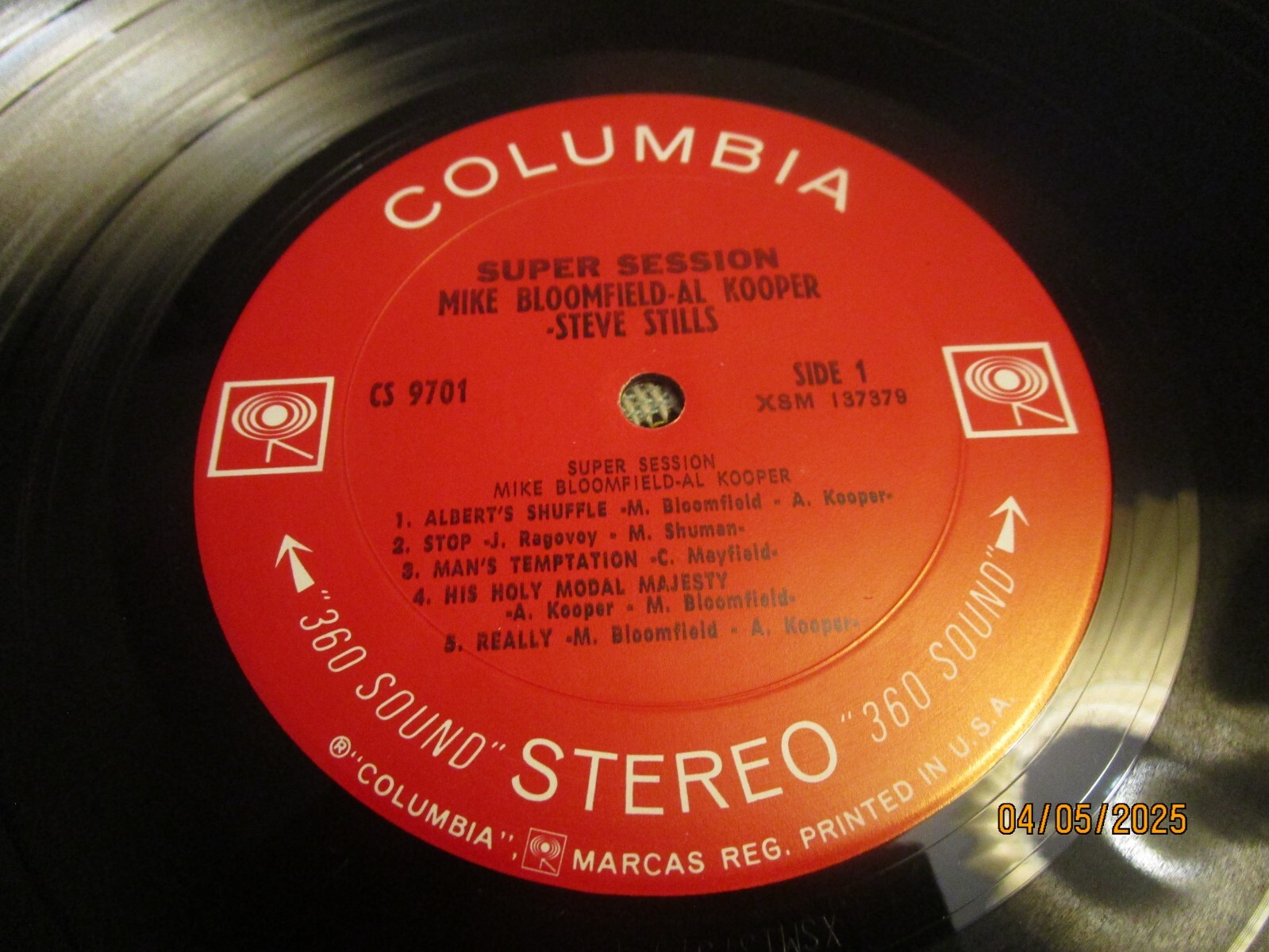
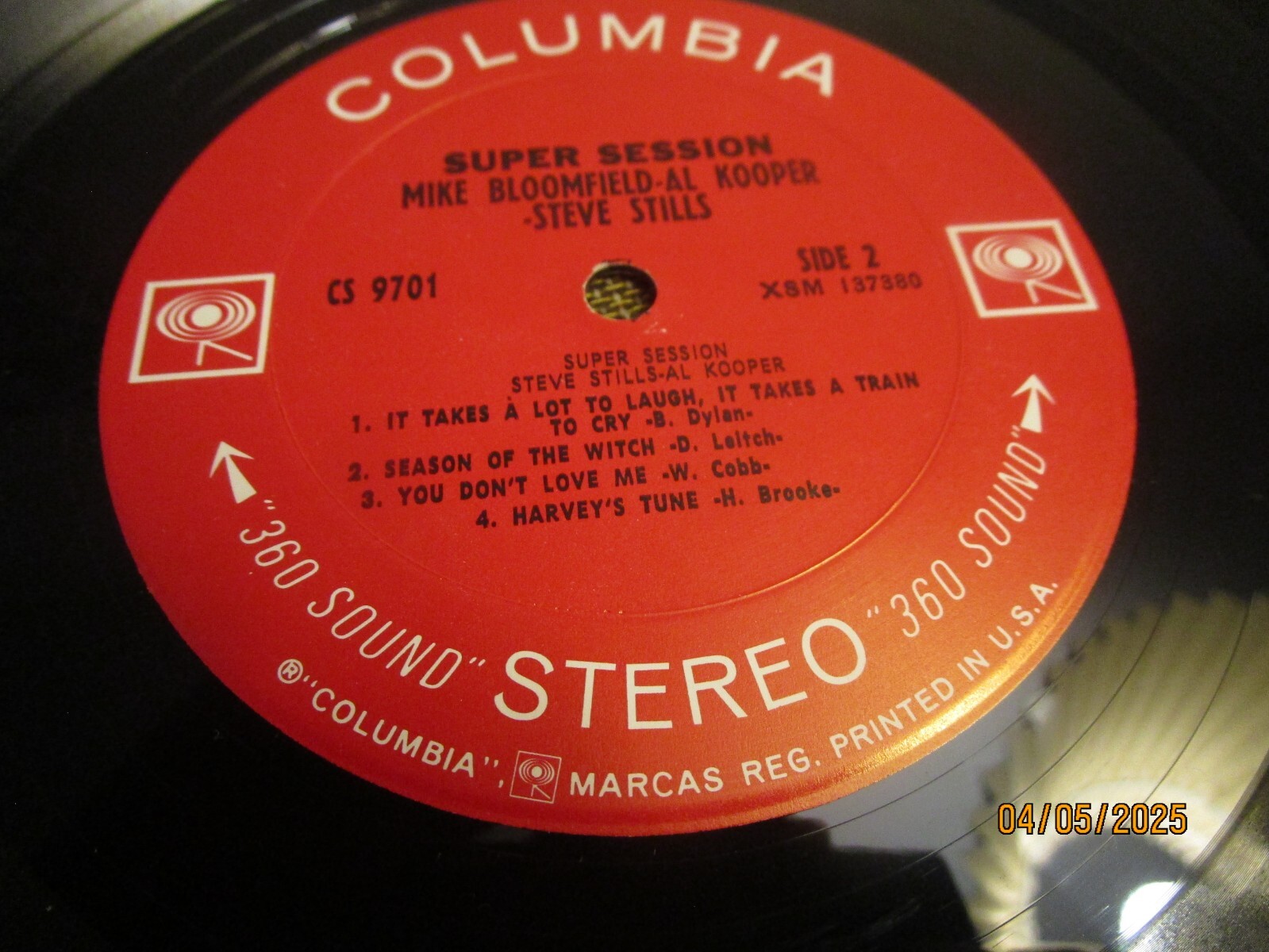
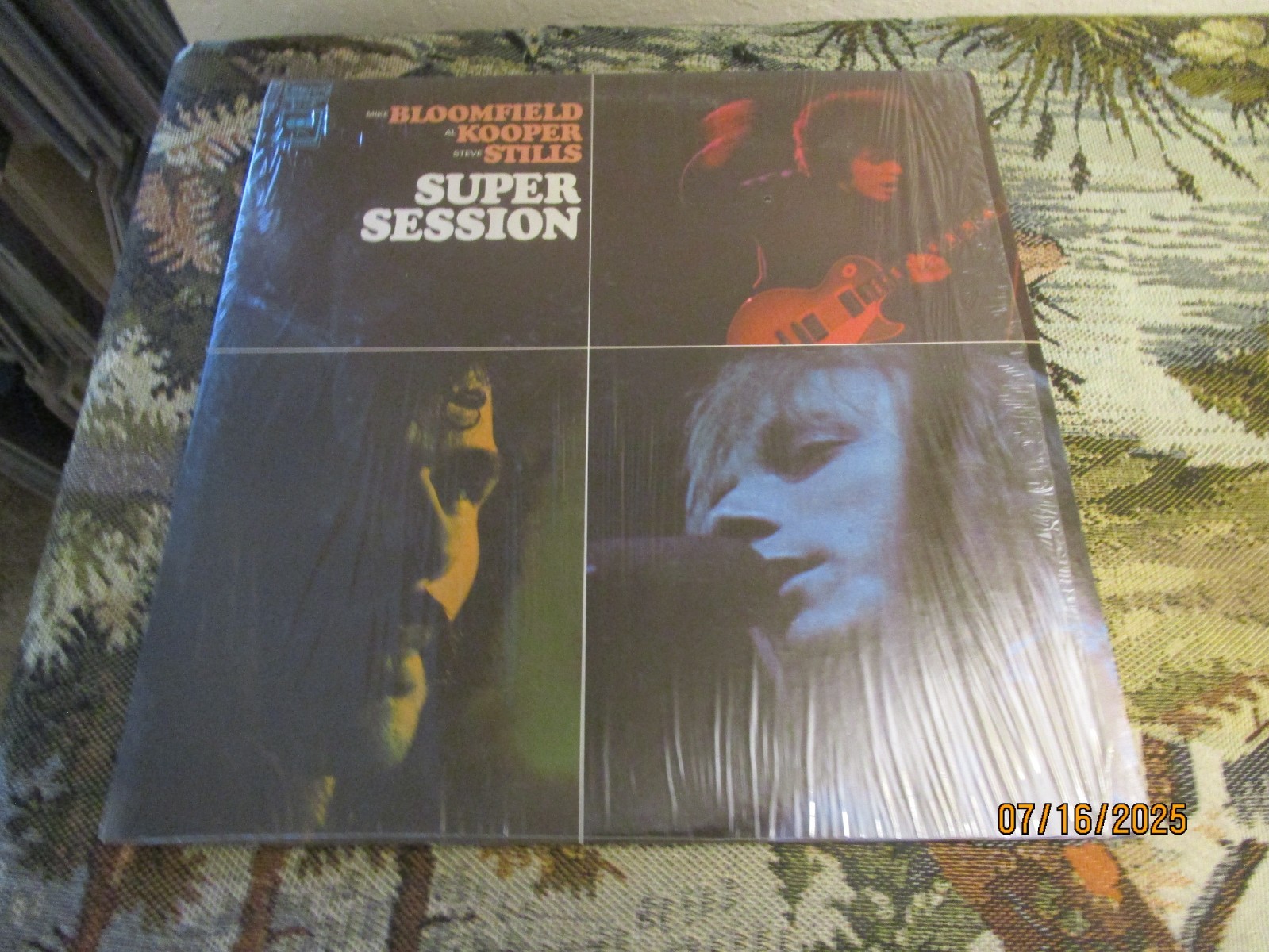
Mike Bloomfield / Al Kooper / Steve Stills – Super Session - LP vg+/vg+ shrink
$
22
Favourite Auctions
To save auctions to your favourites, please login
If you don't have an account, please register
Description
Post office keeps raising the price of delivery for Media mail! I recommend creating a wish list and buying in bulk if you are interested in lots of LP's I can help you with this. I will charge a rate of 5.38 dollars for one lp, and then adjust price to weight. Double LP's and triple and /or more will be adjust a few pennies to reflect weight costs. Please inquiry with an email.
Please read my Conditions!
My only method of cleaning is a soft brush and cloth and some Audio Advisor product. That requires to listening to the LP with my turntable & needle... (Which cost more money these days) and collecting the dust from the grooves. If a stubborn noise erupts, I will then look under a light and microscope. It is quite time consuming. So, I may miss a thing or two sometimes on my listings, like overlook a defect or to over grade; but it is not intentional! I will always be here to help resolve the issue! I am a one man show, while taking care of an elder... That being said... Please play record a few times if I mentioned I have cleaned it and do not use another product until u do so! The enzymes work at eating the debris and play gets better, each time, usually much better If after a few plays you could try cleaning again with your product if stubborn static persists... All I ask is my buyers realize these points and be rest assured I offer a refund policy, but I would prefer you email me so we can work something out first, I may have a backup copy... I have been collecting records since my 20's... It has been a passion and a part-time hobby, I hope you love and enjoy music as much as I do, and selling is another way to get to know other people with a likeminded interest as I. I offer a refund policy, so please give me the opportunity to make good if there is a problem with a transaction. I reserve the right to cancel a transaction after the sale If I find a missed defect on your behalf. Feel free to compare prices elsewhere you will find I am very reasonable. Don't waste your time if the seller does not listen to the LP's, I have return 100's because of defects. Also please be aware I am A human being, and I do make mistakes! So be gentle and straight forward if you are having any issues, I do not like having debates, I would rather listen to my music! Happy Hunting!
Jacket ~ vg+ ~ ex couple corner dings from not being stored in plastic Record ~ vg+ ex play
***With hard to obtain inner, impossible to find! ***LP has some ghosting, a couple very superficial hairlines, and a few small scuff markings. ***Totally cleaned with my cleaning product and it is amazing sound quality!
Mike Bloomfield Bloomfield c. 1968 Background information Birth name Michael Bernard Bloomfield Born July 28, 1943
Chicago, Illinois, U.S. Died February 15, 1981 (aged 37)
San Francisco, California, U.S. Genres
- Blues
- blues rock
- Chicago blues
- psychedelic rock
- Musician
- songwriter
- Guitar
- vocals
- The Paul Butterfield Blues Band
- The Electric Flag
Michael Bernard Bloomfield (July 28, 1943 – February 15, 1981) was an American blues guitarist and composer. Born in Chicago, he became one of the first popular music stars of the 1960s to earn his reputation almost entirely on his instrumental prowess, as he rarely sang before 1969. Respected for his guitar playing, Bloomfield knew and played with many of Chicago's blues musicians before achieving his own fame and was instrumental in popularizing blues music in the mid-1960s. In 1965, he played on Bob Dylan's Highway 61 Revisited, including the single "Like a Rolling Stone", and performed with Dylan at that year's Newport Folk Festival.
Bloomfield was ranked No. 22 on Rolling Stone's list of "100 Greatest Guitarists of All Time" in 2003 and No. 42 by the same magazine in 2011. He was inducted into the Blues Hall of Fame in 2012 and, as a member of the Paul Butterfield Blues Band, was inducted into the Rock and Roll Hall of Fame in 2015.
Early years
Bloomfield was born in Chicago into a wealthy Jewish family. Bloomfield's father, Harold, was born there in 1914. Harold's father, Samuel Bloomfield, started Bloomfield Industries in the early 1930s. After Samuel passed away, Harold and his brother, Daniel, inherited the company. Bloomfield's mother, Dorothy Klein, was born in Chicago in 1918 and married Harold in 1940. She came from an artistic, musical family, and worked as an actress and model before marrying.
Bloomfield's family lived in various locations around Chicago before settling at 424 West Melrose Street on the North Side. When he was twelve his family moved to suburban Glencoe, where he attended New Trier High School for two years. During this time, he began playing in local bands, then put together one called the Hurricanes, named after Ohio rock band Johnny and the Hurricanes. New Trier expelled Bloomfield after his band performed a raucous rock and roll song at a 1959 school gathering. He attended Cornwall Academy in Massachusetts for one year and then returned to Chicago, where he spent his last year of education at a local Central YMCA High School.
Bloomfield had attended a 1957 Chicago performance by blues singer Josh White, and began spending time in Chicago's South Side blues clubs and playing guitar with such black bluesmen as Sleepy John Estes, Yank Rachell, and Little Brother Montgomery. He first sat in with a black blues band in 1959, when he performed with Luther "Guitar Junior" Johnson at a Chicago club called the Place. He performed with Howlin' Wolf, Muddy Waters, and many other Chicago blues performers during the early 1960s. In 1962 he married Susan Smith.
Writing in 2001, keyboardist, songwriter and record producer Al Kooper said Bloomfield's talent "was instantly obvious to his mentors. They knew this was not just another white boy; this was someone who truly understood what the blues were all about." Among his early supporters were B.B. King, Muddy Waters, Bob Dylan and Buddy Guy. "Michael used to say, 'It's a natural. Black people suffer externally in this country. Jewish people suffer internally. The suffering's the mutual fulcrum for the blues.'"
The Butterfield Blues Band (1965–1967)
In the early 1960s he met harmonica player and singer Paul Butterfield and guitarist Elvin Bishop, with whom he would later play in the Paul Butterfield Blues Band. He also began friendships and professional associations with fellow Chicagoan Nick Gravenites and Bronx-born record producer Norman Dayron, who was attending the University of Chicago. He developed a friendship with blues singer Big Joe Williams. In 1963 Bloomfield and his two friends George Mitchell and Pete Welding ran a weekly blues showcase at the Fickle Pickle. He subsequently built up his reputation in two Chicago clubs, Big John's and Magoo's. With help from his friend Joel Harlib, a Chicago photographer who became Bloomfield's de facto manager, he became a Columbia Records recording artist. In early 1964 Harlib took an audition tape by Bloomfield to Columbia producer and talent scout John Hammond, who signed him to Columbia's Epic Records label.
Bloomfield recorded a few sessions for Columbia in 1964 that remained unreleased until after his death. In early 1965 he joined the Paul Butterfield Blues Band, which included Elvin Bishop and keyboardist Mark Naftalin, along with drummer Sam Lay and bassist Jerome Arnold, who had previously worked in Howlin' Wolf's band. Elektra Records producer Paul Rothchild recorded the band in spring 1965, but the majority of the tracks were not released until the 1990s. However, one of the tracks Rothchild recorded during his first pass at producing the group, a Nick Gravenites song titled "Born in Chicago", was included on the Elektra album Folksong '65, which sold two hundred thousand copies when it was released in September 1965. "Born in Chicago" became an underground hit for the Butterfield Band. Their debut album, The Paul Butterfield Blues Band, was recorded in September and released the following month.
In June 1965, Bloomfield had recorded with Bob Dylan, whom he had met in 1963 at a Chicago club called the Bear. The club was bankrolled by future Dylan and Butterfield manager Albert Grossman, who would play a major part in Bloomfield's career. Bloomfield's Telecaster guitar licks were featured on Dylan's "Like a Rolling Stone", a single produced by Columbia Record's Tom Wilson. Bloomfield would play on most of the tracks on Dylan's 1965 Highway 61 Revisited album, and he appeared onstage with Dylan in July at the Newport Folk Festival, where Dylan used Bloomfield and the Butterfield Band—minus Paul Butterfield—along with keyboardists Al Kooper and Barry Goldberg. The show marked Dylan's first use of an electric band in a live performance, and Bloomfield's playing on the songwriter's "Maggie's Farm" is considered a landmark electric-guitar performance. After the Newport Folk Festival ended, Bloomfield helped Dylan complete the sessions for Highway 61 Revisited, and Dylan asked Bloomfield to join his touring band. Bloomfield demurred, preferring to continue playing with the Butterfield Band.
When Sam Lay fell ill after a series of dates in November 1965, the Butterfield Band brought Chicago-born drummer Billy Davenport into the group. During the first part of 1966, the band played in California, and they recorded their second album, East-West, that summer. The record's title track found the band exploring modal music, and it was based upon a song Gravenites and Bloomfield had been playing since 1965, "It's About Time".
Bloomfield played on recording sessions between 1965 and 1967. His guitar playing had a huge impact on San Francisco Bay Area musicians after playing with the Butterfield band at Bill Graham's Fillmore in March 1966, San Francisco's Avalon Ballroom and also in the Los Angeles area due to the storied two-week run at the Golden Bear in Huntington Beach. He became a mentor and inspiration for many guitarists, especially in the SF Bay Area. He did a 1965 date with Peter, Paul and Mary that resulted in a song called "The King of Names", and he recorded in 1966 with pop group Chicago Loop, whose "When She Wants Good Lovin' (My Baby Comes to Me)" made Billboard Magazine's chart that year. He also played guitar on recordings by Chuck Berry, Mitch Ryder and James Cotton.
The Electric Flag (1967–1968)
Bloomfield tired of the Butterfield Band's rigorous touring schedule, relocated to San Francisco, and sought to create his own group. He formed the short-lived Electric Flag in 1967, with two longtime Chicago collaborators, Barry Goldberg and vocalist Nick Gravenites. The band featured a horn section. The band's rhythm section was composed of bassist Harvey Brooks and drummer Buddy Miles. Miles had previously played in Wilson Pickett's touring band, while Brooks had performed with Al Kooper in bands in New York City, and had played with both Kooper and Bloomfield on Bob Dylan's Highway 61 Revisited. The group's first effort was the soundtrack for director-producer Roger Corman's 1967 movie The Trip, which was recorded in the spring of that year.
The Electric Flag debuted at the 1967 Monterey Pop Festival and issued an album, A Long Time Comin', in April 1968 on Columbia Records. Critics complimented the group's distinctive, intriguing sound but found the record itself somewhat uneven. By that time, however, the band was already disintegrating, with rivalries between members, shortsighted management, and heroin abuse all taking their toll. Shortly after the release of that album, Bloomfield left the band, with Gravenites, Goldberg, and bassist Harvey Brooks following.
Work with Al Kooper
Bloomfield also made an impact through his work with Al Kooper, who had played with Bloomfield on Dylan's "Like a Rolling Stone". Kooper had become an A&R man for Columbia Records, and Bloomfield and Kooper had played piano on Moby Grape's 1968 Grape Jam, an instrumental album that had been packaged with the group's Wow collection.
"Why not do an entire jam album together?" Kooper remembered in 1998, writing the booklet notes for the Bloomfield anthology Don't Say That I Ain't Your Man: Essential Blues, 1964–1969. "At the time, most jazz albums were made using this modus operandi: pick a leader or two co-leaders, hire appropriate sidemen, pick some tunes, make some up and record an entire album on the fly in one or two days. Why not try and legitimize rock by adhering to these standards? In addition, as a fan, I was dissatisfied with Bloomfield's recorded studio output up until then. It seemed that his studio work was inhibited and reined in, compared to his incendiary live performances. Could I put him in a studio setting where he could feel free to just burn like he did in live performances?"
The result was Super Session, a jam album that spotlighted Bloomfield's guitar skills on one side. Bloomfield, who suffered from insomnia, left the sessions after the first day. Guitarist Stephen Stills completed the album with Kooper. It received excellent reviews and became the best-selling album of Bloomfield's career. Its success led to a live sequel, The Live Adventures of Mike Bloomfield and Al Kooper, recorded over three nights at Fillmore West in September 1968.
Solo work
An advertisement concert featuring the Mike Bloomfield Band for a 1973 show in Indianapolis.Bloomfield continued with solo, session and back-up work from 1968 to 1980. He played guitar on Mother Earth's cover of Memphis Slim's "Mother Earth", a track from their 1968 Living with the Animals album, and on two albums by Texas-born soul singer Wayne Talbert. With Mark Naftalin, he produced the 1968 sessions for James Cotton's 1968 album Cotton in Your Ears. He released his first solo album, It's Not Killing Me, in 1969. Bloomfield also helped Janis Joplin assemble her Kozmic Blues Band (for the album I Got Dem Ol' Kozmic Blues, Again Mama!) in 1969, co-wrote "Work Me, Lord" for the album, and played the guitar solo on Joplin's blues composition "One Good Man". Columbia released another 1969 album, a live concert jam, Live at Bill Graham's Fillmore West, including Mark Naftalin, former Electric Flag bandmates Marcus Doubleday and Snooky Flowers, and a guest appearance by Taj Mahal. In the same year he reunited with Paul Butterfield and Sam Lay for the Chess Records album Fathers and Sons, featuring Muddy Waters and pianist Otis Spann. Bloomfield composed and recorded the soundtrack for the film Medium Cool, directed by his second cousin, Haskell Wexler. The film includes footage shot in Chicago during the 1968 Democratic National Convention. With Nick Gravenites, he produced blues guitarist Otis Rush's 1969 album Mourning in the Morning, recorded at FAME Studios in Muscle Shoals, Alabama with a band that included keyboardists Mark Naftalin and Barry Beckett, along with guitarist Duane Allman.
During 1970 Bloomfield gave up playing because of his heroin addiction:
...and I put the guitar down – didn't touch it. Shooting junk made everything else unimportant, null and void, nolo contendere. My playing fell apart. I just didn't want to play.
He recorded his second solo album, Try It Before You Buy It, in 1973. Columbia rejected it; the complete version of the record would not appear until 1990. Also in 1973, he cut Triumvirate with Dr. John and guitarist and singer John Hammond Jr. In 1973 he teamed up with Mark Naftalin, at a studio in Sausalito, to produce a one-off live album, Live at the Record Plant 1973. In 1974, he rejoined the Electric Flag for an album titled The Band Kept Playing. In 1975 he recorded an album with the group KGB. The group's name is an acronym of the initials of singer and songwriter Ray Kennedy, Barry Goldberg and Bloomfield. The band also included Ric Grech and drummer Carmine Appice. Grech and Bloomfield quit shortly after its release. As the record hit stores in 1976, Bloomfield told journalists that the group had been an ill-conceived moneymaking project. The album was not well received by critics, but it did contain the standout track "Sail On, Sailor". Its authorship was credited to "Wilson-Kennedy", and had a bluesy, darker feel, along with Ray Kennedy's original cocaine-related lyrics.[citation needed] In the same year, he performed with John Cale on Cale's soundtrack for the film Caged Heat. In 1976 he recorded an instructional album for guitarists, If You Love These Blues, Play 'Em as You Please, which was financed through Guitar Player magazine.
In the 1970s Bloomfield played in local San Francisco Bay area clubs, including the Keystone Korner, and sat in with other bands. In 1977, Bloomfield was selected by Andy Warhol to do the soundtrack for the pop artist's last film, Andy Warhol's Bad (also known as BAD). An unreleased single, "Andy's Bad", was also produced for the project. During 1979–1981 he performed often with the King Perkoff Band, sometimes introducing them as the "Michael Bloomfield and Friends" outfit. Bloomfield recorded "Hustlin' Queen", written by John Isabeau and Perkoff in 1979. He toured Italy and Sweden with guitarist Woody Harris and cellist Maggie Edmondson in the summer of 1980. He sat in with Bob Dylan at San Francisco's Warfield Theatre on November 15, 1980. Bloomfield played on Dylan's "Like a Rolling Stone" and "The Groom's Still Waiting at the Altar". He continued to play live dates, with his performance at San Francisco State College on February 7, 1981, being his penultimate appearance. His final performance was at Mission Ranch, Carmel, CA, approximately 48 hours before his death.
Bloomfield came from a wealthy family, and received annual income from a trust created by his paternal grandfather, which gave him $50,000 each year.
Death
Bloomfield died in San Francisco on February 15, 1981. He was found seated behind the wheel of his car, with all four doors locked. According to police, an empty Valium bottle was found on the car seat, but no suicide note was found. The medical examiner who performed the autopsy ruled the death accidental overdose, due to cocaine and methamphetamine poisoning. Bloomfield's last album, Cruisin' for a Bruisin', was released the day his death was announced.
His remains are interred in a crypt at Hillside Memorial Park Cemetery, in Culver City, near Los Angeles.
Al Kooper Kooper in 2009 Background information Birth name Alan Peter Kuperschmidt Also known as Roosevelt Gook Born February 5, 1944 (age 80)
New York City, U.S. Genres
- Blues
- R&B
- pop
- rock
- Musician
- songwriter
- producer
- Vocals
- keyboards
- guitar
- bass
- percussion
- mandolin
- ABC
- Columbia
- United Artists
- The Blues Project
- Blood, Sweat & Tears
- The Royal Teens
Al Kooper (born Alan Peter Kuperschmidt; February 5, 1944) is an American retired songwriter, record producer, and musician. Throughout much of the 1960s and 1970s he was a prolific studio musician, including playing organ on the Bob Dylan song "Like a Rolling Stone", French horn and piano on the Rolling Stones song "You Can't Always Get What You Want", and lead guitar on Rita Coolidge's "The Lady's Not for Sale". He also joined and named Blood, Sweat & Tears. However, he did not stay with the group long enough to share its popularity. Kooper produced a number of one-off collaboration albums, such as the Super Session album that saw him work separately with guitarists Mike Bloomfield and Stephen Stills. In the 1970s Kooper was a successful manager and producer, recording Lynyrd Skynyrd's first three albums. He has had a successful solo career, writing music for film soundtracks, and has lectured in musical composition. Kooper was selected for induction to the Rock and Roll Hall of Fame in 2023.
Early life
Al Kooper was born into a Jewish family in Brooklyn, New York City, to Sam and Natalie Kuperschmidt, and grew up in Hollis Hills, Queens, New York.
Career
Professional debut
Kooper's first professional work was as a 14-year-old guitarist in the Royal Teens, best known for their 1958 ABC Records novelty song "Short Shorts" (although Kooper did not play on that recording). In 1960, he teamed up with songwriters Bob Brass and Irwin Levine to write and record demos for Sea-Lark Music Publishing. The trio's biggest hits were "This Diamond Ring", recorded by Gary Lewis and the Playboys, and "I Must Be Seeing Things", recorded by Gene Pitney (both 1965). When he was 21, Kooper moved to Greenwich Village in Manhattan.
With Bob Dylan
He first performed with Bob Dylan playing the Hammond organ riffs on "Like a Rolling Stone". He had been invited to watch the recording by producer Tom Wilson. In those recording sessions, Kooper met and befriended Mike Bloomfield, whose guitar playing he admired. He worked with Bloomfield for several years. In 1965, Kooper played with Dylan in concert and played Hammond organ with Dylan at the Newport Folk Festival and in the recording studio in 1965 and 1966. He played organ once again with Dylan during his 1981 world tour.
The Blues Project and Blood, Sweat & Tears
Kooper joined the Blues Project as their keyboardist in 1965. He left the band shortly before their gig at the Monterey Pop Festival in 1967, although he did play a solo set, as evidenced by The Criterion Collection Blu-ray extended edition of the event. He formed Blood, Sweat & Tears in 1967, leaving due to creative differences in 1968, after the release of the group's first album, Child Is Father to the Man. He recorded Super Session with Bloomfield and Stephen Stills in 1968, and in 1969 he collaborated with 15-year-old guitarist Shuggie Otis on the album Kooper Session. In 1972, he rejoined The Blues Project at a charity concert promoted by Bruce Blakeman at Valley Stream Central High School.
Other work
As musicianKooper has played on hundreds of records, including ones by the Rolling Stones, B.B. King, the Who, the Jimi Hendrix Experience, Alice Cooper, and Cream. On occasion he overdubbed his own efforts, as on The Live Adventures of Mike Bloomfield and Al Kooper and other albums, under the pseudonym "Roosevelt Gook".
As record producerIn 1969, Kooper produced, arranged, and conducted the album Appaloosa, a "folk-baroque" style of music that combined rock and classical. Among other artists who were all arranging folk-oriented material with classical-influenced orchestration were Judy Collins, Donovan, Tim Hardin, and Tom Rush. Kooper was joined by Boston musicians John Parker Compton, singer and acoustic guitarist, Robin Batteau on violin, Eugene Rosov on cello, and David Reiser on electric bass. Contributing to the album was saxophonist Fred Lipsius and Blood, Sweat & Tears drummer Bobby Colomby. After moving to Atlanta in 1972, he discovered the band Lynyrd Skynyrd, and produced and performed on their first three albums, including the singles "Sweet Home Alabama" and "Free Bird". In 1975 he produced the debut album of the Tubes.
TV scoresKooper wrote the scores for the TV series Crime Story and the film The Landlord, as well as several made-for-television movies. He was the musical force behind many pop tunes, including "You're the Lovin' End", for The Banana Splits, a children's television program.
StudioIn the late 1980s, Kooper had his own dedicated keyboard studio in the historic Sound Emporium recording studio in Nashville, next to Studio B.
Rock Bottom RemaindersKooper's status as a published author enabled him to join (and act as musical director of) the Rock Bottom Remainders, a band made up of writers including Dave Barry, Stephen King, Amy Tan, and Matt Groening.
New Music For Old PeopleKooper wrote a column called "New Music For Old People" for the online publication The Morton Report from April 2014 to April 2015. This later led to a radio show by the same name, which began in October 2018, for Martha's Vineyard community radio station WVVY-LP. The first 11 editions can be found online.
Magazine writerKooper profiled Steve Martin for Crawdaddy Magazine in 1977.
KooperkastKooper's podcast, "Kooperkast" started in late 2020. Hosted by webmaster Jon Sachs, Kooper discusses his experiences in his more than 60 years in the music industry, including his solo albums, Bob Dylan and Lynyrd Skynyrd. He answers questions that can be submitted on the Kooperkast page on his website.
Honors, awards, and legacy
Kooper celebrating his 68th birthday at the Regatta Bar in Cambridge, Massachusetts, on February 4, 2012In May 2001, Kooper was awarded an Honorary Doctorate of Music from Berklee College of Music in Boston. He taught songwriting and recording production there. He plays weekend concerts with his bands the ReKooperators and the Funky Faculty. In 2008, he participated in the production of the album Psalngs, the debut release of Canadian musician John Lefebvre.
Kooper was inducted into the Musicians Hall of Fame and Museum, in Nashville, in 2008.
In 2005, Martin Scorsese produced a documentary titled No Direction Home: Bob Dylan for the PBS American Masters Series, in which Kooper's contributions are recognized.
In 2023, Kooper was selected for induction into the Rock and Roll Hall of Fame in the Award for Musical Excellence category.
Memoir
Kooper published a memoir, Backstage Passes: Rock 'n' Roll Life in the Sixties (1977), which was revised and published as Backstage Passes and Backstabbing Bastards: Memoirs of a Rock 'n' Roll Survivor (1998). The revised edition includes indictments of "manipulators" in the music industry, including his one-time business manager, Stan Polley. An updated edition, including supplementary material, was published by Backbeat Books in 2008.
Stephen Stills Stills at the Beacon Theatre, 2012 Born Stephen Arthur Stills
January 3, 1945 (age 80)
Dallas, Texas, U.S. Occupations
- Musician
- singer
- songwriter
- record producer
- Rock
- folk
- country
- psychedelia
- Vocals
- guitar
- bass guitar
- keyboards
- Atlantic
- Columbia
- Reprise
- Vision
- Raven
- Titan/Pyramid
- Talking Elephant
- The Au Go Go Singers
- Buffalo Springfield
- Crosby, Stills, Nash & Young
- The Stills–Young Band
- Manassas
Stephen Arthur Stills (born January 3, 1945) is an American musician, singer, and songwriter best known for his work with Buffalo Springfield, Crosby, Stills & Nash, and Manassas. As both a solo act and member of three successful bands, Stills has combined record sales of over 35 million albums. He was ranked number 28 in Rolling Stone's 2003 list of "The 100 Greatest Guitarists of All Time" and number 47 in the 2011 list. Stills became the first person to be inducted twice on the same night into the Rock and Roll Hall of Fame. According to Neil Young, "Stephen is a genius".
Beginning his professional career with Buffalo Springfield, he composed "For What It's Worth," which became one of the most recognizable songs of the 1960s. Other notable songs he contributed to the band were "Sit Down, I Think I Love You", "Bluebird", and "Rock & Roll Woman". According to bandmate Richie Furay, Stills was "the heart and soul of Buffalo Springfield".
After Buffalo Springfield disbanded, Stills began working with David Crosby and Graham Nash as the trio called Crosby, Stills & Nash (CSN). In addition to writing many of the band's songs, Stills played bass, guitar, and keyboards on their debut album. The album sold over four million copies and at that point had outsold anything from the three members' prior bands: the Byrds, Buffalo Springfield, and the Hollies. The album won the trio a Grammy Award for Best New Artist.
Stills' first solo album, Stephen Stills, earned a gold record and is the only album to feature both Jimi Hendrix and Eric Clapton. Its hit single "Love the One You're With" became his biggest solo hit, peaking at number 14 on the Billboard Hot 100. Stills followed this with a string of solo albums, as well as starting a band with Chris Hillman called Manassas in 1972. In summer 1974, Young reunited with CSN after a four-year hiatus for a concert tour that was recorded and released in 2014 as CSNY 1974. It was one of the first stadium tours and the largest tour the band has done to date. CSN reunited in 1977 for their album CSN, which became the trio's best-selling record. CSN and CSNY continued to have platinum albums through the 1980s.
Early years
Stills was born in Dallas, Texas, to Talitha Quintilla Collard (1919–1996) and William Arthur Stills (1915–1986). Raised in a military family, he moved around as a child and developed an interest in blues and folk music. He was also influenced by Latin music after spending his youth in Gainesville and Tampa, Florida, as well as Covington, Louisiana, Costa Rica, the Panama Canal Zone, and El Salvador. Stills attended H.B. Plant High School in Tampa, Florida, Admiral Farragut Academy in St. Petersburg, Florida and Saint Leo College Preparatory School in Saint Leo, Florida, before graduating from Lincoln High School in Costa Rica. He has sisters Talitha and Hannah.
When he was nine years old, he was diagnosed with partial hearing loss in one ear. The hearing loss increased as he got older.
Stills dropped out of Louisiana State University in the early 1960s. He played in a series of bands, including the Continentals, which then featured future Eagles guitarist Don Felder. Stills also sang as a solo artist at Gerde's Folk City, a well-known coffeehouse in Greenwich Village. Stills eventually ended up in a nine-member vocal harmony ensemble, the house act at the Cafe au Go Go in New York City, called the Au Go Go Singers, which included his future Buffalo Springfield bandmate Richie Furay. This ensemble did some touring in the Catskills and in the South, released one album in 1964, and then broke up in 1965.
Stills later formed a folk-rock band called the Company with four other former members of the Au Go Go Singers. The Company embarked on a six-week tour of Canada, where Stills met guitarist Neil Young. On the VH1 CSNY Legends special, Stills said that Young was doing what he always wanted to do, "play folk music in a rock band." The Company broke up in New York within four months; Stills did session work and went to various auditions. In 1966 he convinced a reluctant Furay, then living in Massachusetts, to move with him to California.
Life and career
Buffalo Springfield and Super Session (1966–1968)
Buffalo Springfield in 1966Stills, Furay, and Young reunited in Los Angeles and formed the core of Buffalo Springfield. Legend has it that Stills and Furay recognized Young's converted hearse and flagged him down, a meeting described in a recent solo track "Round the Bend". Buffalo Springfield performed a mixture of folk, country, psychedelia, and rock. Its sound was lent a hard edge by the twin lead guitars of Stills and Young, and that combination helped make Buffalo Springfield a critical success. The band's first record Buffalo Springfield (1966) sold well after Stills' topical song "For What It's Worth" became a top ten hit, reaching No. 7 on the US charts. According to Rolling Stone, the Rock and Roll Hall of Fame and other sources, Buffalo Springfield helped create the genres of folk rock and country rock.
Distrust of their management along with the arrest and deportation of bassist Bruce Palmer worsened the already strained relations among the group members and led to Buffalo Springfield's demise. A second album, Buffalo Springfield Again, was released in late 1967 and featured Stills songs "Bluebird" and "Rock And Roll Woman". In May 1968, the band split up for good, but contractual obligations required the recording and release of a final studio album, Last Time Around. The album was primarily composed of tracks recorded earlier that year. A Stills song from their debut album, "Sit Down, I Think I Love You," was a minor hit for The Mojo Men in 1967.
After the disintegration of Buffalo Springfield, Stills played on half of the Super Session album with Al Kooper in 1968, including a cover of Donovan's "Season of the Witch" that received heavy radio play on progressive FM radio formats. Mike Bloomfield was slated to play on the other half of the album but failed to turn up for the second day of recording. The album sold well and charted at No. 12 on the US charts while being certified Gold in December 1970.
Joni Mitchell (1968–1972)
As a session musician, Stills featured on various albums recorded by fellow artist Joni Mitchell. He was invited by David Crosby to play on Mitchell's 1968 debut album Song to a Seagull, on the track "Night in the City". Throughout the years from 1968 to 1972, Stills played on a variety of Mitchell's studio albums such as Song to a Seagull, Clouds, Ladies of the Canyon, Blue, and For the Roses. Mitchell used his bass playing for songs like "Carey". Mitchell: "That's Stephen [Stills] on that one right? I like his bass playing on that track! I tried various bass players, and I usually took them off the tracks. They weighed things down, made it plodding, and didn't make it swing." Stills himself recalled clearly "understanding the underpinning in all those weird tunings."
Stills was an influence on Mitchell's dulcimer sound, since she first discovered the instrument at Big Sur in 1969. Mitchell had observed Stills' aggressive, rhythmic style and transformed it into a unique rawness. She embraced her new sound, which can be heard on the 1970 album Blue. In 1972, Stills was credited as the rock 'n' roll band in "Blonde in the Bleachers". His multi-musicianship and knowledge can be seen in these guest appearances on her albums. Stills infamous rendition of Mitchell's "Woodstock" was incredible, transforming her song into an electric, rock 'n' roll song.
Crosby, Stills, Nash & Young (1969–1970)
In late 1968, Stills joined forces with David Crosby (late of The Byrds) and Graham Nash (late of The Hollies) to form Crosby, Stills & Nash. Several of Still's songs on the group's debut album, including "Suite: Judy Blue Eyes" and "You Don't Have to Cry", were inspired by his on-again off-again relationship with singer Judy Collins. The album reached No. 6 on the US charts and was certified quadruple platinum.
Stills dominated the recording of the album. Crosby and Nash played guitar on their own songs respectively, while drummer Dallas Taylor played on four tracks and drummer Jim Gordon on a fifth. Stills played all the bass, organ, and lead guitar parts, as well as acoustic guitar on his own songs. "The other guys won't be offended when I say that one was my baby, and I kind of had the tracks in my head," Stills said.
Crosby Stills Nash and Young 1970Wanting to tour and needing additional musicians to fill out their sound, the band invited former Buffalo Springfield member Neil Young to join them for their first tour and second album to make the group the quartet Crosby, Stills, Nash & Young (initialized as CSN&Y). The first tour started in August 1969 and finished in January 1970, followed by the recording their debut album as a quartet, Déjà Vu (1970). The foursome quarreled frequently throughout the recording sessions, in particular Stills and Young, who both fought for control. Stills composed the songs "Carry On" and "4 + 20" and co-wrote "Everybody I Love You" with Young. He also brought his version of Joni Mitchell's song "Woodstock" for the band to cover. The album reached No. 1 on the US charts and was certified 7 times platinum there, selling over 8 million copies.
In May 1970, CSN&Y recorded Young's "Ohio" following the Kent State massacre on May 4. The single's B-side was Still's "Find the Cost Of Freedom". The single was rush released by Atlantic Records at the same subsequent time as the group's "Teach Your Children" was climbing the charts. After an extended second tour finishing in July 1970, the band split up acrimoniously. Stills moved to England and started recording his debut solo album.
In April 1971, CSN&Y released 4 Way Street, a double live album recorded in 1970. The album reached No. 1 in 1971 on the US charts and was certified quadruple platinum in the US.
Having played at the Monterey Pop Festival with Buffalo Springfield and both Woodstock and Altamont with CSN&Y, Stills (along with Crosby) performed at three of the most iconic U.S. rock festivals of the 1960s. During CSN&Y's set at Altamont Free Concert, Stills was reported to have been repeatedly stabbed in the leg by a "stoned-out" Hells Angel, with a sharpened bicycle spoke. At the band's request, their performance was not included in the subsequent film Gimme Shelter (1970).
Peak solo years (1970–71)
In the wake of CSNY's success, all four members recorded high-profile solo albums. In 1970, Stills released his eponymous solo debut album featuring guests Eric Clapton, Jimi Hendrix, Cass Elliot, Booker T Jones and Ringo Starr (credited only as "Richie") as well as Crosby, Nash, Rita Coolidge and CSN&Y drummers Dallas Taylor and Johnny Barbata. It provided Stills with the US No. 14 hit single "Love the One You're With.", and another US top 40 hit "Sit Yourself Down", peaking at No. 37. The album peaked at No. 3 on the US charts, a solo career peak. At the time of release, Stills' album was the highest selling solo album out of the four. It was recorded in the UK, where Stills bought a mansion in Surrey, England, previously owned by Starr. To promote the album, Stills appeared on the BBC television show Disco 2 in January 1971.
The 1970 album cover was shot by photographer Henry Diltz in Colorado, in the early hours of the morning after the death of Jimi Hendrix. Hendrix's untimely death affected Stills immensely. Ever since being first introduced to Hendrix at the Monterey Pop Festival in 1967, Stills was inspired by the guitarist and had befriended him. In 1969, Stills was invited to temporarily join the Jimi Hendrix Experience on tour as their bass player, but was held up by previous commitments with CSN&Y. His biggest regret was not making a full album with Hendrix. In early 1971, on the French music show Pop 2,[27] Stills talked about the influence that Hendrix had on him as a person and a musician:
Jimi [Hendrix] probably had more effect on my music than anybody else. He defined the modernization of the old country blues, as played by Blind Willie Johnson, Robert Johnson, and Blind Lemon Jefferson and all those little dudes, y’know. Since I met Lightnin' Hopkins in 1961, he was the first musician that got me off that hard, he tore my brains out, y’know. I really enjoyed the honor of being able to have him come to my record; to my studio, to my family, to my rhythm section, to my track, y’know. And when Jimi plays guitar, I get really knocked out, it’s truly the best—and it broke my heart when he died. And he brought me to a place where I really decided that rock ‘n’ roll, as we know it right now, has got to change and I want to try help it change.
— Stephen Stills, Pop 2 (1971)Stills followed this first album with his second solo album, Stephen Stills 2, six months later. Recorded in Miami, the album included the singles "Change Partners" and "Marianne", which Nos. 43 and 42 in the US. The album itself reached No. 8 on the charts and was certified US Gold a month after release. Even though "Change Partners" was written before CSN formed, Nash saw it as a metaphor for the many relationships in CSN&Y. Stills initially recorded 23 songs and hoped to release them as a double album; this was ultimately rejected by Atlantic.
Stills embarked on his first solo US tour with an eight-piece band including the Memphis Horns, in which he sold out Madison Square Garden, The Philadelphia Spectrum, LA Forum and the Boston Garden, arguably at his solo commercial peak. Stills' performance at Madison Square Garden occurred one day prior to George Harrison's Concert For Bangladesh. Stills donated his stage, sound, lighting system and production manager in kind, but was later upset when Harrison "neglected to invite him to perform, mention his name, or say thank you". Stills then spent the show drunk in Ringo Starr's dressing room, "barking at everyone". Stills' Madison Square Garden show was professionally recorded and remains unreleased, sans a clip of "Go Back Home" performed in early 1972 on The Old Grey Whistle Test. Two additional acoustic tracks were released on Stills 2013 box set Carry On.
In 1971, Billboard magazine ranked him at No. 34 top singles artist, No. 44 top album artist, No. 14 top singles male vocalist, No. 12 top new singles vocalist, No. 17 top album male vocalists, No. 14 top new album artist, number 73 top producers, and ranked his debut album number 70 in the year end album charts. Additionally, Cashbox ranked Stephen Stills 2 as the No. 51 album of 1971, and his debut as No. 52.
Manassas (1971–1973)
Manassas (TopPop 1972)In late 1971, Stills teamed up with ex-Byrd Chris Hillman to form the band Manassas. Their self-titled double album was a mixture of rock, country, blues, bluegrass and Latin music divided into different sections and peaked at number 4 in the US. It was certified US Gold a month after release but did not yield any more top 40 hits, only "It Doesn't Matter" reached 61 on the US charts. Stills spent the majority of 1972 playing live with Manassas on a world tour, which included headlining festivals in Australia, playing more arenas in the US including the Nassau Coliseum, and the Boston Garden. His concert at The Rainbow Theatre in London was recorded for a BBC TV special titled Stephen Stills Manassas: In Concert. He moved to Boulder, Colorado after this world tour finished and in March 1973 married French singer-songwriter Véronique Sanson in London, after having met while at a Manassas gig in France, 1972. In early 1972, Stills appeared in a UK documentary about himself called Sounding Out. Cashbox magazine ranked Stills as the number 52 top male vocalist of 1972. Billboard ranked Manassas as the number 53 album of 1972, and Stills as the number 75 album artist.
All of Stills' albums after Buffalo Springfield had gone either gold or platinum; the Manassas follow-up album the next year Down the Road was his first LP that did not, but still managed to reach 26 in the US charts. It was recorded less than a year after the debut double album, and encountered some issues with recording and not having enough Stills songs on the album. Also Atlantic were pushing for a far more commercially viable CSNY reunion. Which in June and July 1973, between the two 1973 Manassas tours at the start and end of the year, happened in Maui. As CSNY attempted to record an album tentatively called Human Highway. This album was never finished due to infighting. But after one final 1973 Manassas tour, during which CSN and CSNY reunited during the acoustic sections both at Winterland Arena concerts, a reunion was in the cards, and Manassas was over. Stills then sold his Surrey home and relocated to Colorado. The last date of the first 1973 Manassas tour was recorded for ABC In Concert. Cashbox magazine ranked Manassas as the number 58 group of 1973. Billboard ranked Down The Road as the number 36 of new album artists.
In 1972/73, Stills left the services of David Geffen and set up his own publishing company with Ken Weiss, called Gold Hill Publishing, named after his home in Boulder, Colorado.
Solo and CSNY tours (1974)
Crosby, Stills, Nash & Young, August 1974Stills spent early 1974 on a sold out East coast tour where he played well respected theatres, including Carnegie Hall. The 1975 live album Stephen Stills Live was made up of recordings from this tour. It was also during this tour that Stills announced the 1974 CSNY reunion concert tour. The CSNY reunion tour sold-out shows through July and August in both the US and the UK, with an average concert attendance of 80,000. Due to poor management, the tour made little money for the group, but album sales saw a boost: the CSNY compilation album So Far reached number 1 in the US and sold 6 million copies. After another aborted attempt at recording a CSNY album after the tour, Stills signed with Columbia Records in late 1974. In 1973–1974, Stills was recording another solo album called As I Come Of Age, which was put aside for the CSNY reunion tour. Many songs were used for the 1975 Stills album. In 1974, Stills played bass on, and helped mix his wife's record Le Maudit. He also played bass for her at two concerts in Paris in October 1974.
Signing to Columbia Records and The Stills Young Band (1975–1976)
Stills (far right) performing in 1974 with Crosby, Stills, Nash and Young.Stills signed to Columbia Records for three albums: Stills in 1975, Illegal Stills in 1976; and Thoroughfare Gap in 1978. Stills released in June 1975, was the highest-charting release of the three at number 22 on the US charts, and also the most critically successful of the three. Stills then spent the rest of year touring the US, doing a summer and winter tour playing to 10,000 seat arenas, including the LA Forum, and Red Rocks Amphitheatre. Stills played an acoustic set at the Bob Dylan-organized Night of the Hurricane Benefit at the Houston Astrodome in January 1976. He next released Illegal Stills in May 1976, which reached number 31 on the US charts, but was not critically well received, nor produced any charting singles. Around this time Stills played percussion on the Bee Gees' song "You Should Be Dancing" and wrote an unreleased song with Barry Gibb. In retrospect Stills has commented on his mid-70s solo period saying he "short-circuited for a while, things were moving too fast. I got a little crazed. Too much drinking, too many drugs. What can I say." Cashbox magazine ranked Stills as the number 29 top male vocalist of 1975.
In 1976 after the release of Illegal Stills, Stills attempted a reunion with Neil Young. At one point, Long May You Run was slated to be a CSNY record, but when Crosby and Nash left to fulfill recording and touring obligations, they returned to find the other pair had wiped their vocals from the recordings, as Stills and Young decided to go on without them as the Stills–Young Band. However, Young would leave midway through the resulting tour due to an apparent throat infection. Stills was contractually bound to finish the tour, which he did for three dates before it was cancelled with Chris Hillman helping him, but upon returning home, his wife announced she wanted a divorce and wished to move back to France, although they temporarily reunited.
Stills went out on tour in November 1976 as a three-piece: Stills on guitar, vocals, and piano; George Perry on bass; and Joe Vitale on drums. He reunited with Crosby and Nash shortly afterwards, thanks to the efforts of Nash's future wife Susan, who got Nash to forgive Stills for wiping the Crosby and Nash vocals from Long May You Run. Not before Atlantic Records released a compilation album from Stills first two solo albums, and the two Manassas albums in December 1976 called Still Stills: The Best Of Stephen Stills. Cashbox magazine ranked Stills at number 27 for the top male vocalist of 1976, and Stills and Young as the number 6 duo, number 3 new duo, and number 20 best new artist of 1976. Stills, as Gold Hill Publishing, was having hits publishing for the band Firefall and Joey Stec during this time, so much so that Billboard ranked him as the number 97 publisher of 1976.
CSN reunion and solo years (1977–1979)
Stephen Stills 1978 by Mitchell WeinstockStills' performances with Crosby and Nash in late 1976 and early 1977 led to the permanent reunion of Crosby, Stills, and Nash. They released the CSN album in 1977 and unsuccessfully attempted another album in 1978. The band toured major arenas including Madison Square Garden and the LA Forum in 1977 and 1978, and during the 1977 tour they visited President Jimmy Carter in the White House. Stills released his final album on Columbia Records entitled Thoroughfare Gap in October 1978. It was comparatively unsuccessful and reached number 84 on the US charts. In 1977 and 1978, Stills played only one solo engagement, at the Bread and Roses Festival in 1978.
After a four-day residency at the Roxy in January 1979 with original CSN bandmate Dallas Taylor on drums, Stills spent most of 1979 on tour in the US playing with his California Blues Band. One of these dates in early 1979 included a trip to Cuba to participate in the Havana Jam festival that took place between March 2 and 4, alongside Weather Report, the Trio of Doom, Fania All-Stars, Billy Swan, Bonnie Bramlett, Mike Finnigan, Kris Kristofferson, Rita Coolidge and Billy Joel, as well as an array of Cuban artists such as Irakere, with whom he toured the US after the Havana concerts. His performance is captured on Ernesto Juan Castellanos's documentary Havana Jam '79.
In 1979, Stills recorded one of the first entirely digital albums; however, it remains unreleased, as the record company did not feel it was commercial enough. The songs recorded for this album include "Spanish Suite" and "Cuba al Fin" and the 1982 CSN hit "Southern Cross". The album was produced by Barry Beckett and was slated for release in 1979 or 1980.
CSN played only two dates in 1979, both at Madison Square Garden for Musicians United for Safe Energy. Their performance was released on The Muse Concerts for a Non-Nuclear Future.
In 1979, Still's wife filed for divorce, which was finalized on July 12, 1980.
1980s
Stills performance in Essen, West Germany, on June 17, 1983After playing some European dates in 1980, and with Graham Nash joining him for the German dates supporting Angelo Branduardi, Stills and Nash decided to record a duo album together. The record company refused to release this album without David Crosby, so they added him and CSN's Daylight Again was released in 1982, reaching number 8 in the US and was certified Platinum. The album featured the Stills-written top twenty hit "Southern Cross". In 1983, the CSN live album Allies, was released featuring Stills' number 45 hit song "War Games". CSN toured yearly from 1982 to 1989, except during 1986, due to David Crosby's prison sentence.
In 1984, Stills released his first solo album in six years, Right by You on Atlantic Records. This would be the final Stills album to make the Billboard 200 album chart and featured Jimmy Page on guitar. It was his last solo release on a major label.
In 1985 CSN and CSNY played Live Aid.
In 1988, CSNY reunited for the album American Dream, which reached number 12 on the US charts and was certified platinum in the US. However no tour was taken in support of the album.
1990s
In 1990, CSN released the album Live It Up, their first not to be certified in the US since their debut.
Stills toured with CSN, in 1990, 1994, 1996, 1997 and 1999.
Having spent most of 1990 playing acoustic with CSN and solo he released the solo album Stills Alone in 1991, with the aim of releasing a solo electric album in 1992. However this solo electric album was never released.
In 1994, CSN released the album After the Storm.
From 1993 to 1995, Stills part owned a restaurant in New Orleans, called Toucan Du. He married his third wife, Kristen Hathaway, on May 27, 1996.
In 1997, Stills became the first person to be inducted into the Rock and Roll Hall of Fame twice on the same night for his work with CSN and Buffalo Springfield. Fender Guitars Custom Shop crafted a guitar and presented it to Stills to commemorate the occasion, a Telecaster 1953 reissue guitar serial R2674 bearing an inscription on the neck plate; "Stephen Stills R & R Hall of Fame May 6, 1997 "
In 1999, CSNY reunited to release the album Looking Forward; it reached number 26 on the US charts. Stills co-wrote (with Joe Vitale) "Faith in Me," which was recorded in Ga Ga's Room in Los Angeles, and which he also sang. He also wrote and sang "Seen Enough," recorded at Conway Recording Studios in Hollywood, and "No Tears Left," which was recorded with many other album tracks at Neil Young's facility, Redwood Digital, in Woodside, California. Looking Forward was the eighth and final studio album by Crosby, Stills & Nash, and their third and final with Neil Young.
2000s
This CSNY reunion resulted in CSNY reunion tours 2000 CSNY2K, 2002 and 2006 reunion tours, their first since 1974. The CSNY2K tour of the United States and Canada with the reformed super quartet earned US$42.1 million, making it the eighth largest grossing tour of 2000. The 2006 CSNY tour was the Freedom Of Speech tour, which was released on the album Deja Vu Live.. Stills also toured with CSN in 2003, 2005, 2007, 2008 and 2009. The 2005 tour supported their Gold certified album Greatest Hits, their 2009 tour supported the CSN demos album Demos.
2005 saw Stills release Man Alive!, his first solo offering in 14 years. Man Alive! was released on the small English independent folk rock label Talking Elephant, and was not widely reviewed. The record did not chart on either side of the Atlantic, and was received lukewarmly by the few critics who did review it. It featured songs dating from the 1970s to the present, including "Spanish Suite", originally recorded in the late 70s with Herbie Hancock.
Throughout 2006 and 2007, Stills toured regularly as a solo artist with "the Quartet", which consisted of drummer Joe Vitale, either Mike Finnigan or session player Todd Caldwell on keyboards, and either Kevin McCormick or Kenny Passarelli on bass. On May 28, 2007, Stills sang the national anthem for Game 1 of the 2007 Stanley Cup Finals between the Anaheim Ducks and Ottawa Senators in Anaheim, California. On December 17, 2007, Graham Nash revealed on Larry King Live that Stills had been diagnosed with early stage prostate cancer and that his operation would take place on January 3, 2008, which is Stills' birthday. Stills said later in January 2008 that he had come through the operation with "flying colors."
In 2007 he released Just Roll Tape, a recently found tape of Stills singing demos of his unreleased songs in 1968 after the breakup of the Buffalo Springfield, during the last hour of a Judy Collins session.
Stills toured Europe as a solo artist for the first time during October 2008, resulted in the release of the 2009 live album and video Live At Shepherds Bush, recorded in London, England.
Also in 2009, he released his second archival release Pieces by Manassas, a selection of alternate takes and unreleased songs of Stills band recorded between 1971 and 1973. This was supposed to be the start in a series of archival releases, however none have appeared since.
Later years
Stills in Boston 2011Stills toured with CSN in 2010, 2012, 2014, 2015. The 2012 tour resulted in the release CSN 2012.
In 2011, Stills contributed a song, "Low Barefoot Tolerance," to the soundtrack of a documentary produced by J. Ralph, Wretches & Jabberers.
Also in 2010, Stills reunited with Neil Young and Richie Furay to reform Buffalo Springfield with Young for the Bridge School Benefit 2010. The band also played Bonnaroo in 2011. This was supposed to be followed by a full tour in 2012 but this never materialized.
On August 27, 2013, Stills released the album, Can't Get Enough with Kenny Wayne Shepherd and Barry Goldberg as the blues band the Rides. The band toured to support this release in 2013. They released a follow-up album called Pierced Arrow in 2016, this was followed by another tour to support this release in 2016 and 2017.
On August 12, 2014, Watsky released the album All You Can Do, featuring a song with Stills, "Cannonball".
In 2016, CSN split up after over 30 years together, and in December 2016 Stills independently released a song called "Look Each Other in the Eye" on SoundCloud.
On September 22, 2017, Stills and Judy Collins released an album Everybody Knows, which entered the Billboard 200 chart at number 195 and peaked at 45. It was their first joint album and was followed by a 2017-2018 tour supporting the album.
In April 2021, Stills gave an interview indicating that he was retired. Since the pandemic, Stills returned to guest with Brandi Carlyle at a tribute concert honoring Joni Mitchell, his first public performance since a benefit in December 2018. In February 2023, Stills announced his co-headlining appearance with Neil Young at a Light Up the Blues event, due to take place in April.
Personal life
Relationship with Judy Collins
Stills was involved with musician Judy Collins, from 1968 to 1969. Their brief relationship inspired a lifetime of songs and material. During his Buffalo Springfield years, he wrote the songs "Bluebird", and "Questions"—equally about Collins and meeting Clapton at Whisky a Go-Go. Stills was a guitarist and session musician for Collins, appearing on her 1968 album Who Knows Where the Time Goes and was credited as "Steven Stills". It was during these sessions, that he also recorded his demo album, Just Roll Tape on April 28, 1968 (finally released in 2007). The songs "Change Partners", "So Begins the Task", "Judy", "Helplessly Hoping" and "Suite: Judy Blue Eyes" were originally recorded as demos, with only a stripped-back acoustic guitar and his wavering voice.
In 1969, Stills infamously released the song "Suite: Judy Blue Eyes", written in an attempt to win back her love and even mentioned her therapy sessions. Collins: "My centre was in New York and his in LA. He hated New York and he hated therapy. And I was in both." In the early 1970s, heartbroken, Stills recorded "So Begins the Task", and "Bluebird Revisited"—an updated version of his Buffalo Springfield song. Stills and Collins communicated in bird metaphors, the imagery often appearing in their songs about each other.
In 2017, Stills and Collins reunited and released an album together entitled Everybody Knows.
Other relationships
He dated actress and singer-songwriter Nancy Priddy, who was the inspiration for the Buffalo Springfield song "Pretty Girl Why". Stills also had a short-term relationship with Rita Coolidge, as had Graham Nash, which apparently led to the initial breakup of CSNY, in 1970.
Marriages and family
During a Manassas tour in France, Stills met his first wife, French singer-songwriter Véronique Sanson. They were married on March 14, 1973. Their son Chris Stills was born in 1974. They divorced in 1979. In 1988, he married American model Pamela Ann Jordan, with whom he had a daughter, Eleanor. His third wife is Kristen Hathaway, whom he married on May 27, 1996.
Stills' son Justin Stills was born in 1972 to Harriet Tunis. Justin was critically injured while snowboarding on Mt. Charleston, just outside Las Vegas, in 1997. An episode of Discovery Health's documentary series Trauma: Life in the ER featured his treatment and recovery. Another son, Henry, has been diagnosed with Asperger syndrome and is profiled in the 2007 documentary Autism: The Musical. Stills' daughter Eleanor is a photographer and graduate of Art Center College of Design in Pasadena. Since Eleanor's graduation, she has been responsible for all recent Crosby, Stills & Nash photography. Stills has another daughter, Alex, who attends Emerson College in Boston and currently plays in the rock band Stilljill. His son Chris and daughter Jennifer are both recording artists. His youngest son, Oliver Ragland, was born in 2004 and named in honor of Neil Young, whose maternal family name is Ragland.
Politics
Stills has long been involved in liberal causes and politics. In 2000, he served as a member of the Democratic Party credentials committee from Florida during the Democratic National Convention, and was a delegate in previous years. Stills performed with Billy Porter during the 2020 Democratic National Convention.
In December 2018, Stills received an Honorary Doctorate in Music from the University of Florida, Gainesville, where he was a speaker at the commencement ceremony.
Health
In 1976, Stills told Rolling Stone, "My hearing has gotten to be a terrible problem. If I keep playing and touring the way I have been, I'll go deaf."
Style, musicianship, and sound
Stephen Stills, 1972Stills is a guitarist whose music draws from myriad genres that include rock and roll, blues, gospel, country and folk music. In addition, Latin music has played a key role in both his approach to percussion and guitar and he is also a multi-instrumentalist, capable of playing keyboards, bass, percussion, congas, clavinet, electric piano, piano, organ, banjo and drums.
Stills experimented with the guitar itself, including soaking strings in barbecue sauce or flipping pickups to mimic Hendrix playing a right-handed guitar left-handed. He is also known for using alternate guitar tunings, particularly when performing acoustically. Often a long acoustic solo section of the show would showcase agile fingerstyle playing in standard and altered tunings. His primary alternate tuning is usually D A D F♯ A D, or "Palmer modal tuning which is 'E E E E B E' ", which can be heard in "Suite: Judy Blue Eyes," "Carry On," and "4 + 20."
For the CSN debut album in 1969, Graham Nash commented that "Stephen had a vision, and David and I let him run with it." Stills played every instrumental part on Crosby, Stills and Nash with the exception of some guitar by Crosby and Nash, and drums by Dallas Taylor.
THX U WIKI~
price rating