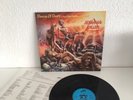
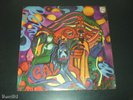
Milton Nascimento & Lo Borges Clube Da Esquina Brazil Edu Lobo Chico Barque Psyc
$
55


Favourite Auctions
To save auctions to your favourites, please login
If you don't have an account, please register
Description
SEALED COPY! 2025 edition. European Pressing (Italy) Single Sleeve
Great Sound on this new edition.
2 LP
If it were possible to do contact tracing for inspiration, the scene that began at the corner of Rua Divinópolis and Rua Paraisópolis in the Brazilian city of Belo Horizonte sometime in 1970 would make an interesting study. There, during a particularly mean season of authoritarian rule, a group of writers, artists, musicians and thinkers gathered in the afternoons to talk, hang, smoke and sing songs.
Out of that loose revolving-cast scene came one of the most unusual double albums in pop music history: Clube da Esquina, which is credited to the singer-songwriters Milton Nascimento and Lô Borges, but in both its overall tone and tiny details reflects ideas that grew from a larger collaborative dynamic.
Released in March 1972 after a two-year gestation period, Clube turns up on all the Essential Records lists. It’s celebrated in books and academic papers for its diverse stylistic explorations and ornate arrangements. Still, even 50 years on, this album’s impact remains tricky to pin down — because of its sweep and scale, and because it influenced seemingly everyone making music in Brazil at the time.
Clube da Esquina was among the first big “statement” records to arrive after the rock-embracing Tropicália movement was quashed by the dictatorship in 1970. Its swirl of disparate fusions — samba percussion, rock song structure, the sleek chords of bossa nova, blissed-out vocal harmonies — became a primary catalyst for the flowering of diverse, globally aware Brazilian music that followed in the early and mid-’70s, much of which was tagged under the broad term Música Popular Brasileira, or MPB.
The LP’s wide, sometimes wild swings had few antecedents at the time in Brazil. The breathtakingly ambitious Clube music was closer in spirit to the late efforts of the Beatles, which, according to Clube member Márcio Borges, confounded the Brazilian critics who panned the album. “They wanted to compare Bituca [Nascimento’s nickname] with [the singer-songwriters] Caetano Veloso and Chico Buarque. They didn’t understand a bit of the interracial, international, interplanetary ecumenism proposed by the atemporal dissonances from Bituca,” he wrote in his personal history of Clube. “They despised the findings of Chopin and the Beatlemaniac love from little Lô.”
Clube da Esquina’s narratives called to “those who want to break free,” and then offered multiple ideas about what that freedom might feel like. Its lyrics expressed the idealism of Woody Guthrie through the melancholy imagery of Pablo Neruda, and its lavish orchestrations and intricate arrays of vocal harmony, stirring by themselves, braided the ancient and modern together into a sound that was also a provocation. Clube da Esquina arrived at a moment in Brazilian cultural life that was defined by fear; in response, it radiated possibility. It challenged its listeners and it challenged other musicians to go big. To dream. To stand for something.
“This is a direct response from the artistic soul to the cruelty of the dictatorship,” says the cellist, composer and arranger Jaques Morelenbaum, who was 18 at the time Clube was released and credits it with cementing his decision to become a musician. Since then, he’s toured with Gilberto Gil and Antônio Carlos Jobim, and appeared on literally hundreds of classic albums. “It’s a complex thing to talk about because now it is so beloved. [But at the time] it seemed so different. Radical. It was speaking poetically to all Brazilians who appreciated freedom of creativity and speech. It was a big, big, big inspiration for all of the musicians of my generation.”
*****
The inspiration circuit that began in Belo Horizonte traveled in waves. First, it heated up among the album’s core participants, including Lô Borges and his songwriter brother Márcio, bassist and guitarist Beto Guedes, guitarist Toninho Horta, multi-instrumentalist Nelson Angelo, writer Fernando Brant and composer Ronaldo Bastos. Having jammed and dreamed up songs in low-key situations for so long, the musicians understood how to coax magic from each other — with an empathetic (and, crucially, egoless) approach to accompaniment.
This group settled in a house in Rio while the rehearsal and recording of Clube da Esquina progressed. There was downtime, and during it, other projects sprouted. Each of them blossomed as a direct result of the atmosphere the musicians had cultivated on the street corner. Borges recorded spare versions of songs he’d written alone and with others from the collective, situating them in a guitar-oriented singer-songwriter context. The resulting self-titled LP, often called “The Sneaker Album,” for its cover, distills the sprawl of Clube into an intimate, minimal soundscape that evokes L.A. acoustic guitar music of the period — as well as the watercolor idylls of the Beatles, again a huge inspiration for the Belo Horizonte crew.
Som Imaginário, the band that had accompanied Nascimento on previous tours and took part in the album sessions, made a rococo progressive-rock record, 1973’s Matança Do Porco, that’s notable for its derivative structures and bombastic peaks, and for its fiery, ruthlessly inventive improvisational excursions.
Guedes and Horta teamed up with Danilo Caymmi, the son of legendary singer and songwriter Dorival Caymmi, a multi-instrumentalist named Novelli and others for a hard-to-find Clube classic that, incredibly, has yet to be reissued. Titled with just the names of the four principals, it’s alive with the exuberance of Clube da Esquina and thrives on the mothership’s collective approach (Lô Borges plays bass). Different tracks have different songwriters and lead singers, each one striving for a subtle union of message and atmosphere.
Nelson Angelo called on many of the Clube musicians to help fill out the sounds on his collaboration with the singer Joyce. Their 1972 album is an unapologetically sweet set of songs that is a classic in its own right. With its languid, winding-lane melodies and pensive aura, it shows that the lavish musical devices central to Clube da Esquina could be transported to different moods and settings, even without the towering presence of Nascimento.
price rating
![The Kinks Live At Kelvin Hall [LP] (Vinyl, 1967 Pye) Sealed Brand New](https://www.popsike.net/php/thumbnail.php?url=https://www.popsike.pics/pix/20190529/312633395112.jpg)