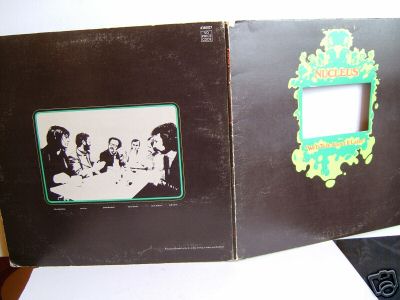
Nucleus - We'll Talk About It Later 6360 027 Swirl UK
£
31
$
41


Favourite Auctions
To save auctions to your favourites, please login
If you don't have an account, please register
Description
General Details Artist Nucleus Title We'll Talk About It Later Record Label Vertigo (Swirl label) Cat. number 6360 027 Mono/Stereo? S
Country
UK Sleeve E. J. Day & Co. Ltd If blank, no sleeve manufactured credits present Recorded 1971Matrix number
Side 1 6360 027 1Y//1 Side 2 6360 027 2Y//1Condition
Disc
Paper Scuffs
Side 1
VGModerate paper scuffs
Side 2 VG Moderate paper scuffsSurface Marks
Side 1
EX Side 2 EXMark on Tk 3 - not audible
Scratches
Side 1
VG 2 hairline scratches Side 2 EX Other Info.Sound
Surface Noise
Side 1
EXSide 2 EX
Pops/Clicks
Side 1
VG Side 2 VGScratches
Side 1
VG Scratch over Tks 1, 2 & 3 - produces clicks Side 2 EX Other Info.Cover
Ring / Surface Wear
Front
VG Surface wear Back VG Surface wear Inner EXCard Creases
Front
VG A couple of light creases on front sleeve Back VG A couple of light creases on front sleeve Inner EXShelf Wear
Edge
EX Spine VG Moderate wear on spine Corner VG Inner SleeveVG
Plain white sleeve - not swirl Other Info.Guide to grades used
M Cover Looks New - no marks, wear or damage Disc Looks unplayed - no marks visible Sound I don't use this grade for sound - as all records (even brand new) produce some noise Ex Cover Slight signs of wear on edges/spine, corners or ring wear. Minor creases. No damage caused by sticker removal/residue. Light sleeves may show slight discolouration due to age or handling Disc May have minor paper scuffs caused by moving record in & out of paper sleeve. Sound May be occasional pops/clicks and minimal surface noise Vg Cover Moderate edge/spine or ring wear. Corners may be a little blunt. Opening edge may show feathering caused by removal of record. Visible creases or laminate lift. Disc Some surface marks &/or hairline scratches. Moderate paper scuffs. Sound May be pops/clicks caused by marks/scratches. Moderate background surface noise and crackles. G Cover Heavy ring or edge/spine wear. Corners noticable bashed. Heavy creases. Considerable laminate damage. Disc Looks very well played. A lot of surface marks/scratches Sound Considerable surface noise. Audible scratches.Background Information
Click on the link to see the original information source: - We'll Talk About It Later Although Nucleus made an acclaimed performance at the Newport Jazz Festival in 1970, the U.K. proto-fusionists never became particularly popular in the States, with much of their recorded output only available as import releases. In fact, in certain quarters Nucleus is known primarily as a source of musicians who joined the latter-day Soft Machine, itself a group that never moved too far beyond cult status. Composer/keyboardist/reedman Karl Jenkins, drummer John Marshall, bassist Roy Babbington, and guitarist Allan Holdsworth all played with Nucleus at one time or another, and all had moved over to the Soft Machine lineup by the time the Softs (with Mike Ratledge the only original remaining member of the band) issued Bundles in 1975. Nucleus' second album, 1970's We'll Talk About It Later, might be of particular interest to fans of Bundles-era Soft Machine given the presence of "Song for the Bearded Lady," a Jenkins composition that later appeared in altered form on Bundles as "Hazard Profile," a vehicle for one of Holdsworth's most stunningly fleet-fingered solos on record. "Song for the Bearded Lady" kicks off We'll Talk About It Later with a fanfare and funky unison and counterpoint riffing that segue into a spacious groove and Ian Carr trumpet solo echoing the influence of electric Miles from the same time period. Chris Spedding was the band's guitarist here, and one shouldn't expect Holdsworth-style pyrotechnics from him; Spedding was a blues-rocker more than a jazzer and generally took a back seat to the soloing skills of Carr, Jenkins, and New Zealand saxophonist Brian Smith (whose duet with drummer Marshall at the conclusion of "Easter 1916" — inspired by the Yeats poem about the Irish nationalist uprising in Dublin — approaches the wildness of some of the era's most incendiary free jazz).The band is at its best when firing on all cylinders (the title track, for example), but the album's mood changes are for the most part effective; "Lullaby for a Lonely Child" is a lovely down-tempo ballad (who would've guessed from that title?) with an understated horn/sax line from Carr and Smith and atmospheric bouzouki from Spedding imparting a Mediterranean flavor. New millennial listeners might wish for a time machine to go back and tell this band to lose the occasional vocals, however. The uncredited singing in "Ballad of Joe Pimp" might seem laughably polite during the age of gangsta rap; this Joe Pimp sounds about as streetwise as Gilbert O'Sullivan of "Alone Again (Naturally)" fame. Still, the song seems prescient — its tempo and instrumentation are akin to Pink Floyd's "Money," which appeared on the scene several years later. Given Carr's long trumpet and flügelhorn lines, Jenkins' probing oboe and funk-filled electric keyboards, Spedding's rockish wah-wah guitar, Smith's freewheeling sax work, and the powerful rhythmic foundation of drummer Marshall and bassist Jeff Clyne, this version of Nucleus should appeal to any fan of late-'60s/early-'70s fusion — either the Soft Machine-esque Brit variety or the stateside explorations of the Miles Davis school. But We'll Talk About It Later shouldn't be viewed merely through the prism of other artists; Nucleus was an original band that deserves considerably more attention than it got for pioneering a form of jazz-rock that has, for the most part, aged quite well, and We'll Talk About It Later is a noteworthy release from a strong Nucleus incarnation. Other Information
If you require any further information about this record or require additional photos, matrix numbers etc - please let me know and I will send them to you.
All records will be sent in professional mailers with two cardboard stiffeners. The record will be removed from the sleeve to protect it during transit. I will always obtain a certificate of posting for each parcel.
It is essential that you use the Recorded/Special delivery (UK) or International Signed For (Rest of World) postal options if you want to insure the item against damage or loss. I cannot take responsibility for the package once it is in the hands of the postal service using the basic 1st class or Air Mail service (uninsured).
I would prefer PayPal, if possible, from non UK bidders. For UK based bidders, PayPal would be the best option, otherwise a cheque or postal order may be acceptable. Please contact me if in doubt.
price rating


![Nucleus - We'll Talk About It Later [Colored Vinyl] [New Vinyl LP] Colored Vinyl](https://www.popsike.net/php/thumbnail.php?url=https://www.popsike.pics/pix/20210908/133871523279.jpg)
