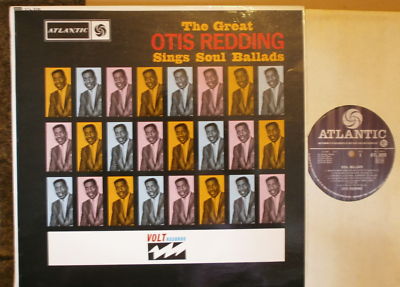
OTIS REDDING SOUL BALLADS PLUM ATLANTIC ATL 5029 MONO MATRIX AML-2744-2B RARE LP
£
30
$
40


Favourite Auctions
To save auctions to your favourites, please login
If you don't have an account, please register
Description
YOU ARE BIDDING ON A RARE LP
OTIS REDDING
SOUL BALLADS
THAT'S HOW STRONG MY LOVE IS
CHAINED AND BOUND
WOMAN, LOVER, A FRIEND
YOUR ONE AND ONLY MAN
NOTHING CAN CHANGE THIS LOVE
IT'S TOO LATE
FOR YOUR PRECIOUS LOVE
I WANT TO THANK YOU
COME TO ME
HOME IN YOUR HEART
KEEP YOUR ARMS AROUND ME
MR. PITIFUL
RELEASED ON ATLANTIC RECORDS ATL 5029
MATRIX NUMBERS: AML-2744-2B,
AML-2745-1B
THIS MONO RECORD HAS PLUM ATLANTIC RECORD LABELS
THE RECORD IS IN EXCELLENT CONDITION, THE SLEEVE HAS A COUPLE OF SMALL SCUFFS/TEARS TO THE TOP FLAP ON THE REAR, VERY SLIGHT RING/EDGE WEAR, SOME LIGHT DISCOLOURATION DUE TO AGE, AND VERY SLIGHT SIGNS OF AGE/WEAR
WE DO COMBINE POSTAGE FOR ITEMS PURCHASED MEANING THAT WE DO PROVIDE POSTAGE DISCOUNTS ON MULTIPLE PURCHASES WHERE POSSIBLE, AS A RULE THE FIRST LP IS CHARGED AT STANDARD POSTAL RATE AND EACH ITEM THERE AFTER AT AROUND A 50% DISCOUNT, AND THE SAME GOES FOR 7" RECORDS, THERE MAY BE A FEW EXCEPTIONS TO THIS, SUCH AS BEING UNABLE TO COMBINE POSTAGE FOR A POSTER AND A RECORD, PLEASE FEEL FREE TO CONTACT US IF YOU ARE STILL UNSURE
ITEMS ARE PACKAGED IN STIFF CARD MAILERS WITH STIFFENERS, AND ARE REMOVED FROM SLEEVES PRIOR TO PACKING-UNLESS THE ITEM IS SOLD AS 'SEALED'
One of the most influential soul singers of the 1960s, Otis Redding exemplified to many listeners the power of Southern "deep soul" -- hoarse, gritty vocals, brassy arrangements, and an emotional way with both party tunes and aching ballads. He was also the most consistent exponent of the Stax sound, cutting his records at the Memphis label/studios that did much to update R&B into modern soul. His death at the age of 26 was tragic not just because he seemed on the verge of breaking through to a wide pop audience (which he would indeed do with his posthumous number one single "[Sittin' On] The Dock of the Bay"). It was also unfortunate because, as "Dock of the Bay" demonstrated, he was also at a point of artistic breakthrough in terms of the expression and sophistication of his songwriting and singing.
Although Redding at his peak was viewed as a consummate, versatile showman, he began his recording career in the early '60s as a Little Richard-styled shouter. The Georgian was working in the band of guitarist Johnny Jenkins at the time, and in 1962 he took advantage of an opportunity to record the ballad "These Arms of Mine" at a Jenkins session. When it became an R&B hit, Redding's solo career was truly on its way, though the hits didn't really start to fly until 1965 and 1966, when "Mr. Pitiful," "I've Been Loving You Too Long," "I Can't Turn You Loose," a cover of the Rolling Stones' "Satisfaction," and "Respect" (later turned into a huge pop smash by Aretha Franklin) were all big sellers.
Redding wrote much of his own material, sometimes with the assistance of Booker T. & the MG's guitarist Steve Cropper. Yet at the time, Redding's success was primarily confined to the soul market; his singles charted only mildly on the pop listings. He was nonetheless tremendously respected by many white groups, particularly the Rolling Stones, who covered Redding's "That's How Strong My Love Is" and "Pain in My Heart." (Redding also returned the favor with "Satisfaction.")
One of Redding's biggest hits was a duet with fellow Stax star Carla Thomas, "Tramp," in 1967. That was the same year he began to show signs of making major inroads into the white audience, particularly with a well-received performance at the Monterey Pop Festival (also issued on record). Redding's biggest triumph, however, came just days before his death, when he recorded the wistful "(Sittin' On) The Dock of the Bay," which represented a significant leap as far as examination of more intensely personal emotions. Also highlighted by crisp Cropper guitar leads and dignified horns, it rose to the top of the pop charts in early 1968.
Redding, however, had perished in a plane crash in Wisconsin on December 10, 1967, in an accident that also took the lives of four members from his backup band, the Bar-Kays. A few other singles became posthumous hits, and a good amount of other unreleased material was issued in the wake of his death. These releases weren't purely exploitative in nature, in fact containing some pretty interesting music, and little that could be considered embarrassing. What Redding might have achieved, or what directions he might have explored, are among the countless tantalizing "what if" questions in rock & roll history. As it is, he did record a considerable wealth of music at Stax, which is now available on thoughtfully archived reissues.
price rating