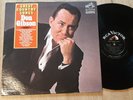
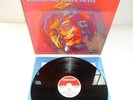
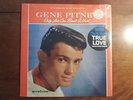
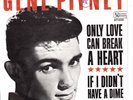
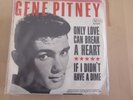
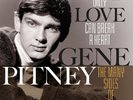
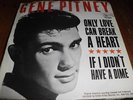
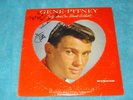
"Only Love Can Break a Heart" Gene Pitney Signed Album Page Todd Mueller COA
$
40


Favourite Auctions
To save auctions to your favourites, please login
If you don't have an account, please register
Description
Up for auction "Only Love Can Break a Heart" Gene Pitney Signed Album Page. This item is authenticated by Todd Mueller Autographs and comes with their certificate of authenticity.
ES-4232E
Gene Francis Alan Pitney (February 17, 1940– April 5, 2006) was an American singer-songwriter, musician, and sound engineer. Pitney charted 16 Top 40 hits in the United States, four in the Top 10. In the United Kingdom he had 22 Top 40 hits, and 11 singles in the Top Ten. Among his most famous hits are "Town Without Pity", "(The Man Who Shot) Liberty Valance", "Twenty Four Hours from Tulsa", "I'm Gonna Be Strong" and "Something's Gotten Hold of My Heart". He also wrote the early 1960s hits "Rubber Ball" recorded by Bobby Vee, "Hello Mary Lou" by Ricky Nelson, and "He's a Rebel" by the Crystals. In 2002, he was inducted into the Rock and Roll Hall of Fame. Pitney was born in Hartford, Connecticut, the son of Anna A. (Orlowsky) and Harold F. Pitney. The third of five children of a lathe operator, Pitney lived with his family in Rockville, Connecticut during his formative years. He grew up in Rockville, now part of Vernon, Connecticut. Pitney's early influences were Clyde McPhatter, country-blues singer Moon Mullican, and doo-wop groups such as the Crows. He attended Rockville High School where he formed his first band, Gene & the Genials. Pitney was an avid doo-wop singer and sang with a group called the Embers. He made records as part of a duo called Jamie and Jane with Ginny Arnell (who in late 1963 had a solo hit, "Dumb Head"), and in 1959 recorded a single as Billy Bryan. Signed to songwriter Aaron Schroeder's newly formed Musicor label in 1961, Pitney scored his first chart single, which made the Top 40, the self-penned "(I Wanna) Love My Life Away", on which he played several instruments and multi-tracked the vocals. He followed that same year with his first Top 20 single, "Town Without Pity", from the 1961 film of the same title. Written by Dimitri Tiomkin and Ned Washington, the song won a Golden Globe Award and was nominated for an Academy Award for Best Song, but lost to "Moon River". Pitney performed the song at the Oscars ceremony on April 9, 1962. He is also remembered for the Burt Bacharach–Hal David song "(The Man Who Shot) Liberty Valance", which peaked at No. 4 in 1962. Though it shares a title with the John Wayne western, the song was not used in the film because of a publishing dispute. Meanwhile, Pitney wrote hits for others, including "Today's Teardrops" for Roy Orbison, "Rubber Ball" for Bobby Vee, "Hello Mary Lou" for Ricky Nelson, and "He's a Rebel" for the Crystals (later recorded by Vikki Carr and Elkie Brooks). "Rebel" kept Pitney's own No. 2 hit "Only Love Can Break a Heart", his highest-charting single in the US, from the top spot on 3 November 1962, the only time that a writer shut himself (or herself) out of the No. 1 position. He followed up in December with "Half Heaven, Half Heartache", which reached No. 12 on the Billboard chart. Because of his success on the music charts, and as he explained to his friend Oldies DJ 'Wild' Wayne, an unknown radio disc jockey at the time gave Pitney the nickname 'The Rockville Rocket', which caught on. Pitney's popularity in the UK market was ensured by the breakthrough success of "Twenty Four Hours from Tulsa", a Bacharach and David song, which peaked at No. 5 in Britain at the start of 1964. It was only Pitney's third single release in the UK to reach the singles chart, and the first to break into the Top Twenty there; it was also a hit in the US, peaking at No. 17 on the Hot 100. Pitney was present with Phil Spector at some of the Rolling Stones' early recording sessions in London, including "Little by Little" and other tracks for their debut album; he played piano, though the extent is uncertain. The Jagger/Richards song "That Girl Belongs to Yesterday" was a No. 7 UK hit for Pitney in 1964; it was the first tune composed by the duo to become a Top 10 hit in the UK.[6] In the US, the single stalled at No. 49, ending a run of seven Top 40 singles for Pitney as a performer.
price rating