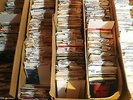
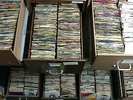
PRE WAR jazz blues 78 rpm phonograph records in good shape DIME STORE LABELS
$
24


Favourite Auctions
To save auctions to your favourites, please login
If you don't have an account, please register
Description
These are all at least V+ unless noted. Some are a little better.
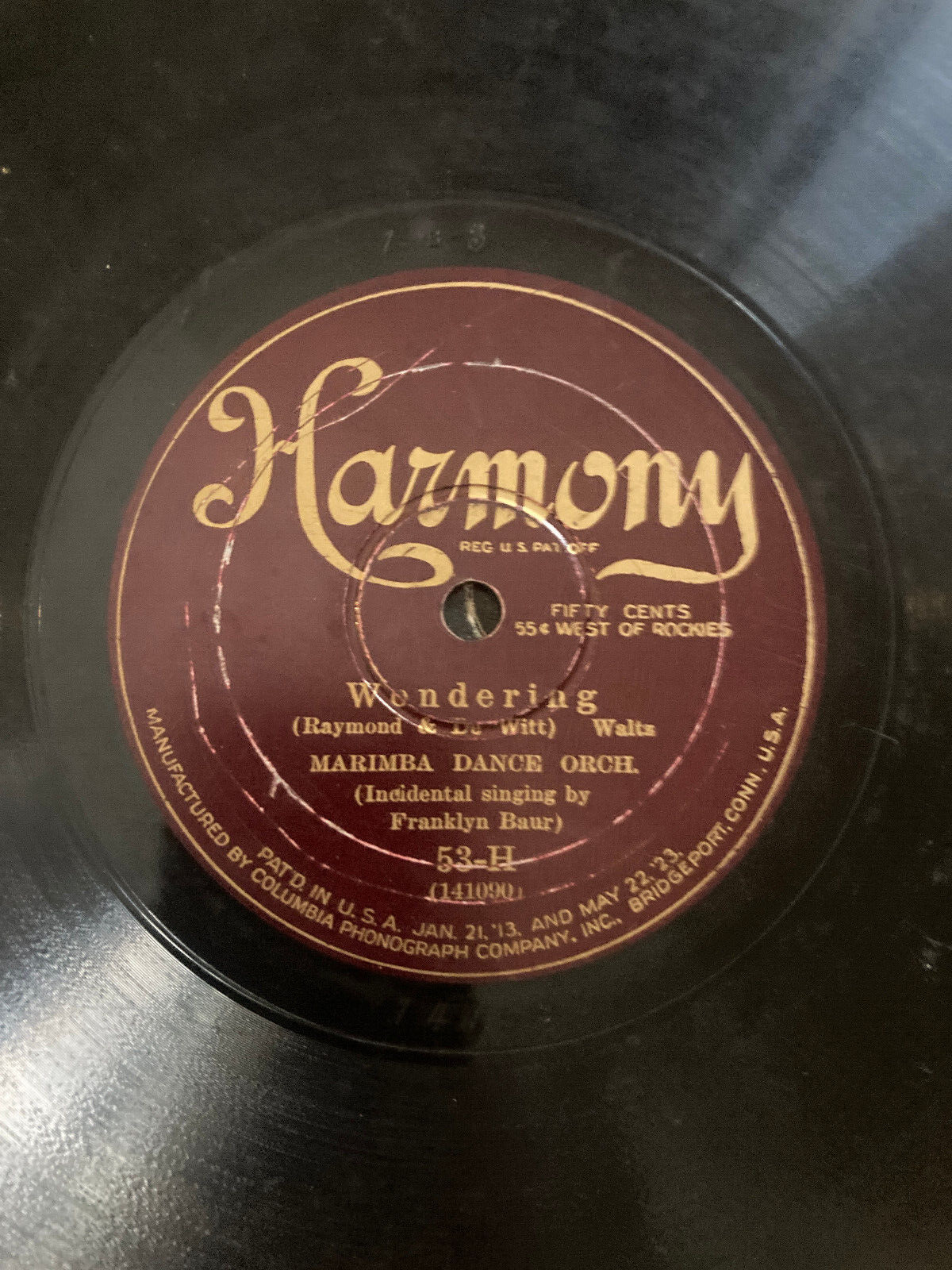
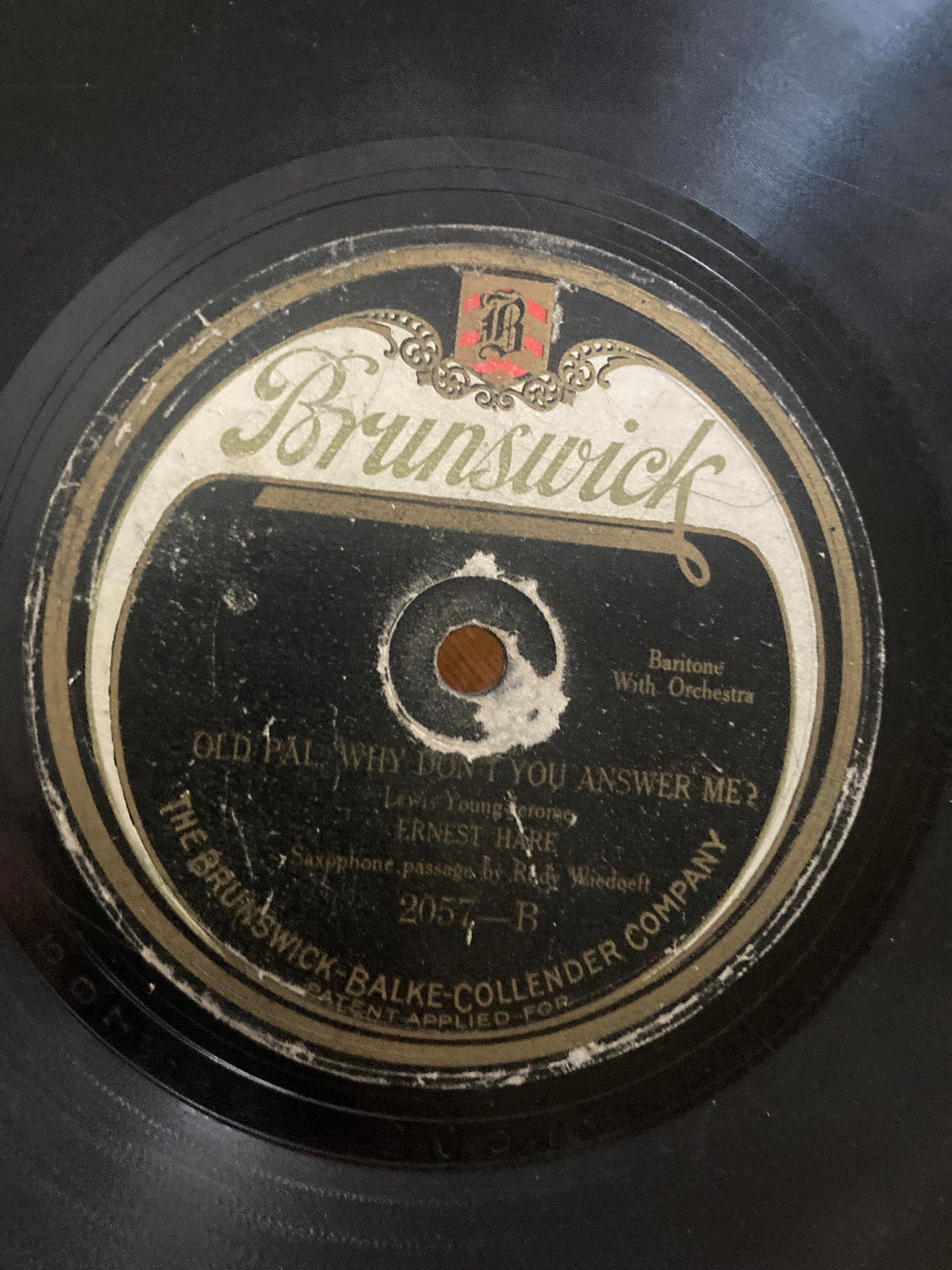
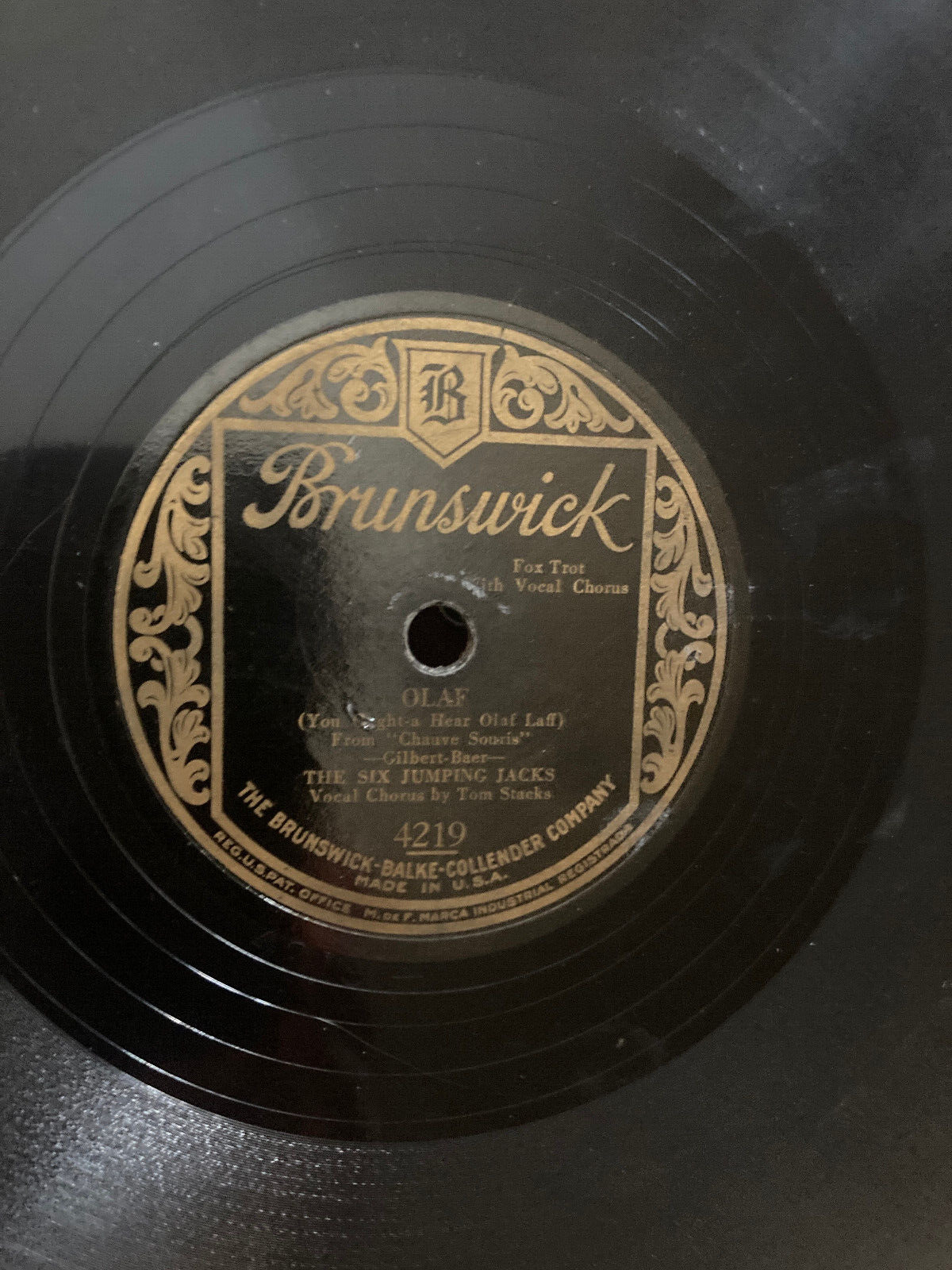
1.HARMONY 257 WMCA Broadcasters V+ / V+ 2. HARMONY 53 Marimba Dance Orchestra V+ / V+ ec dnap 3. CAMEO 1189 Bob Haring V+ / V+ 4. HOMESTEAD Henry Burr V+ / V+ 5. CAMEO 828 Arthur Lange V+ / V+ 6. CAMEO 1052 William Robyn V/ V (lot of scratches, surface noise) 7. CAMEO 1041 Salt and Pepper V+ / V+ 8. BRUNSWICK 2761 Gene Rodemich V / V looks better but more whipped than it shows 9. BRUNSWICK 82651 Tommy Dorsey E- / E- 10. BRUNSWICK 4219 Six Jumping Jacks V+ / V+ 11. BRUNSWICK 2057 Amphion Quartet V / V+ Looks rough but plays V+ 12. BRUNSWICK 2792 Fireside quatet V+ / V+ 13. BRUNSWICK 2798 Bernie Krueger's V+ / V 14. BRUNSWICK 4152 Lee sims V+ / V+
FREE SHIPPING
WIKIPEDIA:
After a short stint with Ross Gorman's band, Krueger's joined the Acme Sextette in New York, which included Miff Mole on trombone, Ernie Holst on violin, and Edwin Taylor Williams on banjo.[2] He had the distinction of being one of the first jazz saxophonists on record. In 1920, the Original Dixieland Jazz Band, following a successful tour of England, cut a number of sides for the Victor Talking Machine Company. One of Victor's managers insisted, against the ODJB members' wishes, that a saxophonist be included on their early recordings. Krueger was chosen by Victor as the saxophonist, and he recorded with the ODJB in 1920 to 1921, according to Rust's Jazz Records 1897-1942.[3]
Following the ODJB recording date, Krueger recorded numerous sides for Brunswick and Vocalion under his own name, as well as under several pseudonyms. His final recording session was for Columbia Records in May 1934, recording songs from the 1934 Carole Lombard-Bing Crosby film We're Not Dressing.
In the 1930s he worked in radio and served as musical director and orchestra conductor for Rudy Vallee and Bob Crosby. He was also a songwriter; "Sunday" was covered by Pat Boone, Lester Young and Louis Jordan). Among his outstanding recordings with his orchestra was "I Don't Know Why" (1931).
Thomas Francis Dorsey Jr. (November 19, 1905 – November 26, 1956)[1] was an American jazz trombonist, composer, conductor and bandleader of the big band era. He was known as the "Sentimental Gentleman of Swing" because of his smooth-toned trombone playing.[2] His theme song was "I'm Getting Sentimental Over You". His technical skill on the trombone gave him renown among other musicians.[3] He was the younger brother of bandleader Jimmy Dorsey.[4] After Dorsey broke with his brother in the mid-1930s, he led an extremely successful band from the late 1930s into the 1950s. He is best remembered for standards such as "Opus One", "This Love of Mine" (no. 3 in 1941) featuring Frank Sinatra on vocals, "Song of India", "Marie", "On Treasure Island", and his biggest hit single, "I'll Never Smile Again" (no. 1 for 12 weeks in 1940).
Early life
Born in Mahanoy Plane, Pennsylvania, Thomas Francis Dorsey Jr. was the second of four children born to Thomas Francis Dorsey Sr., a bandleader,[5] and Theresa (née Langton) Dorsey.[6] He and Jimmy, his older brother by slightly less than two years, became known as the Dorsey Brothers. The two younger siblings were Mary and Edward, who died young.[7] Tommy Dorsey studied the trumpet with his father but later switched to trombone.[3]
At age 15, Jimmy recommended Tommy to replace Russ Morgan in the Scranton Sirens, a territory band in the 1920s. Tommy and Jimmy worked in bands led by Tal Henry, Rudy Vallee, Vincent Lopez, and Nathaniel Shilkret. In 1923, Dorsey followed Jimmy to Detroit to play in Jean Goldkette's band and returned to New York in 1925 to play with the California Ramblers.[8] In 1927, he joined Paul Whiteman. In 1929, the Dorsey Brothers had their first hit with "Coquette" for OKeh Records.[9]
In 1934, the Dorsey Brothers band signed with Decca, having a hit with "I Believe in Miracles".[10] Glenn Miller was a member of the Dorsey Brothers Orchestra in 1934 and 1935, composing "Annie's Cousin Fanny",[11] "Tomorrow's Another Day", "Harlem Chapel Chimes", and "Dese Dem Dose", all recorded for Decca,[12] for the band. Acrimony between the brothers led to Tommy Dorsey walking out to form his own band in 1935 as the orchestra was having a hit with "Every Little Moment".[13] Dorsey's orchestra was known primarily for its renderings of ballads at dance tempos, frequently with singers such as Jack Leonard and Frank Sinatra.[3]
Band
In 2009, Buddy De Franco recalled recording "Opus One" with Dorsey in the 1940s, commenting on Dorsey's desire to be precise and exact.[14] Expanding on De Franco's opinions about Dorsey, writer Peter Levinson said, "He wanted things to be done his way."[15]
The band was popular almost from the moment it signed with RCA Victor for "On Treasure Island", the first of four hits in 1935. After his 1935 recording, however, Dorsey's manager dropped the "hot jazz" that Dorsey had mixed with his own lyrical style, and instead had Dorsey play pop and vocal tunes. Dorsey kept his Clambake Seven as a Dixieland group that played during performances.[8] Dorsey became the co-host of The Raleigh-Kool Program on the radio with comedian Jack Pearl, then became the host.[16]
By 1939, Dorsey was aware of criticism that his band lacked a jazz feeling. He hired arranger Sy Oliver away from the Jimmie Lunceford band.[17][18] Sy Oliver's arrangements include "On the Sunny Side of the Street" and "T.D.'s Boogie Woogie"; Oliver also composed two of the new band's signature instrumentals, "Well, Git It" and "Opus One".[19] In 1940, Dorsey hired singer Frank Sinatra from bandleader Harry James.[20] Sinatra made eighty recordings from 1940 to 1942 with the Dorsey band.[21] Two of those eighty songs are "In the Blue of Evening"[20] and "This Love of Mine".[22] Sinatra achieved his first great success as a vocalist in the Dorsey band and claimed he learned breath control from watching Dorsey play trombone.[13] Sy Oliver and Sinatra did a posthumous tribute album to Dorsey on Sinatra's Reprise records. I Remember Tommy appeared in 1961.[23] Dorsey said his trombone style was heavily influenced by Jack Teagarden.[24]
Among Dorsey's staff of arrangers was Axel Stordahl[25][15] who arranged for Sinatra in his Columbia and Capitol years. Another member of the Dorsey band was trombonist Nelson Riddle, who later had a partnership as one of Sinatra's arrangers and conductors in the 1950s and afterwards.[26][15] Another noted Dorsey arranger, who, in the 1950s, married and was professionally associated with Dorsey veteran Jo Stafford, was Paul Weston.[27] Bill Finegan, an arranger who left Glenn Miller's civilian band, arranged for the Tommy Dorsey band from 1942 to 1950.[28]
The band featured a number of instrumentalists, singers, and arrangers in the 1930s and '40s, including trumpeters Zeke Zarchy,[29] Bunny Berigan,[30] Ziggy Elman,[31][32] Doc Severinsen,[33] and Charlie Shavers,[34] pianists Milt Raskin, Jess Stacy,[35] clarinetists Buddy DeFranco,[36] Johnny Mince,[37] and Peanuts Hucko.[38] Others who played with Dorsey were drummers Buddy Rich,[39] Louie Bellson,[40] Dave Tough[37] saxophonist Tommy Reed, and singers Sinatra, Ken Curtis, Jack Leonard,[41] Edythe Wright,[42] Jo Stafford with the Pied Pipers, Dick Haymes,[43] and Connie Haines.[44]
In 1944, Dorsey hired the Sentimentalists, name with which he renamed the already known vocal band The Clark Sisters asking them not to reveal their identity. They replaced the Pied Pipers.[45] Dorsey also performed with singer Connee Boswell[37] He hired ex-bandleader and drummer Gene Krupa after Krupa's arrest for marijuana possession in 1943.[46] In 1942, Artie Shaw broke up his band, and Dorsey hired the Shaw string section. As George T. Simon in Metronome magazine observed at the time: "They're used in the foreground and background (note some of the lovely obbligatos) for vocal effects and for Tommy's trombone."[47]
Dorsey made further business decisions in the music industry. He loaned money to Glenn Miller enabling him to launch his band of 1938,[48] but Dorsey saw the loan as an investment, entitling him to a percentage of Miller's income. When Miller balked at this, the angry Dorsey got even by sponsoring a new band led by Bob Chester, and hiring arrangers who deliberately copied Miller's style and sound. Dorsey branched out in the mid-1940s and owned two music publishing companies, Sun and Embassy.[49] After opening at the Los Angeles ballroom, the Hollywood Palladium on the Palladium's first night, Dorsey's relations with the ballroom soured and he opened a competing ballroom, the Casino Gardens circa 1944.[49] Dorsey also owned for a short time a trade magazine called The Bandstand.[49]
Tommy Dorsey disbanded his own orchestra at the end of 1946. Dorsey might have broken up his own band permanently following World War II, as many big bands did due to the shift in music economics following the war, but Tommy Dorsey's album for RCA Victor, "All Time Hits" placed in the top ten records in February 1947. In addition, "How Are Things in Glocca Morra?", a single recorded by Dorsey, became a top-ten hit in March 1947. As a result, Dorsey was able to re-organize a big band in early 1947. The Dorsey brothers were also reconciling. The biographical film The Fabulous Dorseys (1947) describes sketchy details of how the brothers got their start from-the-bottom-up into the jazz era of one-nighters, the early days of radio in its infancy stages, and the onward march when both brothers ended up with Paul Whiteman before 1935 when The Dorsey Brothers' Orchestra split into two.
In the early 1950s, Tommy Dorseyprice rating