Paul Robeson Negro Spirituals 78 rpms Lawrence Brown James Weldon Johnson Etc
$
40


Favourite Auctions
To save auctions to your favourites, please login
If you don't have an account, please register
Description
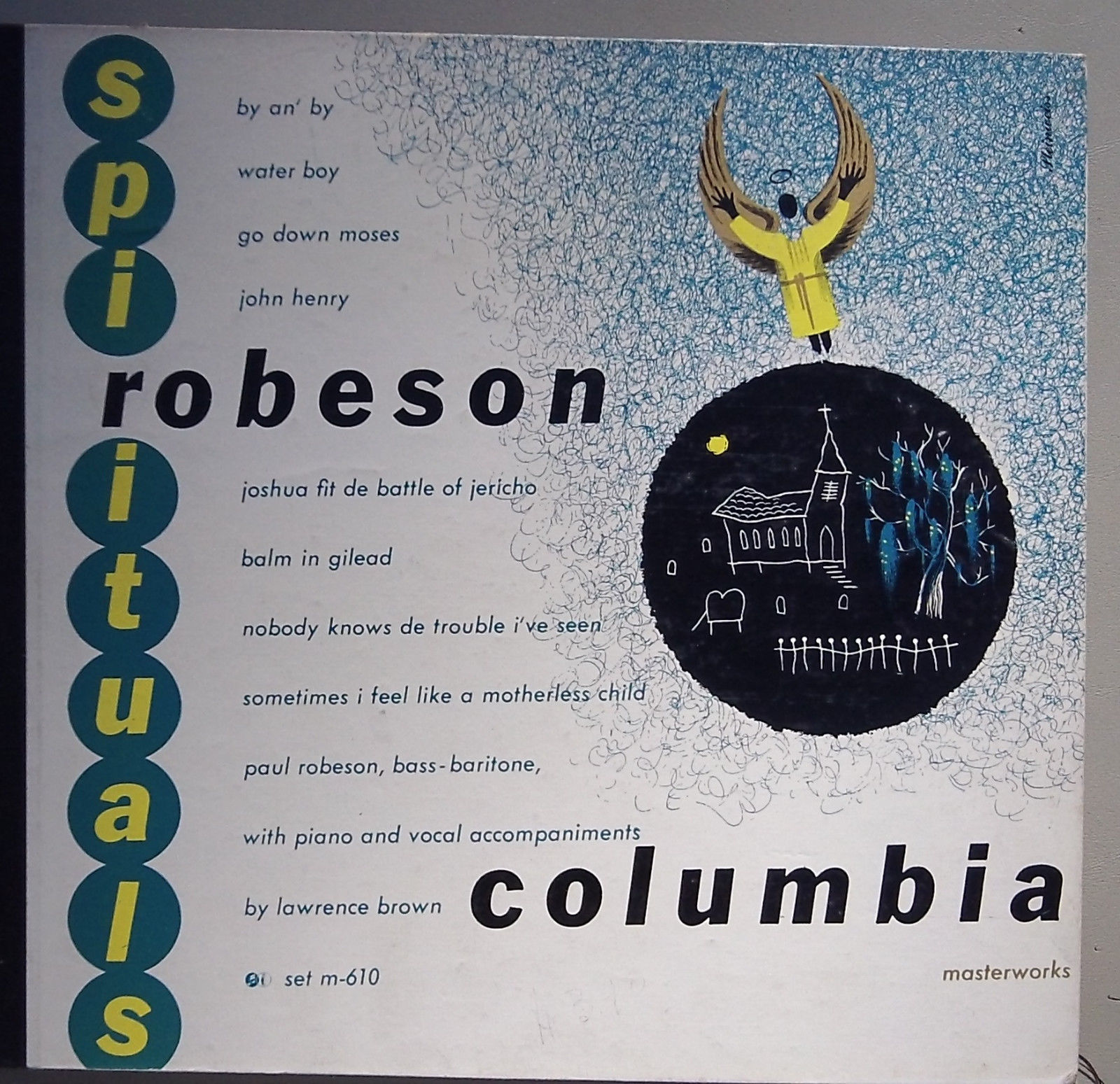
1. Columbia Masterworks Paul Robeson Spirituals 4 78rpm records collection,
Each record side a classic spiritual from the incomparable bass baritone singer,
with piano and vocal accompanyment by Lawrence Brown.
Spirituals include:
Go Down Moses Balm of Gilead By an' By Sometimes I Feel like a Motherless Child John Henry Water Boy Nobody Knows the Trouble I've Seen Joshua Fit de Battle of Jericho
Records are overall VG, some are flawless, others have light wear, could use a careful cleaning,
and probably the inevitable few "pops" here and there, but nothing major, most likely they'll be NO skips.
Sleeve is very good, color bright, well protected over the years. From Wikipedia:
Lawrence Benjamin Brown
Brown's first music teacher was William Riddick, and was sent to study his principal instrument, piano, in Boston, Massachusetts. He worked as an elevator operator to make up for the costs his scholarships did not cover. He made is debut as a concert accompanist for tenor Sydney Woodward, and from there was discovered by tenor Roland Hayes, with whom he toured from 1918 to 1923, including a performance at Buckingham Palace in 1921. While in England, he attended Trinity College for advanced training, where he received education in composition from Amanda Aldridge. In addition to piano and vocal arrangements, he performed string arrangements with cellist Beatrice Harrison at Wigmore Hall.[1]
Folk songs and spirituals
Following the publication of some of his arrangements of Negro spirituals in James Weldon Johnson's Book of American Negro Spirituals, Brown published his own Negro Folk Songs in 1930. His arrangements were performed by Paul Robeson in concert in 1925 at the Greenwich Village Theatre, and he continued a professional relationship and friendship with Robeson for the next 40 years, Brown accompanying Robeson in concert during tours of Show Boat, with Brown harmonizing with his tenor voice. They toured internationally, including in Paris, London, Ireland, for the King of Spain and the Prince of Wales.
Recordings with Paul Robeson
Robeson and Brown recorded many of Brown's arrangements on RCA Victor Records, including "Nobody Knows the Trouble I've Seen", "Sometimes I Feel Like a Motherless Child", and "Joe Hill". "Ballad for Americans" was an international success for the team. The two toured together with the USO during World War II. Brown did significant research for Robeson's projects, and actively sought folk music from around the world. He was frequently contacted by conductors seeking obscure folk music. He also had relationships with writers Lloyd Louis Brown and Langston Hughes. His friendship with Robeson and his wife, Eslanda ("Essie") Cardozo Goode Robeson, was challenged when Paul was blacklisted. Brown retired in 1963 after Robeson's career ended.[2]
II) The Book of American Negro Spirituals, edited, with introduction, by James Weldon Johnson
Musical arrangements by J. Rosamond Johnson
Additional numbers by Lawrence Brown
Viking Press, first edition, second printing, October, 1925 (first printing was a month earlier, September, 1925)
Hardcover, a solid reading copy, retired from public library, pages very good, music appears clean.
Front hinge crack, rear page carefully removed, some child(like) doodling inside front cover, some songs on contents page underlined.
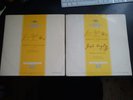
Dozens of spirituals here, see photos of contents for specifics. Several covered by Robeson in the above collection.
James Weldon Johnson (June 17, 1871 – June 26, 1938) was an American author, educator, lawyer, diplomat, songwriter, and civil rights activist. Johnson is best remembered for his leadership of the National Association for the Advancement of Colored People (NAACP), where he started working in 1917. In 1920 he was the first African American to be chosen as executive secretary of the organization, effectively the operating officer.[1] He served in that position from 1920 to 1930. Johnson established his reputation as a writer, and was known during the Harlem Renaissance for his poems, novels, and anthologies collecting both poems and spirituals of black culture.
He was appointed under President Theodore Roosevelt as US consul in Venezuela and Nicaragua for most of the period from 1906 to 1913. In 1934 he was the first African-American professor to be hired at New York University.[2] Later in life he was a professor of creative literature and writing at Fisk University, a historically black university.
price rating





![Eurythmics - Sweet Dreams (Are Made Of This) [New Vinyl LP] 180 Gram, Download I](https://www.popsike.net/php/thumbnail.php?url=https://www.popsike.pics/pix/20230217/134454603274.jpg)