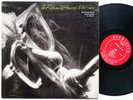
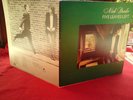
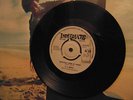
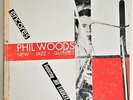
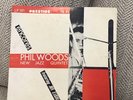
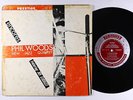
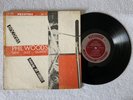
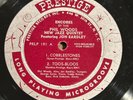
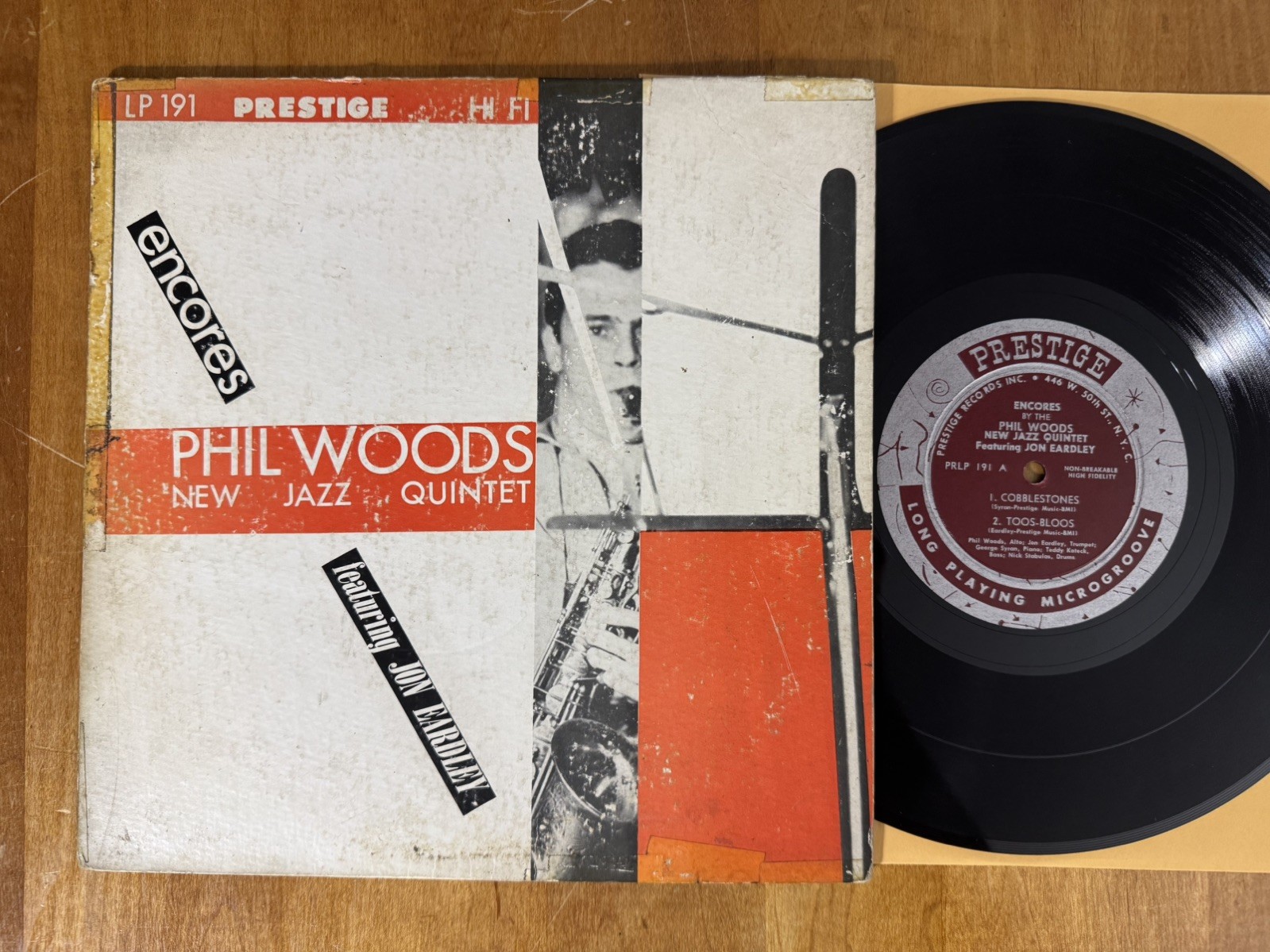
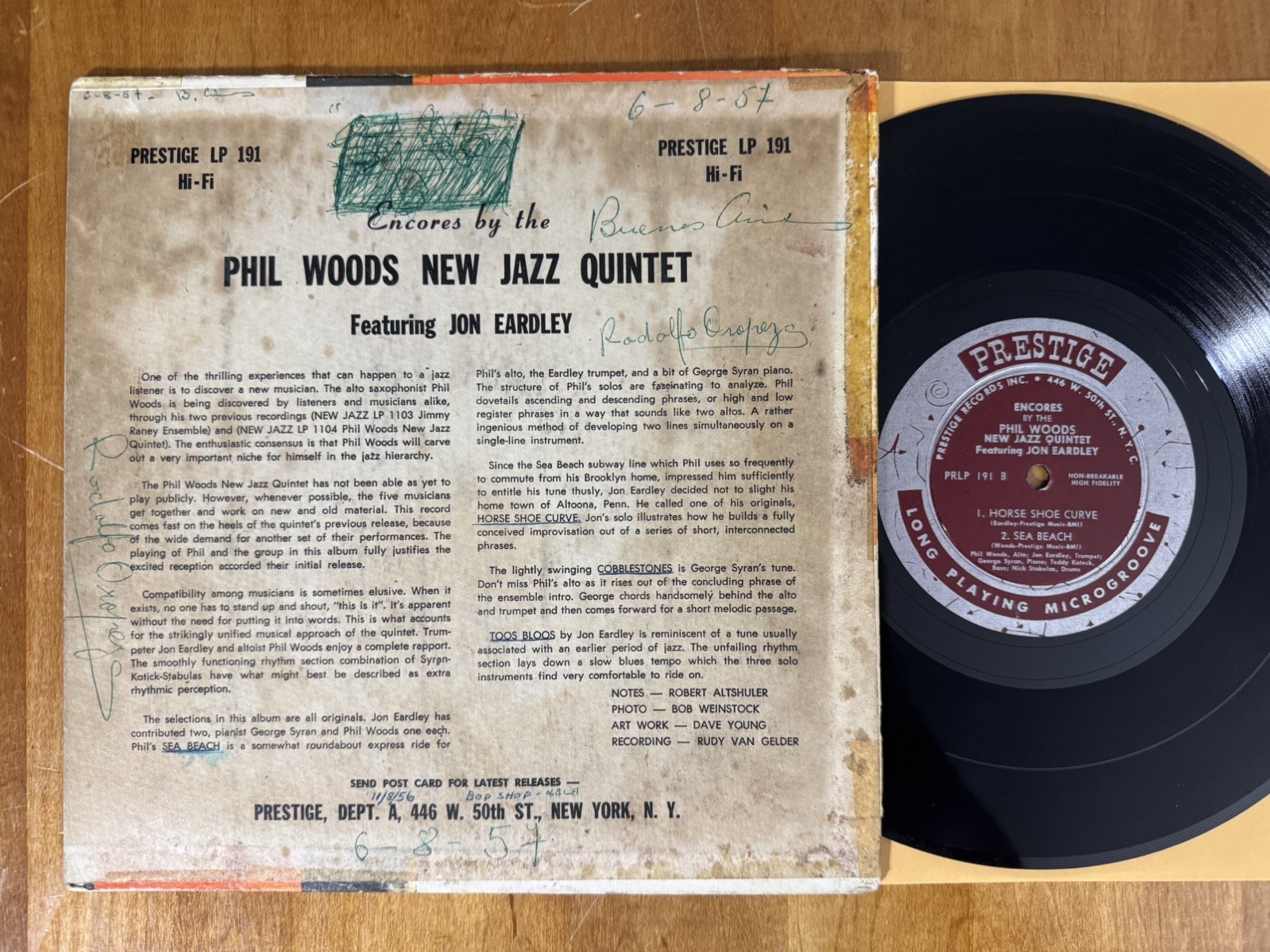
Phil Woods Featuring Jon Eardley LP 10" Encores 1955 Prestige PRLP 191 DG RVG
$
47


Favourite Auctions
To save auctions to your favourites, please login
If you don't have an account, please register
Description
Condition Description
Vinyl:
Looks VG with some light marks, plays with intermittent static or pops at times, Strong VG overall, Phil sounds great.Cover:
Fair top and spine seams split, tape along some edges, back is heavily discolored with writing, side note, I did not know there was a Bop Shop in New Orleans in 1956📦 I will consolidate shipping charges for multiple items.
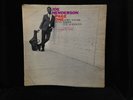
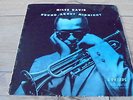
Selling about 75 records from my 10” jazz collection. Some of these are very rare pieces, some are in great condition, yet a lot of these records have some issues. I’d like to call out some facts about the unique nature of 10” records below.
A Note on 10-Inch Vinyl History
The 10-inch LP debuted in 1948 as a vital bridge between 3-minute 78 RPM shellac discs and the eventually dominant 12-inch LP. While larger discs were reserved for classical music, this format modernized jazz and pop by offering 15 minutes of "microgroove" audio per side in a lightweight, unbreakable vinyl package.
However, because these early pressings were only standard for a narrow window until the mid-1950s, they remain fragile "time capsules"; their thin cardstock jackets were prone to seam splitting and ring wear from the heavy disc inside, as well "foxing"—a type of brownish spotting caused by age and moisture.
Because these early discs were housed in tight, unlined cardboard sleeves without the protection of modern poly-inner sleeves, they were frequently subjected to "paper scuffs" and "hairlines" simply from being pulled in and out of the jacket. Over decades of storage, the acidic nature of the vintage cardboard could cause chemical "clouding" on the vinyl surface.
Consequently, finding a disc that retains its original "factory gloss" without surface noise caused by these environmental factors is exceptionally rare for the 10-inch format.
Despite the physical fragility of the era, many legendary jazz labels like Blue Note, Prestige, and Contemporary utilized deep-groove pressings and high-quality mastering that allowed the music to retain its punch and clarity even on well-loved copies. This robust "microgroove" engineering means that even a disc with visible surface wear can often still provide a powerful, dynamic listening experience that modern reissues struggle to replicate.
price rating