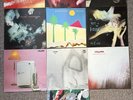
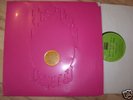
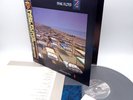
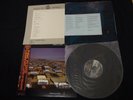
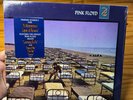
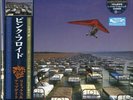
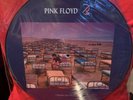
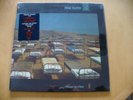
Pink Floyd ? A Momentary Lapse of Reason ? Rare DMM Direct Metal Master Vinyl LP
$
100


Favourite Auctions
To save auctions to your favourites, please login
If you don't have an account, please register
Description
Welcome to Classic Cadillac Records! My goal is to provide each and every customer with the best possible buying experience, no matter the size of the order. Unlike most sellers, I advertise all my items clearly and in as much detail as possible, without shouting at you in all caps. I take multiple high quality pictures and never use stock photos, so you know exactly what you?re buying. I take great pride in my work and go the extra mile, which can clearly be seen in my listings compared to other sellers that put minimal effort into theirs. I visually grade all my records as accurately as possible and will never grade anything above Near Mint unless it?s still sealed. Please note that a visual grade can differ from a play grade, and am happy to spot check a record upon request. All orders are shipped within 1 business day (usually sooner) and packed with extra care to ensure fast, safe arrival. I combine shipping on multiple orders to save you money and gladly ship worldwide. Please look closely at all pictures, read all relevant details and ask any questions you may have before buying. I offer a full 30-day return policy on everything I sell, so buy with confidence! And most importantly, thanks for looking!
Jump to navigationJump to search A Momentary Lapse of Reason Studio album by Pink Floyd Released 7 September 1987 Recorded November 1986 – March 1987 Studio
- Astoria, Mayfair Studios, Britannia Row Studios, and Audio International, London
- A&M Studios, Village Recorders, and Can Am Studios, Los Angeles
- Le Mobile
- EMI
- Columbia
- Bob Ezrin
- David Gilmour
(1983) A Momentary Lapse of Reason
(1987) Delicate Sound of Thunder
(1988) Singles from A Momentary Lapse of Reason
- "Learning to Fly" / "Terminal Frost"
Released: 14 September 1987 - "On the Turning Away"
Released: 14 December 1987 - "One Slip"
Released: 13 June 1988
A Momentary Lapse of Reason is the thirteenth studio album by the English progressive rock band Pink Floyd, released in the UK and US on 7 September 1987 by EMI and Columbia. It was recorded primarily on guitarist David Gilmour's converted houseboat, Astoria.
A Momentary Lapse of Reason was the first Pink Floyd album recorded without founding member Roger Waters, who departed in 1985. The production was marred by legal fights over the rights to the Pink Floyd name, which was not resolved until several months after release. It also saw the return of keyboardist and founding member Richard Wright, who had been fired by Waters during the recording of The Wall (1979).
Unlike earlier Pink Floyd records, A Momentary Lapse of Reason is not a concept album. It includes writing contributions from outside songwriters, following Gilmour's decision to include material once intended for his third solo album. The album was promoted with a successful world tour and with three singles: the double A-side "Learning to Fly" / "Terminal Frost", "On the Turning Away", and "One Slip".
A Momentary Lapse of Reason received mixed reviews; critics praised the production and instrumentation but criticised Gilmour's writing, and it was derided by Waters. It reached number three in the UK and US, and outsold Pink Floyd's previous album The Final Cut (1983).
Background
After the release of Pink Floyd's 1983 album The Final Cut, viewed by some as a de facto solo record by bassist and songwriter Roger Waters,[1][2] the band members worked on solo projects. Guitarist David Gilmour expressed feelings about his strained relationship with Waters on his second solo album, About Face (1984), and finished the accompanying tour as Waters began touring to promote his debut solo album, The Pros and Cons of Hitch Hiking.[3] Although both had enlisted a range of successful performers, including in Waters' case Eric Clapton, their solo acts attracted fewer fans than Pink Floyd; poor ticket sales forced Gilmour to cancel several concerts, and critic David Fricke felt that Waters' show was "a petulant echo, a transparent attempt to prove that Roger Waters was Pink Floyd".[4] Waters returned to the US in March 1985 with a second tour, this time without the support of CBS Records, which had expressed its preference for a new Pink Floyd album; Waters criticised the corporation as "a machine".
At that time, certainly, I just thought, I can't really see how we can make the next record or if we can it's a long time in the future, and it'll probably be more for, just because of feeling of some obligation that we ought to do it, rather than for any enthusiasm.Nick Mason, In the Studio with Redbeard (1987)
After drummer Nick Mason attended one of Waters' London performances in 1985, he found he missed touring under the Pink Floyd name. His visit coincided with the release in August of his second solo album, Profiles, on which Gilmour sang.[7][8] With a shared love of aviation, Mason and Gilmour were taking flying lessons and together bought a de Havilland Dove aeroplane. Gilmour was working on other collaborations, including a performance for Bryan Ferry at 1985's Live Aid concert, and co-produced the Dream Academy's self-titled debut album.
In December 1985, Waters announced that he had left Pink Floyd, which he believed was "a spent force creatively".[10][11] After the failure of his About Face tour, Gilmour hoped to continue with the Pink Floyd name. The threat of a lawsuit from Gilmour, Mason and CBS Records was meant to compel Waters to write and produce another Pink Floyd album with his bandmates, who had barely participated in making The Final Cut; Gilmour was especially critical of the album, labelling it "cheap filler" and "meandering rubbish".
They threatened me with the fact that we had a contract with CBS Records and that part of the contract could be construed to mean that we had a product commitment with CBS and if we didn't go on producing product, they could a) sue us and b) withhold royalties if we didn't make any more records. So they said, 'that's what the record company are going to do and the rest of the band are going to sue you for all their legal expenses and any loss of earnings because you're the one that's preventing the band from making any more records.' They forced me to resign from the band because, if I hadn't, the financial repercussions would have wiped me out completely.Roger Waters, Uncut (June 2004), explaining why he stopped his legal challenge [13]
According to Gilmour, "I told [Waters] before he left, 'If you go, man, we're carrying on. Make no bones about it, we would carry on', and Roger replied: 'You'll never fucking do it.'"[14] Waters had written to EMI and Columbia declaring his intention to leave the group and asking them to release him from his contractual obligations. He also dispensed with the services of Pink Floyd manager Steve O'Rourke and employed Peter Rudge to manage his affairs.[7] This left Gilmour and Mason, in their view, free to continue with the Pink Floyd name.[15] In 2013, Waters said he regretted the lawsuit and had not understood English jurisprudence.
In Waters' absence, Gilmour had been recruiting musicians for a new project. Months previously, keyboardist Jon Carin had jammed with Gilmour at his Hookend studio, where he composed the chord progression that became "Learning to Fly", and so was invited onto the team.[17] Gilmour invited Bob Ezrin (co-producer of 1979's The Wall) to help consolidate their material;[18] Ezrin had turned down Waters' offer of a role on the development of his new solo album, Radio K.A.O.S., saying it was "far easier for Dave and I to do our version of a Floyd record".[19] Ezrin arrived in England in mid-1986 for what Gilmour later described as "mucking about with a lot of demos".
At this stage, there was no commitment to a new Pink Floyd release, and Gilmour maintained that the material might become his third solo album. CBS representative Stephen Ralbovsky hoped for a new Pink Floyd album, but in a meeting in November 1986, told Gilmour and Ezrin that the music "doesn't sound a fucking thing like Pink Floyd".[21] Gilmour later said that the project had been difficult without Waters.[22] He experimented with songwriters such as Eric Stewart and Roger McGough, but settled on Anthony Moore,[23] who was credited as co-writer of "Learning to Fly" and "On the Turning Away". Whereas many prior Pink Floyd albums are concept albums, Gilmour chose a more conventional approach of a collection of songs without a thematic link.[24] By the end of that year, he had decided to make the material into a Pink Floyd project.
Recording
You can't go back ... You have to find a new way of working, of operating and getting on with it. We didn't make this remotely like we've made any other Floyd record. It was different systems, everything.David Gilmour
A Momentary Lapse of Reason was recorded in several studios, mainly Gilmour's houseboat studio Astoria, moored on the Thames; according to Ezrin, "working there was just magical, so inspirational; kids sculling down the river, geese flying by ...".[20] Andy Jackson was brought in to engineer. During sessions held between November 1986 and February 1987,[26] Gilmour's band worked on new material, which in a marked change from previous Pink Floyd albums was recorded with a 24-track analogue machine and overdubbed onto a 32-track Mitsubishi digital recorder. This trend of using new technologies continued with the use of MIDI synchronisation, aided by an Apple Macintosh computer.
After agreeing to rework the material that Ralbovsky had found objectionable, Gilmour employed session musicians such as Carmine Appice and Jim Keltner. Both drummers, they replaced Mason on several songs; Mason was concerned that he was too out of practice to perform on the album, and instead busied himself with its sound effects.[21][28] Some drum parts were also performed by drum machines.[29] During the sessions, Gilmour was asked by the wife of Pink Floyd's former keyboardist, Richard Wright, if he could contribute. A founding member of the band, Wright had left in 1979, and there were legal obstacles to his return, but after a meeting in Hampstead he was recruited as a paid musician on a weekly wage of $11,000.[30][31] Gilmour said in an interview with author Karl Dallas that Wright's presence "would make us stronger legally and musically". However, his contributions were minimal; most of the keyboard parts had already been recorded, and so from February 1987 Wright played some background reinforcement on a Hammond organ, and a Rhodes piano, and added vocal harmonies. He also performed a solo in "On the Turning Away", which was discarded, according to Wright, "not because they didn't like it ... they just thought it didn't fit."[25] Gilmour later said: "Both Nick and Rick were catatonic in terms of their playing ability at the beginning. Neither of them played on this at all really. In my view, they'd been destroyed by Roger." Gilmour's comments angered Mason, who said: "I'd deny that I was catatonic. I'd expect that from the opposition, it's less attractive from one's allies. At some point, he made some sort of apology." Mason conceded that Gilmour was nervous about how the album would be perceived.
"Learning to Fly" MENU 0:00 With frequent use of samplers and drum machines, A Momentary Lapse of Reason demonstrates a significant change in style over the more traditionally recorded Final Cut. "Learning to Fly" was heavily influenced by Gilmour's flying lessons. Problems playing this file? See media help."Learning to Fly", with its lyrics of "circling sky, tongue-tied and twisted, just an earthbound misfit, I", was inspired by Gilmour's flying lessons, which occasionally conflicted with his studio duties.[32] The track also contains a recording of Mason's voice during takeoff.[33] The band experimented with audio samples, and Ezrin recorded the sound of Gilmour's boatman (Langley Iddens) rowing across the Thames.[20] Iddens' presence at the sessions was made vital when Astoria began to lift in response to the rapidly rising river, which was pushing the boat against the pier on which it was moored.
"The Dogs of War" is a song about "physical and political mercenaries", according to Gilmour. Its creation came about through a mishap in the studio when a sampling machine began playing a sample of laughter, which Gilmour thought sounded like a dog's bark.[34] "Terminal Frost" was one of Gilmour's older demos, which he considered adding lyrics to but decided to leave as an instrumental.[35] Conversely, the lyrics for "Sorrow" were written before the music. The song's opening guitar solo was recorded in the Los Angeles Memorial Sports Arena. A 24-track mobile studio piped Gilmour's guitar tracks through a public address system, and the resulting mix was then recorded in surround sound.
Legal disputes
AstoriaThe sessions were interrupted by the escalating disagreement between Waters and Pink Floyd over who had the rights to the Pink Floyd name. O'Rourke, believing that his contract with Waters had been terminated illegally, sued Waters for £25,000 of back-commission.[20] In a late-1986 board meeting of Pink Floyd Music Ltd (Pink Floyd's clearing house for all financial transactions since 1973), Waters learnt that a bank account had been opened to deal exclusively with all monies related to "the new Pink Floyd project".[37] He immediately applied to the High Court to prevent the Pink Floyd name from being used again,[7] but his lawyers discovered that the partnership had never been formally confirmed. Waters returned to the High Court in an attempt to gain a veto over further use of the band's name. Gilmour's team responded by issuing a press release affirming that Pink Floyd would continue to exist; however, Gilmour told a Sunday Times reporter: "Roger is a dog in the manger and I'm going to fight him, no one else has claimed Pink Floyd was entirely them. Anybody who does is extremely arrogant."[30][38]
Waters twice visited Astoria, and with his wife had a meeting in August 1986 with Ezrin; Ezrin later suggested that he was being "checked out". As Waters was still a shareholder and director of Pink Floyd Music, he was able to block any decisions made by his former bandmates. Recording moved to Mayfair Studios in February 1987, and from February to March – under the terms of an agreement with Ezrin to record close to his home – to A&M Studios in Los Angeles: "It was fantastic because ... the lawyers couldn't call in the middle of recording unless they were calling in the middle of the night."[26][39] The bitterness of the row between Waters and Pink Floyd was covered in a November 1987 issue of Rolling Stone, which became the magazine's best-selling issue of that year.[30] The legal disputes were resolved out-of-court by the end of 1987.
Packaging and title
The original LP gatefold includes, for the first time since 1971's Meddle, an image of the band. Wright appears only by name in the credits.Careful consideration was given to the album's title, with the initial three contenders being Signs of Life, Of Promises Broken and Delusions of Maturity. The final title appears as a line in the chorus of "One Slip".
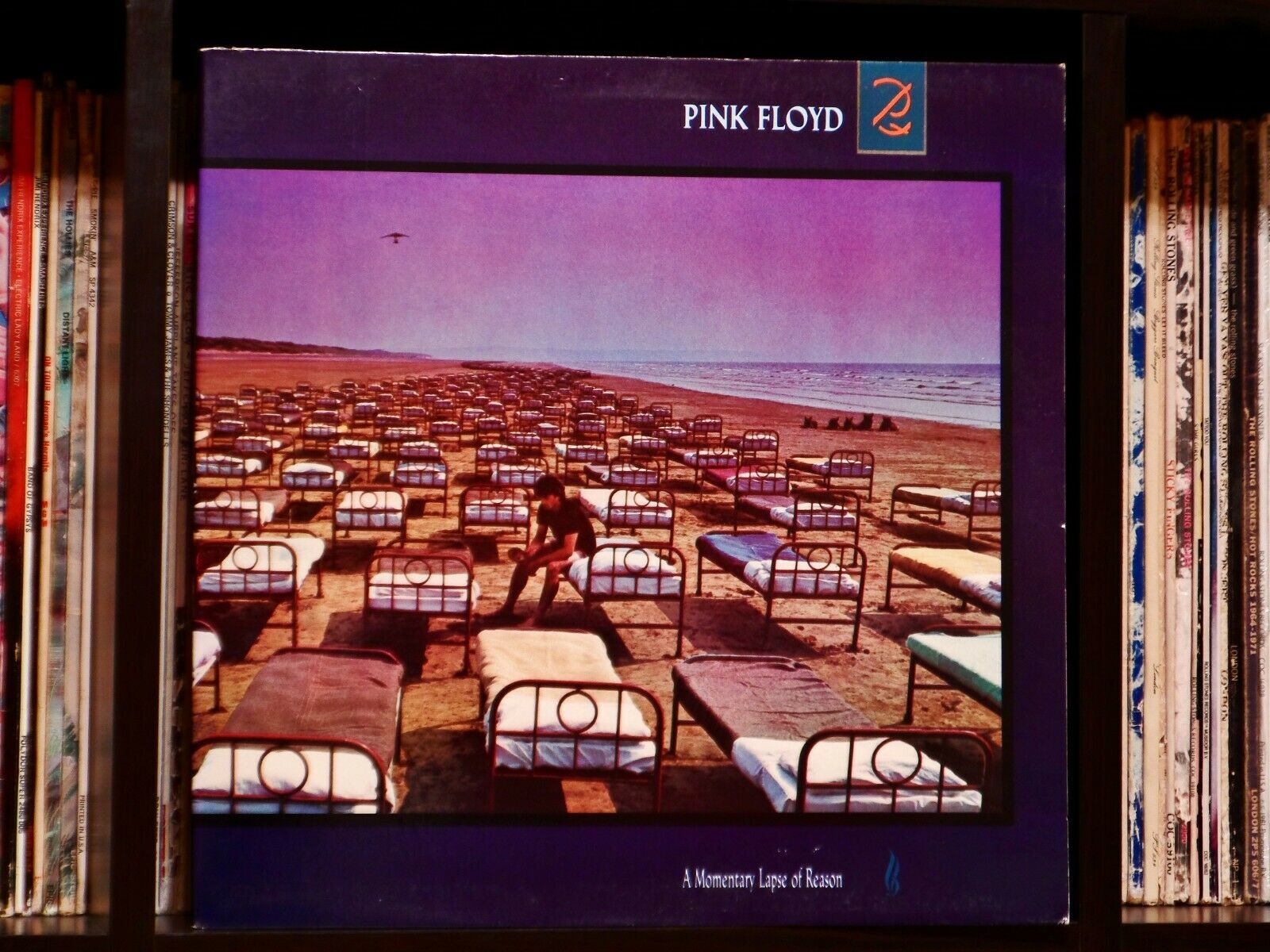
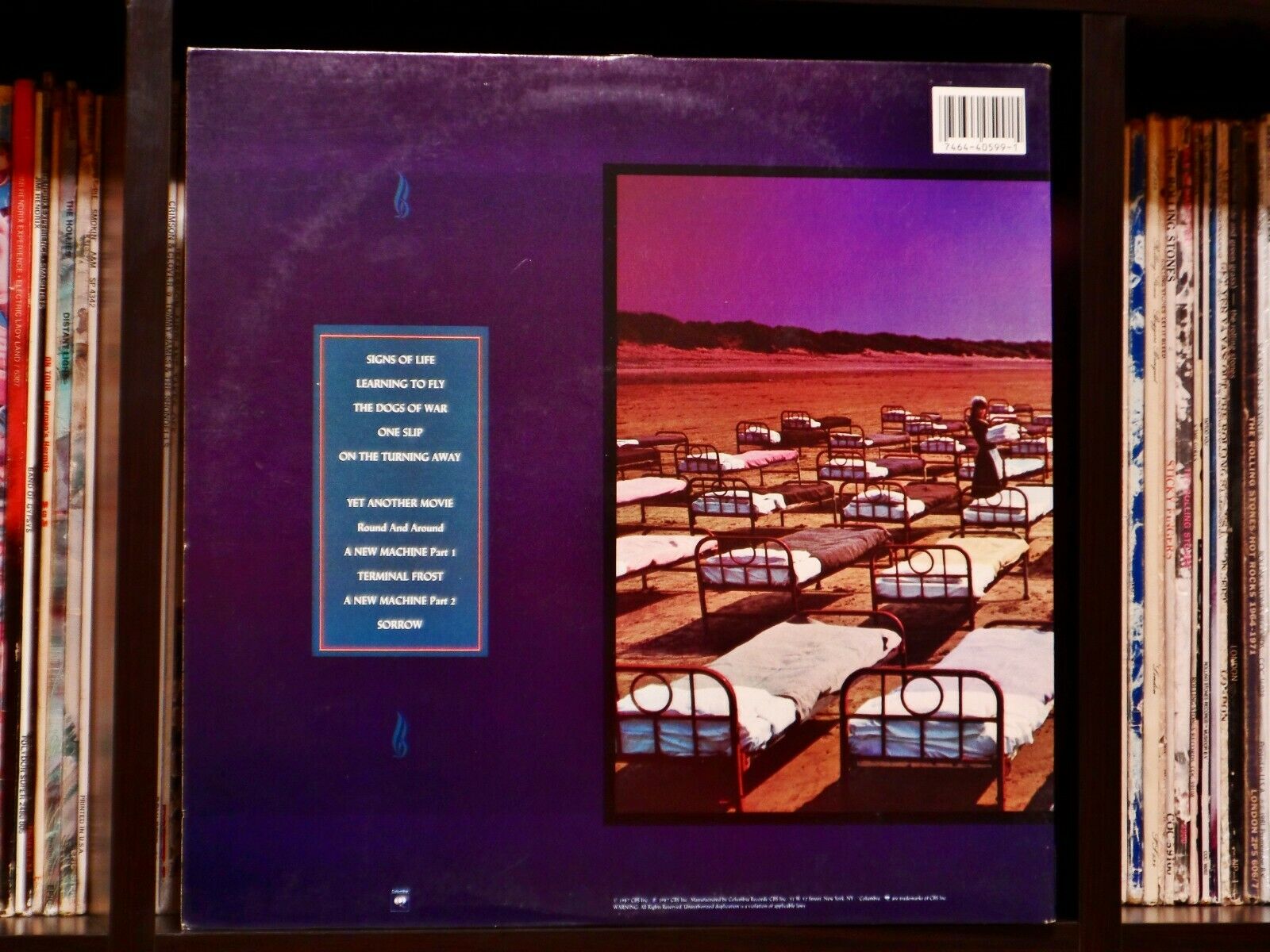
For the first time since 1977's Animals, designer Storm Thorgerson was employed to work on a Pink Floyd studio album cover. His finished design was a long river of hospital beds arranged on a beach, inspired by a phrase from "Yet Another Movie" and Gilmour's vague hint of a design that included a bed in a Mediterranean house, as well as "vestiges of relationships that have evaporated, leaving only echoes".[42] The cover shows hundreds of hospital beds, placed on Saunton Sands in Devon (where some of the scenes for Pink Floyd – The Wall were filmed).[43][44] The beds were arranged by Thorgerson's colleague Colin Elgie.[45] A hang glider in the sky references "Learning to Fly". The photographer, Robert Dowling, won a gold award at the Association of Photographers Awards for the image, which took about two weeks to create.[46] To emphasise that Waters had left the band, the inner gatefold featured a photograph of just Gilmour and Mason shot by David Bailey. Its inclusion marked the first time since 1971's Meddle that a group photo had been used in the artwork of a Pink Floyd album. Wright was represented only by name, on the credits.
Release and reception
Professional ratings Review scores Source Rating AllMusic [49] The Daily Telegraph [50] Encyclopedia of Popular Music [51] MusicHound 2/5[52] Robert Christgau C[53] The Rolling Stone Album Guide [54]A Momentary Lapse of Reason was released in the UK and US on 7 September 1987.[nb 1] It went straight to number three in both countries, held from the top spot in the US by Michael Jackson's Bad and Whitesnake's self-titled album.[55] It spent 34 weeks on the UK Albums Chart.[56] It was certified silver and gold in the UK on 1 October 1987, and gold and platinum in the US on 9 November. It went double platinum on 18 January the following year, triple platinum on 10 March 1992, and quadruple platinum on 16 August 2001,[57] greatly outselling The Final Cut.[58]
Gilmour presented A Momentary Lapse as a return to an older Pink Floyd sound, citing his belief that under Waters' tenure, lyrics had become more important than music. He said that their albums The Dark Side of the Moon and Wish You Were Here were successful "not just because of Roger's contributions, but also because there was a better balance between the music and the lyrics [than on later albums]".[59] Waters said of the album: "I think it's very facile, but a quite clever forgery ... The songs are poor in general; the lyrics I can't quite believe. Gilmour's lyrics are very third-rate."[60] Wright later said Waters' criticisms were "fair".[55]
In Q, Phil Sutcliffe wrote that it "does sound like a Pink Floyd album" and highlighted the two-part "A New Machine" as "a chillingly beautiful vocal exploration" and a "brilliant stroke of imagination". He concluded: "A Momentary Lapse is Gilmour's album to much the same degree that the previous four under Floyd's name were dominated by Waters … Clearly it wasn't only business sense and repressed ego but repressed talent which drove the guitarist to insist on continuing under the band brand-name."[61] Recognising the return to a more music-oriented approach, Sounds said the album was "back over the wall to where diamonds are crazy, moons have dark sides, and mothers have atom hearts".[62]
Conversely, Greg Quill of the Toronto Star wrote: "Something's missing here. This is, for all its lumbering weight, not a record that challenges and provokes as Pink Floyd should. A Momentary Lapse of Reason, sorry to say, is mundane, predictable."[63] Village Voice critic Robert Christgau wrote: "You'd hardly know the group's conceptmaster was gone – except that they put out noticeably fewer ideas."[53] In 2016, AllMusic critic William Ruhlmann described it as a "Gilmour solo album in all but name".[49]
In 2016, Nick Shilton chose A Momentary Lapse of Reason as one of the "Top 10 Essential 80s Prog Albums" for Prog. He wrote: "While it's not a patch on the Floyd masterworks of the 70s, it merits inclusion here. The ironically titled 'Signs of Life' is an instrumental prelude for 'Learning to Fly' which showcases Gilmour's guitar, while the pulsating 'The Dogs of War' is considerably darker, and the uplifting 'On the Turning Away' simply sublime."[64]
Tour
A photo-montage of the stage on the Momentary Lapse TourPink Floyd decided to tour for the album before it was complete. Early rehearsals were chaotic; Mason and Wright were out of practice, and, realising he had taken on too much work, Gilmour asked Ezrin to take charge. Matters were complicated when Waters contacted several US promoters and threatened to sue if they used the Pink Floyd name. Gilmour and Mason funded the start-up costs; Mason, separated from his wife, used his Ferrari 250 GTO as collateral. Some promoters were offended by Waters' threat, and several months later 60,000 tickets went on sale in Toronto, selling out within hours.[42][44]
As the new line-up (with Wright) toured throughout North America, Waters' Radio K.A.O.S. tour was sometimes close by. Waters forbade the members of Pink Floyd to attend his concerts,[nb 5] which were generally in smaller venues. Waters also issued a writ for copyright fees for use of the Pink Floyd flying pig; Pink Floyd responded by attaching a huge set of male genitalia to the balloon's underside to distinguish it from Waters' design. By November 1987, had Waters given up, and on 23 December a legal settlement was reached at a meeting on Astoria.[24]
The Momentary Lapse tour beat box office records in every US venue it booked, and was the most successful US tour that year. Tours of Australia, Japan, and Europe followed, before two more tours of the US. Almost every venue was sold out. A live album, Delicate Sound of Thunder, was released on 22 November 1988, followed in June 1989 by a concert video. A few days later, the live album was played in orbit, on board Soyuz TM-7. The tour eventually came to an end by closing the Silver Clef Award Winners Concert, at Knebworth Park on 30 June 1990, after 200 performances, a gross audience of 4.25 million fans, and box office receipts of more than £60 million (not including merchandising).[68]
Track listing
All lead vocals performed by David Gilmour except where noted.
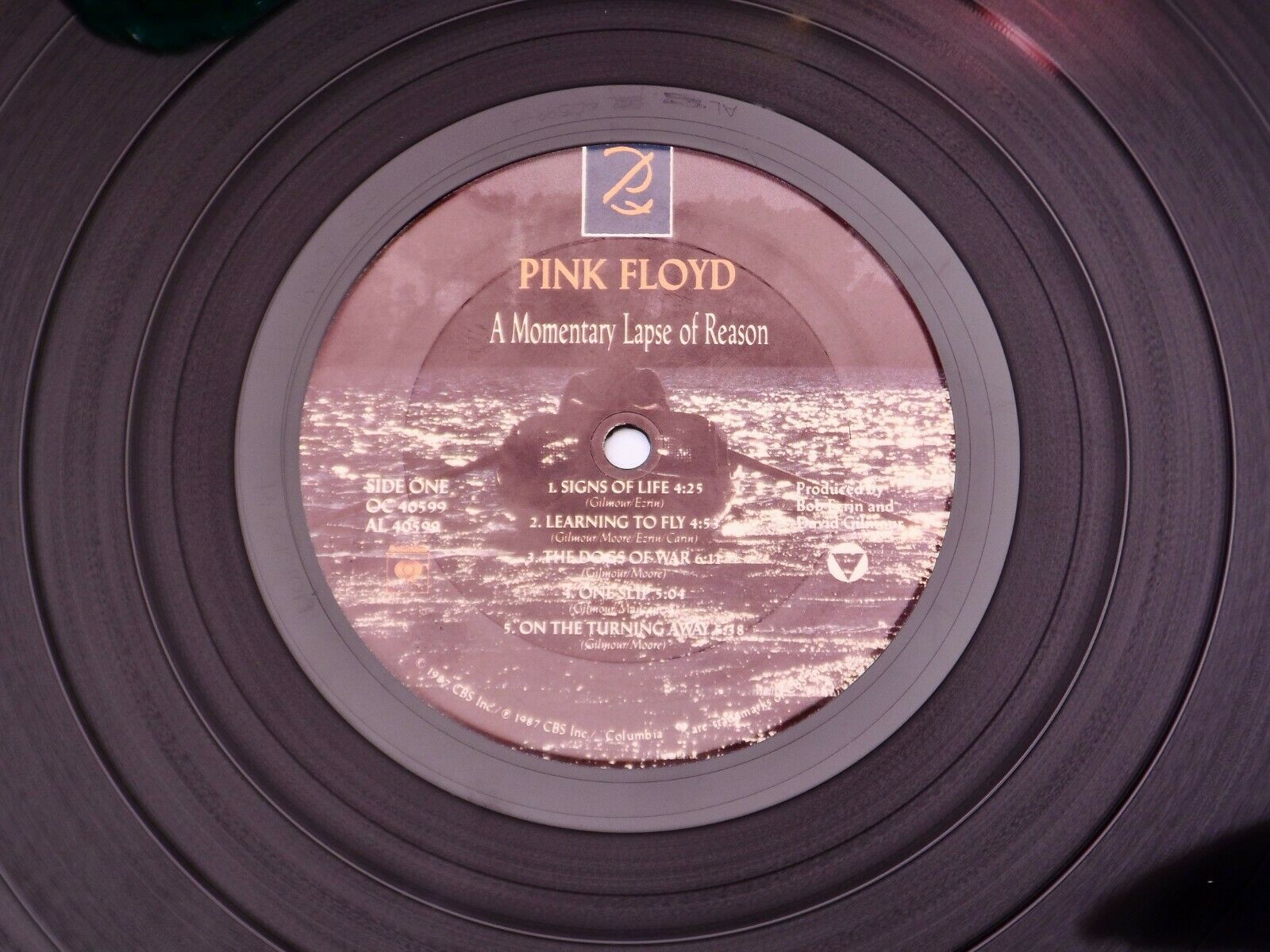
Side one No. Title Writer(s) Length 1. "Signs of Life" (Instrumental, with spoken vocals by Nick Mason) Gilmour, Ezrin 4:24 2. "Learning to Fly" Gilmour, Moore, Ezrin, Carin 4:53 3. "The Dogs of War" Gilmour, Moore 6:05 4. "One Slip" Gilmour, Manzanera 5:10 5. "On the Turning Away" Gilmour, Moore 5:42 Total length: 26:14 Side two No. Title Writer(s) Length 1. "Yet Another Movie" Gilmour, Leonard 6:28 2. "Round and Around" (instrumental) Gilmour 1:02 3. "A New Machine (Part 1)" Gilmour 1:46 4. "Terminal Frost" (instrumental) Gilmour 6:17 5. "A New Machine (Part 2)" Gilmour 0:38 6. "Sorrow" Gilmour 8:46 Total length: 24:55price rating