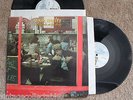
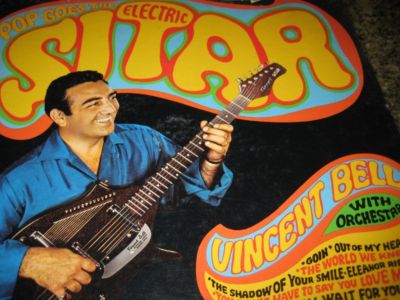
Pop Goes the Electric Sitar: Vincent Bell Groovy Electric Folk Orig Decca Label
$
25


Favourite Auctions
To save auctions to your favourites, please login
If you don't have an account, please register
Description
EBOT Store
Pop Goes the Electric Sitar: Vincent Bell Groovy Electric Folk Orig Decca Label
EACH ADDITIONAL RECORD IS ONLY $1 EXTRA FOR SHIPPING.
Hard to find LP Record, Decca Records DL4938 Mono on original colorband label. Really cool fuzzy electric folk music, definite 60s groove. Cool info on Bell and electric sitars to jacket back.
LP very light visible wear. Jacket art VG, light surface rub at edges. No marks, stickers, seam splits.
Matrix Numbers
In the trail-off of a Capitol record from the 60's - 70's, you are likely to find something like this:
The first component is the prefix. "S" (after 1958) denotes stereo. "T" is the price code (price codes "W", "M", and later "O" were also used on Beatles records.) If the record had inserts or a fold-open cover, two more letters were added. The third letter is the total number of records in the set (A=1, B=2, etc.) The fourth letter is the type of packaging.
The second component is the side. (1, 2, 3, 4).
The third component is the catalog number.
The fourth component tells what set of stampers were used, as follows.
From the 50's D was used to denote 1st press mono records. When a second dub of the master was made, N was used. In the 60's, F and G denote 1st issue mono records. P and T denote 2nd presses.
For stereo records, A and B were used the first issue. W and X were usually used the second time, but sometimes H and J were used, as on the White Album.
The number after the letter may have something to do with the actual stampers. So, B8 might denote the 8th stamper made from the first sub- master.
price rating




![Original Soundtrack - Blues Brothers Soundtrack [180 gm black vinyl]](https://www.popsike.net/php/thumbnail.php?url=https://www.popsike.pics/pix/20190410/254195104479.jpg)