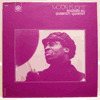
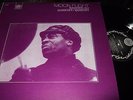
RASHIED ALI QUARTET/QUINTET - MOON FLIGHT LP NM/NM 1976 RARE SURVIVAL SR-109
$
25


Favourite Auctions
To save auctions to your favourites, please login
If you don't have an account, please register
Description
This rare record and cover are in near mint condition. The cover has little or no wear and the record appears unplayed and looks new. 1976. Survival Records SR-109.
The Survival label was started by Rashied Ali on a shoestring budget in the mid-70s. These discs were rare when they were issued. On Moon Flight drummer Rashied Ali assembles a group of musicians who didn't have to struggle to keep up with the polyrhythms he inflicted. Joined by James Vass on alto sax, Marvin Blackman on tenor, Charles Eubanks on piano, and Benny Wilson on bass, this ensemble rages through Ali's "Blood on the Cross," Blackman's "Moon Flight," Vass's "A Light," and fellow drummer Zahir Batin's "Face of Forgotten Thought," while veering into a free jazz landscape while oddly juggling jagged hard bop roots. Acting as a balance to this intensity are tributes to John Coltrane in the form of two beautiful compositions -- Mal Waldron's "Soul Eyes" and Coltrane's "Naima," which Ali had played live with Coltrane, as documented on the Village Vanguard Again sessions on Impulse.
A1 Blood on the Cross A2 Soul Eyes A3 Moon Flight B1 A Light B2 Naima B3 Face of Forgotten ThoughtThe task of following Elvin Jones as drummer with John Coltrane must have been one of the most daunting situations ever entered into by a jazz musician. In the mid-'60s, most jazz listeners would have assumed that Jones was the only drummer alive who possessed the requisite imagination, intensity, and powerful sense of swing necessary to drive Coltrane's passions. As it turned out, even Jones had limitations, and since Coltrane was all about transcending limitations, it seems proper that he would complement Jones' polymetric intractability with the addition of Rashied Ali's skittish, asymmetrical flexibility. The two drummers shared the bandstand briefly, before Jones, reportedly disgusted, left the band. It's not difficult to understand why the pairing proved ill-fated. Jones was an innovator, but he was bound to tradition -- specifically, the tradition of ground-beat swing. He was the last stage in the evolution of the drummer-as-timekeeper; he reiterated swing's primal importance, even as he extended the drummer's role in terms of interaction with the ensemble. For his part, Ali almost completely abandoned a steady pulse, adopting instead a rhythmically irregular, textural, hyperactive approach that propelled the music in a manner at odds with Jones' more literal style. The addition of Ali and the departure of Jones marked Coltrane's last and most extreme step away from the jazz tradition. The removal of a steady beat, and the multitude of implied meters set by Ali and bassist Jimmy Garrison freed Coltrane to an unprecedented extent. Indeed, it was with the addition of Ali to his group that Coltrane's free jazz period truly began.
Ali studied at Philadelphia's Granoff School of Music. He gained early experience with local jazz and R&B bands around Philadelphia. In 1963, he toured Japan with Sonny Rollins before moving to New York, where he became involved in the free jazz scene there. Associations with Pharoah Sanders, Albert Ayler, Bill Dixon, and Sunny Murray preceded his tenure with Coltrane, which began in 1965 and lasted until the latter's death in 1967. For a time, Ali continued playing with pianist Alice Coltrane before going off on his own as a bandleader and musical organizer. In 1972, he helped coordinate the New York Musicians Festival. The next year, he formed his own record label, Survival, and opened his own performance venue, Ali's Alley, a New York City loft space that presented free jazz performances until the summer of 1979. In the '80s and '90s, his presence on the scene was sporadic; he performed on occasion with saxophonist Makanda Ken McIntyre, and recorded with multi-instrumentalist Zusaan Kali Fasteau and tenor saxophonist David Murray. In 1987 he recorded as a member of the group Phalanx, with guitarist James "Blood" Ulmer, tenor saxophonist George Adams, and bassist Sirone. In 1991, he made the critically acclaimed album Touchin' on Trane with bassist William Parker and tenor saxophonist Charles Gayle. The '90s found Ali at the helm of the band Prima Materia (initially co-led with Parker), an ensemble dedicated to interpreting the late works of Coltrane and Albert Ayler.
price rating








![Rashied Ali Quartet/Quintet - Moon Flight [Survival - VERY RARE LP]](https://www.popsike.net/php/thumbnail.php?url=https://www.popsike.pics/pix/20120715/130731334901.jpg)

