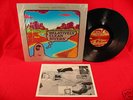
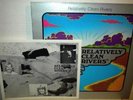
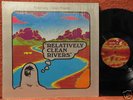
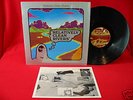
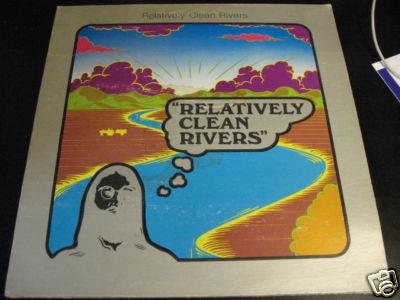
RELATIVELY CLEAN RIVERS LP '76 PSYCH ORIG
$
614


Favourite Auctions
To save auctions to your favourites, please login
If you don't have an account, please register
Description
THE RELATIVELY CLEAN RIVERS LP QUITE POSSIBLY THE GREATEST US PRIVATE PRESS PSYCH ALBUM
OF ALL TIME, AND ABOUT AS SCARCE AS THEY COME. AMAZING EASTERN-TINGED PSYCH FOLK SLASH
RURAL ROCK. THIS IS AN ORIGINAL (NOT THE REISSUE ON RADIOACTIVE) ON PACIFIC (PC 17601) FROM
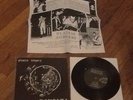
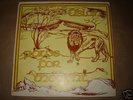
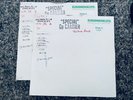
1976. COMES WITH THE ORIGINAL PHOTO INSERT (SEE PICTURE). SLEEVE HAS VERY LIGHT RING- AND
EDGEWEAR, AND A SMALL STAIN ON THE FRONT (SEE PICTURE). VINYL IS SUPER CLEAN, WITH ONLY
A FEW TINY SURFACE SCUFFS. PLAYS PERFECTLY. GREAT COPY OVERALL!
VG+/EX (Sleeve/Vinyl)
For LPs: $4 & $1 for each additional in the US (media) and $8 for Canada. $14 & $4 for each additional internationally.
WE DON'T SHIP TO ITALY OR RUSSIA ANY LONGER. TOO MANY LOST PACKAGES.
We are not responsible for lost or damaged packages so please get insurance if you're concerned about this,
especially if you live in Mexico, South America or Eastern Europe.
New York state residents pay applicable sales tax.
MINT VINYL: This should be very simple to define. A mint record should look perfect, as described earlier. Any defect from the factory pressing, such as bubbles or pits in the vinyl are not acceptable! Even if they do not cause any problem when played. It should, as we said, be a perfect pressing. Records often were packaged by hand and the simple placing of the record into a paper sleeve can caused minor scuffs. Probably very insignificant, but they are flaws as never the less. For this reason, it is impossible to call a sealed record mint, thus any sealed record that is sold, should be sold only with the guarantee that it is assumed to be un-played. Sealed records have sold for more than the high end of price guides. If you are selling sealed records, be advised that many collectors shy away from them. A sight unseen record is hard to sell. A sealed record is even harder to sell.
-----------------------------------------------------------
NEAR MINT or NM: Sometimes dealers use M- (Mint Minus)grade.
You may need to ask the dealer if he/she uses the M- grade the same way as NM. They should mean the same thing however many people have had used several confusing grades all based around the Mint status. We define NM and or M- as being almost mint. This grade should be, for the most part, the most widely used grade for records that appear virtually flawless. Virtually flawless records are not perfect. A very minor scuff and very little else can appear on the vinyl. This will most likely have occurred during packaging, or removing the record from the inner sleeve but had been handled with extreme care. It should play without any noise over the flaw. The flaw should be very hard to see. If a scuff covers more than a few tracks yet can be seen, it will not be NM, however it may come very close. Use strong judgment when evaluating the vinyls condition.
NEAR MINT COVERS: The cover should look as close to perfect with only minor signs of wear and or age. Minor impressions to the cover (due to the outer edge of the vinyl resting inside) may be acceptable, however the artwork should be as close to perfect as can be.
--------------------------------------------------------------
EXCELLENT or EX or VG++: This is truly NOT Goldmine defined grade, however it is becoming more and more mainstream among collectors and sellers. It is also a very conservative grade for those who don't want to grade NM, for fear they may over grade the record and cover. In which case it is very acceptable yet should not command the highest price based on NM value. Only NM records or better are considered collectable and WILL command top dollar. Anything less, the prices drop dramatically. However many very rare (collectable) items can command very close to NM value, simply because NM copies may not even exist. This will be explained under a different topic...
FAQ: How to value your collection based on grade (future updates forthcoming)
-----------------------------------------------------------------------------------------------
EX VINYL: An excellent (EX or VG++) condition for vinyl will allow minor scuffs which are visible but only slightly. There may be more than a few, so be careful not call a record that has wear to more than 15% of the surface. The wear should be minimal and of course should play mint! Any scratches that can be felt with your fingernail can NOT be called scuffs. Scuffs lay on top of the grooves. If any break in the grooves are felt, they ARE scratches. And most often, they will be heard when played (soft clicks or even loud pops). Once again, no scratches can make this grade!
-----------------------------------------------------------------------------------------------
EX COVER: Artwork should still be as close to perfect as can be. Some impression to the cover (minor outer ring wear) but no ink wear! Some slight creases to the corners, but not wrinkled and obtrusive to the eye. The corners can show white (where the artwork pasted slick was) meaning, slight wear. No seam splits or writing on the cover or taped repairs can make this grade. If you don't think a cover is NM than call it EX or less. There will be obvious reactions to the EX grade. But if you use a EX grade and price a bit lower, your risk of over grade will be reduced dramatically. You will also make more people happy, rather than trying to call it NM.
----------------------------------------------------------------------------------------------
VERY GOOD PLUS or VG+: What does this mean? Some people will call a less than NM record VG+ and skip the EX grade. Goldmine defines it as Excellent (EX), yet commands only 50% of the value (for most records). It can easily be defined as 2 ways. VG+ should be the next grade below a NM value when grading 45 singles. EX can be used for EP's. 45 singles have only 2 songs and EP's (7" by the way) can have anywhere from 3, 4, 6 and 8 (rarely found) songs on the record. With 45 singles one side may be NM and the other side may not. If the flip side is not NM but still plays well (or great, no noise), VG+ is a conservative grade. Very few 45's should be called EX unless they are of rarities. Use careful judgment when buying and selling them with this grade!
-----------------------------------------------------------------------------------------------
VG+ VINYL: Now for LP's (the big ones <G>). VG+ will show wear, surface scuffs,(or spiral scuffs that came from turn table platters or jukeboxes for 45 singles) and some very light scratches. Surface scuffs are caused from blunt (not sharp) objects. Often the minor scuffs are caused from inner sleeves. The vinyl should still have a great luster, but the flaws will be noticeable to the naked eye. Sometimes holding the record up to a very bright light, you will see many tiny lines across the surface. If the flaws don't cause any surface noise, the vinyl can make the VG+ grade. Most (but not all) VG+ records should still play like a NM record. But because the vinyl has more than 15% (yet less than 30%) wear to the surface, it can make this grade. Remember, the record still should look as though it was handled with extreme care. Sometimes people find records that have no scuffs that are visible, yet a careless needle scratch causes a break in the grooves. Play the record. If there is any obtrusive clicks or pops, which cause the the song to be less than enjoyable, it may not even be VG+! Scratches are not acceptable to a serious collector in any way. If you call a record 95% NM but note the record as having 1 track with a bad scratch, many will only consider it as VG (explained next). You should seldom call a record "A Strong VG, plays mostly VG+". It does not explain the overall condition well enough. Use this very cautiously when grading.
--------------------------------------------------------------------------------------------------
VG+ COVERS: Now that we defined the EX grade, a few extra flaws will make this grade.
A virtually clean cover, but may have small writing on it. (Magic marker in big letters will not cut it. They are an eye sore, so be weary of over grading). The artwork should look clean with slightly more aging. The back of the cover usually gives away the age of the cover. Flat white paper will be somewhat yellow yet no stains or mildew from water damage. Some minor wear to the seams or spine, but no tears or holes popping through. The corners will be slightly dog eared yet no crackly bends, defacing the artwork. In essence, a VG+ cover should have no more than 3 flaws mentioned. If all apply, it is less than VG+. (see next grade below)
------------------------------------------------------------------------------------------------
VERY GOOD or VG: The Very Good Grade does not mean Very good at all. At least not in the visual sense. A Very Good (VG) record will appear well played but still have some luster. The vinyl may be faded, slightly grayish, yet appears to have been handled as carefully as it could have been helped. Records that get continuous playing time will start to deteriorate. More and more surface scuffs and scratches, and audible sound defects WILL be heard. They should not overpower the dynamics of the music. With VG records, the surface noise will be minor crackle or a slight hiss, but should only be heard in between tracks or in low musical passages.
------------------------------------------------------------------
VG COVERS: VG covers will look worn, used. There may be some seam splitting (but not completely separated!). There will be some ring wear, where the ink has begun to wear off. Giving the cover a look of snow falling. If the artwork looks snowy all over, it is less than VG condition. There may be some writing on the cover (still not LARGE letters in Magic Marker).
It will look aged, and more yellowish due to contaminations in the air (sometimes looking like cigarette smoke). Still it should be decent. If damaged beyond any formable beauty, it will not make this grade. VG should at least still have some attractive life to it, and not have taped seams or water damage to it. If you decide to tape repair a cover, to prevent further damage, use clear scotch tape and place it on so that it is not obtrusive to the eye. If only a small split, only tape the split. Don't run tape across the entire spine or seams. Too much tape means too little interest. Use as little as possible. If the split is minor, it is best to just leave it alone. Note the flaw and go from there with the grade.