Rolling Stones "Some Girls" CUN 39108 A5/B4 censored inner 1978 Demo copy
£
25
$
33

Favourite Auctions
To save auctions to your favourites, please login
If you don't have an account, please register
Description
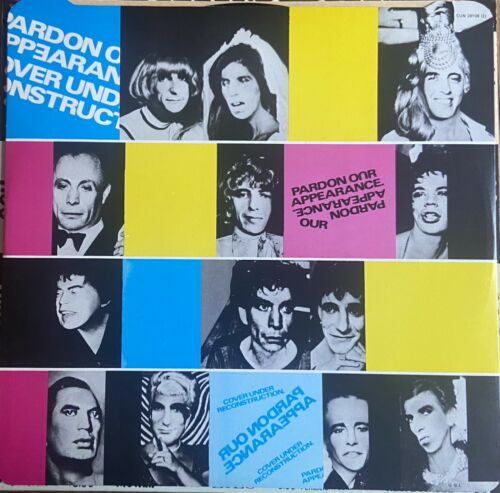
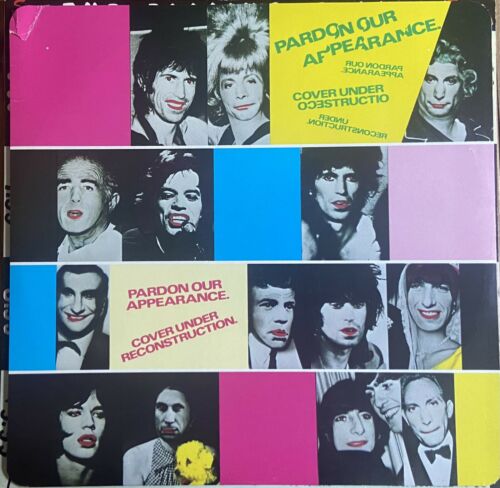
The Rolling Stones "Some Girls" Rolling Stones Records CUN 39108 Vinyl, LP, housed in a "Cover Under Reconstruction" Inner Sleeve and released in 1978.
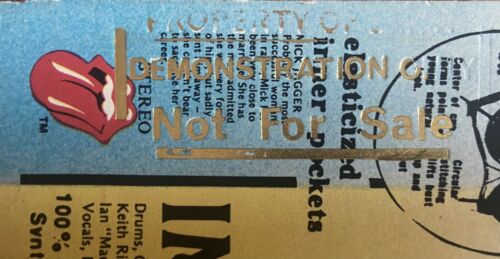
The vinyl appears to have been lightly played and is in great shape. It played through beautifully on my elderly stereo - no hop, stick or jump. It is housed in a "Pardon Our Appearance, Cover Under Reconstruction" inner sleeve, which has a small tear at the top corner (see photo), but which is otherwise in good condition. The sleeve, which is stamped "Property of ???? Demonstration Only. Not For Sale", shows minimal signs of wear and is also in great shape - no rips or writing. The spine is intact and legible. Matrix / Runout Side 1 : CUN 39108 A-5U G O R STERLING TJ CUN 39108 5 A Matrix / Runout Side 2 : CUN 39108 B-4U G P H STERLING CUN 39108 4 B
"Some Girls" is the Rolling Stones' 14th British and 16th American studio album, released on 9 June 1978 on Rolling Stones Records. By 1976, the Rolling Stones' popularity was in decline as the music industry was dominated by disco and newer rock bands. In addition, the punk rock movement was an emerging cultural force in the UK. Due to legal troubles surrounding guitarist Keith Richards, Mick Jagger is generally regarded as the principal creative force behind "Some Girls", with him taking influence by dance music, most notably disco, during the sessions. With recording taking place at Pathé Marconi Studios in Paris, the sessions were highly productive, resulting in numerous outtakes that would appear on subsequent albums.
It was the first album to feature guitarist Ronnie Wood as a full-time member; Wood had contributed to some tracks on the band's prior two albums, "It's Only Rock 'n Roll" (1974) and "Black and Blue" (1976). With a stable line-up in place for the first time in several years, the album marked a return to basics for the Rolling Stones and did not feature many guest musicians, unlike many of their prior albums. Notable contributions to the album, however, come from blues harmonica player Sugar Blue on "Miss You" and "Some Girls".
Despite controversy surrounding its cover artwork and lyrical content, "Some Girls" was a commercial success, peaking at No. 2 on the UK Albums Chart and No. 1 on the US Billboard 200. It became the band's top-selling album in the US, having been certified by the RIAA for selling six million copies sold by 2000. Several hit singles emerged from the album which would become rock radio staples for decades, including "Beast of Burden" (US No. 8), "Shattered" (US No. 31), "Respectable" (UK No. 23), highlighted by "Miss You", which reached No. 1 in the US and No. 3 in the UK.
Rebounding from the relative critical disappointment of "Black and Blue", "Some Girls" was a major critical success, with many reviewers calling it a classic return to form for the band and their best album since "Exile on Main St." (1972). It became the only Rolling Stones album to be nominated for a Grammy Award in the Album of the Year category. Retrospectively, it has continued to receive acclaim, with many commending the band's ability to blend contemporary music trends with their older signature style. Considered one of the band's finest records, Rolling Stone has included "Some Girls" in their lists of the 500 Greatest Albums of All Time.
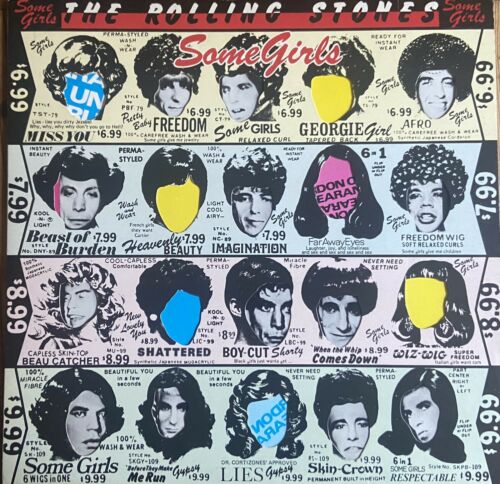
The album cover for "Some Girls" was conceived and designed by Peter Corriston, who would design the next three album covers, with illustrations by Hubert Kretzschmar. An elaborate die-cut design, with the colours on the sleeves varying in different markets, it featured the Rolling Stones' faces alongside those of select female celebrities inserted into a copy of an old Valmor Products Corporation advertisement. The cover design was challenged legally when Lucille Ball, Farrah Fawcett, Liza Minnelli (representing her mother Judy Garland), Raquel Welch, and the estate of Marilyn Monroe threatened to sue for the use of their likenesses without permission. Similarly, Valmor did take legal action and were given a monetary award for the use of their design.
The album was quickly re-issued with a redesigned cover that removed all the celebrities, whether they had complained or not. The celebrity images were replaced with black and punk style garish colours with the phrase Pardon our appearance – cover under re-construction. Jagger later apologised to Minnelli when he encountered her during a party at the famous discothèque Studio 54. The only celebrity whose face was not removed was ex-Beatle George Harrison. As with the original design, the colour schemes on the redesigned sleeves varied in different markets.
price rating