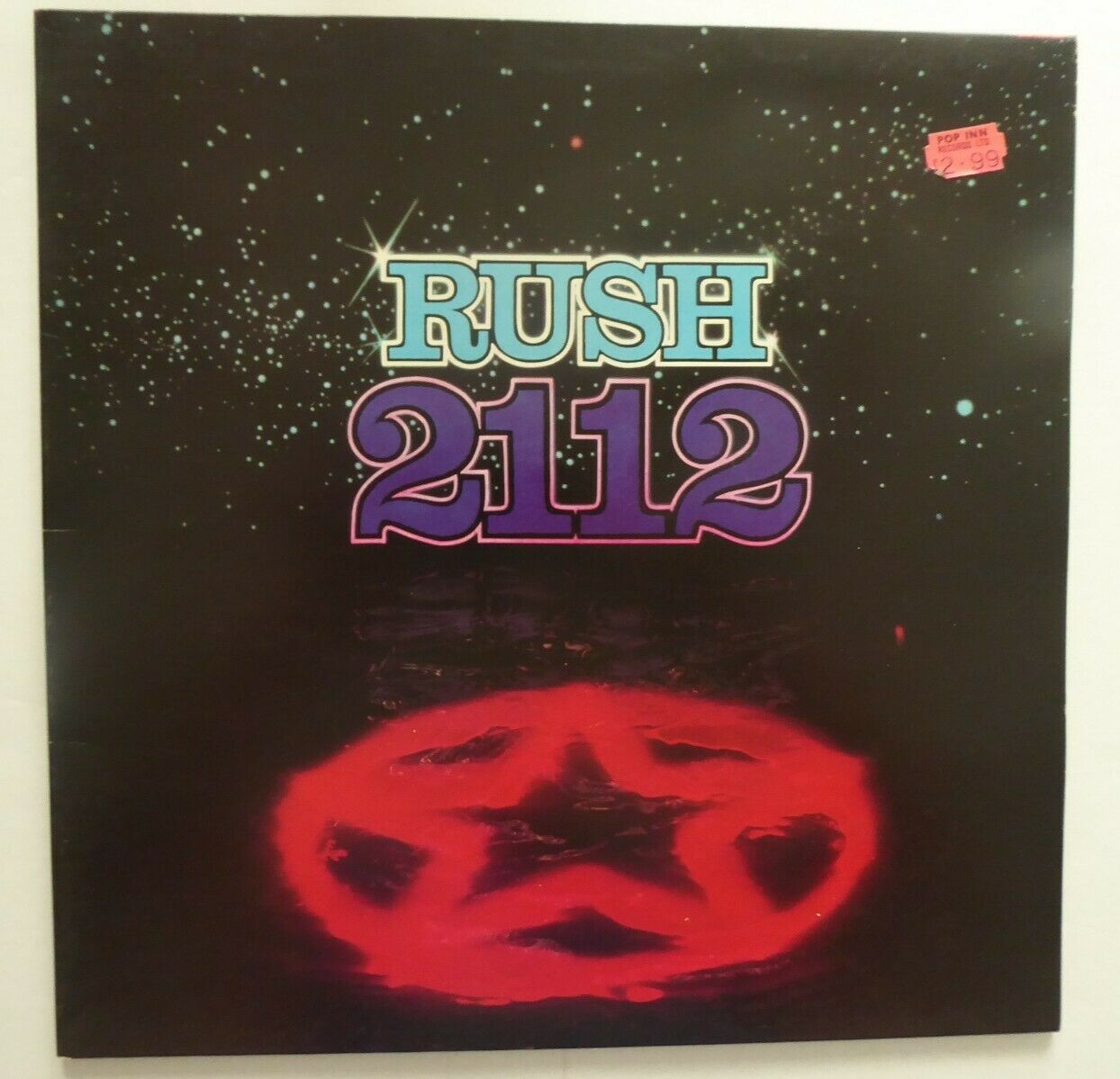
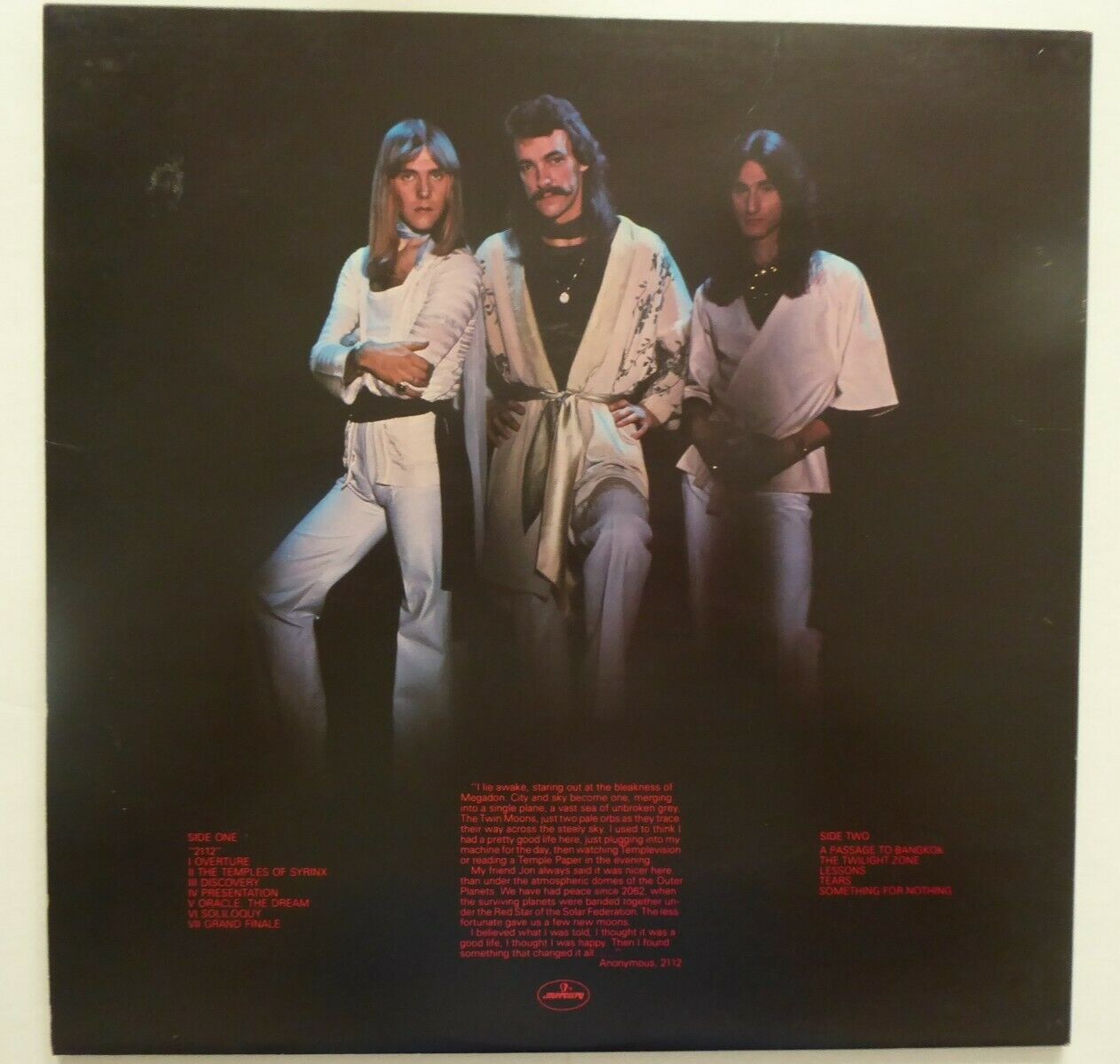
Rush "2112" original 1976 vinyl LP Mercury 9100 039 Gatefold sleeve
£
15
$
20
Favourite Auctions
To save auctions to your favourites, please login
If you don't have an account, please register
Description
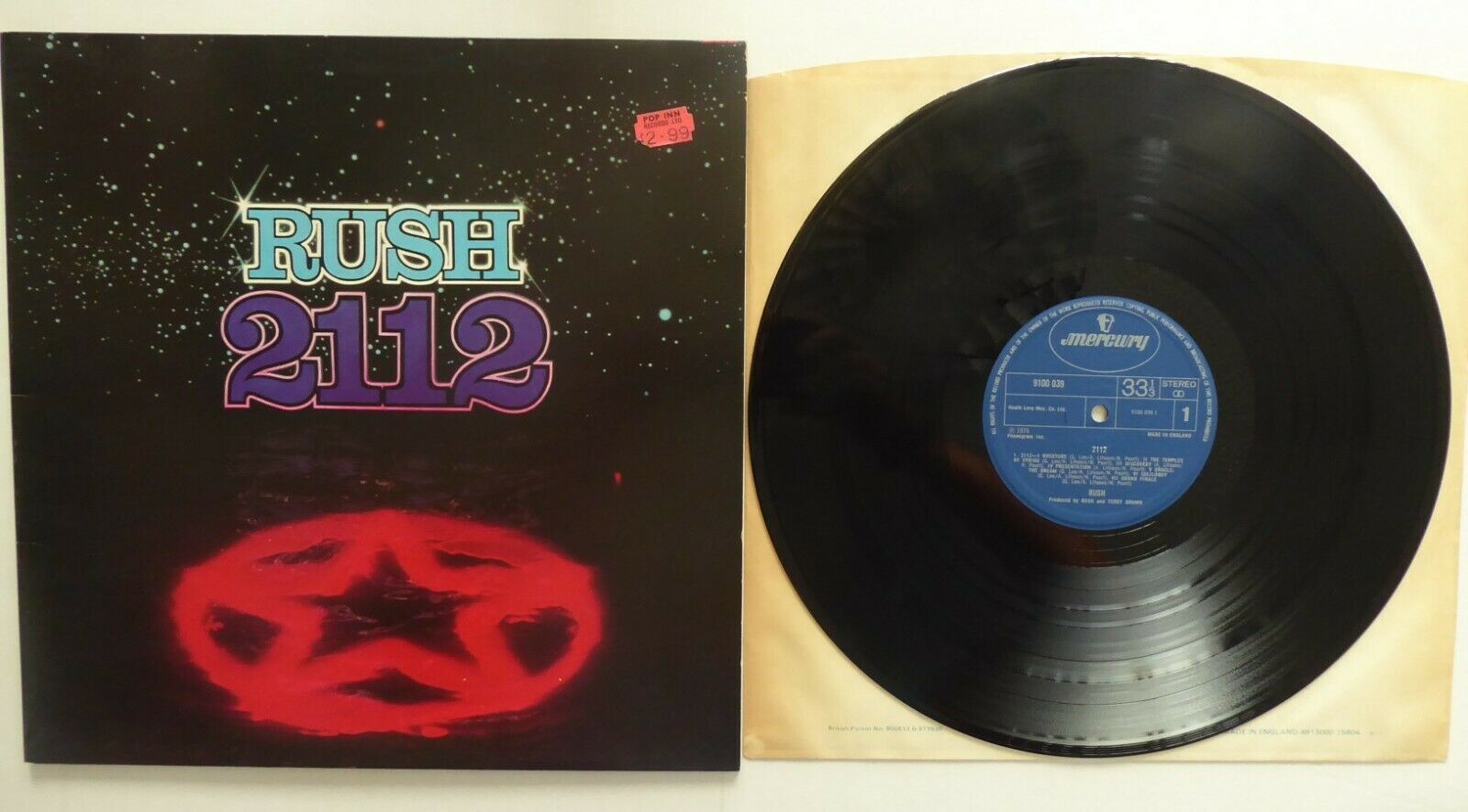
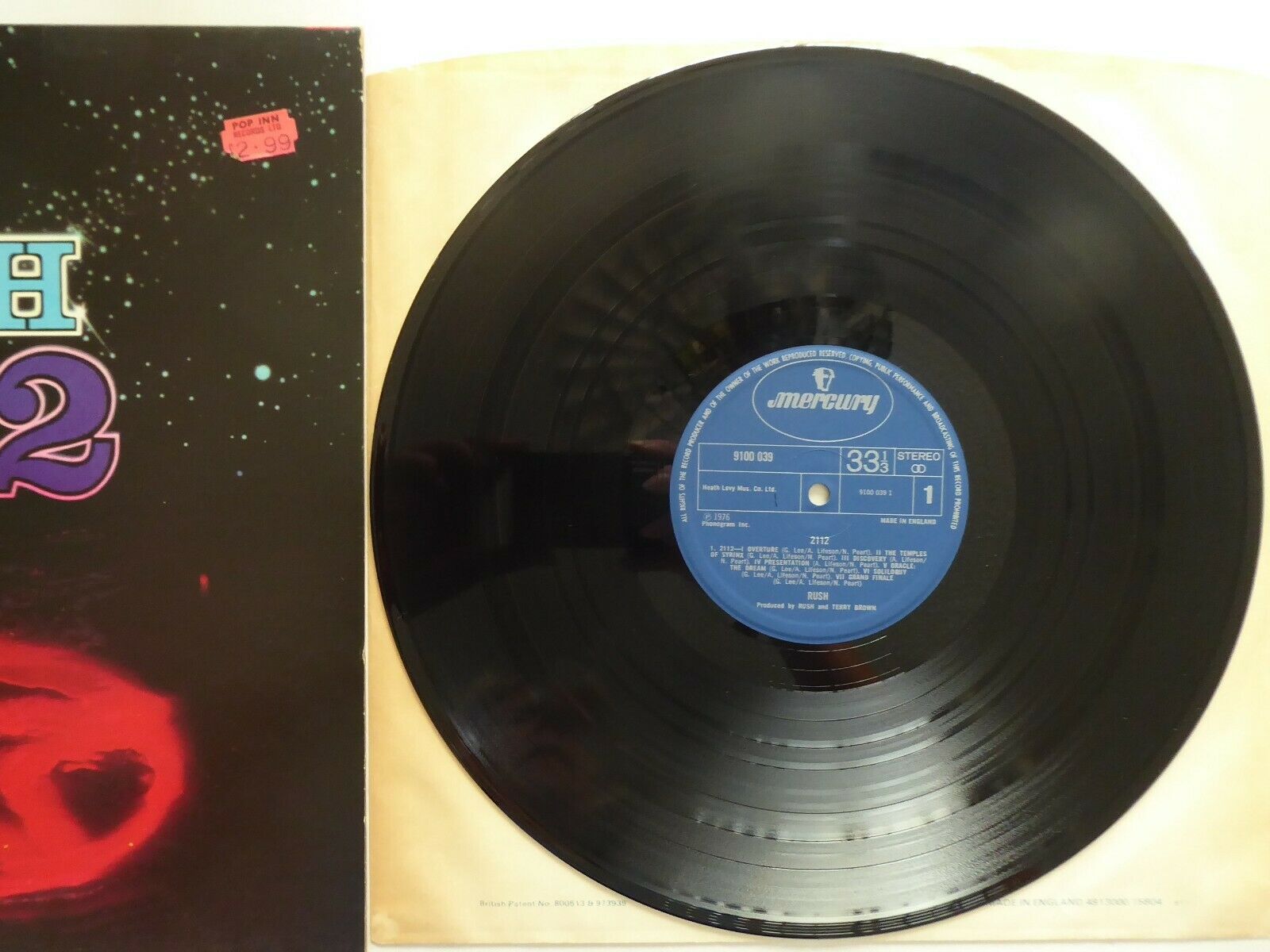
Rush "2112" original 1976 vinyl LP Mercury 9100 039 in Gatefold sleeve. Condition is Used. Dispatched with Royal Mail 2nd Class. Both the sleeve and the vinyl are in excellent condition.
2112 (pronounced "twenty-one twelve") is the fourth studio album by Canadian rock band Rush, released on April 1, 1976, by Anthem Records. After finishing touring for its previous album, Caress of Steel, in early 1976, the band was in financial hardship due to the album's disappointing sales, unfavourable critical reception, and a decline in attendance at its shows. The band's international label, Mercury Records, considered dropping Rush but granted the band one more album following negotiations with manager Ray Danniels. 2112 was recorded in February 1976 in Toronto with longtime producer Terry Brown. Its centrepiece is a 20-minute title track, a futuristic science-fiction song that takes up the entire first side of the album. There are five individual tracks on side two.
2112 was released to favourable reviews from music critics and quickly outsold the band's previous albums. It peaked at No. 5 on the Canadian Albums Chart and No. 61 on the U.S. Billboard Top LPs & Tape and was the band's commercial breakthrough there. Rush supported the album with a tour of the United States, Canada, and for the first time, Europe, from February 1976 to June 1977. 2112 remains the band's second-highest-selling album with more than 3 million copies sold in the United States. It is listed in 1001 Albums You Must Hear Before You Die, and ranked second on Rolling Stone's reader's poll, Your Favourite Prog Rock Albums of All Time.
In January 1976, Rush ended its 1975–1976 tour to support the band's third studio album, Caress of Steel. The band members had enjoyed writing and recording the album, but Lifeson recalled the group in a state of confusion after the tour, sensing the disappointing reaction from crowds after playing songs from it on stage. The progressive rock-themed album with lengthy, story-based songs, complex song structures, and hard-to-grasp lyrics, made it difficult to receive radio airplay and promote effectively. Lee said the band could not understand the underwhelming response, and later dubbed the tour the "Down the Tubes Tour" as the band members struggled to meet their $125-a-week salary while crowds declined. Lee added, "That really shakes your confidence. We were so confused and disheartened". In 1980, Lifeson picked this moment of the band's history as the only time he felt close to giving up.
To make matters worse, Caress of Steel raised concerns for management at Mercury Records, the band's international label, which considered dropping Rush. Band manager Ray Danniels then flew to the label's head offices in Chicago to try to regain confidence in the band and spoke highly of the band's new ideas for a new album without hearing any of it. Mercury complied and gave the green light to one more album. Despite pressure from the label and management to make a more commercial record, the band ignored the advice and proceeded with material as they saw fit. Lifeson questioned the musical direction the band was taking at such a crucial time in the band's history. "I remember having these conversations about, 'What are we going to do? Are we going to try to make another mini-Led Zeppelin record or are we going to do what we are going to do and continue forward and whatever happens, happens?' That's what we honestly decided to do. We fully intended to go down in flames but we were prepared to do that."
Songs
Side oneSide one of the album is occupied by the 20-minute futuristic science fiction song "2112". The seven-part track is based on a story by Peart, the band's primary lyricist, who credits "the genius of Ayn Rand" in the album's liner notes. Rand, a Russian-born, Jewish-American novelist, and inventor of the philosophy of Objectivism, wrote the 1937 dystopian fictional novella Anthem, the plot of which bears several similarities to 2112, and all members read the book.[15] Peart added the credit to avoid any legal action. The credit caused the band significant negative publicity, with many labelling them right-wing extremists. In the British paper NME, Barry Miles made allusions to Nazism, which particularly offended Lee, whose parents were Holocaust survivors. The first and last sections, "Overture" and "Grand Finale", respectively, are instrumental and borrows a short sequence from 1812 Overture by Pyotr Tchaikovsky. The "Overture" features an introduction from graphic designer and musician Hugh Syme performed on an ARP Odyssey synthesizer with an Echoplex Delay pedal. Music writer and professor Rob Bowman calculated that in the entire piece, 2:34 of the song contains improvised guitar solos. "Overture" contains the lyric "And the meek shall inherit the earth", a reference to the Biblical passages Book of Psalms 37:11 and Matthew 5:5.
"2112" tells a story set in the city of Megadon in the year 2112, "where individualism and creativity are outlawed with the population controlled by a cabal of malevolent Priests who reside in the Temples of Syrinx". A galaxy-wide war resulted in the planets forcefully joining the Solar Federation (symbolized by the "Red Star"). By 2112, the world is controlled by the priests who take orders from giant banks of computers inside the temple. Music is unknown in the world absent of creativity and individuality, but in "Discovery", a nameless man finds a beaten guitar inside a cave and rediscovers the lost art of music. In "Presentation", the man takes the guitar to the priests at the temple, who say, "Yes, we know, it's nothing new; it's just a waste of time", and then proceed angrily to destroy it and banish him. Next, in "Oracle: The Dream", the man dreams of a new planet, established at the same time as the Solar Federation, where creative people live. He awakens, depressed that music is part of such a civilization and that he can never be part of it, and commits suicide, in "Soliloquy", originally titled "Soliloquy of the Soul". Another planetary war begins in "Grand Finale", originally named "Denouement", resulting in the ambiguous spoken ending: "Attention all planets of the Solar Federation: We have assumed control". Peart described the ending as a "double surprise ... a real Hitchcock killer".
Side twoSide two contains five individual songs that display the band's more traditional hard-rock sound and Lee's higher-pitched vocals featured on their previous albums. Lifeson said having a title track more serious, the rest of the album was to be "just a little lighter and a little more fun". Bowman wrote the variation of styles on side two offers "a very different listening experience" in comparison. Though the tracks are not specifically about the "2112" concept, they do contain ideas that can relate to its overall theme. Lee wrote the lyrics for "Tears" and Lifeson the lyrics to "Lessons", while Peart wrote the rest.
"A Passage to Bangkok" is a song about marijuana; Lee said it is "a travelogue for all the places in the world that grow the best weed". The track mentions a number of cities and countries, including Bogotá, Acapulco, Morocco, Bangkok and Kathmandu, Nepal. Rush started to write "The Twilight Zone" at a time when they needed one more song to fill both sides of the vinyl record. The band were big fans of the television series The Twilight Zone and based the track on the stories written for it from its host, Rod Serling. "Lessons" is one of the few Rush songs written solely by Lifeson. For him, the process of songwriting is more seldom and spontaneous in comparison to dedicating time to write, rehearse and scrap parts that do not work. "Tears" is a romantic ballad and is the first Rush track to incorporate the Mellotron, which Syme performs. "Something for Nothing" is a song about freewill and decision making. Regarding this song, Peart states: "All those paeans to American restlessness and the American road carried a tinge of wistfulness, an acknowledgement of the hardships of the vagrant life, the notion that wanderlust could be involuntary, exile as much as freedom, and indeed, the understanding that freedom wasn't free. In the mid-1970s, the band was driving to a show in downtown Los Angeles, at the Shrine Auditorium, and I noticed some graffiti splattered across a wall: 'Freedom isn't free', and I adapted that for a song on 2112."
Artwork
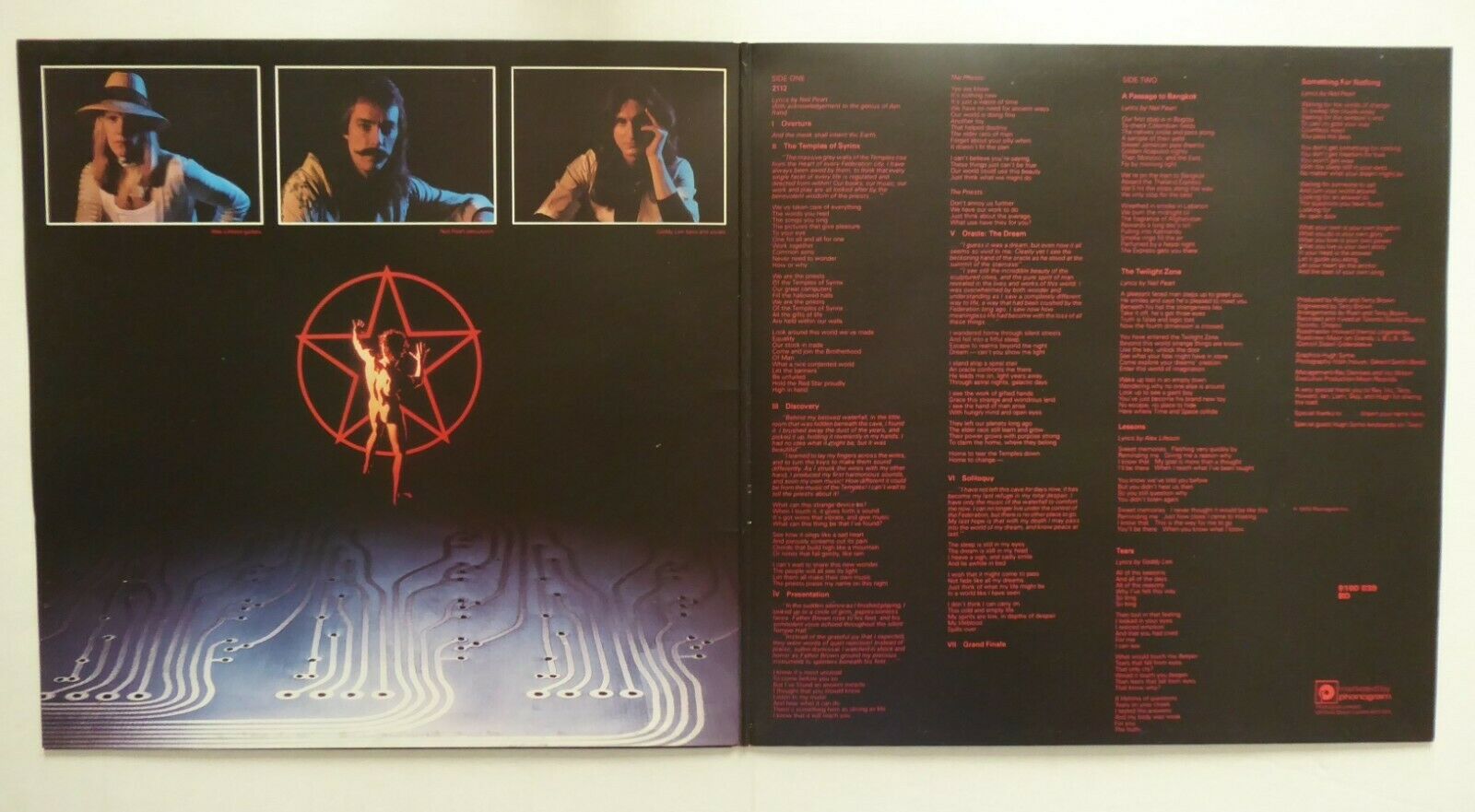
Also known as the 'Man in the Star' logo, the Starman emblem was adopted by Rush fans as a logo since its first appearance in the gatefold of 2112. Peart described the Starman in an interview with Creem magazine:
All [the naked man] means is the abstract man against the masses. The red star symbolises any collectivist mentality.On the album art, the "collectivist mentality" is depicted as the Red Star of the Solar Federation, which, according to the plot, is a galaxy-wide federation that controls all aspects of life during the year 2112. The figure in the emblem is depicted as the "Hero". Hugh Syme, the creator of many of Rush's album covers, commented on the design: "The man is the hero of the story. That he is nude is just a classic tradition ... the pureness of his person and creativity without the trappings of other elements such as clothing. The red star is the evil red star of the Federation, which was one of Peart's symbols. We basically based that cover around the red star and that hero."
The logo also appears on seven other Rush album covers: on the backdrop behind Peart's drumkit in All the World's a Stage, their first live album released in 1976; in one of the pictures that is being moved in Moving Pictures; on Retrospective I; on Archives, a compilation album released in 1978; on their 1981 live album Exit...Stage Left, in the background amongst symbols from all their previous work; on their 2003 compilation The Spirit of Radio: Greatest Hits 1974–1987; and on their 2004 EP Feedback. It is also featured on the Canada Post stamp honouring Rush issued 19 July 2013. It also was featured on the front bass drum heads of Peart's drum kit from 1977 to 1983, and again on the 2004 R30 and 2015 R40 tours.
Personnel
Rush[edit]
- Geddy Lee – vocals, bass guitar
- Alex Lifeson – electric and acoustic guitar, classical guitar
- Neil Peart – drums, percussion
Info courtesy of Wikipaedia
price rating