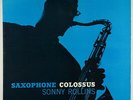
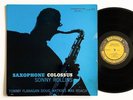
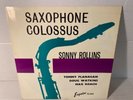
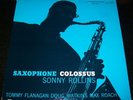
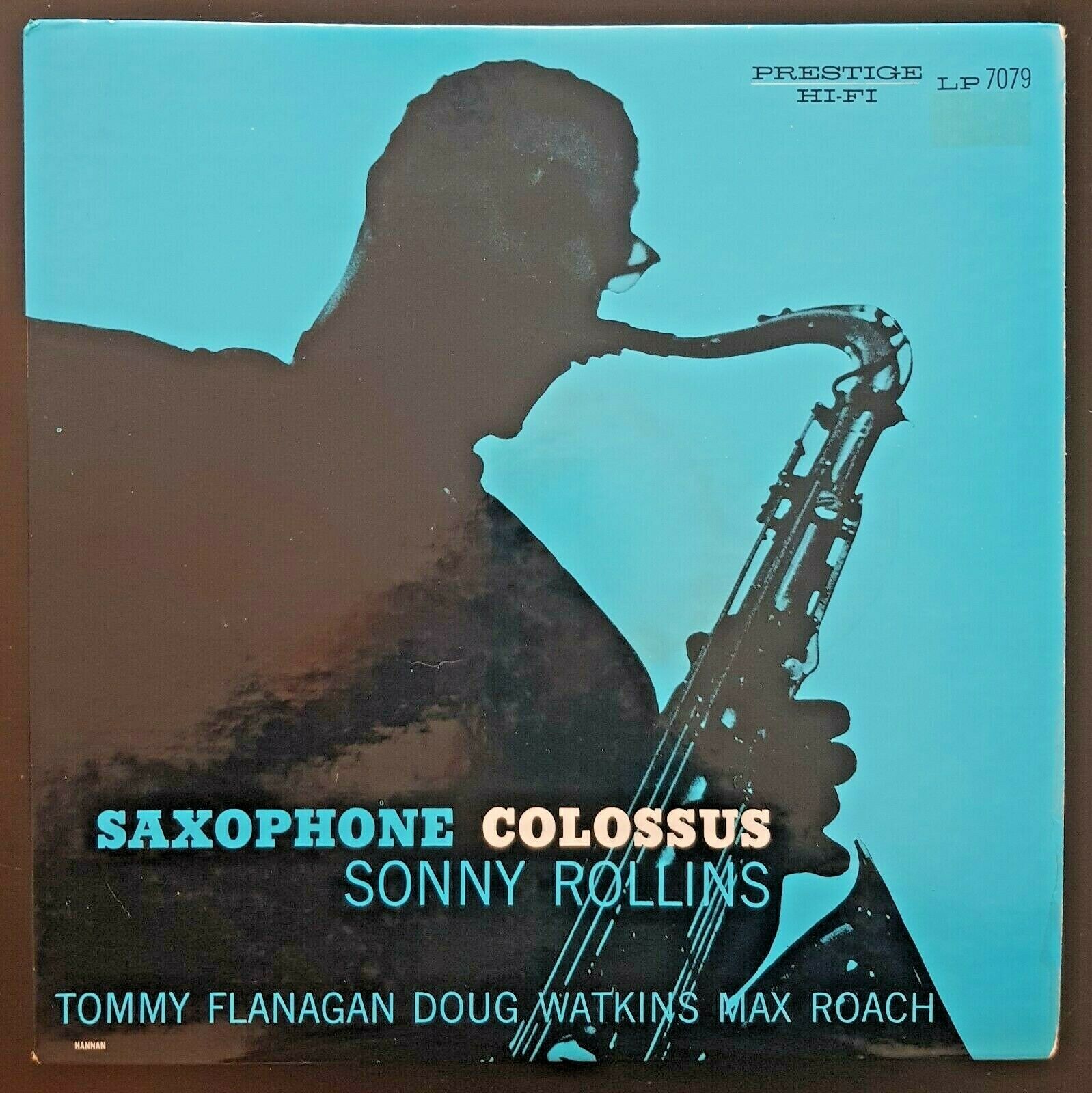
SONNY ROLLINS - SAXOPHONE COLOSSUS LP orig. 1956 Prestige MONO RVG AB 2nd press.
$
431



Favourite Auctions
To save auctions to your favourites, please login
If you don't have an account, please register
Description
"SAXOPHONE COLOSSUS" SONNY ROLLINS
Original 2nd pressing of this absolute masterpiece and holy grail of Bop Jazz by Sonny Rollins at tenor sax, Tommy Flanagan on piano, the killer Max Roach at the drums and Doug Watkings on bass. Originally recorded in Van Gelder studio in 1956.
PRESTIGE LP 7079 HI FI
2nd Bergenfiled address on labels and back sleeve / original Prestige yellow & black labels with deep groove
Deadwax: PRLP 7079-A RVG AB / PRLP 7079-B RVG AB
Record: amazing copy. Vinyl shows paper scuffs and light surface marks but sound is incredible and very clean, between VG++ and EX with just minimal background noises. Clean labels too. Cover: the beatiful front-laminated sleeve is nice and in highly-collectible condition, solid VG++ shape with very clean back and just slight worn corners as usual. Light sticker residue on front.
Enjoy the clip ripped from vinyl HERE
International shippings made by POST NL registered mail worldwide (economic method) or through UPS EXPRESS SAVER / STANDARD (Expedited)
from theguardian.com
The phrase "saxophone colossus" regularly comes up when Rollins is discussed – not just because he continues to be one, but because the album of that title was the high point of the astonishing creative breakout he made in 1956. Through a succession of improvisational masterpieces that year, his torrential inventiveness began to inspire sax-players everywhere, including John Coltrane. Though he had been the dominant partner in recordings with the Modern Jazz Quartet, Miles Davis and Thelonious Monk that had begun several years before, it was from early 1956 that Rollins really took off. The saxophonist's personal merging of tenor-founder Coleman Hawkins's big-toned gravitas and harmonic sophistication, Charlie Parker's uptempo intensity, and Lester Young's lyricism opened a new chapter of jazz soloing possibilities on a saxophone. During this period Rollins had joined trumpeter Clifford Brown, pianist Richie Powell, bassist George Morrow and former Charlie Parker drummer Max Roach in a group that, under Roach's and Brown's joint leadership, became one of the standard-bearers of a pungent new jazz style dubbed "hard bop". In the clip above, you can hear that band in March 1956 on the Rollins original, Valse Hot.
Rollins's powers seemed to be expanding by the week in this period, and in May he made the Tenor Madness album with fellow saxophonist John Coltrane and Miles Davis's rhythm section of the time. Then in June came Saxophone Colossus. The most thematically interesting and improvisationally unfettered Rollins recording of that year, it featured the calypso St Thomas (the saxophonist's parents came from the Virgin Islands, and calypsos remain a feature of his music still), a reworking of Mack the Knife as the drily eloquent Moritat and a long, steadily-building, tonally colourful and intricate improvisation on a mid-tempo blues (Blue Seven) that came to be widely regarded as one of the great recorded jazz solos.
This eruption of spontaneous music didn't come from nowhere. Rollins had immense natural gifts, but he also grew up in Harlem in the 1930s with some of the most famous musicians of the day - including Duke Ellington and Coleman Hawkins - living around the corner, and pianist Thelonious Monk was a childhood friend who opened his ears to unusual melodies and harmony. Rollins led a high school band that included the Charlie Parker-ish alto saxist Jackie McLean, and Miles Davis was a regular playing partner between 1949 and 1954. After that, the saxophonist was ready to run his own show, as he has done ever since - though the tragic deaths of Clifford Brown and Richie Powell in a car crash, just days after Saxophone Colossus was recorded, undoubtedly brought a shattered Rollins's career as an ensemble sideman to an end sooner that he could have imagined.
Constantly intent on improvement, Rollins took a two-year sabbatical from 1959 to 1961, and returned to work with two Ornette Coleman collaborators (trumpeter Don Cherry and drummer Billy Higgins) in an indication that the challenges of the newly-emerging free jazz may have had a bearing on his temporary retirement to study. The Bridge was one of his best-known recordings from this period, named after New York's Williamsburg Bridge, under which he used to practice at night. In 1966, he quit the music scene again, for a longer period of practice and meditation. He once told this writer, however, that his sabbaticals had as much to do with "things in my life that weren't to do with music, about trying to survive as a human being. Underneath, they were all tied to the creative musical thing, of course. But, when I studied in the East for two years around 1969, which was part of trying to deal with what seemed to me a hostile environment, I found that what it did was to illuminate the real meaning of my musical life. I found I could see that part of myself much more clearly."
price rating