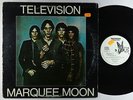
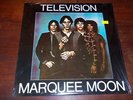
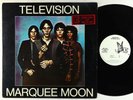
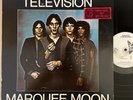
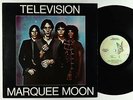
TELEVISION - MARQUEE MOON - 1977 US - ELEKTRA 7E-1098 - PRC Pressing -CUT-OUT
$
148
Favourite Auctions
To save auctions to your favourites, please login
If you don't have an account, please register
Description
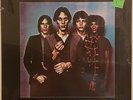
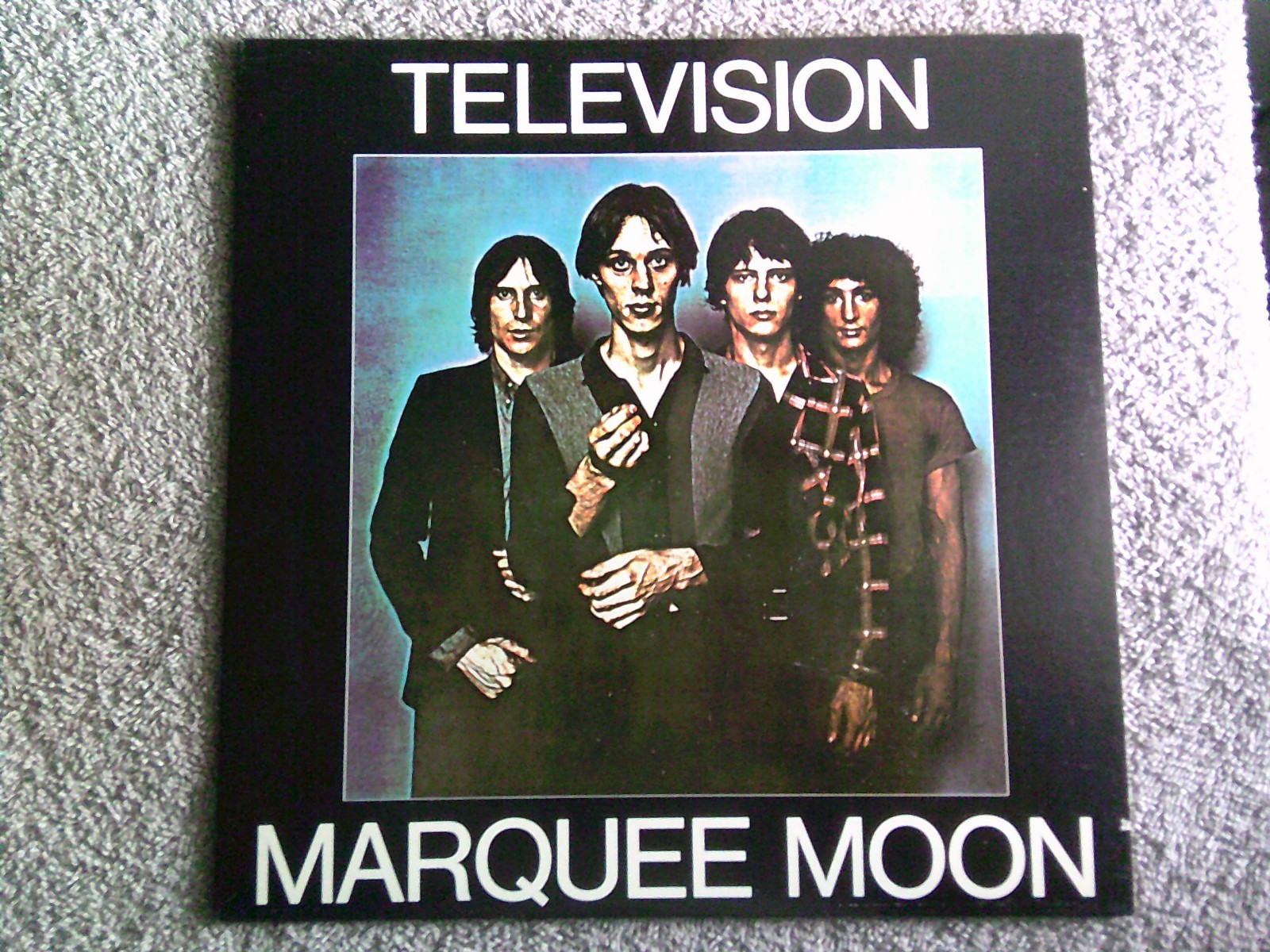
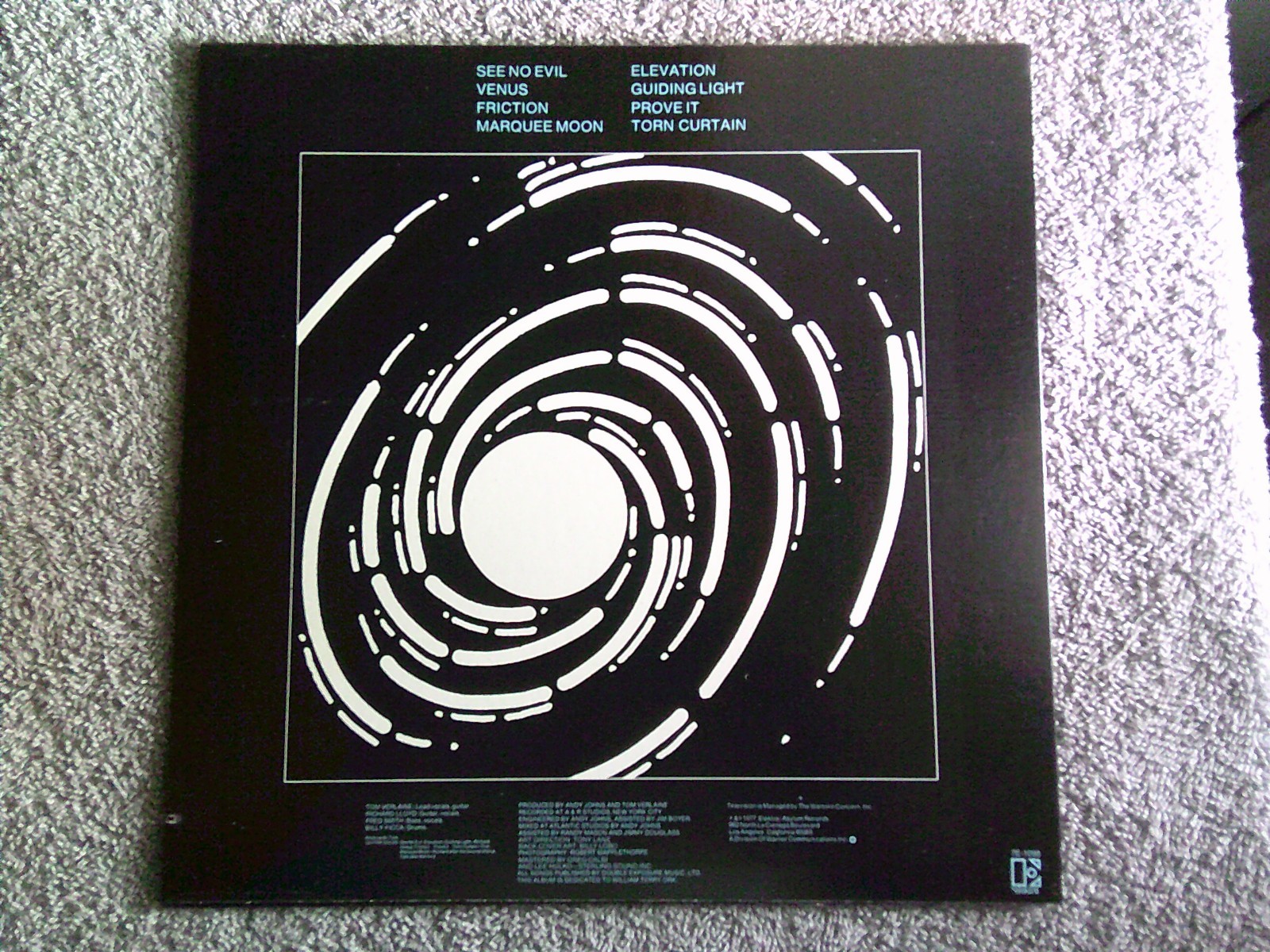
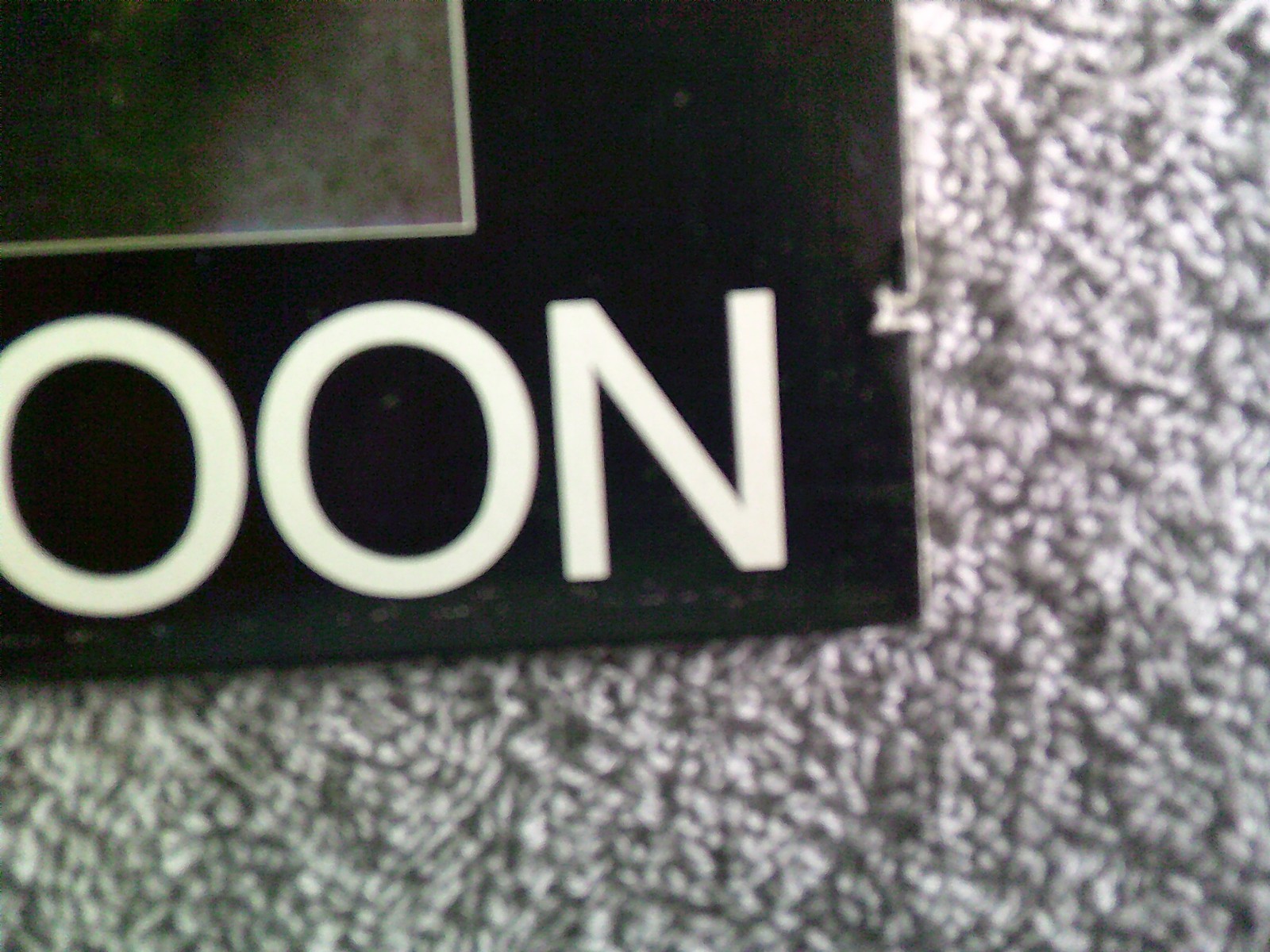
Purchased Brand New in a record store, this is a PRC Pressing with the Elektra butterfly labels. It has a small Cut-Out notch on the bottom front right edge and has been stored in a plastic bag. It has nice corners, edges and spine with lettering below center (see pictures). Album access edge looks good, except for Cut-Out notch (see pictures). Very small horizontal pinch crease off spine on front cover located at about 11 o'clock (see picture).Tiny white spot on front cover at about 2 o'clock next to album access edge and two tiny white spots on the back cover at about 8 o'clock and another across from end of cut-out notch (see pictures). No ring wear or face wear.
Inner printed factory sleeve with lyrics/credits on one side and band picture on the other is in great shape. It has a small split on the right side of the lyrics/credits side (see picture). No other creases, rips, tears or wrinkling.
Vinyl has been played a few times. I always used a Shure M91ED stylus and cartridge tracking at 1 gram. Vinyl is in Like New condition with only seeing two surface scratches only in the runout on Side B visible in critical light. Labels are the Elektra Butterfly with 1 long spindle mark visible on Side A. In excellent condition. This is an Excellent Specimen of this Edition.
Information from Discogs, in Bold below, holds true for this edition:
Label and pressing variation, on green Elektra "butterfly" labels. This version omits the "for Maverick Productions Ltd." text from label producer credits (unlike Marquee Moon).
"PRC" plant code on labels and "PRC" etched in runouts denote PRC Recording Company, Richmond, IN, pressing. Remainder of runouts etched, "STERLING" stamped (albeit partially/faintly). May appear with a 70mm diameter single pressing ring or dual 35/75mm diameter pressing rings.
An otherwise similar promotion copy of this pressing is at Marquee Moon.
Includes printed black and white inner sleeve with lyrics on one side and picture of the band on the other.
Recorded at A & R Studios, New York City.
Mixed at Atlantic Studios.
Mastered – Sterling Sound Inc.
On back cover:
℗ & © 1977 Elektra/Asylum Records
On labels
℗ 1977 Elektra Records
All songs published by Double Exposure Music, Ltd.
All lyrics ©1977 Double Exposure Music, Ltd. ASCAP
- Rights Society: ASCAP
- Price Code (Spine): 0698
- Pressing Plant ID (On labels): PRC
- Matrix / Runout (Side A label): 7E-1098-A
- Matrix / Runout (Side B label): 7E-1098-B
- Matrix / Runout (Side A runout): 7E-1098-A-3-PRC-RE-1-1 STERLING PRC
- Matrix / Runout (Side B runout): 7E-1098-B-3-PRC-RE-1-1 STERLING PRC
Television was an American rock band from New York City that formed in 1973. Its most prominent lineup comprised vocalist and guitarist-keyboardist Tom Verlaine, guitarist Richard Lloyd, drummer Billy Ficca, and bassist Fred Smith. An early fixture of CBGB and the 1970s new York punk rock scene, the band is considered influential in the development of punk rock and alternative rock.
Although they recorded in a stripped-down, guitar-based manner similar to their punk contemporaries, Television's music was by comparison clean, improvisational, and technically proficient, drawing influence from jazz and 1960s rock. The group's 1977 debut album, Marquee Moon, was widely acclaimed and is considered one of the defining releases of the punk era. The group released Adventure to a more muted reception the following year, after which they disbanded. They reunited in 1991 to record a self-titled album, disbanding again in 1993. Another reunion followed in 2001; they occasionally performed live from then until Verlaine's death in January 2023. The band recorded new material in the 21st century, but it has not been completed or released.
Television's roots can be traced to the teenage friendship between Tom Verlaine and Richard Hell. The two met at Sanford School in Hockessin, Delaware, from which they ran away. Both moved to New York, separately, in the early 1970s, aspiring to be poets.
Their first group together was the Neon Boys, consisting of Verlaine on guitar and vocals, Hell on bass and vocals, and Billy Ficca on drums. The group lasted from late 1972 to March 11, 1973. A 7-inch record featuring "That's All I Know (Right Now)" and "Love Comes in Spurts" was released in 1980.
On March 12, 1973, the group reformed, calling themselves Television and recruiting Richard Lloyd as a second guitarist. The name, devised by Hell, was a pun on 'tell a vision' as well as a reference to reclaiming the dominant media of the era.Their first gig was at the Townhouse Theatre, on March 2, 1974. Their manager, Terry Ork, persuaded CBGB owner Hilly Kristal to give the band a regular gig at his club, where they reportedly constructed their first stage. After playing several gigs at CBGB in early 1974, they played at Max's Kansas City and other clubs before returning to CBGB in January 1975, where they established a significant cult following.
The band had received interest from labels by late 1974, but chose to wait for an appropriate record deal. They turned down a number of major labels, including Island Records, for whom they had recorded demos with producer Brian Eno. Eno produced demos of "Prove It", "Friction", "Venus", and "Marquee Moon" in December 1974, but Verlaine considered Eno's production "cold and brittle, no resonance. We're oriented towards really strong guitar music ... sort of expressionistic."
Initially, songwriting was split almost equally between Hell and Verlaine, with occasional contributions from Lloyd. However, friction began to develop as Verlaine, Lloyd, and Ficca became increasingly musically confident and adept, while Hell remained defiantly untrained in his approach. Verlaine, feeling that Hell's frenzied onstage demeanor was upstaging his songs, reportedly told him to "stop moving" onstage and occasionally refused to play Hell's songs, such as "Blank Generation", in concert. This conflict, as well as one of their songs being picked up by Island Records, led Hell to leave the group and take some of his songs with him. He co-founded the Heartbreakers in 1975 with Johnny Thunders and Jerry Nolan of the New York Dolls, later forming Richard Hell and the Voidoids. Fred Smith, briefly of Blondie, replaced Hell in Television.
In 1975, Television shared a residency at CBGB with Patti Smith, who recommended the band to Arista Records president Clive Davis. Although he had seen them perform, Davis was hesitant to sign them at first. He was persuaded by Smith's then-boyfriend Allen Lanier to let them record demos, which Verlaine said resulted in "a much warmer sound than Eno got." However, Verlaine still wanted to find a label that would allow him to produce Television's debut album himself, even though he had little recording experience.
Television made their vinyl debut in 1975 with "Little Johnny Jewel" (Parts One and Two), a 7-inch single on the independent label Ork Records, owned by their manager, Terry Ork. Lloyd apparently disagreed with the selection of this song, preferring "O Mi Amore" for their debut, to the extent that he seriously considered leaving the band. Former Pere Ubu guitarist Peter Laughner reportedly auditioned for his spot during this time.
Television's first album, Marquee Moon, was received positively by music critics and audiences, and although failing to enter the Billboard 200 albums chart, it reached the top 30 in the United Kingdom and Sweden. Roy Trakin wrote in the SoHo Weekly: "forget everything you've heard about Television, forget punk, forget New York, forget CBGB's ... hell, forget rock and roll—this is the real item." Stephen Thomas Erlewine of AllMusic writes that the album was "revolutionary" and composed "entirely of tense garage rockers that spiral into heady intellectual territory, which is achieved through the group's long, interweaving instrumental sections."
Television's second album, Adventure, was recorded and released in 1978. Softer and more reflective than their debut album, Adventure was well received by critics despite modest sales (although peaking at #8 on the UK Albums Chart). The members' diverging artistic visions, a lack of commercial success, and Lloyd's drug abuse led to the band's break-up in July 1978. Lloyd and Verlaine pursued solo careers, while Ficca joined the Waitresses.
Part of my personal punk collecction.
price rating