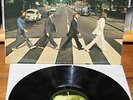
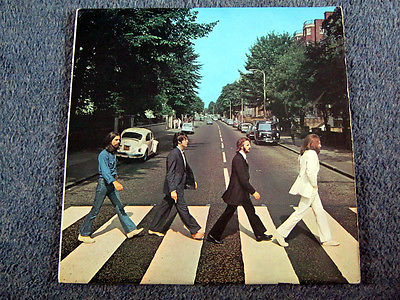
THE BEATLES-ABBEY ROAD-APPLE 1ST PCS.7088 -EXPORT 749-3U NO HM MISALIGNED APPLE
£
86
$
114


Favourite Auctions
To save auctions to your favourites, please login
If you don't have an account, please register
Description
THE BEATLES-ABBEY ROAD TYPE SINGLE LP-STEREO LABEL/PRESSING INFO
APPLE 1ST PRESS DARKER GREEN LABELS and "An E.M.I. Recording" label text. with EXPORT MATRIX NUMBERS: YEX 749-3U : YEX 750-1 - NO "Her Majesty" credit on side 2 label and 33 1/3 situated to the left on both labels
CATALOGUE NUMBER PCS 7088 YEAR OF RELEASE 1969 COUNTRY OF RELEASE U.K. SLEEVE TYPE SINGLE - GARROD & LOFTHOUSE INTERNATIONAL LTD FULLY LAMINATED WRAP OVER SLEEVE WITH MISALIGNED APPLE LOGO ON REAR INSERTS/EXTRASPLAIN WHITE INNER
GRADING/CONDITION DISC(s)EXCELLENT+ (NICE CLEAN record with MINIMAL PLAYWEAR and a few VISIBLE VERY LIGHT (little more than smudges on the surface of the vinyl) storage handling marks. PLAYS AND SOUNDS GREAT
LABELSEXCELLENT+ (CLEAN LABELS with NO writing rips tears stickers or removal marks with VERY LIGHT spindleusage, and VERY LIGHT overall handling storage and ageing marks).
SLEEVEFront board.Inner gatefold EX+
Clean sleeve with NO writing rips or tears stickers or removal marks. The front laminate is bright and shiny with VERY LIGHT pressure marking and VERY LIGHT rubbing wear, and a handful of light thumbnail type laminate creasing
Rear Board EX+ Rear board is much as the front clean with NO writing rips tears stickers and just very light handling wear and creasing Flipbacks N/A N/A Spine EX+ Spine is complete with no laminate loss complete and clear complete lettering Top & bottom edges EX+ Right and bottom edges have LIGHT wear only Opening EX+ Opening has VERY LIGHT usage and LIGHT wear Corners EX Spine ends have light wear only, top and bottom of the opening has heavier wear with a bit of bare card and buffing. INNER /EXTRASN/A
DETAILSThe final album recorded by the Beatles, as John Lennon had mentioned he "wanted a divorce" a couple of weeks before Abbey Road hit the record store shelves. It's mostly a three-piece affair, as John Lennon had taken a withdrawn role in the group by this time.
"Come Together" was the most substantial track Lennon had contributed to the album, and the song itself came about as a retread of Chuck Berry's "You Can't Catch Me"; indeed, this would result in a lawsuit by that song's publisher that Lennon would later settle out of court in part by making his "Rock and Roll" solo album five years later. "I Want You (She's So Heavy)" only has three lines of lyrics over nearly 8 minutes. He does have one moment of true brilliance, the vocal showcase "Because" with rich triple-tracked harmonies by Lennon, McCartney, and Harrison; in a matter of perspective to their eventual breakup, the song's vocals were cut in one of the last sessions for the album. Paul McCartney's contributions aren't much better, although "Oh! Darling" sounds like a dreamy rock oldie chestnut. George Harrison's two contributions are worth the price of admission alone; "Something", his first Beatles A-side single, and "Here Comes the Sun", are two of the best songs he ever contributed to the band, and possibly his two best ever compositions. Whether by accident or design, they helped set the table for his enormously successful "All Things Must Pass" one year later.
But it's the production values that really make Abbey Road. The medley that makes up the bulk of Side 2 (on the vinyl configuration) is nothing more than a triumph of production thanks to McCartney and producer George Martin. Most of the medley are vignettes and incomplete songs written the previous year in India and rejected from the White Album and Let It Be sessions. But Abbey Road does stand as arguably one of their best and slickest produced albums, the summation of years of experimentation and perfection culminating in this final effort. And even if the Beatles were breaking up, they were still pushing themselves forward here; nothing even the best production could hide if they weren't at least trying. Even on "Come Together" McCartney's thick, swampy bass, Lennon's tight rhythm playing and Ringo Starr's intricate, precise drumming make the track a stunning ensemble showcase. And Harrison's Moog synthesizer adds the right touches to the songs (notably "I Want You (She's So Heavy)", "Maxwell's Silver Hammer" and "Here Comes the Sun") without becoming overbearing.
So this was the end of the road. Most consider Abbey Road as the way to go out instead of Let It Be; if that's how you choose to view it, then they couldn't have ended on a better note; a full summary of everything they'd learned up until now. And for awhile, would carry into their respective solo careers.
price rating