THE EAGLES Vinyl 9LOT,Greatest Hits,On Border HENLEYFREY WALSH MEISNER See Pic's
$
80
Favourite Auctions
To save auctions to your favourites, please login
If you don't have an account, please register
Description
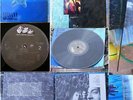
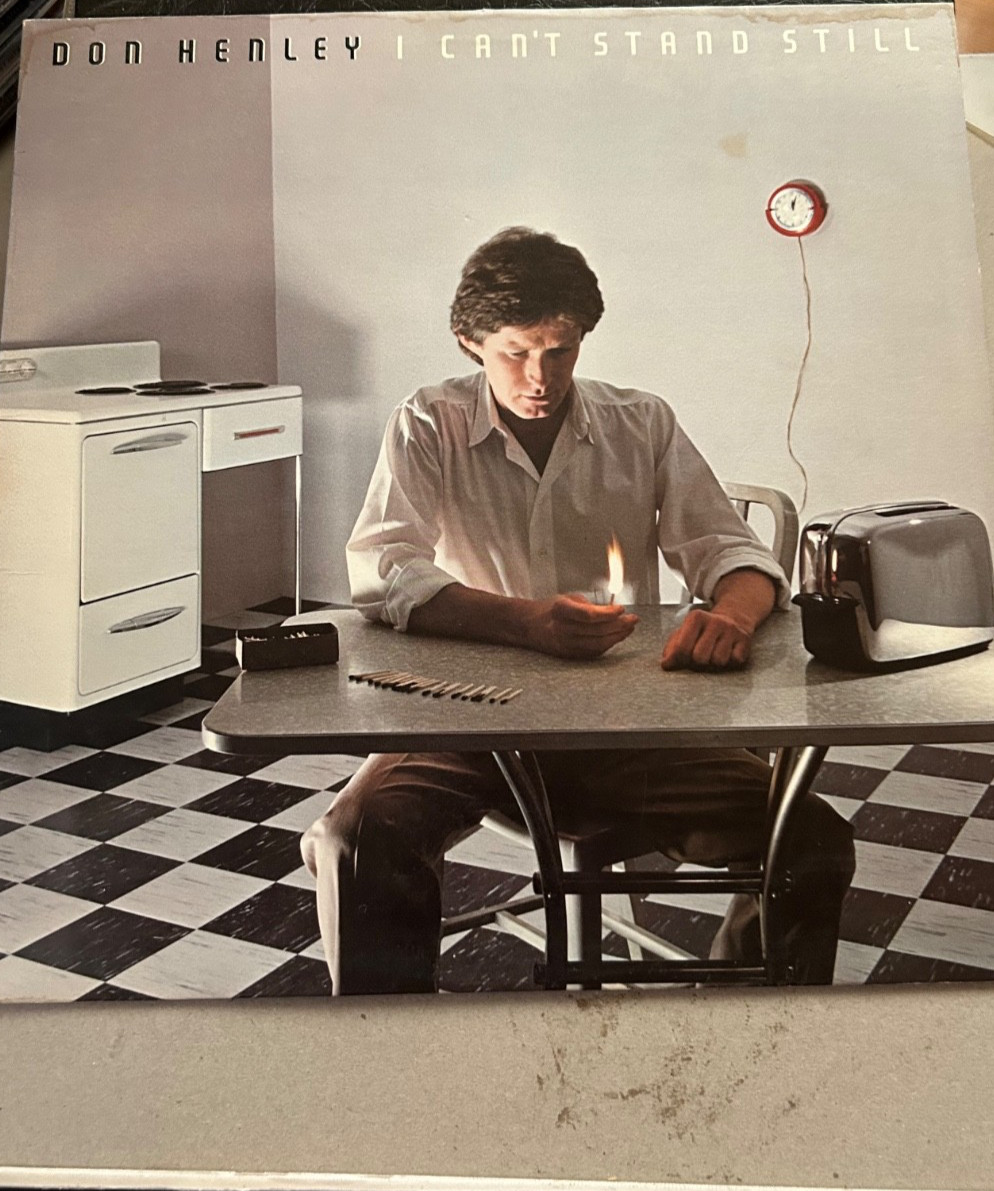
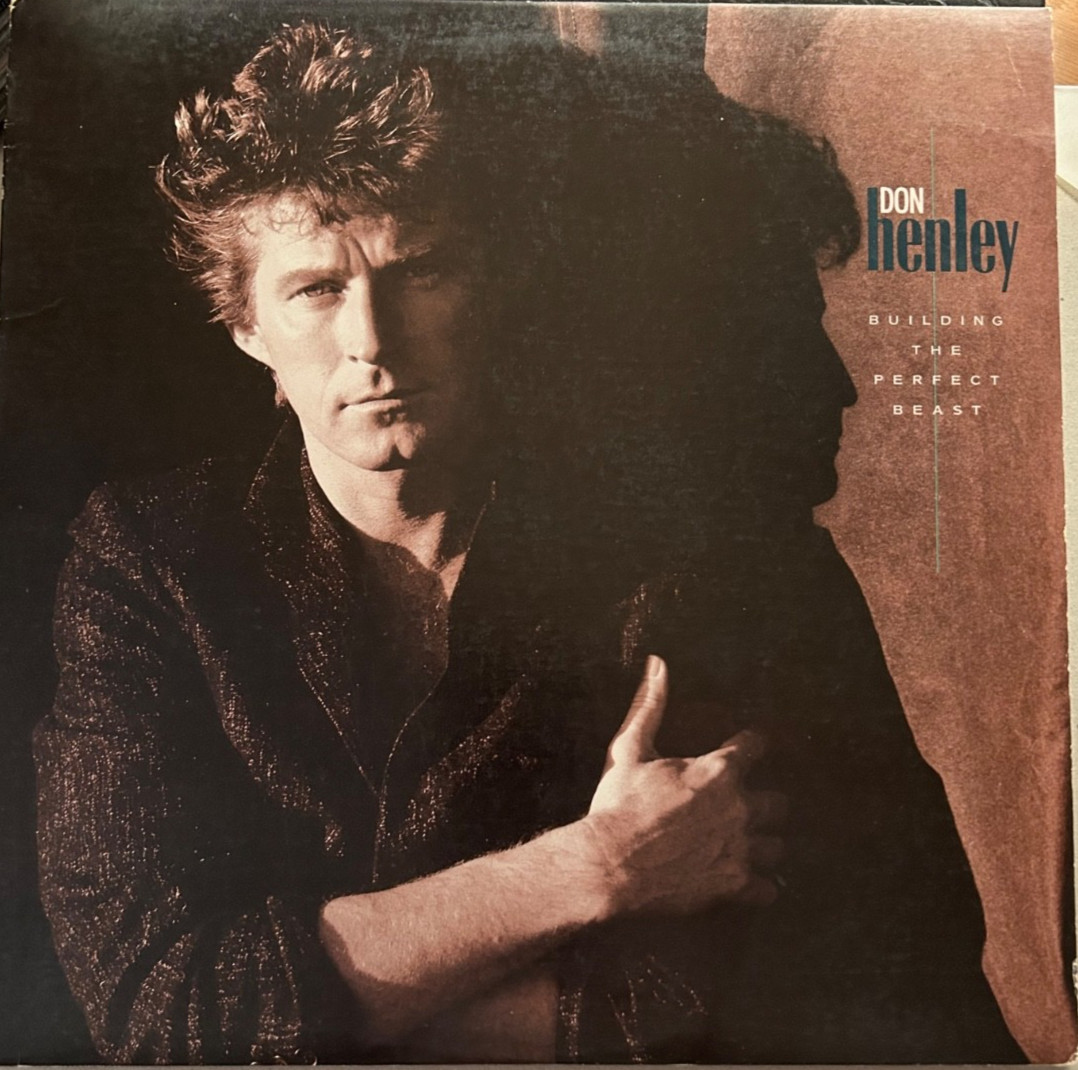
This product is a lot of 8 Eagles vinyl records featuring "Greatest Hits", "On the Border"..... Don Henley: "Building the Perfect Beast" ",Can't Stand Still"... Glenn Frey: "All Nighter", No Fun Aloud"... Joe Walsh," There goes the Neighborhood"...Randy Meisner" one more Song" The records are first edition and first pressing, with a mix of greatest hits and best of albums. The vinyl is in excellent condition and comes in original black cardboard sleeves. These classic rock records are from the 1970s& 80's and include original cover art. Perfect for any Eagles fan looking to add some vintage vinyl to their collection.
On the Border is the third studio album by American rock band the Eagles, released on March 22, 1974. Apart from two songs produced by Glyn Johns, it was produced by Bill Szymczyk because the group wanted a more rock‑oriented sound instead of the country-rock feel of the first two albums.[3] It is the first Eagles album to feature guitarist Don Felder. On the Border reached number 17 on the Billboard album chart and has sold two million copies.
Three singles were released from the album: "Already Gone", "James Dean" and "Best of My Love". The singles peaked at numbers 32, 77 and 1 respectively. "Best of My Love" became the band's first of five chart toppers. The album also includes "My Man", which had started as Leadon's tribute to his old friend Duane Allman, who always greeted Leadon saying "Hey, My Man", hence the name of the song, and who had died in 1971 in a motorcycle accident. "My Man" eventually also became a tribute to Leadon's old bandmate and friend Gram Parsons, who had died of a drug overdose the year prior at Joshua Tree National Monument in southeastern California. Leadon and Parsons had played together in the pioneer country-rock band The Flying Burrito Brothers, before Leadon joined the Eagles.
This is the earliest album by the Eagles to have been released in Quadraphonic surround sound. It was released on Quadraphonic 8-track tape and CD-4 LP. A hidden message, carved into the run-out groove of some vinyl LP copies, reads: "He who hesitates is lunch".
Background
The album was initially produced by Glyn Johns and recorded at Olympic Studios in London, but during the making of the album, disagreement arose between the Eagles and Johns. As the band tried to lean towards a more hard rock sound, they felt that Johns was overemphasizing their country-influenced rock sound.[4] Johns, however, felt that the Eagles were not capable of what the band wanted, and told the band: "You are not a rock-and-roll band, The Who is a rock-and-roll band, and you're not that."[5] The band—Glenn Frey in particular, but not Don Henley—were also unhappy with the no-drug policy of Johns during the recording;[6] furthermore they did not feel at home recording in London.[7] The band was concerned about the lack of success of the previous album Desperado, and were more assertive in wanting more input into the album, which Johns was unwilling to allow.[5]The Eagles spent six weeks recording in London, with both the band and the producer becoming frustrated with each other, leading to frequent arguments between Johns and Frey.[8][5] The band then took a break, decided to find a new producer and discarded all the recordings except for two usable tracks, "Best of My Love" and "You Never Cry Like a Lover".[3]
The band relocated back to California and hired Bill Szymczyk, who had produced The Smoker You Drink, the Player You Get by Joe Walsh—who was also managed by their manager Irving Azoff and who would go on to join the Eagles in late 1975—that interested the band.[3][9] The band recorded the rest of the album at Criteria Studios in Miami[1] and the Record Plant Studios in Los Angeles. They were allowed more input in how the album was made and enjoyed more freedom with Szymczyk in the making of the album.[7][10]Szymczyk suggested they bring in a harder-edged guitarist to add slide guitar to the song "Good Day in Hell". Bernie Leadon suggested his old friend Don Felder, whom they had met and jammed with on a few occasions. The band was so impressed that they invited Felder to become the fifth Eagle.[11] The only other track on this album on which he appeared was "Already Gone".[12] They credited him as a late arrival on the album's liner notes.
On the difference in sound between Johns' and Szymczyk's productions, Henley said: "There's a lot less echo with Bill, for one thing. There's more of a raw and funky presence. Glyn had a stamp he put on his records which is a deep echo that is really smooth like ice cream". He thought that the production on the two songs that Johns produced was good and necessary.[7] Frey, however, found that L.A. country-rock records were "all too smooth and glassy", and wanted a "tougher sound".[13] Their friend and collaborator JD Southerascribed the change of producer to "Eagles' desire to get more of a live, thin sound on the albums".[7]
The first two singles released were more rock-oriented; Frey was reluctant to release the Johns-produced "Best of My Love" as a single, and held off its release for some months. However, when it was finally released, the label had truncated the song–without the band's knowledge or approval–so that it would be more radio-friendly.[14] "Best of My Love" would become their biggest hit thus far, and their first No. 1 on the charts.
Songs
"Already Gone", "James Dean", and "Best of My Love" were released as singles from the album, and information on these songs can be found in their respective articles. The following are other noteworthy tracks[according to whom?] from the album:
"My Man"
"My Man" had started as Bernie Leadon's tribute to his old friend Duane Allman, who always greeted Leadon saying "Hey, My Man", hence the name of the song, and who had died in 1971 in a motorcycle accident. "My Man" eventually also became a tribute to Leadon's old bandmate and friend Gram Parsons, who had died of a drug overdose the year prior at Joshua Tree National Monument in southeastern California. Leadon and Parsons had been members of the pioneering country-rock band The Flying Burrito Brothers. In the lyrics, Leadon makes reference to Parsons' song "Hickory Wind" ("like a flower he bloomed till that old hickory wind called him home") which appeared on the Byrds' groundbreaking country-rock album Sweetheart of the Rodeo in 1968, the only Byrds album Parsons appeared on. [15]
"On the Border"
A hard rock song, the track was inspired by the Watergate scandal and fears of the government overstepping its bounds and infringing on people's privacy. Barely audible at the end of the song, Glenn Frey can be heard whispering "Say Goodnight, Dick", a line made famous by Dan Rowan of Rowan and Martin but in this case referring to Richard Nixon's resignation.[16] Nixon would indeed resign five months after the release of the album. Henley, however, judged the song they wrote to be a "clumsy, incoherent attempt" as they were still learning how to write. According to Henley, the song was supposed to be "an R&B-type song" but missed the mark.[17]
In the liner notes, "T.N.T.S." was credited for the vocals on the track; this refers to Tanqueray 'n' tonic, a drink favored by the producer Szymczyk. According to Henley, the drink ""helped out" on the hand-clap overdub and the Temptations-like background vocals on the title track" by adding an element of spontaneity to the song.[17]
"Ol' 55"
David Geffen played to Glenn Frey a demo of three songs by Tom Waits; Frey loved this song and took it to Henley suggesting that they split the vocals on the song. Frey said: "It's such a car thing. Your first car is like your first apartment. You had a mobile studio apartment! "Ol' 55" was so Southern California, and yet there was some Detroit in it as well. It was that car thing, and I loved the idea of driving home at sunrise, thinking about what had happened the night before."[18]
"Good Day in Hell"
According to Henley, the song was written by Frey as a tribute to Danny Whitten and Gram Parsons. He also described the song as another of their "running commentaries on the perils of the music business and the lifestyle that often comes with it".[17]
Critical reception
In an early review, Janet Maslin of Rolling Stone found the album "competent and commercial", but was disappointed that it did not live up to the potential for bigger things shown in Desperado. She also thought that with three guitarists in the band, there were "just too many intrusive guitar parts here, too many solos that smack of gratuitous heaviness. Many of the arrangements seem to lose touch with the material somewhere in mid-song." Overall, she judged the album "a tight and likable collection, with nine potential singles working in its favor and only one dud ("Midnight Flyer") to weigh it down," and that it's "good enough to make up in high spirits what it lacks in purposefulness."[23] William Ruhlmann of AllMusicnoted in his retrospective review the R&B direction in its title track that would be pursued more fully in later albums, and considered the album "which looked back to their earlier work and anticipated their later work" to be "a transitional effort that combined even more styles than most of their records did."[19]
Track listing
Side one No. Title Writer(s) Lead vocals Length 1. "Already Gone"- Jack Tempchin
- Robb Strandlund
- Don Henley
- JD Souther
- Henley
- Leadon
- Glenn Frey
- Henley
- Frey
- Souther
- Jackson Browne
- Henley
- Frey
- Henley
- Frey
- Souther
Their Greatest Hits (1971–1975) is the first compilation album by the American rock band the Eagles, released by Asylum Records on February 17, 1976. It contains a selection of songs from the band's first four albums, which were released from 1972 to 1975. On the U.S. Billboard 200 chart, the album reached number 1, where it stayed for five weeks.
The album has the distinction of being the first album to receive a Recording Industry Association of America (RIAA) Platinumcertification, which was introduced in 1976 to recognize albums that ship at least one million copies in the United States. It was ranked number four on Billboard's year-end album chart for 1976, and in September 2025, it broke the 500-week mark (non-consecutive). The RIAA has certified the album 40 times Platinum, indicating sales of 40 million copies in the United States alone, which would make Their Greatest Hits (1971–1975) the best-selling album of the 20th century in the United States (it was surpassed in Platinum certifications by Michael Jackson's Thriller after Jackson's death in 2009,[1] but regained the title in August 2018). In 2017, the album was selected by the Library of Congress for preservation in the National Recording Registry as being "culturally, historically, or aesthetically significant".[2]
Background
Their Greatest Hits (1971–1975) comprises nine singles released between 1972 and 1975, plus the album track "Desperado". All of the singles except "Tequila Sunrise" had charted in the top 40 of the Billboard Hot 100, and five had reached the top ten. "One of These Nights" and "Best of My Love" had both topped the chart.
Irving Azoff, the manager of the Eagles, said: "We decided it was time to put out the first greatest-hits because we had enough hits."[3] According to Don Felder, however, none of the band members had any say in the decision to release the compilation album,[4] which they complained was "nothing more than a ploy by the record company to sell product without having to pay additional production costs".[5] Don Henley was unhappy that songs like "Tequila Sunrise" and "Desperado" were lifted out of the context of the original album in a way that he thought was detrimental to the nature, quality, and meaning of the music. He said: "All the record company was worried about were their quarterly reports. They didn't give a shit whether the greatest hits album was good or not, they just wanted product."[5]Despite being unhappy with the album's release, the band nevertheless reasoned that it gave them more time to work on the Hotel California album,[6] which was released later in 1976.
Critical reception
William Ruhlmann of AllMusic said the songs in the compilation are melodic, immediately engaging, and lyrically consistent, so, "unlike the albums from which they come, these songs make up a collection consistent in mood and identity, which may help explain why Their Greatest Hits (1971–1975) works so much better than the band's previous discs and practically makes them redundant. No wonder it was such a big hit out of the box".[9]
In a 1978 poll of 50 rock critics and DJs organized by Paul Gambaccini, the album was ranked number 141.[13] It was voted by the public as the sixth best compilation album in the 1994 edition of All Time Top 1000 Albums.[14]
Commercial performance
Their Greatest Hits (1971–1975) debuted at number 4 on the U.S. Billboard 200 album chart[15] and reached number 1 the following week, where it stayed for five weeks.[16][17] It ranked number 4 on Billboard's year-end album chart for 1976, and has been in and out of the Billboard 200 ever since. In September 2025 it reached its 500th non-consecutive week.[18][19] Of its 465 weeks on the Billboard Top Pop Catalog Albums chart, during which it was not eligible for the main album chart, the compilation spent 15 non-consecutive weeks at number one.[19]
The album has the distinction of being the first album to receive the RIAA's Platinumcertification, which was introduced in 1976 to recognize albums that ship one million copies in the United States.[20][21] It received its first Platinum certification a week after its release (on February 24, 1976), was certified 12 times Platinum in August 1990, 14 times Platinum in 1993, and 22 times Platinum in 1995. On November 10, 1999, the album became the best-selling album of the 20th century in the United States when it was certified 26 times Platinum.[22][23] In a 2001 radio interview, Randy Meisner said neither he nor Bernie Leadonwere notified of the 1999 certification, "so we had to call and we finally received it."[24] The album was certified 29 times Platinum on January 30, 2006, and, in August 2018, it was certified 38 times Platinum under a new system that tallies album and track sales as well as streams, surpassing Michael Jackson's Thriller (certified 34 times Platinum) to again become the highest-certified album by the RIAA.[25] In January 2026, Their Greatest Hits (1971–1975) became the first album in US history to be certified 4 times Diamond for selling over 40 million units alone in the country.[26]
There is skepticism of the album's RIAA certifications. The additional certifications it received in 1995 indicate it had sold eight million units since 1993. However, per Nielsen SoundScan, it sold fewer than a million copies during that period, as well as just over five (rather than 17) million copies from 1991 (when SoundScan began tracking) to 2006,[27][28][29] and 6.4 million album-equivalent units from 1991 to February 2020.[30] In 2018, Sony Music CEO Rob Stringer stated the album only sold 2.3 million units from 2006 to 2018, yet it received certifications for nine million additional units.
When asked about the discrepancy between the certification increases and Nielsen SoundScan data, the RIAA did not provide a clear explanation, but later confirmed that Warner Music had conducted a full audit of the Eagles’ sales history, recounting past shipments dating back to 1976. The album was initially certified Platinum in 1976 and 12× Platinum in 1990, but was reassessed in 1994, which retroactively added 8 million units and increased the certification to 22× Platinum—despite SoundScan recording only about 1 million new sales during that period. Another reassessment took place in 2018, adding another 9 million units and increased the album’s certification to 38× Platinum, surpassing Thriller as the highest-certified album in U.S. history. Both the 1994 and 2018 retrospective audits included units dating before point-of-sale figures reported by Nielsen SoundScan. In response to the situation, a representative from Michael Jackson's estate noted sales audits are usually restricted to three years and said, "The notion that they can go back 10, 15, 20 or 30 years and find units that were never counted before is absurd, they reviewed these records before. Why didn't they find those uncounted records then?"[31]
Worldwide, the album has sold nearly 45 million copies as of 2020,[32] making it the best-selling greatest hits album, and the fourth best-selling album, of all time.
Track listing
Side one No. Title Writer(s) Lead vocals Length 1. "Take It Easy" (from Eagles, 1972)- Glenn Frey
- Jackson Browne
- Don Henley
- Bernie Leadon
- Don Henley
- Glenn Frey
- Robb Strandlund
- Jack Tempchin
- Don Henley
- Glenn Frey
- Don Henley
- Glenn Frey
- Don Henley
- Glenn Frey
- Randy Meisner
- Don Henley
- Glenn Frey
- Don Henley
- Glenn Frey
- JD Souther
There Goes the Neighborhood is the fifth solo studio album by the American singer-songwriter, multi-instrumentalist, and sometime-guitarist for the Eagles, Joe Walsh. The album was released in May 1981,[1] by Asylum Records, three years after Walsh's album But Seriously, Folks... (1978).
The album features contributions from two Eagles' members Don Felder and Timothy B. Schmit as well as session musicians including Russ Kunkel, David Lindley, Bob Mayo, and Victor Feldman.
The album peaked at No. 20 on the Billboard200. The album only spawned one charting single, "A Life of Illusion", which would become one of Walsh's most popular songs and reached No. 34 at on the Billboard Hot 100. The single also topped the Hot Mainstream Rock Tracks chart.
Cover artwork
The cover art for the album features Walsh leaning, while at the top of an American tank with rubble around him. Additionally, the single release of the song "A Life of Illusion" used the same image of Walsh. The promotional video for the track shows the coming to life of the album's cover.[2] In the cover photograph, office complex Century City, in Los Angeles, is in the background.
Background
"A Life of Illusion" was recorded in 1973 with Joe Walsh's first solo band Barnstorm but was not completed. The overdubs and final mixes were completed during the There Goes the Neighborhood sessions and released on the album. This song also appeared in the opening credits of The 40-Year-Old Virgin (2005) and appears as the first song on its soundtrack.
Another track "Rivers (Of the Hidden Funk)" was a track Walsh wrote for the Eagles' sixth studio album The Long Run (1979), but was left off. The track featured a guest appearance by Walsh's Eagles-mate Don Felder (who co-wrote the track) on talk box guitar.
The album's final track "You Never Know" is a song about rumors and hearsay, including not-so-veiled swipes at other members of the Eagles and their management with lines like "The Frontline grapevine jury's in a nasty mood / you might be guilty, honey, you never know." (Frontline Management was Irving Azoff's management firm at the time). Don Felder appears on guitar on this track performing rhythm and dual lead guitar solos with Walsh.
Eagles bandmate Timothy B. Schmit sang backing vocals on the opening track "Things".
AllMusic's Ben Davies wrote: "Joe Walsh's long and varied career has had its ups and downs, to say the least. Here, you see Walsh in good old rock form... The rock legend's trademark sound is prominently featured throughout the album, and undoubtedly here he performs some of his finest solos. The only qualm that one can pick is that the whole album is in a much-similar vein."[3]
Record World called the single "Made Your Mind Up" a "real toe-tapper [that] features a compelling arrangement."[5]
Track listing
All songs written and composed by Joe Walsh, except where noted.
Side one No. Title Writer(s) Length 1. "Things" 5:40 2. "Made Your Mind Up" 4:24 3. "Down on the Farm" 3:10 4. "Rivers (Of the Hidden Funk)"- Walsh
- Don Felder
- Kenny Passarelli
- Walsh
One More Song is the second solo studio album by former Eagles bassist Randy Meisner. Released in October 1980 by Epic Records in the United States, and in the United Kingdom. The album was Meisner's most successful album as a solo artist, peaking at number 50, on the US Billboard200 chart.
The single, "Deep Inside My Heart" featuring Kim Carnes, peaked at number 22 on the US Billboard Hot 100, and the single "Hearts on Fire" peaked at number 19, three months later.[3]
Critical reception
Retrospectively reviewing for AllMusic, critic Mike DeGagne wrote of the album "One More Song highlights Meisner's knack for writing honest, heartfelt love songs with a countrified rock candor that reveals his rustic, down-home roots." and he added that, "One More Song ends up being a pleasurable set of modest songs from a musician who was glad to be home."[4]
Track listing
Side one
- "Hearts on Fire" (Eric Kaz, Meisner) – 2:48
- "Gotta Get Away" (Kaz, Meisner, Wendy Waldman) – 4:03
- "Come on Back to Me" (Kaz, Meisner, Waldman) – 3:51
- "Deep Inside My Heart" duet with Kim Carnes (Kaz, Meisner) – 3:29
- "I Need You Bad" (Kaz, Meisner, Waldman) – 3:11
Side two
- "One More Song" (Jack Tempchin) – 3:55
- "Trouble Ahead" (Kaz, Meisner, Waldman) – 4:12
- "White Shoes" (Tempchin) – 4:11
- "Anyway Bye Bye" (Richie Fura
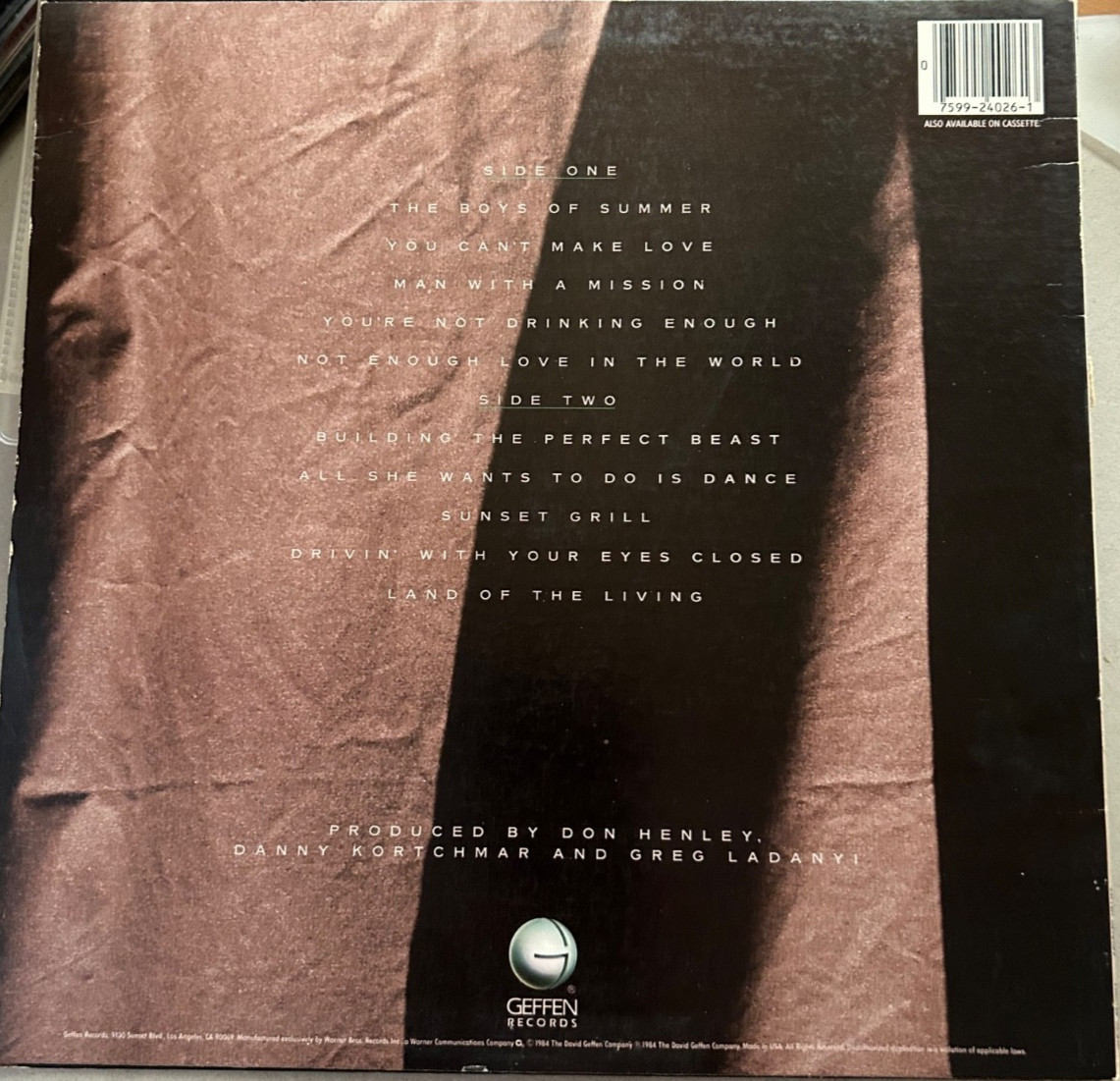
Building the Perfect Beast is the second solo studio album by American rock singer Don Henley, released on November 19, 1984, by Geffen Records. A commercial and critical success, it is generally regarded as the culmination of the smoother, more adult-oriented sound of Henley's solo work.
As with his debut solo studio album I Can't Stand Still (1982), Henley collaborated primarily with guitarist Danny Kortchmar, along with members of the then current line-up of Tom Petty and the Heartbreakers, who contributed to the writing of the songs: guitarist Mike Campbell, keyboardist Benmont Tench and drummer Stan Lynch, the last of whom would later collaborate with Henley on composing the Eagles' song "Learn to Be Still", which was released on their second live album Hell Freezes Over (1994). The album also features contributions from Toto's keyboardists Steve Porcaro and David Paich, Fleetwood Mac's lead guitarist and co-lead vocalist, Lindsey Buckingham, the Go-Go'slead vocalist Belinda Carlisle, Scandal's lead vocalist Patty Smyth, the Motels' lead vocalist Martha Davies, one half of Sam & Dave, Sam Moore, Eagles' associate JD Souther and features contributions from Randy Newman, Michael Boddicker, Jim Keltner, Waddy Wachtel, Pino Palladino, Charlie Sexton, and Ian Wallace.
The album reached No. 13 on the Billboard200[1] and was certified 3× Platinum by the Recording Industry Association of America(RIAA).[2] The album spawned four singles which all reached the Top 40 on the Billboard Hot 100, including "The Boys of Summer", which would become one of Henley's most popular songs and win him numerous awards, including a Grammy Award and four MTV Video Music Awards.
Critical reception
Professional ratings Review scores Source Rating AllMusic [3] Robert Christgau B[4]Reviewing the album in Rolling Stone, Kurt Loder wrote that "Building the Perfect Beast is a meticulously crafted and programmed set of songs about love and politics. The first side is given to personal reflections on love and loss, such as the wistful 'Boys of Summer.' Side two is more issue-oriented, tackling subjects from genetic engineering ('Building the Perfect Beast') to America's reckless foreign policy('All She Wants to Do Is Dance'). The album's longest and most ambitious piece, 'Sunset Grill,' describes in disturbingly vivid images a character's sense of entrapment in an evil, convulsive metropolis: 'You see a lot more meanness in the city/It's the kind that eats you up inside/Hard to come away with anything that feels like dignity.'"[5] The magazine placed the album at No. 73 on its 1989 list of the "100 Best Albums of the Eighties".[6]
Reviewing retrospectively for AllMusic, critic Vik Iyengar has written of the album, "After experimenting with synthesizers and a pop sound on his solo debut, Don Henley hits the mark on his sophomore release, Building the Perfect Beast. This album established Henley as an artist in his own right after many successful years with the Eagles, as it spawned numerous hits."[7]
Track listing
Side one No. Title Writer(s) Length 1. "The Boys of Summer"- Don Henley
- Mike Campbell
- Henley
- Danny Kortchmar
- Henley
- Kortchmar
- JD Souther
- Henley
- Kortchmar
- Benmont Tench
- Henley
- Kortchmar
- Henley
- Kortchmar
- Tench
- Henley
- Kortchmar
- Stan Lynch
- Henley
- Kortchmar
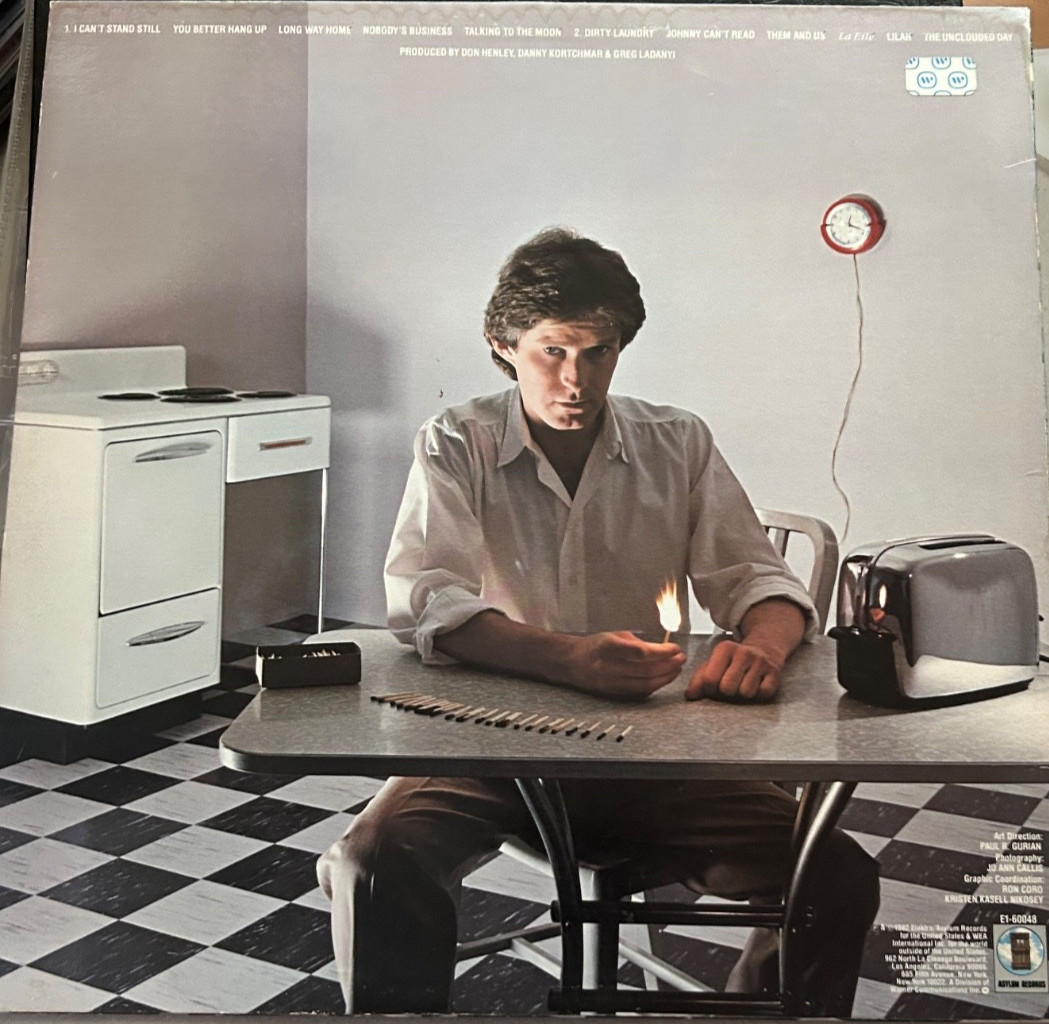
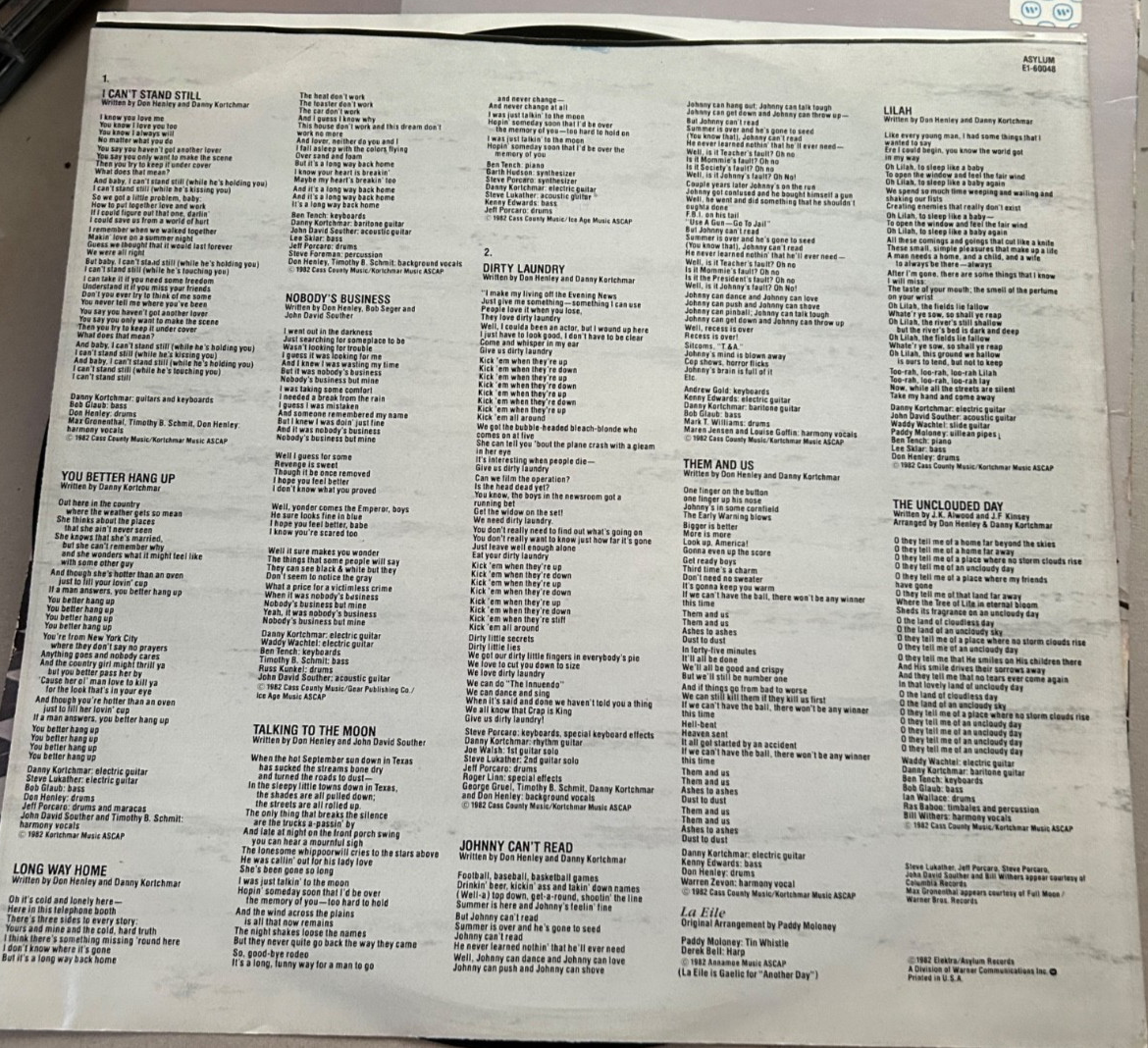
Can't Stand Still is the debut solo studio album by American musician Don Henley, drummer and co-lead vocalist for the Eagles. It was released in August 1982 by Asylum Records. Henley, Danny Kortchmar and Greg Ladanyi produced the album. I Can't Stand Still achieved gold status, and peaked at No. 24 on the Billboard 200 and at the same position on the UK Albums Chart. Three singles were released from the album, including the hit "Dirty Laundry", which peaked at No. 3 on the Billboard Hot 100 and became Henley's best-selling single. The title track "I Can't Stand Still" reached No. 48 and the track "Johnny Can't Read" reached No. 42 on the charts.
The album showcased some of Henley's frustrations at the time. "Dirty Laundry" displays his disgust with the media and tabloid news coverage, and "Johnny Can't Read," shows his displeasure with the American educational system.[5]
Critical reception
Robert Palmer, music critic for The New York Times, was surprised by I Can't Stand Stilland wrote that it "rings with the righteous indignation of a man who has taken a good look at what's going on around him and decided at least to speak his mind about it...The record doesn't offer any solutions, but how many pop records do? I Can't Stand Still scores points for its palpable anger; for its lean, stripped-down arrangements; for the lack of self-indulgence in the playing, the production and Mr. Henley's soaring vocals, and for its overall point of view, which links the disparate songs together and gives the album an admirable coherence. As far as this listener is concerned, it's better than anything Mr. Henley did with the Eagles."[6]
Reviewing retrospectively for AllMusic, critic Mike DeGagne has written of the album, "Henley's first solo album may still have had the ghost of the Eagles lingering in the corners, but for the most part it showcases his stalwart partnership with producer and songwriter Danny Kortchmar," and then added "Henley's adept combination of lyrical wit and thought-provoking staidness begins to materialize on I Can't Stand Still, paving the way for an extremely accomplished solo career."[5]
Cash Box said of the title track that "using the same organ that made "Laundry" so unique, Henley weaves the chords through a ballad about a guy's bitterness over his lost love's new find."[7] Cash Box also said that it's "a slow, dramatic, organ-dominated tune that's almost, but not quite, reggae" and that Henley's vocal tingles with a jealous edge as he sings of his lover's 'undercover' relationship."[8] Billboard called it "reggae California style, using heavy bass and syncopated organ for the rhythm track."[9] AllMusic critic Mike DeGagne called it "a trouble-in-paradise love song, [that] has Henley pouring his heart out with sugary angst, but is helped along with some avid keyboard work."[5]
Track listing
All tracks are written by Don Henley and Danny Kortchmar, except where noted.
Side one No. Title Writer(s) Length 1. "I Can't Stand Still" 3:33 2. "You Better Hang Up" Danny Kortchmar 3:21 3. "Long Way Home" 5:28 4. "Nobody's Business"- Don Henley
- Bob Seger
- JD Souther
- Henley
- Souther
- Josiah K. Alwood
- J.F. Kinsey
The single "Smuggler's Blues" helped to inspire the Miami Vice episode of the same name, and Frey was invited to star in that episode, which was Frey's acting debut. The music video for the single also won Frey an MTV Video Music Award in 1985.
Critical reception
In a contemporary review for The Village Voice, music critic Robert Christgau gave The Alnighter a "C" and panned it as a "smarmy piece of sexist pseudosoul".[3] In a retrospective review for The Rolling Stone Album Guide (1992), Mark Coleman gave the album two out of five stars and wrote that it "glistens with synthesized oomph, but the sugar coating doesn't sit well on Frey's mannered white R&B loverman act."[4] On the other hand, AllMusic's William Ruhlmann retrospectively gave it four-and-a-half stars and said that it departs from the "old Eagles sound" of Frey's last album for a "bluesy, rocking feel."[5]
Track listing
All songs by Glenn Frey and Jack Tempchin, except where noted.
No. Title Length 1. "The Allnighter" 4:22 2. "Sexy Girl" 3:30 3. "I Got Love" 3:49 4. "Somebody Else" (Hawk Wolinski, Frey, Tempchin) 6:00 5. "Lover's Moon" 4:10 6. "Smuggler's Blues" 4:20 7. "Let's Go Home" 5:01 8. "Better in the U.S.A." 3:00 9. "Living in Darkness" (Frey, Tempchin, Wolinski) 4:35 10. "New Love" 4:25No Fun Aloud is the debut solo studio album by Glenn Frey.[6] It was released in June 1982 on Asylum.[7]
The album reached #32 on the charts and contained two top 40 singles, "The One You Love" and "I Found Somebody".[8] The album was certified Gold by the Recording Industry Association of America (RIAA), selling over 500,000 copies in the United States.[9]
Critical reception
AllMusic critic Mike DeGagne wrote that "it's Frey's perfectly guided vocals and impeccable talent for crafting laid-back love songs that make[s] the album noteworthy ... With Frey's own production assistance, No Fun Aloud stands up as a modest debut album."[2] The Rolling Stone Album Guidecalled No Fun Aloud "a predictably slick solo debut in [Frey's] old band's party-boy mode."[5] The Globe and Mail called it "remarkably uninspired and joyless," writing that "by and large, the songs are of the John David Souther school of no-melody dirge—the type of thing that gives California music a bad name."[10] The New York Times deemed it "an agreeable, well-crafted little record."[11]
Track listing
All songs by Glenn Frey and Jack Tempchin, except where noted.
No. Title Writer(s) Length 1. "I Found Somebody" 4:05 2. "The One You Love" 4:34 3. "Partytown" 2:57 4. "I Volunteer" Jack Tempchin, Bill Bodine 4:06 5. "I've Been Born Again" Don Davis, James Dean 4:36 6. "Sea Cruise" Huey "Piano" Smith, Johnny Vincent 2:36 7. "That Girl" Glenn Frey, Bob Seger 3:41 8. "All Those Lies" Glenn Frey 4:43 9. "She Can't Let Go" 3:11 10. "Don't Give Up" 4:48 Total length: 39:21price rating