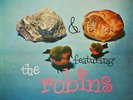
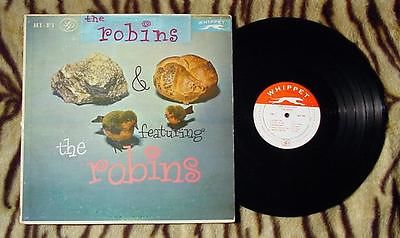
THE ROBINS ROCK & ROLL 1958 1ST PRESSING WHIPPET WLP 703 PLAYS NRMT
$
300


Favourite Auctions
To save auctions to your favourites, please login
If you don't have an account, please register
Description
OFFERING FOR YOUR CONSIDERATION TODAY, A CLASSIC 1958 ORIGINAL 1ST PREESSING FROM THE ROBINS "ROCK & ROLL!" LP!
THIS IS THE ORIGINAL 1ST PRESSING RECORDED IN HIGH FIDELITY THAT GOLDMINE VALUES AT $800+ IN NRMT CONDITION AND THIS ONE'S A BEAUTY! THIS IS ONE OF THE RAREST DOO-WOP ROCK & ROLL ALBUMS EVER!
PLEASE DO NOT PURCHASE THIS ITEM IF YOU CAN NOT TAKE THE TIME TO READ AND UNDERSTAND THE ENTIRE LISTING. THANK YOU!
CHECK OUT THE SONG LIST BELOW TO SEE THE INCREDIBLE COLLECTION OF ROCKIN' TUNES! THIS LP WILL REALLY GET YOUR FEET TAPPIN' AND YOUR HEAD BOPPIN'
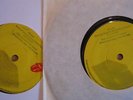
THIS IS AN ORIGINAL 1958 1ST PRESSING ON THE WHIPPET WHITE LABEL WITH RED PRINT S1 & S2 ARE STAMPED INTO THE DEAD WAX INDICATING THE EARLIEST 1ST PRESSING
# WLP-703 RECORDED IN HIGH FIDELITY!
VISUALLY, THE 55 YEAR OLD THICK VINYL PLATTER IS IN EXCELLNET CONDITION!
I HAVE EXAMINED THIS UNDER BRIGHT LIGHT AND SEE THAT THE VERY THICK RARE PLATTER HAS RETAINED MOST ALL OF IT'S DEEP RICH LUSTER! PLENTY OF SHINE HERE! I DO SEE SOME EXTREMELY LIGHT PAPER SCUFFS/HAIRLINES. (MOSTLY THE SWIRLY VARIETY) WITH PORTIONS OF 1 OR 2 LINES BEING JUST BARELY FEEL-ABLE. NONE OF WHICH WOULD EFFECT THE INCREDIBLE LISTENING EXPERIENCE!
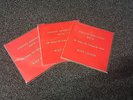
PLEASE NOTE THESE LABEL PICS ARE BLOWN UP TO APROX. 2X THE ACTUAL SIZE! ANY IMPERFECTIONS APPEAR TWICE AS BAD AS THEY ACTUALLY ARE!!
PLEASE NOTE THESE LABEL PICS ARE BLOWN UP TO APROX. 2X THE ACTUAL SIZE! ANY IMPERFECTIONS APPEAR TWICE AS BAD AS THEY ACTUALLY ARE!!
THE LABELS ARE FREE OF ANY WRITING OR STICKERS AND ARE IN EX- CONDITION!
OVERALL I GRADE THE VINYL AS EX
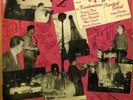
THE COVER PRESENTS VERY PROUDLY! THERE IS NO WRITING, STICKERS ANYWHERE. THERE WAS A CREATIVE UPPER SEAM REPAIR DONE BY A PREVIOUS OWNER AS CLERLY SHOWN. THE LOWER SEAM IS UN-SLIP BUT WORN AT THE CORNERS. THE SPINE IS WORN & SPLITTING IN SEVERAL PLACES. THERE IS EVIDENCE OF RING/SHELF ON THE FRONT SIDE THAT APPEARS TO HAVE BEEN TOUCHED UP. THERE IS SOME MINOR WEAR ON THE REVERSE SIDE. THERE IS SOME MINOR STAINING AND TAPE RESIDUE EVIDENT ON THE REVERSE SIDE AS WELL.
THERE ARE SOME MINOR DINGS/CREASES/SCUFFS & SOILING AS SHOWN.
BASED ON THE ABOVE IMPERFECTIONS THE COVER GRADES VG BUT STILL PRESENTS PROUDLY!
I HAVE PLAY GRADED THIS AND THE LISTENING EXPERIENCE WAS OUTSTANDING!!! IF YOU LISTENED VERY VERY CLOSELY THERE WAS SOME EXTREMELY MINOR NOISE OCCASIONALLY NOTICEABLE MOSTLY IN THE QUITE PASSAGES. BUT NOTHING DISTRACTING IN ANY WAY! YOU REALLY HAVE TO BE LOOKING FOR SOMETHING TO NOTICE ANYTHING. THIS BABY PLAYS LOUD & PROUD!
THERE WERE NO SKIPS, STICKS OR DISTRACTING POPS, HISSES, CLICKS,TICKS OR BURPS! THE LISTENING EXPERIENCE GRADES NRMT-!!
OVERALL CONSIDERING ALL OF THE ABOVE, I GIVE THIS ROCKIN' LP A GRADE OF EX!
This Los Angeles vocal group is best remembered today as the forerunner of the Coasters, though their own record of hits was substantial in its own right. What's more, their history is a lot more complicated than most fans of the Coasters are aware, and can be divided into two key phases. The Robins' roots go back to Alameda High School in San Francisco, in 1945. That year, tenor Terrell Leonard (aka Ty Terrell) joined with baritone siblings Billy Richards and Roy Richards to form what was known originally as the A-Sharp Trio, doing repertory that showed the distinct influence of the Golden Gate Quartet, the Nat King Cole Trio, and the Delta Rhythm Boys, among other established harmony groups of the period. They moved to Los Angeles and found lots of work in the area around Watts, but their first break came when they placed second in a competition at the Barrelhouse Club, owned by bandleader Johnny Otis, who hired them to perform on weekends. It was at the Barrelhouse Club that they crossed paths with bass/baritone Bobby Nunn, who did odd jobs around the place in between singing, waiting for his break. That moment came when Otis thought to turn the trio into a quartet, and see if they couldn't cut in on some of the audience that was coalescing around the rival group the Ravens.
Terrell, the Richards brothers, and Nunn thus initially became the 4 Bluebirds (a name chosen by Otis) and cut one side under that name (backed by an Otis side), entitled "My Baby Done Told Me" for the Excelsior label early in 1949. The quartet discarded the Bluebirds name soon after and at their second recording session -- this time for Aladdin Records -- in May of 1949, they were known as the Robins. The first Robins single, "Around About Midnight" b/w "You Sure Look Good To Me", appeared in June of 1949. A second Aladdin single, "Don't Like The Way You're Doing" b/w "Come Back Baby", showed up just a couple of weeks later. They were next signed to the Savoy label, along with the rest of Otis's performing outfit, which resulted in a series of releases that included Johnny Otis playing with them, and their appearance on the single "Double Crossin' Blues" backing his lead singer Esther Jones (aka Little Esther). The latter record went on to become one of Savoy's biggest sellers. In the meantime, the first Savoy single actually credited to the Robins, "If I Didn't Love You So" b/w "If It's So Baby", showed up in December of 1949. They cut a huge number of singles for Savoy in 1950, some credited to the group and others released as Johnny Otis, Little Esther, and Mel Walker singles (of which, on the latter, they were credited as the "Blue Notes"). Their debut Savoy single was eventually flipped, the upbeat "If It's So Baby" replacing the bluesier original A-side as the "play" side, and peaked at number 10 on the r&b charts, the group's first national chart placement. To add to the promise they seemed to enjoy that year, "Double Crossin' Blues" became an even bigger hit, rising all the way to the top spot on the r&b charts.
It seemed as though the Robins were on their way. And then, suddenly, in the spring of 1950, their first string of success came to a halt. They had approached Johnny Otis about the amount of money they were getting, and Otis responded by firing the Robins from his show, on the eve of what would have been their first national tour.
The group was gone from Otis's orbit and their recording contract, but Savoy issued several Robins singles over the ensuing months, thanks to the large stockpile of recordings that they'd left behind; additionally, Bobby Nunn, who had already cut some sides on his own, recorded some singles in the wake of the split. The summer of 1950 saw them pick up their career under a new contract with Dolphin Records, which yielded "Race of Man" b/w "Bayou Baby Blues". Then it was off to the Bihari Brothers' RPM and Modern Records imprints later in the year, where they cut some sides backing Mickey Champion. But it was in 1951, on a session that yielded four songs, that fate took a hand -- one of the numbers they cut was"That's What The Good Book Says", a fairly undistinguished composition that was notable as one of the earliest successful songwriting ventures by a pair of white teenagers, Jerry Leiber and Mike Stoller. The song was relegated to a B-side, and in order to keep the group from overtly running afoul of their Dolphin contract, it was credited to "the Robbins" -- but it did mark the first time that Leiber and Stoller would cross paths with this group professionally.
The quartet became inactive during mid-1951 thanks to the military draft, which caught up the Richards brothers and Terrell. Bobby Nunn was the only member not in uniform for most of the next year, and he pursued a string of singles under his own name during this hiatus, as well as working with Little Esther on a few sides for Federal. The four originals re-united in late 1952, opening what was essentially the second phase of the group's history, and they did it by adding a fifth member to their ranks, Grady Chapman. His presence, with a second, higher-range tenor voice, extended their upper range considerably and gave the group what was essentially a new sound. The re-formed Robins also gained the services of a new manager, Jack Lewis, who pushed them up into the big-time with an RCA Victor recording contract in early 1953. In February of that year, they made their RCA bow with "A Fool Such As I" b/w "My Heart's The Biggest Fool", the latter notable as a group original. The quintet remained with RCA thru the end of the year, though their last recording session took place in the fall -- despite several impressive recordings, they never charted with the label. In October of that year, RCA released the Robins' recording of "Ten Days In Jail", a Leiber and Stoller composition that gave a jocular treatment to a subject with some serious undertones, all done to a comic fault; it stood out thanks to the comical yet gritty vocal approach of the group, and released as an RCA Victor single it did fairly well.
But Leiber and Stoller, like a lot of songwriters in that era, found themselves cut out of a big chunk of their rightful royalties, an experience that led the duo to protect themselves in the future by forming their own publishing company and, in tandem with the latter, their own record label, Spark Records, with veteran record company man Lester Sill as the third partner in the company. The Robins had bounced from RCA back to the Bihari brothers, this time to the Modern label imprint Crown Records, through which they released a handful of sides in 1954. It was during this period that they added a new member, tenor Carl Gardner -- it seems that Grady Chapman had become unreliable, owing to some personal and legal situations, and wasn't always a certain bet to be available, and Gardner came aboard as insurance that they would have at least five voices at their shows -- and when Chapman did make it, there were six, which was even better. Finally, in the spring of 1954, the group was once more between contracts and when Leiber and Stoller approached them -- having had a good experience working with them before, and seeing some potential for a serious future with the group, they wanted the Robins signed up to Spark, and the group was willing. And they hit the second time at bat for Spark with "Riot In Cell Block #9", a more outrageously comical and over-the-top treatment of the theme that had worked so well with "Ten Days In Jail", complete with machine-gun sound effects -- the two producers, however, replaced Bobby Nunn as lead singer on the track with a guest vocalist, Richard Berry, later of "Louie, Louie" fame.
The group followed this up with the similarly-themed "Framed", which seemed to click with everyone who heard it. The problem for Leiber and Stoller, and partner Lester Sill, and for the Robins, however, was that Spark had no reliable national distribution or promotion; as a result, their releases, good as they were, simply weren't seeing the sales that they should have, or making the charts. The recording of "Smokey Joe's Cafe" in the summer of 1954 brought matters to a head, and also gave the two producers a song that they could parlay into something much bigger than Spark Records was ever going to be. Leiber and Stoller had already piled up impressive credits as songwriters with the Big Mama Thornton hit "Hound Dog" -- in mid-1954 Nesuhi Ertegun, the co-founder of Atlantic Records with his brother Ahmet Ertegun, approached them about licensing "Smokey Joe's Cafe" for release on Atlantic's Atco imprint; as a result, the record appeared on both the Spark and Atco labels, peaking at number 79 nationally on the pop charts and number 10 on the r&b charts. It seemed as though the Robins were finally breaking through somewhere beyond Los Angeles, and that's when matters got complicated.
Spark was already attracting attention from major labels, and at one point it seemed as though Decca Records was going to be buying out Leiber, Stoller, and Sill. But the Spark owners and Decca's management were never able to nail down a final agreement, and in 1955 it was Ahmet Ertegun of Atlantic Records who came knocking on Leiber' Stoller, and Sills' corporate door. Ertegun and producer Jerry Wexler (who was a partner in Atlantic) loved what they heard in the Robins' music, and saw in the future of Leiber and Stoller, and offered the duo a contract with Atlantic and a buy-out of Spark Records' entire existing library. Leiber and Stoller would function as independent producers, a first in the business -- they would have a legal partnership as producers and songwriters, but they would be under the Atlantic umbrella. A deal was made that would soon turn Leiber and Stoller into wunderkinds within the record industry, but the Robins weren't in quite so cooperative a mood. For starters, signing with Atlantic would mean moving to the East Coast, and none of the members -- mostly long-transplanted from the south and Texas to California -- were in a hurry to make that move. Also complicating matters greatly was the fact -- according to historian Marv Goldberg -- that Terrell had taken it upon himself to register a copyright in the Robins' name himself. In the end, he and the Richards brothers refused to sign with Atlantic.
Chapman was apparently out of the picture at that moment, and so their decision left Gardner -- the newest member of the group -- and co-founder Nunn as the only members that Leiber, Stoller, and Atlantic had to work with; and even Gardner wasn't with them at first. He's initially stayed on with Terrell and the Richards brothers, but Leiber and Stoller were able to convince him to shift his alliance to Nunn -- so the producers had two singers without a group name that they could use legally. They ended up recruiting Leon Hughes and Billy Guy and forming the Coasters, signing with Atlantic, and going on to 10 years of success that was still continuing in 2008 with Gardner leading a performing version of the group. Meanwhile, the Robins had hardly ceased to exist -- they had a record of hits that people remembered well, especially on the WEst Coast. Terrell and the Richards' signed with Whippet Records and got one especially promising single out, entitled "Cherry Lips", which ultimately failed to chart. They continued performing on the West Coast for years, recording intermittently, with Grady Chapman handling the leads. After their Whippet contract ended in 1957, they moved on to the Imperial Records subsidiary Knight Records the following year, but late in 1958 Grady Chapman left. He was replaced by Bobby Sheen, and with him as lead singer they later recorded for Arvee Records and Lavender Records, going into the early 1960's. They cut their last two records, "White Cliffs Of Dover" b/w "How Many More Times, and "Magic Of A Dream" b/w "Mary Lou Loves To Hootchy Kootchy Coo", for the latter label in 1961.
Biography by Bruce Eder
SONG LIST SIDE 1
1. CHERRL LIPS
2. A FOOL IN LOVE
3. MERRY-GO-ROCK
4. SINCE I FIRST MET YOU
5. WHERE'S THE FIRE
SIDE II
1. OUT OF THE PICTURE
2. HURT ME
3. BREAKUP
4. EVERY NIGHT
5. HOW LONG
6. ALL OF A SUDDEN MY HEART SINGS
WE USE GOLDMINE AS GUIDELINE FOR OUR GRADING SYSTEM.
ALL RECORDS ARE VISUALLY INSPECTED UNDER BRIGHT LIGHT. I TRY TO PLAY GRADE WHEN POSSIBLE OR AT LEAST IN ANY AREAS IDENTIFIED AS QUESTIONABLE FROM THE VISUAL INSPECTION.
MINT
Mint records are in most cases sealed in original shrink wrap. The only wear permissible is to the shrink wrap itself.
NEAR-MINT
NM records have glossy vinyl. There are no visible defects such as writing, tape, or stickers on the labels. The labels should not contain any spindle marks (from someone blindly trying to put the record on the turntable) The vinyl may have a few extremely fine hairline scratches or light scuffs that do not affect the sound quality. The vinyl will "appear" to have been unplayed (It may very well have been played and well-cared for) The album cover will have NO writing, tape, creases, folds, seam splits ,stains, ring wear or Promo holes or cuts!
VG+ (EXCELLENT)
VG+ records have glossy vinyl. Slight signs of wear, including light scuffs, very light scratches or slight warping that does not seriously affect the listening experience is permissible. Very slight intermittent background noise mostly in the quiet passages is acceptable.
The album cover will have no more than three of the following imperfections: light writing such as initials or name in one area, minor creasing, seam splits not larger than 1". Neatly taped seams of 2" or less. It may also contain very slight ring wear or discoloration, a promo stamp, punch hole or cut-out as originally sold.
VG
VG Records have more obvious flaws such as more pronounced scratches & lack of gloss. Groove wear and scratches deep enough to be felt with a fingernail are common. When played there will be surface noise but it should not continuously overpower the music. There are NO skips permissible with no more than 1.5 grahams of tracking force. It is common to hear crackling and pops especially in the quiet passages. The labels may contain writing such as a persons name or initials or it may contain a piece of tape or sticker with or without writing. The cover may have some seam splits, writing, tape, stickers, ring wear and scuffs.
VG-
VG- All of the defects listed VG category would be more pronounced. The record will play through without skipping WITH NORMAL tracking force. A quick skip or two with no more that 2.5 grahams of tracking force are permissible. The record will have many obvious flaws but still enjoyable to listen to. Generally if the record is rare, it is still highly collectible.
G/G+
Good (G), Good Plus (G+) Good does not mean Bad! A record in Good or Good Plus condition can be put onto a turntable and will play through without skipping WITH NORMAL tracking force. A quick skip or two with no more that 2.5 grahams of tracking force are permissible. It will have significant surface noise and scratches and visible groove wear (on a styrene record, the groove will be starting to turn white). A cover or sleeve will have seam splits, especially at the bottom or on the spine. Tape, writing, ring wear or other defects will start to overwhelm the object.
* * * * * * * * * * * * * * * * * * * * * * * * * * * * * * * * * * * * * * * * * *
* * * * * * * * * * * * * * * * * * * * * * * * * * * * * * * * * *
PLEASE REMEMBER TO CHECK OUT MY OTHER ITEMS I HAVE UP FOR SALE THIS WEEK!!
For RARE memorabilia Please check out my Store!!
I accept the following types of payment:
*** WE ACCEPT PAYPAL ***
***USA $3.99 MEDIA NO INSURANCE!***
***WORLDWIDE $48.95 PRIORITY INSURED***
***YES WE COMBINE SHIPPING! U.S.A $1 EACH ADDITIONAL RECORD. INTERNATIONAL $6 EACH ADDITIONAL RECORD!***
***This item will be shipped FLAT sandwiched between cardboard
"FOR ULTIMATE PROTECTION" We pride ourselves in packaging your investment properly!***
If you are the winner of this item please pay within 7 days!
Please email me with any questions you may have before you Bid or Buy!
Quality Memorabilia brought to you by